


Your scalp is the base for healthy hair extensions. If it's not clean and balanced, extensions can slip, cause irritation, or even damage your natural hair. Here’s why scalp preparation is key:
- Better Extension Hold: Oils, sweat, and residue can weaken adhesives, leading to early slippage.
- Healthier Scalp: Dirty or irritated scalps can cause itching, dandruff, or infections like folliculitis.
- Protects Natural Hair: Extensions add weight, which can stress weak follicles, causing shedding or breakage.
Australia’s humid climate, saltwater, and hard water make scalp prep even more important. Cleanse, exfoliate, and hydrate your scalp for two weeks before your appointment to ensure long-lasting, comfortable extensions.
Skipping this step risks discomfort, early extension failure, and hair damage. Start with clarifying shampoos, avoid heavy oils, and focus on scalp health for the best results.
How I Treat & Prep Natural Hair BEFORE Protective Styling | No Extensions Cornrows
What Happens When You Skip Scalp Preparation
Neglecting your scalp before installing extensions can weaken the bonds of the extensions and harm your natural hair. When extensions are applied to a scalp coated with oils, sweat, and product residue, these substances get trapped against your skin, creating the perfect conditions for problems to arise. Here’s a closer look at how skipping scalp preparation can impact both your extensions and natural hair.
Itching, Flaking, and Infection Risk
Applying extensions to an unclean scalp can suffocate the skin, blocking airflow and trapping buildup. This often leads to itching, flaking, and even more serious issues. Mahisha Dellinger, CEO and Founder of CURLS, warns:
The scalp tends to get neglected and suffocated while wearing extensions. This can lead to severe itching and dandruff.
When sebum and styling products build up, they can create a breeding ground for bacteria and other microbes, especially on oily scalps. Hair follicles clogged with these residues may develop folliculitis, which appears as red, inflamed bumps that can sometimes fill with pus. What starts as mild irritation can quickly escalate into an infection that might require medical treatment.
Extensions That Slip or Fall Out Early
Failing to prepare your scalp properly can weaken the attachment points of your extensions. Natural oils, sweat, and product residue act like lubricants, making it harder for adhesives, beads, or rings to hold securely. This often leads to premature slippage. As Angel Extensions points out:
Wash your hair when it's dirty or greasy, because a build up of dirt, sweat and product can cause your extensions to slip.
Without a clean foundation, the continuous production of sebum worsens the issue over time. Extensions that are supposed to last for weeks or even months may fail early, wasting both your money and your stylist’s effort.
Damage to Your Natural Hair
An unprepared scalp doesn’t just affect your extensions - it can also damage your natural hair. Residue buildup and a lack of proper care weaken hair follicles, increasing shedding and breakage under the weight of the extensions. This can lead to traction alopecia, a condition where inflamed and weakened follicles struggle to support the extensions. Moisture and debris trapped at the attachment points can also cause your natural hair to mat near the roots, making removal difficult and sometimes resulting in hair snapping off. Mahisha Dellinger highlights the risks:
Alopecia, permanent hair loss, breakage, and infection are all risks associated with not properly caring for extensions.
Furthermore, product buildup can clog the scalp, slowing down healthy hair growth beneath the extensions. This can stunt new growth during the months you’re wearing them. For these reasons, a two-week scalp preparation routine is crucial to maintaining the health of both your natural hair and your extensions.
Common Scalp Issues and How to Fix Them
Before heading to your appointment, take a moment to examine your scalp for any issues that might affect how well your extensions adhere. A healthy, balanced scalp is crucial for strong, long-lasting extensions. Below, we’ve outlined common scalp concerns and practical solutions to address them.
Oily Scalp with Product Buildup
If your roots feel greasy by the end of the day or your hair seems limp, excess sebum could be the issue. Australia’s humid climate often worsens oil production, especially for those with fine hair. This buildup can make it harder for extensions to stay securely in place. As trichologist Ricardo Vila Nova explains:
A scalp that's imbalanced or experiences excess oil, dandruff, and product build-up may affect the hair texture or hair structure.
To tackle this, wash your hair with a clarifying or sebum-control shampoo one to two days before your appointment. This will clear away oil and residue without leaving behind any unwanted film. Avoid applying conditioner or oils near your roots before your extensions are installed, as these can interfere with adhesion.
Dry, Flaky, or Itchy Scalp
If greasiness isn’t the problem, dryness might be. Signs of a dry scalp include tightness, fine flakes, and itchiness. When extensions are added to an already dry scalp, the extra weight can amplify discomfort.
Instead of heavy oils or butters, opt for lightweight hydrating serums with ingredients like hyaluronic acid or aloe vera to restore moisture without adding excess oil. For example, the Dermal Therapy Scalp Relief Shampoo & Conditioner, rated 4.7/5 by 62 reviewers, contains urea and allantoin to gently exfoliate flaky skin while soothing irritation. Apply these products to your scalp (avoiding the roots where the extensions will sit) and allow at least a week for your scalp to recover before your appointment.
Tender or Inflamed Scalp
If your scalp feels sore, looks red, or burns when touched, these could be signs of inflammation or tenderness. This can happen due to stress, overuse of harsh chemicals, heat styling, or even sunburn. Applying extensions to an inflamed scalp can worsen the problem and may lead to long-term damage.
Ricardo Vila Nova recommends:
If you have a sensitive scalp you should avoid high detergent-based shampoos and look for more hypoallergenic formulas.
For sensitive scalps, switch to hypoallergenic, sulfate-free shampoos. Gentle scalp massages can also improve circulation and reduce inflammation. If you’ve recently had extensions removed, give your scalp a break for at least two weeks. During this time, avoid tight hairstyles and protect your scalp from the sun with a hat or a leave-in treatment.
| Scalp Condition | Signs to Look For | Quick Fix Before Extensions |
|---|---|---|
| Oily with Buildup | Greasy roots, limp hair | Use a clarifying shampoo 1–2 days prior; skip root conditioners |
| Dry and Flaky | White flakes, tightness, itchiness | Apply lightweight hydrating serums; use gentle, sulfate-free cleansers |
| Tender or Inflamed | Redness, burning, soreness | Use hypoallergenic products; rest your scalp for two weeks |
sbb-itb-dcde78e
How to Prepare Your Scalp Before Extensions
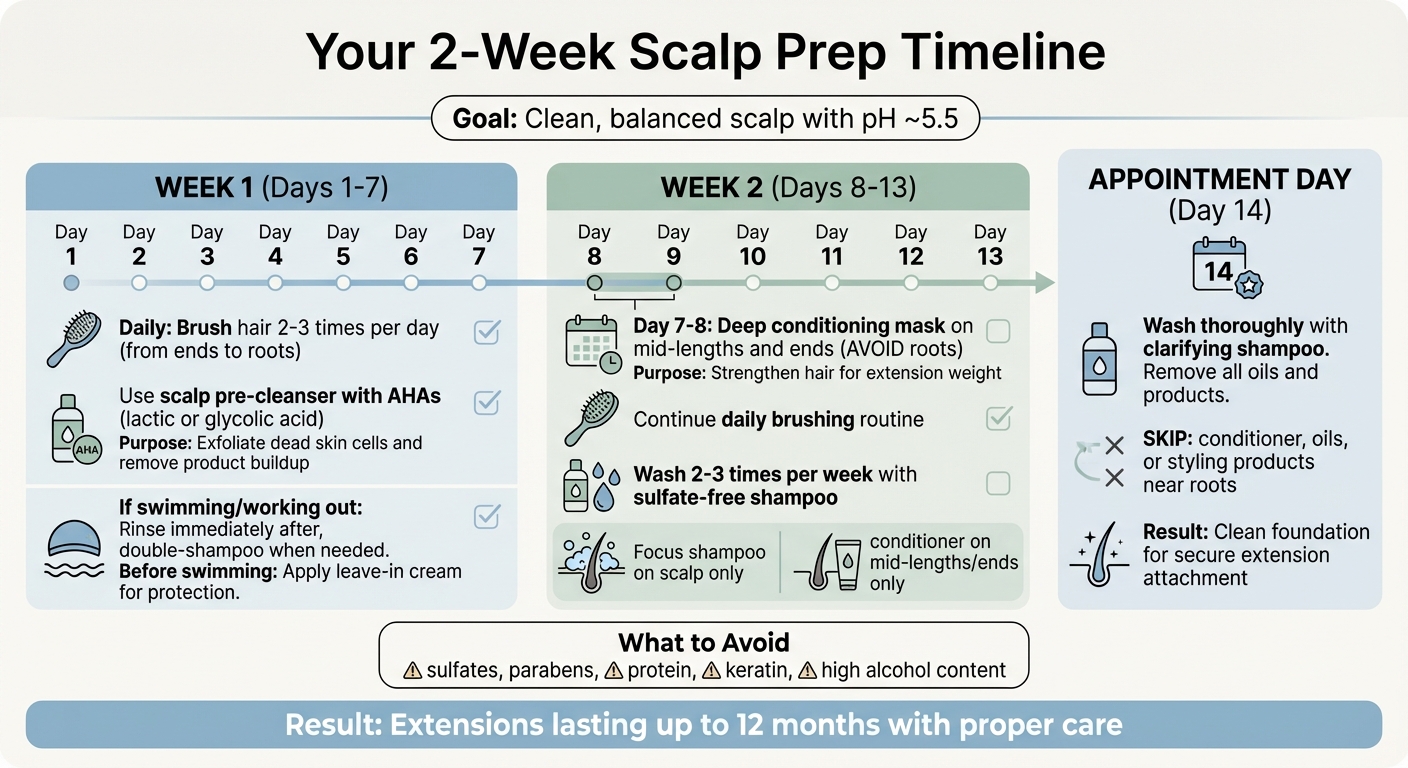
2-Week Scalp Preparation Timeline for Hair Extensions
Getting your scalp ready for extensions isn’t just about showing up to your appointment with clean hair - it’s about creating a solid foundation. A well-prepped scalp can mean the difference between extensions that last for months and those that start slipping after just a few weeks. The aim here is to ensure your scalp is clean, balanced, and ready to securely hold the extensions while keeping your natural hair healthy underneath. Here’s a step-by-step guide to help you prepare.
2-Week Preparation Schedule
Start your preparation 14 days before your appointment. During the first week, use a scalp pre-cleanser with AHAs, like lactic or glycolic acid, to gently exfoliate dead skin cells and remove any lingering product buildup. This step is especially important if you regularly use dry shampoo, styling creams, or oils. Make it a habit to brush your hair 2–3 times a day, working from the ends up to the roots. This stimulates your scalp and keeps tangles at bay.
One week before your appointment, treat your mid-lengths and ends to a deep conditioning mask - but avoid applying it near your roots. This helps strengthen your hair to handle the added weight of extensions. If you swim or work out frequently, rinse your hair immediately after to wash away salt, chlorine, or minerals, and double-shampoo when needed. Before swimming, apply a leave-in cream to shield your hair from harsh water conditions.
On the day of your appointment, wash your hair thoroughly with a clarifying shampoo to remove any leftover oils or products. Skip the conditioner, oils, or styling products near your roots, as they can interfere with how well your extensions attach.
Proper Washing Technique
Throughout the preparation period, how you wash your hair matters. Focus your shampoo application on the scalp, using your fingertips to gently massage it in. This prevents tangling and ensures a clean base. Always keep conditioner away from your roots - apply it only to the mid-lengths and ends to avoid compromising the bond of your extensions. Finish with a cool rinse to seal the hair cuticles and lock in moisture. In Australia’s warm climate, you might feel the urge to wash your hair daily, but try to stick to 2–3 times a week unless it’s genuinely greasy.
Tools and Products That Help
The right tools can make all the difference in protecting your natural hair while getting your scalp ready for extensions. Hair Wonderland’s Tangle Tamer Brush is designed to detangle gently, reducing stress on your roots. Incorporate it into your daily brushing routine to keep your hair smooth and tangle-free. For washing and product application, the Styling Comb is ideal for sectioning your hair neatly, ensuring you apply products exactly where they’re needed. After washing, use a microfibre towel to blot your hair dry instead of rubbing it, which helps minimise friction and scalp irritation.
When it comes to products, avoid anything with sulfates, parabens, protein, keratin, or high alcohol content during this two-week prep period. These ingredients can dry out your hair or make it harder to manage. Stick to sulfate-free and alcohol-free shampoos to maintain your scalp’s natural pH of around 5.5, preserving its essential moisture balance. This careful preparation not only ensures better adhesion for your extensions but also helps keep your natural hair in great condition.
Benefits of Proper Scalp Preparation
After understanding how neglecting scalp care can lead to problems, it's time to look at the benefits of taking the right steps to prepare your scalp.
Better Attachment and Longer Wear
A clean and balanced scalp lays the foundation for secure, long-lasting hair extensions. When natural oils, sweat, and styling products build up, they create a barrier that stops adhesives - especially tape-in methods - from bonding effectively.
The payoff? Extensions made from Remy human hair can last up to 12 months when paired with proper scalp and hair care. For example, Hair Wonderland's high-quality Russian and Mongolian extensions are crafted for durability but depend on a clean base to perform well. Regular professional maintenance every 5 to 6 weeks ensures extensions stay firmly attached to the right sections of your natural hair as it grows, preventing slippage and damage. With strong adhesion, your scalp experiences less strain, which also means less discomfort.
Less Discomfort and Fewer Problems
A properly prepared scalp can help reduce tension, irritation, and common issues like itching, redness, and even folliculitis. In Australia’s hot and humid climate, sweat can complicate matters further by weakening adhesives and causing discomfort if not managed.
"Product build-up has been found to lead to common hair and scalp conditions including dullness, disruption in pH... redness, flakes and dandruff, and even hair loss in severe cases." - skelp!
Keeping your scalp’s pH balanced is key to avoiding dryness and irritation. Washing your hair 2 to 3 times a week helps control oil buildup while preserving essential moisture. This is especially important when dealing with the effects of heat and humidity on permanent extensions. Proper scalp care not only keeps your extensions secure and comfortable but also supports the health of your natural hair.
Healthier Natural Hair Growth
A well-maintained scalp creates the perfect environment for strong, healthy hair growth. Techniques like regular scalp massages and gentle exfoliation improve circulation and remove buildup, ensuring your natural hair stays healthy underneath your extensions. Good circulation is particularly important when your natural hair is supporting the added weight of extensions.
A healthy scalp is also better equipped to handle the tension caused by extensions, reducing the risk of soreness or inflammation. Since natural hair sheds about 50 to 100 strands daily, the section holding your extension gradually becomes smaller. By maintaining your scalp properly, you can prevent breakage and damage, allowing your natural hair to grow strong and healthy even with extensions in place.
Conclusion
Getting your scalp ready is a crucial step to protect your natural hair and ensure your extensions stay secure and comfortable. A clean, well-prepped scalp creates the ideal foundation for extensions to attach properly while also reducing the risk of irritation. Skipping this step can lead to extensions slipping, causing discomfort, or even damaging your natural hair. By taking the time to prepare, you’re setting yourself up for a smooth and successful extension experience.
A two-week preparation routine helps address common scalp concerns and ensures your extensions adhere securely from the start. Thorough cleansing before your appointment improves adhesion, while avoiding products with sulfates or heavy oils near the roots helps keep the bonds intact.
"A healthy scalp provides a stable base for attaching hair extensions, reducing the risk of damage and discomfort." - Cliphair
As highlighted earlier, Hair Wonderland’s premium Russian and Mongolian extensions are made from 100% Remy European human hair, offering durability when cared for properly. Using the recommended products not only helps extensions stay secure but also supports the health of your natural hair and extends the life of your extensions.
FAQs
Why is scalp care important before getting extensions?
Before putting in extensions, giving your scalp some TLC is a must. Starting with a clean, oil-free scalp sets the stage for secure extensions and helps avoid problems like slipping or irritation.
Skipping scalp care can lead to issues like product build-up, dryness, or sensitivity, all of which can interfere with how your extensions hold and feel. Taking the time to care for your scalp not only improves the grip of your extensions but also makes the whole experience more comfortable and longer-lasting.
Why is scalp care important before getting hair extensions?
Proper scalp care is a must before applying hair extensions. It lays the groundwork for keeping both your natural hair and the extensions in great condition. Skipping this step can lead to problems like irritation, itching, or even infections caused by dryness or product buildup. Plus, an unhealthy scalp weakens the base for extensions, making them more likely to slip, cause discomfort, or harm your natural hair.
By cleansing thoroughly, keeping the scalp moisturised, and opting for gentle, sulphate-free products, you create the perfect conditions for extensions to blend naturally and stay secure for longer. This preparation not only enhances the longevity of Hair Wonderland’s premium extensions but also encourages healthy hair growth, minimising breakage and the need for frequent replacements.
How do I prepare my scalp for hair extensions?
Preparing your scalp before getting extensions is a crucial step to ensure a solid foundation and lasting results. Start by assessing your scalp for common issues like itchiness, flakiness, dryness, redness, or excess oil. These could point to problems like dandruff, product buildup, or an imbalance that needs attention before moving forward.
Addressing these concerns involves using products tailored to your scalp's specific needs. For itchiness or flakiness, shampoos containing ingredients like salicylic acid or tea tree oil can work wonders. If your scalp feels dry, soothing masks with aloe vera or chamomile can provide relief. On the other hand, lightweight conditioners are ideal for managing excess oil without weighing your hair down. Incorporating gentle brushing into your routine helps distribute natural oils, and a weekly scalp exfoliation can effectively remove buildup, leaving your scalp refreshed and healthy.
When the day arrives for your extensions, make sure your scalp is clean, hydrated, and free of residue. Using stylist-recommended products can help protect both your hair and scalp throughout the process. A well-prepared scalp not only ensures the extensions feel comfortable but also helps them last longer while maintaining a natural look.