


Whether you choose Russian or Mongolian hair extensions, they don’t receive natural nutrients from your scalp, so their care depends entirely on your routine. Hydration and moisturising are two key steps to keep them soft and healthy, but they serve different purposes:
- Hydration: Adds water to the inner hair shaft (cortex), improving elasticity and reducing brittleness. Use water-based products with ingredients like glycerin, hyaluronic acid, and aloe vera.
- Moisturising: Seals in hydration by targeting the outer layer (cuticle) with oils and butters like argan oil or shea butter, preventing dryness and frizz. Proper maintenance also involves brushing your extensions correctly to avoid mechanical damage.
Key Takeaways:
- Always hydrate first, then moisturise to lock in water.
- Avoid products with protein, keratin, sulphates, or alcohol - they can damage extensions.
- Use a weekly hydrating mask and daily lightweight oils to maintain softness and shine.
Extensions rely on proper care. Follow a routine that combines hydration and moisturising to keep them looking their best.
How to Moisturize & Care for Virgin Hair Extensions
sbb-itb-dcde78e
What is Hydration for Hair Extensions?
Hydration for hair extensions means replenishing water within the hair strands by reaching the inner cortex to maintain their softness and flexibility. As former hair stylist Mel explains, "Hydration in haircare refers to the process of absorbing and retaining water within the hair strands... the internal replenishment of water that keeps your hair soft, elastic, and less prone to breakage". This process is especially important for extensions, which, unlike natural hair, don’t receive oils or moisture from the scalp. Instead, they depend entirely on the products you use. Without regular hydration, extensions can become dry, rough, and straw-like. For premium extensions like those from Hair Wonderland, keeping them hydrated is key to maintaining their softness and lifespan. Let’s take a closer look at how water works to hydrate hair extensions.
How Hydration Works
Water molecules pass through the outer cuticle and into the cortex, where they bind with keratin proteins to restore the hair’s elasticity and bounce. Applying hydrating products to damp hair helps improve absorption. Humectants in these products attract moisture from the environment and lock it into the hair fibre. To keep that moisture from escaping, finish with a cool water rinse to seal the cuticles. Skipping this step can cause the hydration to evaporate quickly, undoing your efforts.
Key Ingredients for Hydration
When choosing products for your extensions, look for humectants like glycerin, hyaluronic acid, and aloe vera. These ingredients are excellent at drawing water into the hair strands. Panthenol (Pro-Vitamin B5) is another great option, as it pulls in moisture and boosts elasticity. Some newer ingredients, such as Blue Sea Kale, can also penetrate the cortex to improve suppleness. On the flip side, avoid products with high concentrations of protein, keratin, sulphates, or alcohol, as they can make extensions brittle and prone to damage.
Benefits of Hydration for Extensions
Proper hydration offers several benefits: it improves elasticity, reduces breakage, and can increase shine by up to 75% while strengthening hair by 61% after just one treatment. Adding a weekly deep conditioning mask to your routine - leaving it on for 15–20 minutes - can help restore the moisture that extensions naturally lose over time. This simple step can make a big difference in keeping your extensions looking and feeling their best.
What is Moisturising for Hair Extensions?
Moisturising hair extensions is all about sealing in water and protecting the outer cuticle layer using oils, butters, or other ingredients that create a barrier. While hydration focuses on replenishing water within the inner cortex, moisturising locks that water in by targeting the cuticle - the outermost protective layer. Think of it this way: hydration is like filling a glass with water, while moisturising is putting a lid on it. As professional barber John Jefferson explains:
If hydration is filling the glass, moisturisation is placing a lid on top
. This is especially important for hair extensions, which don’t benefit from the natural oils your scalp produces. Without a proper seal, the hydration added during washing evaporates quickly, leaving your extensions dry and prone to damage.
How Moisturising Works
Moisturising creates a barrier that helps your extensions retain water. It works by coating each strand, locking in hydration and preventing moisture from escaping. This not only keeps the cuticle smooth but also reduces tangling and frizz. To get the most out of your routine, always apply moisturising products after hydrating ones: water first, then seal it in.
When caring for permanent extensions like tape-ins or keratin bonds, focus on applying moisturisers from the mid-shaft to the ends, steering clear of the attachment points. This helps to avoid weakening the adhesives. Another tip? Finish your wash with a cool rinse. It helps to close the cuticles, making your moisturising products even more effective.
Key Ingredients for Moisturising
The best moisturising products for extensions use lightweight natural oils and butters that protect without causing buildup. Here are a few key players:
- Argan oil: Packed with antioxidants, it smooths frizz and adds shine.
- Jojoba oil: Its wax-like texture fills in cracks, trapping moisture.
- Coconut oil: Offers deep conditioning and softens the hair.
- Shea butter and almond oil: Add softness and improve texture.
On the flip side, steer clear of heavier oils like mineral, castor, or olive oil, as they can leave your extensions greasy. Also, avoid products with protein, keratin, sulphates, or high alcohol content, which can strip moisture.
Benefits of Moisturising for Extensions
Moisturising does more than just make extensions look good - it extends their lifespan. It adds shine, smooths out the texture, and protects against damage from heat styling and environmental factors. Well-moisturised extensions are less likely to break, shed, or become brittle, and they handle heat styling better.
For permanent extensions, using a couple of pumps of treatment oil every evening helps maintain moisture. Clip-ins, on the other hand, benefit from a light styling cream or oil applied while damp. Since extensions don’t get natural nourishment from the scalp, external moisturising is a must to keep them soft, smooth, and healthy. Without it, they can quickly turn dry and straw-like.
Hydration vs. Moisturising: Key Differences
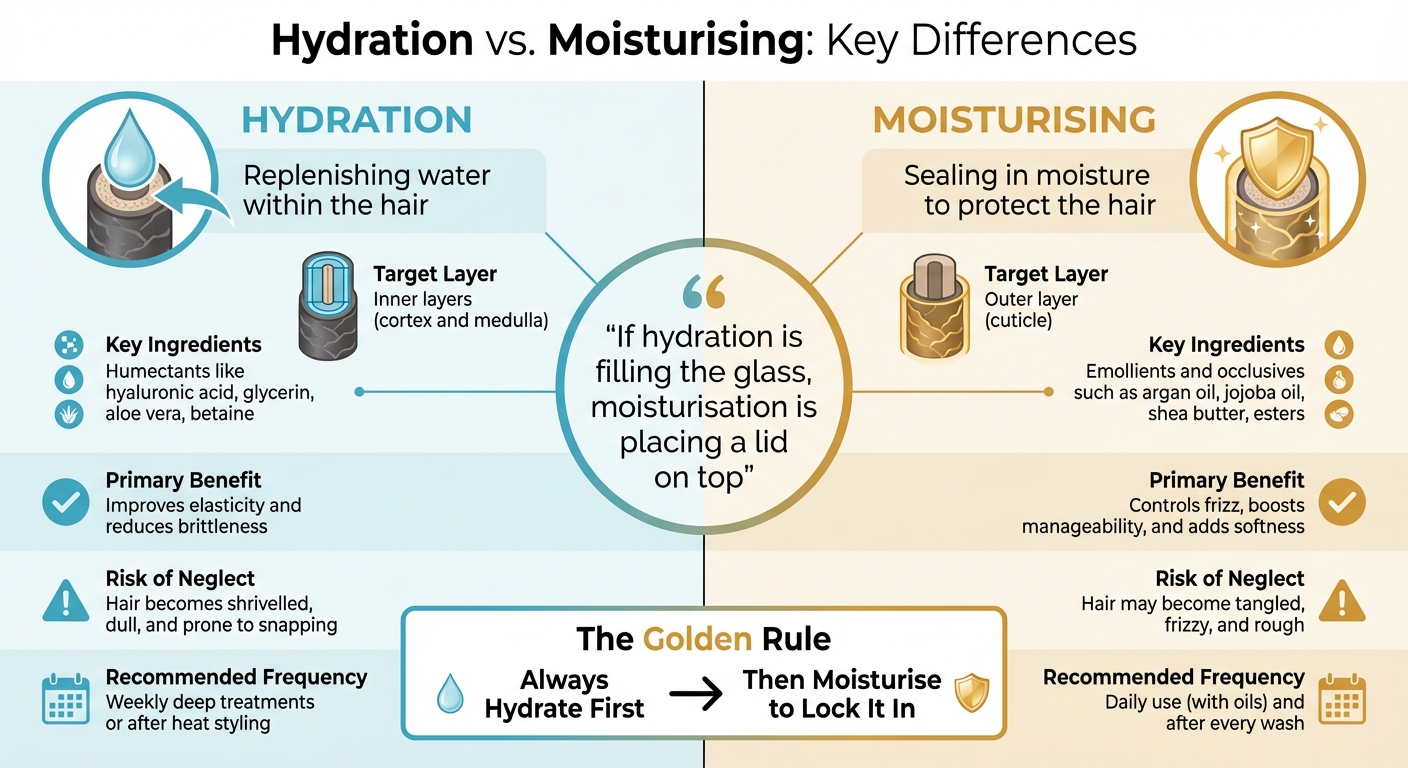
Hydration vs Moisturising for Hair Extensions: Key Differences and Benefits
Hydration and moisturising serve distinct purposes when it comes to caring for extensions. Hydration focuses on replenishing water in the inner layers of the hair - the cortex and medulla - helping to improve elasticity and flexibility. Meanwhile, moisturising targets the outer cuticle, using nourishing oils and butters to lock in moisture, prevent evaporation, and enhance shine.
As DESIGNME Hair explains:
Hydration is the act of having water penetrate the hair, while moisturization is the act of keeping it in there.
If your extensions feel brittle or snap easily, they are likely dehydrated and in need of hydration. On the other hand, if they feel rough, frizzy, or appear dull, moisturising is the solution to restore smoothness and shine.
The best approach? Always hydrate first, then moisturise. Cécred puts it simply:
If you apply moisturizing products without hydrating first, you're essentially sealing in dryness.
This layering technique is especially crucial for extensions, as they don't receive natural oils from the scalp and rely entirely on external care.
Comparison Table: Hydration vs. Moisturising
| Feature | Hydration | Moisturising |
|---|---|---|
| Definition | Replenishing water within the hair | Sealing in moisture to protect the hair |
| Target Layer | Inner layers (cortex and medulla) | Outer layer (cuticle) |
| Key Ingredients | Humectants like hyaluronic acid, glycerin, aloe vera, betaine | Emollients and occlusives such as argan oil, jojoba oil, shea butter, esters |
| Primary Benefit | Improves elasticity and reduces brittleness | Controls frizz, boosts manageability, and adds softness |
| Risk of Neglect | Hair becomes shrivelled, dull, and prone to snapping | Hair may become tangled, frizzy, and rough |
| Recommended Frequency | Weekly deep treatments or after heat styling | Daily use (with oils) and after every wash |
Use this guide to choose the right treatment for your extensions.
When to Use Hydration vs. Moisturising
Hydration is especially important after using heat styling tools like flat irons or blow dryers, as these can evaporate the water that extensions need. If your extensions feel straw-like, snap easily, or look dull, it’s a clear sign they require hydration. Without internal moisture, extensions are also more prone to tangling.
Moisturising, on the other hand, becomes essential after colouring or chemical treatments that can weaken the cuticle. If your extensions are well-hydrated but still show signs of frizz or puffiness, they need a sealing layer to smooth the cuticle. Additionally, before heading into dry, windy, or cold weather, applying a moisturiser can create a protective barrier to prevent moisture loss. Extensions with high porosity, such as lightened or blonde shades, absorb water quickly but lose it just as fast. These types benefit from richer moisturising products, like butters and oils.
Taking a systematic approach to hydration and moisturising is crucial since extensions don’t benefit from the natural nutrients your scalp provides; following expert hair extension care tips can help bridge this gap.
Hair Care Routine for Extensions
Double-drawn extensions thrive on a routine that combines hydration and moisturising. This layered approach ensures the inner moisture needs of the hair are met while protecting the outer barrier. By following these steps, you can seamlessly incorporate effective hydration and moisturising techniques into your daily care routine.
Step 1: Hydration Treatments
Start with water-based treatments designed to penetrate deep into the hair. On wash days, apply a hydrating mask enriched with humectants like glycerin or hyaluronic acid to damp extensions. Focus on the mid-lengths to ends, steering clear of the roots to avoid slippage.
Leave the mask on for 10–20 minutes to allow it to work its magic, then gently comb through using your fingers or a wide-tooth comb. Aim to include deep hydration in your routine 1–2 times a week. Between washes, refresh your extensions with a water-based leave-in conditioner to replenish lost moisture. Once hydration is complete, it’s time to lock it in.
Step 2: Moisture Lock with Lightweight Products
Seal in the hydration using lightweight moisturising products that contain emollients like argan oil, shea butter, or moringa seed oil. Apply 1–2 pumps in the morning and 2–3 in the evening, concentrating on the mid-lengths and ends. For a reliable option, try Hair Wonderland's Moisture Magic ($39.95), which enhances shine and tames frizz without weighing the hair down. To finish, rinse with cool water to close the cuticles and lock in moisture.
Step 3: Ongoing Maintenance and Protection
Gentle handling is essential for maintaining extensions. Brush twice daily using tools like Hair Wonderland's Tangle Tamer Brush ($21.95) or The Detangle Brush ($29.95). These brushes are designed to glide smoothly through wet or treated extensions, reducing breakage by up to 40–60% compared to regular brushes. Always brush starting from the ends and work your way up to the roots using light, upward strokes.
For overnight care, store your extensions flat in a Clip In Bag ($54.00) with satin lining. This helps retain moisture and keeps the double-drawn structure intact, ensuring your extensions stay smooth, shiny, and uniform.
Conclusion
Knowing the difference between hydration and moisturising is key to maintaining healthy extensions. Hydration adds water to the hair shaft, while moisturising locks it in - both are crucial since extensions don’t benefit from your scalp’s natural oils. Without this two-step care, extensions can become dry, brittle, and tangled.
Together, these treatments work to keep your double-drawn extensions soft, shiny, and manageable. Think of hydration as quenching your hair’s thirst, while moisturising acts as a protective barrier against everyday stressors like sun exposure, wind, and friction. Neglecting either can leave your extensions feeling rough, looking dull, or even shedding.
A simple routine can make all the difference. Start with a water-based treatment to hydrate, then follow up with a lightweight oil like Moisture Magic ($39.95) to seal in the moisture. Use tools like the Tangle Tamer Brush ($21.95) or The Detangle Brush ($29.95) to minimise breakage while styling. And don’t forget to store your extensions safely in a Clip In Bag ($54.00) overnight to keep them protected and tangle-free.
FAQs
How do I tell if my extensions need hydration or moisturising?
To figure out whether your hair extensions need hydration or moisturising, start by examining their condition. Hydration focuses on restoring water content, which is essential if your extensions feel dry, brittle, or stiff. On the other hand, moisturising helps seal in water and nutrients, making it the go-to solution for extensions that appear dull, frizzy, or coarse.
Pay attention to their texture - if they’re dry and brittle, hydration is key. If they feel rough or look frizzy, moisturising will make a difference. Sticking to a consistent care routine will help keep your extensions in great shape.
Can I hydrate and moisturise my extensions without washing them?
Yes, you can refresh your hair extensions without washing, but the approach you take depends on your goal. For a quick touch-up, try using leave-in conditioners, hydrating sprays, or light oils. These products can provide moisture and hydration without the need for a full wash. Just be cautious not to overdo it - using too much product can lead to buildup, which might shorten the lifespan of your extensions or make them look less natural. That said, regular washing is still crucial to keep your extensions in good condition over time.
What ingredients should I avoid to prevent damage to bonds or wefts?
Avoid ingredients like sulfates, as they can strip away natural oils and weaken the bonds or wefts of your hair extensions. Similarly, stay away from alcohol-based ingredients like denatured alcohol or ethanol. These can dry out your extensions, affecting both their durability and appearance over time.