


Hair extensions need extra care in autumn. Cooler temperatures, dry air, and indoor heating can strip moisture, leaving extensions dry, brittle, and prone to damage. Unlike natural hair, Russian vs Mongolian hair extensions don’t benefit from your scalp’s natural oils, so hydration depends entirely on your routine.
Key tips for autumn hair extension care:
- Cleanse carefully: Use sulphate-free shampoo 1–3 times a week to avoid over-drying.
- Condition deeply: Apply hydrating conditioner and weekly masks to replenish moisture.
- Daily hydration: Use lightweight oils (like argan or jojoba) and leave-in treatments on mid-lengths and ends.
- Protect at night: Sleep on silk pillowcases and keep extensions in loose braids or ponytails.
- Reduce friction: Avoid wool scarves and opt for silk-lined hats.
With the right products and steps, you can keep your extensions soft, shiny, and tangle-free throughout the season.
How to Rehydrate Extensions : Hair Extensions
sbb-itb-dcde78e
How Fall Weather Affects Hair Extensions
Autumn weather brings a mix of conditions that can be tough on hair extensions. As KOVI Hair explains:
Winter [and fall] weather is like a moisture thief - it sucks the hydration out of everything, from your skin and lips to your hair extensions.
The cold air outside, combined with indoor heating, pulls moisture from extensions more aggressively than it does from natural hair. This lack of hydration creates a domino effect, leaving extensions more prone to damage as the season continues.
Unlike natural hair, high-quality hair extensions don’t benefit from the scalp’s natural oils. They rely entirely on external products for hydration, making them especially susceptible when humidity levels drop.
On top of that, autumn wardrobes can also take a toll. Wool scarves, beanies, and heavy coats create friction against the cuticle, leading to tangles, matting, and annoying static that causes flyaways. Following a proper brushing routine is essential to prevent this friction-based damage. This wear and tear can make styling harder and dull the overall look of your extensions.
Other seasonal factors, like gusty winds, pollution, and even those steamy hot showers we all crave when it’s cold, can further strip moisture. These conditions open the cuticle, increasing the risk of breakage.
To keep your extensions in good shape, consider these tips:
- Opt for silk-lined hats to minimise friction.
- Use lightweight oils, like argan or jojoba, daily (just 1–2 pumps on the mid-lengths and ends).
- Treat your extensions to a weekly deep conditioning session (20–30 minutes).
- Stick to protective styles, like low braids or ponytails, to reduce friction and lock in moisture.
These steps can help protect your extensions through the season, setting the stage for a more thorough hydration routine in the next section.
Step-by-Step Guide to Hydrating Extensions for Fall
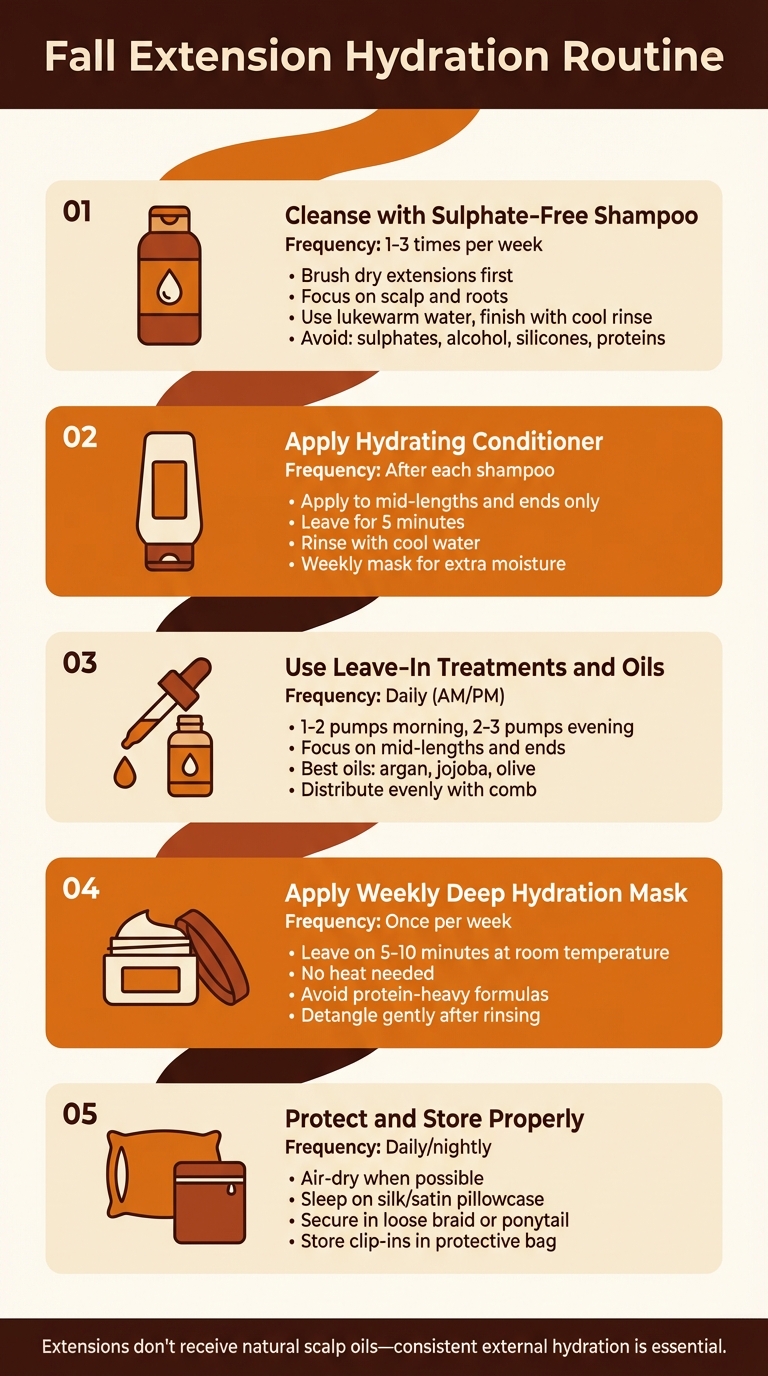
5-Step Fall Hair Extension Hydration Routine
Keeping your extensions hydrated during autumn is essential to combat the moisture loss caused by colder air and indoor heating. Follow this routine to maintain their softness and longevity.
Step 1: Cleanse with Sulphate-Free Shampoo
Autumn's dry conditions mean you should limit washing your extensions to 1–3 times a week. As EH Hair & Extensions explains:
"Extensions don't get oily the same way natural hair does, because they aren't attached to your scalp. Washing too often can dry them out, cause tangling, and shorten their lifespan."
Before washing, gently brush your dry extensions with an extension-safe brush. When applying shampoo, focus on the scalp and roots, keeping it away from the mid-lengths and ends. Use a double shampoo to clear buildup while preserving moisture. Always wash with lukewarm water and finish with a cool rinse to close the cuticles and seal in hydration.
Opt for shampoos free from sulphates (SLS/SLES), alcohol, silicones, and proteins. Hair Wonderland warns:
"Avoid products containing: protein, keratin, sulfates, and high alcohol content. These can damage your extensions and make them unmanageable after just one use."
For those who exercise regularly, try a "half wash" by rinsing the roots with warm water and conditioning the ends instead of doing a full wash. After cleansing, follow up with a hydrating conditioner.
Step 2: Apply Hydrating Conditioner
Conditioning after shampooing is key to replenishing lost moisture. Apply conditioner to the mid-lengths and ends only - keeping it away from bonds, tapes, or wefts to avoid slippage. Let it sit for five minutes before rinsing with cool water to lock in hydration.
To boost moisture, use a treatment mask weekly. Angel Extensions highlights:
"Hydration is your extensions' best friend. As extensions are not attached to your scalp like your natural hair, they don't receive the natural moisture of oils travelling down the hair shaft."
After rinsing, gently blot your extensions with a microfibre towel instead of rubbing, which can lead to frizz and damage.
Step 3: Use Leave-In Treatments and Oils
Incorporate leave-in treatments and oils into your daily routine. Use 1–2 pumps of treatment oil in the morning and 2–3 pumps in the evening, focusing on the mid-lengths and ends. Warm a pea-sized amount of oil, such as argan, jojoba, or olive, in your hands before applying.
Shakira Dickinson from Hair Candy advises:
"Oil helps to restore moisture, prevent tangling, and keep the hair looking glossy."
Distribute the oil evenly with Hair Wonderland's Styling Comb (AUD $12.95). Look for products containing hydrating ingredients like argan oil, aloe vera, coconut water, and pro-vitamin B5 for the best results.
Step 4: Apply a Weekly Deep Hydration Mask
A weekly deep hydration mask is a must for keeping extensions soft and healthy during autumn. After shampooing, apply the mask and leave it on for 5–10 minutes at room temperature to allow it to penetrate effectively. Avoid using heat during this step. Once rinsed, blot gently with a towel and detangle with Hair Wonderland's Tangle Tamer Brush (AUD $21.95) to minimise breakage.
Stick to masks designed for hydration rather than protein-heavy formulas, which can make extensions brittle over time.
Step 5: Protect and Store Extensions Properly
Whenever possible, let your extensions air-dry. If you need to use a blow dryer, stick to medium heat, focus on the roots, and always apply a heat protectant beforehand.
Before bed, ensure your extensions are completely dry - wet hair is more prone to tangling and damage. Secure them in a loose, low plait or ponytail, and sleep on a silk or satin pillowcase to reduce friction. Great Lengths explains:
"Cotton pillowcases absorb moisture and can tug at your extensions overnight, causing friction and dryness. Silk or satin alternatives are much gentler and help your hair (and skin) retain hydration."
For clip-in extensions, remove them before sleeping. Store them in Hair Wonderland's Clip In Bag (AUD $54.00) to maintain their shape and moisture levels. Hair Wonderland advises:
"If you show your extensions some love and care, they'll last longer – but since extensions aren't attached to your scalp, they miss out on all those natural oils and nutrients your hair normally gets."
Products for Hydrating Extensions
After completing your hydration routine, these tools can help lock in moisture and make caring for your extensions easier. Hair Wonderland offers products designed to keep your extensions hydrated and protected throughout autumn.
Tangle Tamer Brush and The Detangle Brush
Learning how to detangle hair extensions without damage is key to maintaining moisture and avoiding breakage. The Tangle Tamer Brush (AUD $21.95) and The Detangle Brush (AUD $29.95) are designed to gently work through your extensions, starting from the ends and moving upwards. This approach reduces breakage and helps keep your extensions hydrated.
It’s a good idea to brush your extensions before washing to prevent severe tangling during cleansing, which can lead to dryness and matting. After applying treatment oils or leave-in conditioners, use the brush to evenly distribute moisture through the mid-lengths and ends. Always hold the hair just above the section you're brushing to avoid pulling on the attachment points.
Once you’ve carefully detangled your extensions, storing them properly is just as important.
Clip In Bag for Storage
For clip-in extensions, how you store them between uses plays a big role in keeping them in great condition. The Clip In Bag (AUD $54.00) is designed to shield your extensions from dust and environmental factors that can cause them to dry out or tangle. Without the natural oils from your scalp, extensions are especially vulnerable to drying out, particularly when exposed to indoor heating during cooler months.
Before placing your extensions in the Clip In Bag, ensure they’re detangled and lightly oiled. This storage solution helps prevent friction and matting, keeping your Remy human hair extensions smooth and silky between wears.
Comparison: Hydration Methods for Extensions
When it comes to keeping your extensions in top condition, choosing the right hydration method makes all the difference. Unlike natural hair, extensions don’t get the benefit of your scalp’s natural oils, so they rely entirely on external care. Daily treatment oils, weekly hydration masks, and leave-in treatments each bring their own strengths to the table.
For instance, using treatment oils twice a day can help maintain softness and shine, while leave-in treatments act as a shield against things like heat, salt, and chlorine. However, it’s crucial to focus on the mid-lengths and ends of your extensions, steering clear of the attachment points - like bonds or tapes - to avoid slippage or buildup. This is especially important for permanent extensions, where product near the bonds can weaken their hold.
Here’s a quick breakdown of how these methods stack up:
Comparison Table
| Hydration Method | Frequency | Primary Benefits | Suitable Extension Types |
|---|---|---|---|
| Treatment Oils | Twice daily (AM/PM) | Restores moisture, adds shine, and improves manageability | All types (clip-ins, tape-ins, wefts); apply to mid-lengths and ends |
| Weekly Hydration Masks | Once per week | Provides deep nourishment and restores softness | All human hair extensions; avoid bonds/tapes |
| Leave-In Treatments | Daily or as needed | Protects against environmental factors like salt, chlorine, and heat | All types |
Conclusion
Maintaining a simple and consistent hydration routine is key to keeping your extensions in top condition during autumn. As the temperature drops and indoor heating becomes a regular part of life, your extensions are exposed to conditions that can quickly sap their moisture. Unlike natural hair, extensions don’t benefit from the oils produced by your scalp - they depend entirely on the care you provide to stay healthy and vibrant.
The basics are easy to follow: stick to sulphate-free shampoos 2–3 times a week, use treatment oils daily, and treat your extensions to a weekly deep hydration mask. These steps will help preserve the soft, silky feel of premium human hair, ensuring your extensions remain an investment that looks and feels amazing.
FAQs
How do I keep my hair extensions hydrated and healthy during autumn?
To keep your hair extensions soft and hydrated as the weather cools down, here are a few easy-to-follow tips:
- Choose the right products: Use hair care products your stylist recommends, steering clear of anything with sulfates, keratin, or high alcohol content - these ingredients can strip moisture from your extensions.
- Keep them moisturised: Apply a lightweight leave-in conditioner or treatment daily to the mid-lengths and ends. This helps lock in hydration without making the hair feel heavy.
- Limit heat styling: Embrace low-maintenance looks like braids or buns, and if you do use hot tools, always apply a heat protectant spray first.
- Sleep on silk: Swap out your regular pillowcases for silk ones. This reduces friction while you sleep and helps your extensions maintain their moisture.
- Deep condition weekly: Treat your extensions to a deep-conditioning mask or a light hair oil once or twice a week. This keeps them smooth, shiny, and manageable.
With these simple steps, your extensions can stay soft, hydrated, and looking their best throughout the cooler Australian months.
What oils are best for keeping hair extensions hydrated daily?
For everyday hydration, lightweight oils like argan oil work wonderfully for hair extensions. They provide moisture and shine without adding unnecessary weight or causing buildup, leaving your extensions soft, smooth, and glossy.
To apply, take 2–3 drops of argan oil and warm it between your palms by rubbing your hands together. Then, gently run your fingers through the mid-lengths and ends of your extensions, steering clear of the roots to avoid any slippage. Use a detangling brush to ensure the oil is evenly distributed, and style your hair as you normally would. Incorporating this into your routine not only helps prevent dryness but also keeps your extensions looking natural and healthy, even during cooler months.
Why should you use sulphate-free shampoo on hair extensions?
Using a sulphate-free shampoo is key to preserving the health and lifespan of your hair extensions. Sulphates, commonly found in many shampoos, are strong detergents that can strip away moisture. For extensions, which don’t benefit from the natural oils produced by your scalp, this can lead to dryness, brittleness, and breakage.
Opting for a gentle, sulphate-free shampoo helps maintain hydration, keeping your extensions soft, smooth, and easy to manage. Plus, it ensures your extensions blend beautifully with your natural hair for a longer period.