


Taking care of hair extensions during winter can be tricky, especially with Australia's cold, dry air and indoor heating. These conditions strip moisture, causing extensions to become dry, brittle, and prone to tangling. Here's how you can keep your extensions in great condition:
- Hydration is key: Use sulfate-free shampoos, apply lightweight oils (like argan or jojoba), and deep condition weekly to lock in moisture.
- Prevent tangles: Brush gently with a detangling brush, avoid over-brushing, and protect extensions from friction caused by winter clothing and sleeping.
- Control static and heat damage: Use heat protectant sprays, lower heat settings on styling tools, and opt for satin-lined hats to reduce dryness and static.
- Store properly: Keep extensions dry, detangled, and stored in breathable materials like silk or satin bags.
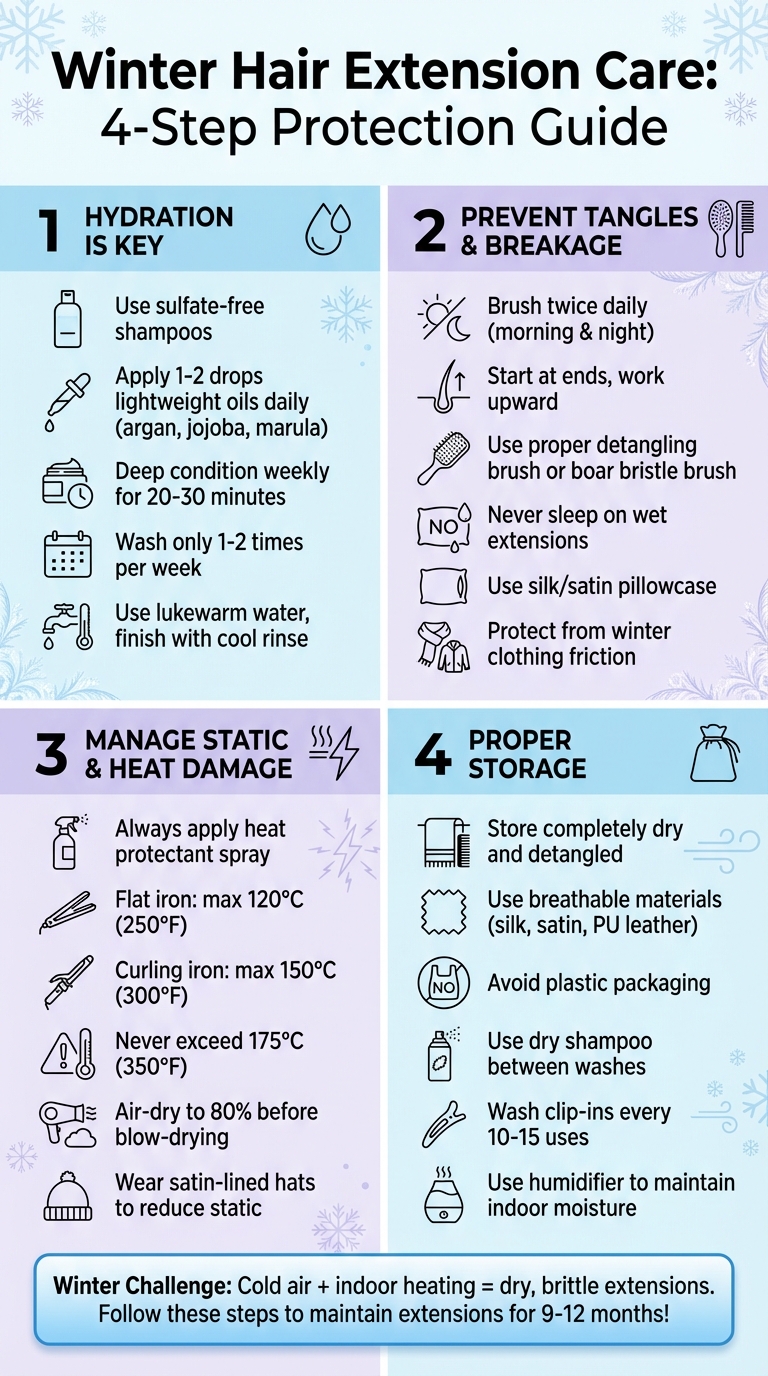
Winter Hair Extension Care: 4-Step Protection Guide
Keeping Extensions Hydrated in Winter
Keeping your extensions hydrated is crucial during the colder months. Unlike natural hair, extensions don’t benefit from the scalp's natural oils, making them especially susceptible to the drying effects of winter weather and indoor heating systems. As Viola Hair Extensions points out:
Cold air holds less moisture, which can lead to your hair becoming dry and brittle. Indoor heating systems also contribute to the problem by stripping moisture from the air.
If not properly hydrated, extensions can become brittle, lose their shine, and tangle easily - shortening their lifespan. The good news? With the right care, you can protect your extensions and keep them looking their best.
Choose Sulfate-Free Products
Sulfates can strip away the moisture your extensions desperately need during winter. That’s why switching to sulfate-free shampoos and conditioners is essential. When washing, stick to lukewarm water rather than hot, as high temperatures open the hair cuticle, allowing moisture to escape. Focus the shampoo on your scalp, letting the lather naturally flow through the extensions. Finish with a cool rinse to seal the cuticle and lock in moisture. To avoid over-drying, experts recommend washing your extensions only 1–2 times per week during winter. After washing, it’s time to protect that moisture with hydrating oils.
Apply Lightweight Hydrating Oils
Lightweight oils are your winter defence against dryness. Use just 1–2 drops of a warmed oil like argan, marula, or jojoba and apply it to the mid-lengths and ends daily. This method keeps your extensions hydrated and shiny without weighing them down or making them greasy. Steer clear of applying oil near the attachment points (bonds, tapes, or rings) to avoid slippage. These oils act as a barrier, sealing in moisture while protecting against the drying effects of both the cold air outside and heated indoor environments.
Deep Condition Weekly
A weekly deep-conditioning treatment is a must to keep your extensions in top shape during winter. Apply a hydrating mask to the mid-lengths and ends, leaving it on for 20–30 minutes. For better absorption, wrap your hair in a warm towel before rinsing with cool water to seal the cuticles. Keep the mask away from attachment points to prevent slippage. After rinsing, gently blot your extensions with a microfibre towel - never rub - to avoid damage.
Preventing Tangling and Breakage
Winter hair care isn’t just about keeping your locks hydrated - it’s also about keeping tangles and breakage at bay. The cold season brings unique challenges, like increased hair porosity from chilly winds and friction caused by winter clothing. Scarves, high-collared coats, and wool jumpers can lead to matting, especially around the nape of the neck. To combat these issues, it’s essential to use the right tools and techniques.
Use a Proper Detangling Brush
The right brush can make all the difference when it comes to preventing tangles. Tools like the Hair Wonderland Tangle Tamer Brush ($21.95) or The Detangle Brush ($29.95) are designed to glide smoothly over your hair without snagging. Boar bristle brushes are another great option - they help distribute natural oils, reducing frizz and minimising matting. When brushing, start at the ends and work your way up, supporting the hair above to protect the bonds. For weft or tape-in extensions, take extra care by separating each row and brushing gently between them to avoid matting at the base. Keep a travel-sized brush in your bag during winter for quick touch-ups after facing the elements.
Protect Extensions While Sleeping
Night-time friction can wreak havoc on extensions. As Goldie Locks explains:
The friction of rolling your head back and forth while sleeping can cause matting from the weft hairs and also cause your roots and natural hair to get tangled, or worse, breakage - especially if they are wet!
To avoid this, never sleep on wet extensions. Instead, loosely tie your hair back before bed and opt for a silk or satin pillowcase. These materials reduce friction and help your hair retain moisture, making mornings much easier when it’s time to detangle.
Brush Only When Needed
Over-brushing can lead to breakage, so it’s best to keep it to a minimum. Aim to detangle twice a day - once in the morning and again at night - and always after removing winter layers. Stick to brushing dry hair, as wet extensions are more prone to damage. If you need to detangle wet extensions, use a wide-tooth comb for a gentler approach.
Managing Static and Heat Damage
Once hydration and detangling are under control, it’s just as important to shield your extensions from static and heat damage. Winter brings its own set of challenges - dry outdoor air and heated indoor spaces can rob your extensions of moisture, leaving them brittle and prone to static and heat-related issues.
Apply Heat Protectant Before Styling
Heat styling tools can get dangerously hot, often exceeding 200°C, which can wreak havoc on damp extensions. Before using any heat tool, always apply a heat protectant spray to the mid-lengths and ends of your hair. This creates a protective barrier that helps minimise thermal damage. Be cautious not to spray near the roots, as this can interfere with bonds or tapes.
Wear Satin-Lined Accessories
Winter fabrics like wool, fleece, and cotton can cause static, but you can reduce this by switching to satin- or silk-lined hats. These materials help your extensions retain moisture. As KOVI Hair notes:
Static happens when your hair is dry! Combat it with leave-in conditioner, hair oils, or serums.
Another quick fix? Gently run a dryer sheet over your hair to neutralise static charges.
Use Lower Heat Settings
Winter dryness makes high heat especially risky for extensions. Stick to lower temperatures: keep your flat iron at about 120°C (250°F), your curling iron around 150°C (300°F), and never exceed 175°C (350°F). Lower heat settings help prevent further drying and damage. If you’re using a blow dryer, let your extensions air-dry to about 80% first to minimise heat exposure.
sbb-itb-dcde78e
Proper Storage and Maintenance
With hydration, detangling, and heat protection sorted, proper storage is the final step to ensure your extensions stay flawless throughout winter.
Taking the time to store your extensions correctly isn't just about keeping things organised - it’s about protecting them from the harsh conditions that winter can bring.
Store in a Protective Bag
Before putting your extensions away, make sure they’re detangled and completely dry. Any lingering moisture can lead to mould or mildew, which can ruin your extensions beyond repair. Once prepped, store them in a specialised storage bag, like the Hair Wonderland Clip In Bag ($54.00). These bags keep your extensions neatly organised and shield them from dust, moisture, and friction, helping to maintain their quality and prevent frizz.
Avoid using plastic packaging, as it traps moisture and can lead to damage. Instead, choose breathable materials like silk, satin, or PU leather. These materials not only prevent static but also help keep your extensions in great condition.
Use Dry Shampoo Between Washes
Winter air is already dry, so over-washing your extensions can strip away the moisture they need. To keep them fresh without constant washing, apply dry shampoo at the roots. This absorbs excess oil and adds a bit of texture, letting you go longer between washes. For clip-in extensions, washing every 10–15 uses is usually enough - especially during winter when the environment is already working against you.
Control Indoor Humidity Levels
While central heating is fantastic for staying warm, it’s not so great for your extensions. The dry air it creates can leave your extensions brittle and prone to breakage. To combat this, consider using a humidifier in rooms where you store or wear your extensions. It helps maintain moisture in the air, which in turn keeps your extensions hydrated.
As HairClub explains:
Indoor heating creates dry air that can dehydrate your hair and scalp. Using a humidifier at home can replenish moisture in the air, helping your hair retain hydration and reducing static.
Conclusion
Taking consistent care of your extensions is key to keeping them looking polished throughout the winter months. Simple steps like staying hydrated, detangling gently, controlling static, and storing them properly can make a big difference. Winter's cold air and indoor heating can be tough on extensions, but a regular routine - including weekly deep conditioning, using the right tools, and protecting against heat and friction - can help safeguard their quality. Don't forget that maintaining indoor humidity can also prevent brittleness and breakage, keeping your extensions in great shape.
Hair Wonderland offers products designed to support your winter care routine. The Tangle Tamer Brush ($21.95) and Clip In Bag ($54.00) are just two examples of their dedication to quality. Their double-drawn Russian/Mongolian human hair extensions are made to last 9 to 12 months with proper care. These tips and tools ensure your extensions stay beautiful and durable throughout the season.
As Hair Wonderland wisely says:
"If you show your extensions some love and care, they'll last longer – but since extensions aren't attached to your scalp, they miss out on all those natural oils and nutrients your hair normally gets."
With the right care, your extensions will continue to look flawless, no matter how harsh the winter weather gets.
FAQs
How often should I wash my hair extensions in winter?
To keep your hair extensions in top condition during winter, aim to wash them every 3 to 4 days. Overwashing can strip away essential moisture, leaving the hair prone to dryness and static.
When it’s time to wash, reach for a gentle, sulphate-free shampoo. Focus on cleansing the lengths of the hair while steering clear of the bonds to prevent weakening them. After shampooing, apply a nourishing conditioner to the mid-lengths and ends - where hydration is needed most. When drying, gently pat your hair with a towel instead of rubbing, as this helps minimise tangling. If possible, let your hair air-dry naturally. If you’re in a rush, use a blow-dryer on a low-heat setting to avoid heat damage.
This routine helps lock in moisture, protects against winter wear and tear, and keeps your extensions feeling soft and looking healthy.
What oils are best for keeping hair extensions hydrated during winter?
To keep your hair extensions soft, shiny, and well-hydrated during the colder months, consider using lightweight, nourishing oils. Argan oil is a standout option thanks to its ability to moisturise and protect. For an extra boost of hydration, you can pair it with ingredients like avocado oil or shea butter, which add even more softness and shine.
When applying oils, use them sparingly and focus on the mid-lengths and ends of your extensions. This prevents them from feeling heavy or greasy. Regular application can help counteract the dryness caused by chilly weather and indoor heating, leaving your extensions smooth, silky, and easy to manage throughout the season.
How can I stop static in my hair extensions during winter?
Static in hair extensions during winter often happens due to the dry, cold air and the friction caused by hats, scarves, or even frequent brushing. To keep your extensions looking their best, focus on keeping them hydrated and reducing unnecessary friction.
Start with a sulphate-free, moisturising shampoo and conditioner to lock in moisture. Adding a weekly treatment like a leave-in conditioner or deep-conditioning mask can also work wonders in keeping your extensions hydrated. When it comes to brushing, choose a natural-bristle brush or a wide-tooth comb - plastic combs tend to create more static. If you're wearing hats or scarves, smooth your extensions beforehand and stick to fabrics like cotton or silk, which are gentler and less likely to cause friction.
For added defence against static, try a light anti-static spray or a silicone-based serum. These products can help neutralise static without making your extensions feel heavy. Another great tip? Use a small humidifier indoors, set to around 40–50% humidity. This helps balance the dry air and keeps your extensions smooth and natural-looking all winter long - perfect for the Australian chill.