


Hair extensions require special care to maintain their look and longevity. Unlike natural hair, extensions don’t get natural oils from the scalp, making them prone to dryness and damage if not handled properly. Here’s the essential guide to washing your extensions safely:
- Use the Right Products: Choose sulphate-free, silicone-free, and alcohol-free shampoos and conditioners. Look for hydrating ingredients like argan oil or aloe vera. Avoid oils near tape or bond adhesives.
- Detangle Before Washing: Always detangle extensions when dry, starting from the ends and working upward. Use loop brushes or wide-tooth combs to avoid breakage.
- Wash Gently: Use lukewarm water, apply shampoo at the roots, and let it run down the lengths. Avoid scrubbing or circular motions to prevent tangling.
- Condition Correctly: Apply conditioner only to the mid-lengths and ends. Keep it away from roots and bonds to avoid slippage.
- Dry Carefully: Pat extensions dry with a microfiber towel. Air drying is best, but blow-dry roots on low heat if using tape-ins or bonded extensions.
- Storage: Store clip-ins flat or in a dedicated bag, and loosely braid permanent extensions before bed to prevent tangling.
Stick to these steps, and your extensions can last up to six months or more. Proper care is key to keeping them soft, shiny, and damage-free.
Selecting Products for Hair Extensions
Why Regular Shampoos Damage Extensions
Regular shampoos might work well for natural hair, but they can wreak havoc on extensions. The main issue lies with sulphates - commonly listed as SLS or SLES on ingredient labels. These cleansing agents are designed to strip oils from the hair. While this is fine for natural hair, which benefits from the scalp's natural oils, extensions don’t have that luxury.
"Sulphates strip the hair of moisture, and since extensions don't receive natural oils from your scalp, they need all the hydration they can get." - Heather Collier, Cliphair
Another culprit is silicone, which can build up over time and leave extensions feeling greasy, heavy, and lifeless. Worse yet, removing this buildup often requires harsher products, which can lead to further damage. Avoiding these ingredients is key to keeping your extensions in top condition.
What to Look for in Hair Care Products
Given the risks posed by standard shampoos, it’s essential to choose products that nurture rather than harm. The golden rule? Stick to formulas that are free from sulphates, silicones, and alcohol. High alcohol content is especially harmful to colour-treated extensions, as it can lead to dullness and brittleness. Additionally, avoid products with excessive protein or keratin. While these ingredients can strengthen natural hair, they often make extensions stiff and difficult to manage after just one use.
Instead, opt for products rich in hydrating ingredients like:
- Argan oil
- Coconut oil
- Aloe vera
- Shea butter
- Avocado oil
These natural ingredients help replenish moisture without weighing down the hair or compromising adhesive bonds. However, if you have tape-in or bonded extensions, steer clear of oil-based products, as they can weaken the adhesives holding your extensions in place.
Products Made for Extensions
To truly care for your extensions, consider using shampoos and conditioners specifically designed for them. These products are formulated with the unique needs of extensions - or "dead hair" - in mind. They’re typically free from sulphates and parabens, prioritising moisture retention over harsh cleansing. This means they’re gentle on the hair cuticle while still effectively removing buildup and environmental residue.
Investing in extension-specific products isn’t just about maintaining appearance - it’s about protecting your overall investment. Proper care extends the life of your extensions, saving you from the cost of premature replacements. In fact, many salons require clients to use professional-grade products to maintain warranty coverage during the first six weeks of wear.
sbb-itb-dcde78e
Preparing Extensions Before Washing
How to Detangle Extensions
Always detangle your extensions when they’re dry to avoid common hair extension problems like knots or breakage. Start at the ends and work your way up toward the roots - this method prevents stubborn tangles from forming. For installed extensions, support the bonds by gently holding the roots as you brush.
Choose the right tools for the job. Loop brushes with circular bristles are ideal for gliding over bonds, clips, or tape without snagging. Wide-tooth combs and soft-bristle brushes also work well for initial detangling, helping to minimise pulling and reduce breakage. Brands like Hair Wonderland even offer specialised detangling brushes, such as the Tangle Tamer Brush ($21.95) and The Detangle Brush ($29.95), designed specifically for extensions.
If you’re working with clip-in extensions, stack the wefts together before washing to keep them from tangling. Once detangled, you’re ready to move on to washing - but timing that first wash is key to maintaining your extensions.
When to Wash After Installation
For tape-in or bonded extensions, it’s best to wait 48–72 hours before washing them for the first time. This waiting period allows the adhesive bonds to fully set, reducing the risk of slippage and ensuring your extensions stay secure for longer. Washing too early can weaken the bonds, potentially shortening the lifespan of your extensions.
Clip-in extensions, however, are ready to use straight out of the box and don’t require a pre-use wash. Once you start using them regularly, only wash them when there’s noticeable product build-up - this usually happens after 10–30 wears, depending on use.
How to Wash Hair Extensions
Using the Right Water Temperature
When washing extensions, lukewarm water is your best bet. Stick to a range of 32–38°C - it should feel warm but not overly hot. Hot water can rob the hair of moisture and weaken adhesives like those used in tape-ins and keratin bonds. On the other hand, cold water isn't strong enough to break down oils or product build-up during washing. However, a cool rinse at the very end is a great way to seal the cuticles and add shine.
"It's best to wash hair extensions with lukewarm water. Hot water can strip moisture and damage the extensions, while cold water may not effectively remove product build-up, however, a cool rinse at the end is great to seal the hair cuticles to enhance shine." - Heather Collier, Author, Cliphair
Applying Shampoo Correctly
When shampooing, focus on the roots and let the lather naturally run down the hair. Avoid scrubbing in circular motions, as this can cause tangling and damage to bonds or tapes. If you're dealing with permanent extensions, shampooing twice at the roots can help clean between tapes or wefts more effectively.
"When shampooing, always start at the roots and carefully work the shampoo downward through the hair. Do not scrub, or rub the hair in a vigorous circular motion while shampooing." - Cosmetic Capital
For clip-ins, remove them first and wash each weft individually. This prevents the clips from snagging or causing damage. After shampooing, follow up with conditioner to replenish moisture.
How to Condition Extensions
When conditioning, stick to the mid-lengths and ends of the hair. Avoid applying conditioner near the roots or attachment points, as it can cause extensions to slip or loosen.
"Never apply conditioner or masks near tapes, wefts, or bonds, as this can cause slipping." - EH Hair & Extensions
Let the conditioner sit for a few minutes so the hair can absorb it, then rinse thoroughly. If you're using a deep conditioning mask, take extra care to rinse out any residue to avoid a greasy finish.
Rinsing Out Products
Rinse the extensions by letting lukewarm water flow downwards from roots to ends. Extensions are often thicker than natural hair, so you might need to rinse a bit longer to ensure all product residue is gone. Keep rinsing until the water runs completely clear.
"Extensions need a little longer than natural hair due to their thickness. Finally, always ensure that the water is clear before finishing up!" - Heather Collier, Cliphair
Wrap up with a quick cool water rinse to seal the cuticles and give the hair a glossy finish. For clip-ins, rinse each weft separately to ensure every strand is properly cleaned.
Drying and Caring for Extensions After Washing
How to Dry Extensions Gently
After rinsing, carefully press out excess water - avoid wringing or twisting the hair. Use a towel to pat the extensions dry, and for best results, opt for a microfiber towel. These are great because they absorb water quickly while being gentle on the hair cuticle.
"Blot – don't rub – your extensions with a towel to remove excess water."
– Heather Collier, Cliphair
For clip-in extensions, lay each weft flat on a clean surface before patting them dry. This helps avoid unnecessary pulling on the strands. If you're working with tape-in or bonded extensions, focus on drying the roots and adhesive areas first. Leaving these sections wet for too long can weaken the bonds.
Air Drying vs Heat Drying
Air drying is the gentlest way to maintain your extensions' texture and longevity. Lay the wefts flat on a towel or use an extension hanger, allowing them to dry naturally. However, if you’re dealing with tape-ins or glue-bonded extensions (like U-tips), blow-drying the roots and bonds is essential. This step prevents the adhesive from breaking down, even if you air-dry the rest of the hair.
When blow-drying, always use a heat protectant (suitable for up to 232°C). Stick to low or medium heat settings, and keep the dryer moving to avoid overheating the bonds. Direct the airflow from roots to ends to smooth the cuticle and minimise frizz. Before brushing, let the extensions dry at least 80–90% to prevent damage like stretching or snapping.
"Never go to bed with wet hair!"
– Hair Wonderland
To maintain a silky finish, apply a small amount of argan, coconut, or kukui nut oil to the mid-lengths and ends. Once fully dry, proper storage is key to keeping your extensions in great condition.
Storing Extensions After Washing
When your extensions are completely dry, make sure to store them correctly to maintain their texture and shape. For clip-ins, a dedicated storage bag like Hair Wonderland's Clip In Bag ($54.00) is a great option. These bags are designed to keep extensions safe during storage or travel. Alternatively, lay the wefts flat or hang them on an extension hanger to prevent tangling.
Keep your extensions in a cool, dry, and shaded place to avoid brittleness or fading. If you have permanent extensions, consider loosely braiding your hair or wrapping it in a silk scarf before bed. This simple step helps prevent matting and keeps your extensions looking their best.
How to Wash Hair Extensions
How Often to Wash Different Extension Types
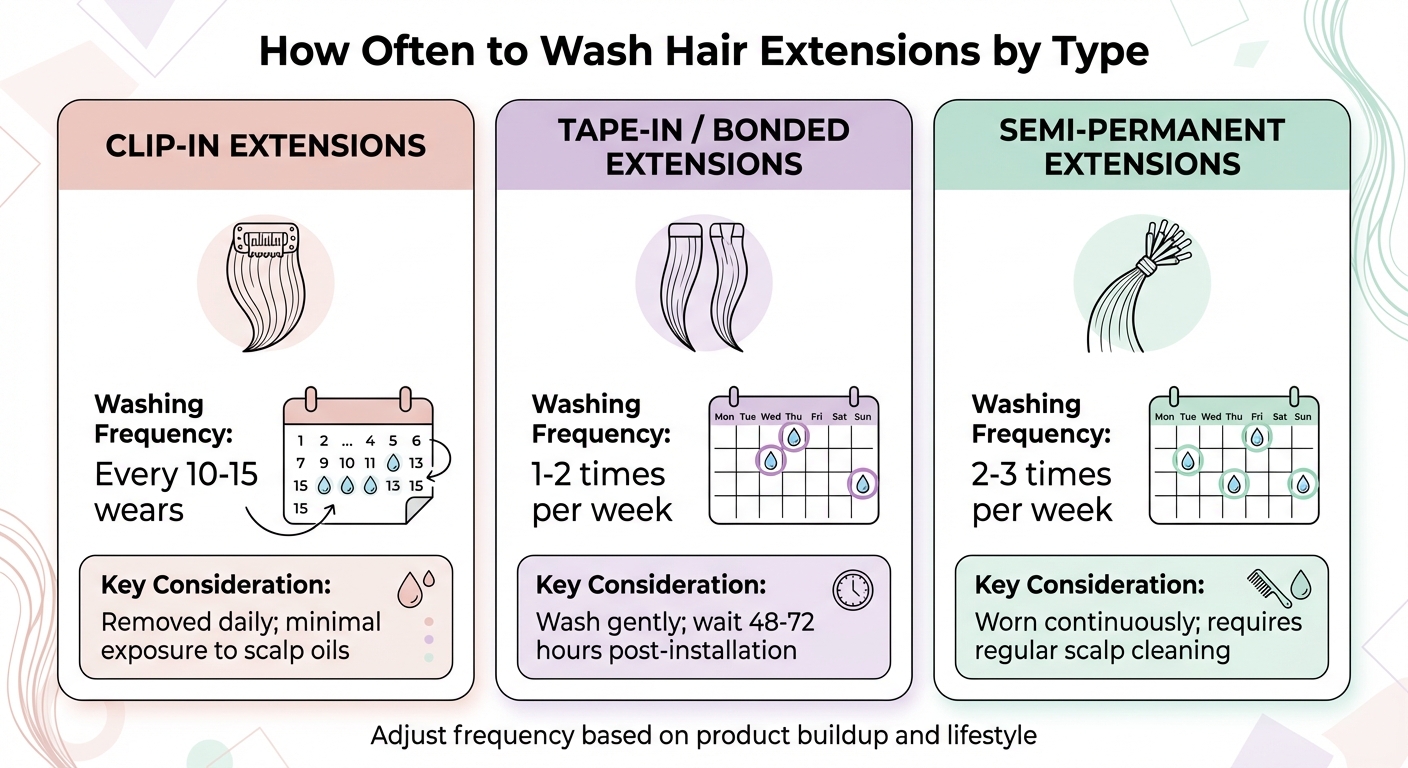
Hair Extension Washing Frequency Guide by Type
Caring for your extensions properly includes knowing how often to wash them. This depends on the type of extensions you have and how much contact they have with your scalp. Generally, clip-ins need less frequent washing compared to extensions that are worn continuously, like tape-in or semi-permanent styles. Adjusting your washing routine based on the type of extensions can help maintain their quality and longevity.
Clip-In Extensions
Clip-in extensions should be washed every 10–15 wears. Since they are removed before bed, they avoid prolonged exposure to your scalp's natural oils. However, if they start to feel heavy, look dull, or become harder to style, it’s likely time for a wash. Learning how to blend extensions with natural hair can also help maintain a seamless look between washes.
"A good guide is every 10–15 wears."
– EH Hair & Extensions
Tape-In or Bonded Extensions
For tape-in and bonded extensions, aim to wash them 1–2 times per week. If you work out frequently, you might need a quick 'half wash' to manage oil buildup. After installation, wait 48–72 hours before washing to allow the adhesive to fully set.
Semi-Permanent Extensions
Semi-permanent extensions, which are worn continuously, need washing 2–3 times per week to keep your scalp clean. If you notice buildup between washes, a dry shampoo can help.
| Extension Type | Recommended Washing Frequency | Key Consideration |
|---|---|---|
| Clip-In | Every 10–15 wears | Removed daily; minimal exposure to scalp oils |
| Tape-In / Bonded | 1–2 times per week | Wash gently; wait 48–72 hours post-installation |
| Semi-Permanent | 2–3 times per week | Worn continuously; requires regular scalp cleaning |
Extension Care in Special Situations
Taking care of your extensions in unique situations calls for some extra attention and specific techniques to ensure they stay in great condition. Activities like swimming and alternative washing methods require a bit of extra thought to avoid unnecessary damage.
Protecting Extensions While Swimming
Swimming, whether in chlorinated pools or the ocean, can be tough on extensions. Chlorine and salt water strip away moisture, leaving hair dry and brittle. Salt water, in particular, is tricky because as it dries, salt crystals are left behind, pulling even more moisture out of the hair. These elements can also weaken the bonds in tape-ins or U-tips, leading to potential damage over time.
"Saltwater is particularly aggressive on natural hair and extensions. It is not necessarily swimming or diving in saltwater itself that is damaging but rather the subsequent drying process."
– hair2heart
To minimise damage, start by gently detangling your extensions before swimming. This step ensures your hair is prepped and ready. Next, apply a leave-in cream or a protective serum to form a barrier against harsh chemicals. Secure your hair in a low, loose plait instead of tight buns or top knots, which can cause tangling and matting.
After swimming, rinse your hair thoroughly with fresh water as soon as possible. Follow up with two rounds of shampoo to remove any lingering residue, then apply a deep conditioner to replenish moisture. If you have glue-bonded extensions, make sure to blow-dry the attachment points right away to prevent the adhesive from breaking down.
For additional protection beyond swimming, consider alternative washing methods like co-washing.
Co-Washing Extensions
Co-washing is a gentler way to clean your extensions, using a conditioner instead of shampoo to maintain moisture while avoiding harsh stripping effects. Opt for a sulfate- and alcohol-free conditioner, applying it only to the mid-lengths and ends of your extensions. Avoid the bonds to keep them intact, and finish with a cool rinse to seal the hair cuticles.
If your extensions feel particularly dry, treat them with a deep conditioning mask, leaving it on for 5–10 minutes before rinsing. This step helps restore softness and texture, keeping your extensions looking and feeling their best.
Conclusion
Washing your extensions requires a bit of care, but the basics are simple: detangle thoroughly, use lukewarm water with sulphate-free products, apply conditioner only to the mid-lengths and ends, and make sure attachment points are completely dry. These steps, as outlined earlier, are key to protecting your investment and keeping your extensions in great condition for months.
Beyond washing, proper maintenance is essential for preserving the quality of your extensions. Since extensions are essentially "dead hair", they depend on external moisture from high-quality conditioners and treatment oils to stay soft and manageable. Whether you’re looking after clip-ins, tape-ins, or semi-permanent extensions, these tips apply. Clip-ins typically need washing after 10–15 wears, while permanent extensions should be cared for 2–3 times a week. A consistent routine makes all the difference.
Post-wash care is equally important. Gently blot your extensions with a microfibre towel, and blow-dry the roots and attachment points using low-to-medium heat. These steps, as discussed earlier, help maintain the integrity of your extensions. With the right care, premium Remy human hair extensions can last six months or more.
FAQs
How often should I wash my hair extensions to keep them in great condition?
It’s generally best to wash your hair extensions once or twice a week. Unlike your natural hair, extensions don’t get the benefit of your scalp’s natural oils, so over-washing can leave them dry and brittle. By washing them less often, you’ll help preserve their softness and extend their lifespan.
How often you wash them can vary based on your lifestyle. If you work out frequently or use a lot of styling products, you might need to clean them more often. Just make sure to use gentle methods and products specifically made for extensions to keep them looking and feeling great.
What are the best products for washing hair extensions without damaging them?
To keep your hair extensions in top condition, stick to sulphate-free and paraben-free shampoos and conditioners. These gentle products help preserve the quality of your extensions by reducing dryness and preventing damage. For example, RPR Extension Envy Shampoo and Conditioner are tailored for Australian hair extensions, offering hydration and shine while protecting the fibres.
Other reliable brands include Davroe, R+Co, Olaplex, and Eleven Australia. These are specially designed for extension care, helping to keep them soft, tangle-free, and long-lasting. Always opt for products made specifically for extensions to maintain their look and feel.
Is it safe to swim while wearing hair extensions?
Swimming with hair extensions isn’t off-limits, but it’s not ideal either. Chlorine, saltwater, and other chemicals can weaken the bonds and reduce the life of your extensions. If you do decide to swim, wearing a swim cap or tying your hair up can help limit exposure.
Once you’re out of the water, rinse your extensions thoroughly with fresh water to wash away chlorine or salt. Use a sulphate-free shampoo and conditioner to gently cleanse and hydrate them. These simple steps can go a long way in keeping your extensions looking their best for longer.