


Hair extensions can transform your look, but they need proper care to stay in good condition. Following a daily care routine is the first step. While daily brushing and washing help, professional maintenance is crucial to prevent damage, extend their lifespan, and protect your natural hair. Here’s when you should see a professional:
- Attachment Issues: Loose bonds, slipping tape, or grown-out extensions (over 2.5 cm from the scalp) can cause tension and damage.
- Shedding or thinning: Excessive hair loss or thinning near attachment points signals a problem.
- Tangling or Matting: Severe knots, especially at the roots, require expert detangling and re-sectioning.
- Colour Fading: Uneven, brassy tones or mismatched colours need professional correction.
- Product Buildup: Dull, stiff extensions often need a deep clean to restore their look.
Regular maintenance appointments every 4–10 weeks (depending on the extension type) ensure your extensions stay secure and look great. Australia's climate can also require seasonal adjustments, like hydration in dry months and anti-humidity treatments in summer. Proper care saves you time, money, and potential hair damage in the long run.
6-week Hair Extensions Maintenance: Remove & Reapply (Step-by-Step)
sbb-itb-dcde78e
Signs Your Extensions Need Professional Care
Keeping an eye on your extensions can help you catch problems early. But when at-home care just isn’t cutting it, it’s time to call in the experts. If you notice any of the following warning signs, it’s a good idea to book a salon appointment.
Damage to Extensions or Attachment Points
Take a moment to inspect your extensions closely. Look for split or frayed ends, a straw-like texture, or a loss of curl. For semi-permanent extensions, pay attention to the attachment points. Are the keratin bonds fraying? Is the tape adhesive slipping? Or perhaps the extensions have grown out more than 2.5 centimetres from your scalp? If so, they’re overdue for professional care. Extensions that grow out too far can create extra tension on your roots, potentially causing damage.
Also, if you’re experiencing redness, inflammation, or tenderness that lasts longer than 48 hours, it’s time to see your stylist. And whatever you do, don’t try to remove professional extensions on your own. The adhesives used require special solutions to be safely removed without harming your natural hair.
If these issues are ignored, they can lead to further complications, such as hair loss or damage, which ties into the next concern.
Heavy Shedding or Loss of Volume
It’s normal to lose 50 to 100 natural hairs daily, but if you’re spotting large clumps or noticing thinning near the attachment points, something’s wrong. A thinning extension weft or shortened overall length often signals that hair is shedding from the attachment point or breaking off. This kind of volume loss isn’t something to brush off - it needs a professional’s assessment. It could even indicate a type of hair loss caused by excessive pulling.
When shedding is combined with other warning signs, it’s a clear indication that your extensions need more than just basic home care.
Severe Tangling or Matting
If your extensions are tangling badly at the roots or forming “nests” where individual bonds knot together, it’s a sign you need professional help. Severe matting can’t be fixed with a standard extension brush or detangling tool. Attempting to do so yourself might even lead to cutting your natural hair by accident.
Daily shedding of natural hair can leave the sections supporting your extensions thinner, making them more prone to tangling. To prevent this, professionals recommend re-sectioning every 5–6 weeks - or every 4 weeks if your hair is finer. Matting can also be worsened by product buildup, which may require a deep clean along with professional detangling.
"If any issues arise that are beyond your control, please contact us immediately." – Hair Wonderland
If your usual tools aren’t doing the trick, it’s time to book a maintenance appointment. A stylist can re-section your extensions and ensure they’re properly placed on a suitable section of hair to avoid further issues.
When Home Care Isn't Enough
Sometimes, no matter how careful you are, certain issues with hair extensions require professional attention. Here are some situations where booking a salon appointment is the best course of action.
Loose or Damaged Attachment Points
Extensions that slip or fall out soon after installation often signal that their attachment points need professional reinstallation. You may notice small white dots at the base of your hair - these are signs that the weight of the extensions is pulling your natural hair out by the root. Sticky, heat-damaged, or porous keratin bonds also require expert re-bonding. Similarly, broken micro rings or lifted tape bonds can’t be securely fixed at home.
"If your hair falls out after a hair extension with your natural hair, quick action is required... Please have your extensions professionally removed immediately. Otherwise, hair damage and, in the worst case, bald spots can occur".
To avoid further damage, only a professional should adjust or reattach loose extensions. For tape extensions, scheduling professional move-up appointments every 8 to 12 weeks can prevent sagging bonds and reduce tension on your natural hair.
Colour Fading or Poor Colour Match
If your extensions seem persistently brassy despite using purple shampoo, or if the colour looks uneven with visible banding from prior treatments, it’s time for professional colour correction. Additionally, if you’ve changed your natural hair colour, your extensions will need adjustment - this may even require multiple sessions to ensure a seamless match. Avoid using box dye on extensions, as these products don’t account for the existing pigment layers and can lead to muddy or overly dark results.
"Color correction is not a single service. It is a customized process used to fix unwanted color results and bring hair back into balance".
Extensions often absorb colour more quickly due to their porosity, making professional application essential for achieving a consistent and natural look.
Product Buildup and Deep Cleaning
When extensions feel stiff, look dull, or show residue even after washing, they likely need a professional deep clean. Stylists use specialised remover solutions to clear adhesive or tape residue that regular products can’t dissolve. They also employ professional-grade clarifying shampoos to tackle stubborn buildup from minerals, heavy products, and environmental factors.
"Post-removal hair extension cleaning is an important step in ensuring that the extensions remain in good condition and can be used again in the future".
A deep cleaning not only restores the extensions' appearance but also helps maintain their longevity for future use.
How Often to Schedule Professional Maintenance
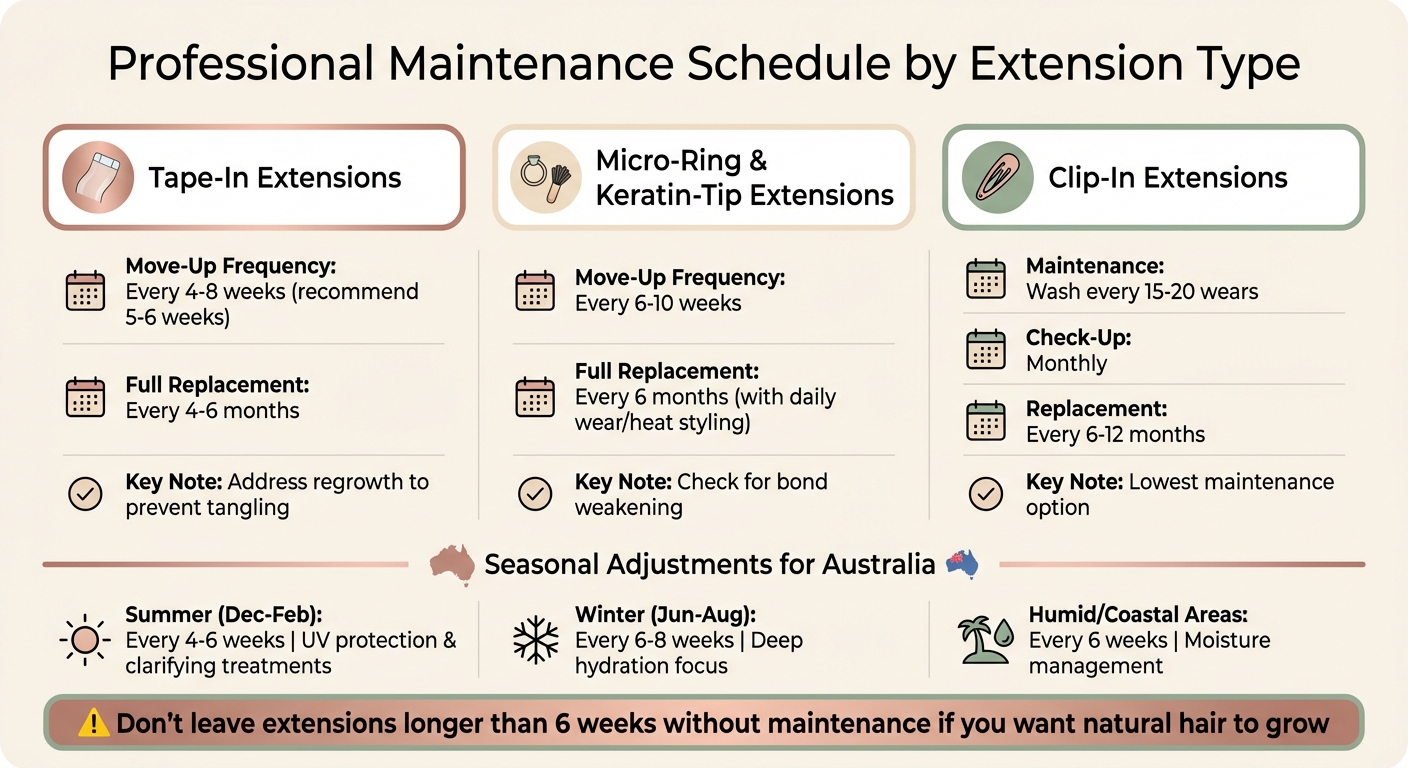
Hair Extension Maintenance Schedule by Type
Keeping up with regular professional appointments is essential for maintaining your extensions and prolonging their life. Each type of extension comes with its own maintenance schedule. For example, tape-ins typically require move-ups every 4–8 weeks, micro-ring and keratin-tip extensions need upkeep every 6–10 weeks, while clip-ins are much lower maintenance, needing a wash every 15–20 wears and a monthly check-up. Here's a closer look at the maintenance routines for different extension styles.
Move-Up Appointments
Move-up appointments are a must for keeping extensions looking seamless. These involve removing the extensions, cleaning off any adhesive residue, and reapplying them closer to the roots. This process helps address natural hair regrowth, which can create visible gaps and lead to tangling at the scalp. For tape-ins, experts recommend scheduling move-ups every 5–6 weeks to keep up with hair growth. Regular move-ups not only maintain your extensions' appearance but also help prevent damage. Skipping these appointments can lead to matting and may harm the natural hair supporting the extensions.
"If you want your natural hair to grow while wearing extensions, do not leave them in for longer than 6 weeks without maintenance." – Hair Wonderland
During these appointments, your stylist will also re-section your hair to ensure each extension is attached to a strong enough section of hair. This is crucial because daily shedding can reduce the density of hair in the attachment areas over time.
When to Replace Extensions Completely
Even with diligent care, extensions have a limited lifespan. Tape-ins typically need replacing every 4–6 months, while clip-ins can last 6–12 months if cleaned and stored properly between uses. Factors like daily wear, heat styling, and swimming can shorten these timeframes. During maintenance visits, your stylist will check for signs of wear, such as breakage at the ends from improper brushing or weakened bonds caused by product buildup. While higher-quality extensions tend to last longer, frequent styling may still mean replacing them every 6 months. Keep in mind that extensions are made from "dead hair" and don't receive nutrients from your scalp, so they require extra care to stay in good condition.
Seasonal adjustments can also help protect your extensions from environmental stressors, ensuring they look their best year-round.
Adjusting Care for Different Seasons
Australia's diverse climate means you might need to tweak your maintenance routine depending on the season. During the summer months (December–February), it's a good idea to book appointments every 4–6 weeks. The heat can accelerate colour fading and dryness, so your stylist might use UV-protectant treatments and clarifying shampoos to remove sweat buildup. In winter (June–August), slightly longer intervals of 6–8 weeks are often fine, with an emphasis on deep hydration to counteract the effects of low humidity and indoor heating.
If you're in humid coastal areas or experiencing Queensland's wet season (November–April), it's wise to stick to 6-week intervals. This helps manage the impact of excess moisture, which can cause tape-ins to slip or lose their hold. Adapting your care routine to the changing seasons can make a big difference in keeping your extensions looking flawless and feeling secure.
Conclusion
Knowing when to seek professional care is key to maintaining both your extensions and your natural hair. Be on the lookout for warning signs such as attachment damage, excessive shedding, severe tangling, loose bonds, colour fading, or noticeable product buildup. While daily brushing and using sulphate-free shampoo are great for at-home care, some issues - like adjusting bonds, deep cleaning, or repositioning - require a professional touch.
Taking action early makes a difference. Clients who schedule regular check-ups often enjoy healthier hair with less shedding, making the most of their investment in quality extensions. Stylists often emphasise that skipping maintenance can lead to problems like matting or slippage. Regular visits ensure your extensions stay flawless and help you avoid unnecessary expenses down the road.
"If you want your natural hair to grow while wearing extensions, do not leave them in for longer than 6 weeks without maintenance." – Hair Wonderland
Hair Wonderland’s premium double-drawn Russian and Mongolian extensions, combined with expert care, offer a seamless, durable, and comfortable look. With proper maintenance, these extensions can handle challenges like UV exposure, mineral buildup, and heat - perfect for Australia's demanding climate.
FAQs
Can I remove my extensions at home?
Yes, you can take out your extensions at home, but it’s crucial to handle the process with care to avoid causing any harm or discomfort. Use gentle techniques and the right tools for the job. If your extensions need a specialised removal method or you’re unsure how to proceed, it’s always a good idea to seek help from a professional to avoid any potential damage or complications.
What should I do if my scalp is sore or red?
If your scalp feels sore or looks red, it's important to take action quickly to prevent complications. Start by consulting a professional or dermatologist who can evaluate the condition of your scalp. Avoid scratching the area or using harsh products, as these can worsen the irritation. Instead, focus on gentle care that's safe for any extensions you may have. Keeping your scalp clean is key, so maintain good hygiene and keep an eye on the irritation. If the redness or soreness doesn’t improve, seek professional guidance to avoid potential infections or further damage.
How do I adjust my extension care for Aussie summer and winter?
To keep your extensions looking their best during the Australian summer, it's essential to guard them against the harsh sun and heat. Prolonged exposure can lead to dryness, so opt for lightweight hydrating products and ensure you wash your extensions regularly to remove sweat and dirt.
When winter rolls around, the focus shifts to maintaining moisture. Deep conditioning treatments and nourishing serums can work wonders in combating the dryness caused by cold winds and indoor heating. Throwing on a hat or wrapping a scarf around your hair can also offer extra protection from the elements.
By adjusting your care routine to suit the season, you can keep your extensions soft, smooth, and easy to manage all year long.