


Hair extensions are delicate and require extra care, especially when using heat styling tools. Without proper protection, high temperatures can damage extensions, leaving them dry, brittle, and frizzy. Heat protectants act as a shield, reducing the impact of heat and maintaining the quality of your extensions. Here's what you need to know:
- Why Protectants Matter: Extensions lack natural oils, making them more prone to damage. A good heat protectant prevents breakage, locks in moisture, and ensures even heat distribution.
- Key Ingredients: Look for silicones (like dimethicone), natural oils (argan, jojoba), and hyaluronic acid for hydration and protection. Avoid products with protein, keratin, sulfates, or high alcohol content.
- Application Tips: Apply to clean, dry extensions, focusing on mid-lengths and ends. Keep products away from bonds or tapes to avoid weakening adhesives.
- Safe Temperatures: Use styling tools below 190°C and ensure extensions are completely dry before applying heat.
Taking these steps can extend the life of your extensions while keeping them smooth and manageable.
Hairdresser’s Guide to Using Heat Protectant Correctly
What to Look for in Heat Protectants
When it comes to hair extensions, not all heat protectants are created equal. Extensions don't benefit from the natural oils produced by the scalp, so they need products that not only guard against heat but also replenish moisture. Here's what to prioritise when selecting a heat protectant for your extensions.
Temperature Protection Levels
Choose a heat protectant that can handle temperatures of at least 230°C, as most styling tools operate within this range. Some professional-grade options even offer protection up to 240°C. However, using higher temperatures isn’t necessary. Salon educator Jordan Thomas emphasises:
"It's a myth that different hair types or textures need different temperatures. You don't. All you need is a consistent temperature of 185°C."
This temperature is ideal for styling while keeping extensions intact. Exceeding 130°C can start to alter hair pigments, which often leads to brassiness in blonde or lighter-toned extensions.
Beyond temperature ratings, the ingredients in the heat protectant are equally important for maintaining the health and appearance of your extensions.
Ingredients That Matter
Since extensions are essentially "non-living" hair, they depend entirely on the products you use to maintain their condition. Look for heat protectants containing natural oils like argan, jojoba, or avocado to restore moisture and add shine. Hyaluronic acid is another great ingredient, as it helps draw moisture into the hair shaft, reducing brittleness.
Silicones such as cyclomethicone or dimethicone are also beneficial. They create a protective layer around each strand, ensuring even heat distribution and sealing the cuticle. Additionally, products with UV filters or antioxidants like vitamin E can shield extensions from environmental damage and prevent colour fading.
On the flip side, avoid certain ingredients. As noted in Hair Wonderland's care guide:
"Avoid products containing: protein, keratin, sulfates, and high alcohol content. These can damage your extensions and make them unmanageable after just one use."
Products with protein, keratin, sulfates, or high alcohol levels can leave extensions stiff, dry, and difficult to style, ultimately shortening their lifespan.
Choosing Extension-Safe Formulas
The overall formulation of your heat protectant matters just as much as its temperature rating and ingredients. Extensions, especially tape-ins, are sensitive to sulfates, which can weaken adhesive bonds. Opt for sulfate-free products and lightweight formulas - fine mist sprays are ideal for even application without weighing down extensions. Some "quick dry" formulas are designed to cut blow-drying time by up to 50%, reducing heat exposure.
If you live in a humid area, look for humidity-resistant heat protectants that can shield your hair from up to 80% humidity. This helps maintain a smooth blend between your extensions and natural hair. When applying any heat protectant, focus on the mid-lengths and ends of your extensions, steering clear of the attachment points to avoid weakening the bonds or tapes.
Types of Heat Protectants
Picking the right heat protectant for your hair extensions depends on your styling habits and the condition of your extensions. Each type has its own perks, so understanding how they work can help you make the best choice for your hair.
Heat Protection Sprays
Sprays are lightweight and coat your hair evenly without making it feel heavy. They work well on both damp and dry hair, making them a great choice for quick heat styling. Aerosol sprays, in particular, offer a fine, dry mist and often come with "style memory" features to help curls stay intact for longer. Since extensions don’t produce natural oils like your own hair, they can struggle to hold styles, but thermal holding sprays can make a big difference. For daily touch-ups, a light spritz over sectioned hair can protect your extensions while keeping their volume intact. Just be sure to avoid spraying near bonds or tapes to prevent slippage.
For a more intensive approach to hydration and protection, creams and serums might be a better fit.
Creams and Serums
If a spray doesn’t provide enough moisture or protection, creams and serums step in with a thicker, more nourishing formula. Products like creams or lotions, often enriched with ingredients like hyaluronic acid or argan oil, are perfect for towel-dried hair. Focus on applying them to the mid-lengths and ends, where extensions are most prone to heat damage.
Serums and oils, on the other hand, deliver concentrated protection while adding shine and locking in moisture. Some "water-less" formulas even help combat frizz during straightening. These are especially helpful for extensions, as they replenish moisture that natural hair typically retains on its own.
However, the thicker texture of creams and serums can be a downside. While they’re excellent for nourishing dry or damaged extensions, it’s crucial to keep them away from the attachment points. This ensures your extensions stay secure while still getting the hydration and protection they need.
sbb-itb-dcde78e
How to Apply Heat Protectants
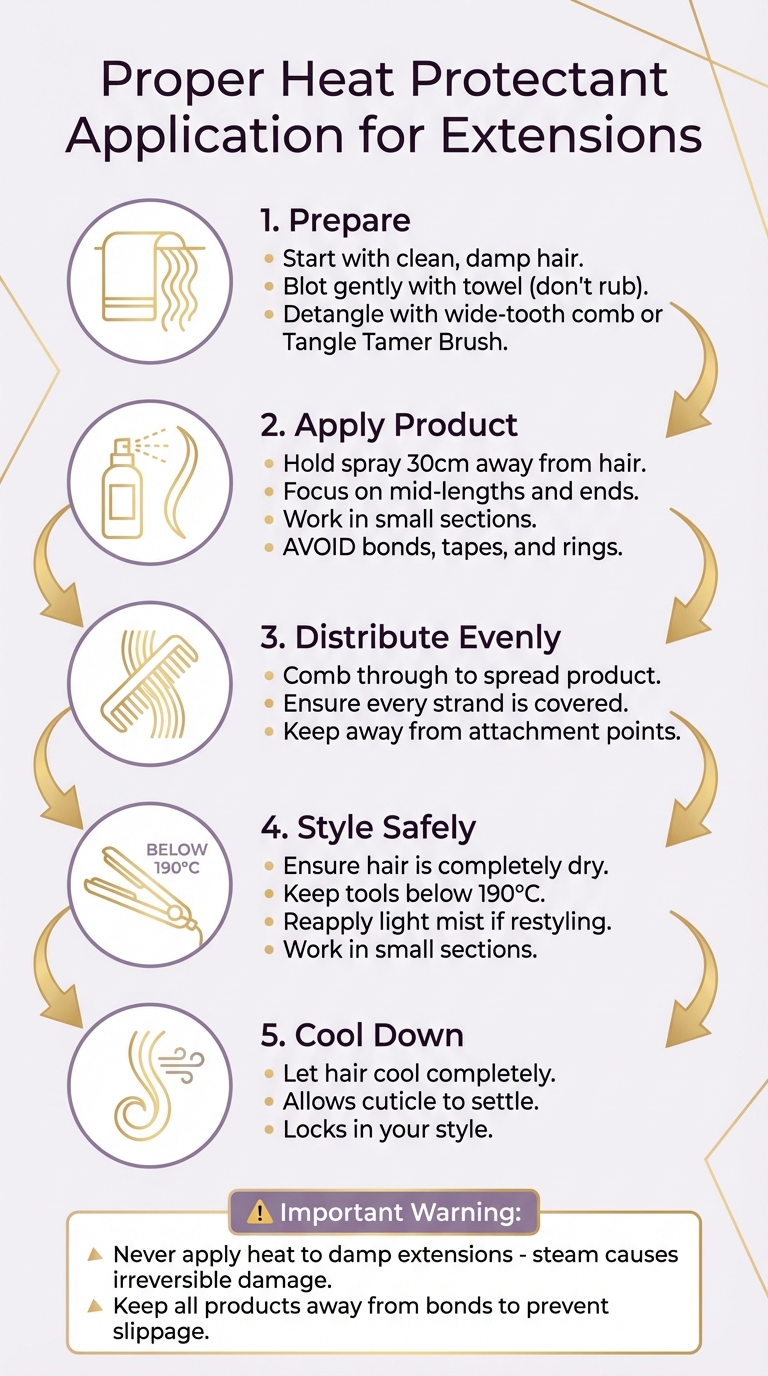
How to Apply Heat Protectant to Hair Extensions: Step-by-Step Guide
Getting the application right can mean the difference between keeping your extensions in top condition or dealing with heat-damaged hair. The trick? Be thorough and precise - apply the product where it’s needed while steering clear of the bonds.
Preparing Your Extensions
Start with clean, damp hair. After washing, gently blot your hair with a towel - don’t rub! Extensions are more fragile when wet since they lack the natural oils that protect your own hair from friction.
Before you use any product, detangle your extensions with a wide-tooth comb or the Hair Wonderland Tangle Tamer Brush ($21.95). This step helps prevent tangles from holding onto excess product. When applying your heat protectant spray, hold the bottle about 30 centimetres away to ensure a light, even mist instead of drenching one area. Focus on the mid-lengths and ends - these parts are more prone to dryness and damage. Work in small sections to make sure every strand is covered, then comb through again to spread the product evenly. Be careful to avoid the bonds, tapes, or rings altogether, as product buildup or moisture in these areas can weaken the adhesive or cause slippage.
"Heat protection prior to heat styling is essential to prevent damaged hair." - Debra, Salon Stylist, HAIRHOUSE Bendigo
Once your extensions are prepped, it’s time to pay attention to your heat settings.
Safe Styling Temperatures
For extensions, keep your styling tools below 190°C. This temperature range helps maintain the hair’s integrity while still allowing you to achieve your desired look. Just like careful preparation, monitoring your tool’s temperature is key to protecting your extensions. Always ensure your extensions are completely dry before styling, including the attachment points. Styling damp hair can cause trapped water to turn into steam, which can lead to irreversible damage .
If you’re transitioning from blow-drying to flat-ironing, lightly mist your now-dry hair with protectant again to maintain the barrier against heat. Work in small sections and avoid running your flat iron or curling wand over the same spot multiple times - extensions don’t bounce back from heat damage like natural hair can.
After Styling Care
Once you’ve finished styling, let your hair cool down completely before touching or manipulating it further. This helps the cuticle settle and locks in your style. When it’s time to wash your hair, stick to sulfate-free shampoos and conditioners - ideally every 2–3 days if you have permanent extensions. Sulfate-free products effectively remove styling residue without harming adhesives or weighing your hair down. Together, these steps help maintain the longevity and natural appearance of your extensions.
Conclusion
Taking care of your extensions is key to keeping them looking and feeling their best. Heat protectants are your first line of defence, creating a shield between your hair and styling tools to prevent damage. Extensions are especially prone to drying out and losing their quality when exposed to high temperatures, typically between 150°C and 200°C.
As RPR Hair Care explains:
"Heat styling can quickly shorten the lifespan of your hair extensions if not protected properly." – RPR Hair Care
Using the right heat protectant does more than just guard against heat. It helps retain moisture, prevents steam-related damage, and keeps Hair Wonderland's premium extensions smooth and silky. Without this protective layer, extensions can become frizzy, brittle, and hard to manage. These steps are essential to maintaining the techniques discussed earlier.
Key Takeaways
Here’s a quick recap of the essentials:
- Opt for heat protectants free from sulfates, high alcohol content, proteins, and keratin - these ingredients can harm Remy extensions, even after just one use.
- Apply heat protectant to damp hair, focusing on the mid-lengths and ends. Be careful to avoid bonds, tapes, or rings to prevent slippage.
- Keep styling tools below 180°C and ensure your extensions are completely dry before using high-heat tools like flat irons or curling wands.
- If restyling between washes, reapply a light mist of heat protectant to maintain its effectiveness.
Using quality products like Moisture Magic ($39.95) or RPR Protect My Hair ($28.95), combined with proper care, not only prevents damage but also extends the life of your extensions while keeping their natural look intact. Regular heat protection is also a must to maintain Hair Wonderland's 6-week service warranty, ensuring your extensions stay covered and looking flawless.
FAQs
What’s the best way to choose a heat protectant for hair extensions?
To keep your Hair Wonderland extensions in top condition, it's essential to pick the right heat protectant. Look for a lightweight spray made specifically for human-hair extensions. These sprays create a protective barrier that shields the delicate strands from heat damage while locking in moisture. Steer clear of formulas containing protein, keratin, sulphates, or high levels of alcohol, as these can dry out and weaken your extensions over time.
If your hair is on the finer side, go for a light mist to avoid build-up. For thicker hair, a slightly richer spray can work better. Before you start styling, make sure to towel-dry your extensions or use a microfibre turban to remove excess water. Then, apply 1–2 pumps of the heat protectant evenly across the extensions. Keep your styling tools at a safe temperature - around 185°C - to reduce the risk of damage while still getting the results you want. With the right product and care routine, your Hair Wonderland extensions will stay looking stunning and last longer.
What ingredients should I avoid in heat protectants for hair extensions?
When selecting a heat protectant for your extensions, it's important to avoid products with sulfates, keratin, or high alcohol content. These ingredients can strip away moisture and weaken the bonds holding your extensions in place. Similarly, steer clear of products loaded with protein, as too much can leave your extensions brittle and more likely to break.
Instead, look for gentle, hydrating formulas made specifically for hair extensions. These products help keep your extensions soft, smooth, and in great condition for longer.
Can I use the same heat protectant on both my extensions and natural hair?
Yes, you can use the same heat protectant for both your natural hair and extensions, provided the product works well with your hair type and the material of the extensions. To be sure, it’s a good idea to consult your stylist or refer to the care instructions that came with your extensions to confirm the product’s suitability.
For optimal results, go for a lightweight, alcohol-free heat protectant. This helps avoid drying out your extensions. Make sure to apply it evenly before using any heat styling tools. Taking these steps will help maintain the smooth and healthy appearance of both your natural hair and extensions.