


Hair extensions can snap due to improper care, making them brittle, dull, and prone to breakage. To keep your extensions in good condition, follow these key tips:
- Avoid Heat Damage: Use low heat settings (below 180°C), always apply a heat protectant, and never style wet extensions.
- Choose the Right Products: Opt for sulphate-free shampoos and conditioners to maintain moisture and prevent dryness.
- Handle Gently: Detangle with a wide-tooth comb, starting from the ends, and avoid brushing wet extensions.
- Proper Washing: Wash clip-ins every 1–2 weeks and permanent extensions 2–3 times a week, focusing conditioner on mid-lengths and ends.
- Storage: Keep extensions clean, dry, and stored in a breathable bag to prevent tangling and damage.
- Regular Maintenance: Trim split ends every 6–8 weeks and switch up hairstyles to avoid stress on attachment points.
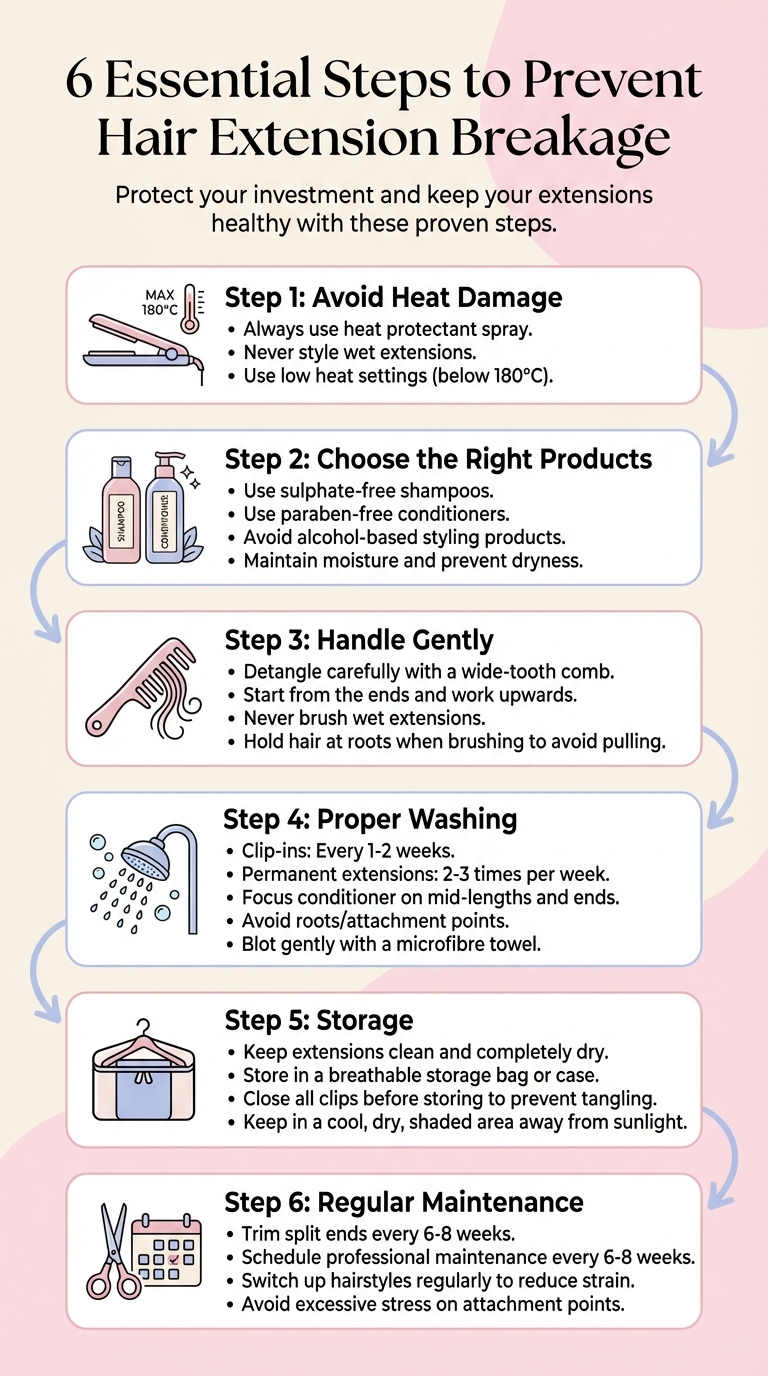
6 Essential Steps to Prevent Hair Extension Breakage and Snapping
5 Tips to STOP Hair Extension Damage + Fallout | ellebangs
Why Hair Extensions Snap
Hair extensions can snap when their fibres weaken and can no longer withstand daily wear and tear. Unlike natural hair, extensions depend entirely on external care. When the protective cuticle layer is damaged, it exposes the inner cortex, making the hair prone to breakage along the shaft.
Chemical Damage and Over-Processing
Frequent bleaching, dyeing, or toning can strip extensions of their limited moisture, weakening their structure. Since extensions are already processed during manufacturing, additional chemical treatments can further compromise their integrity. Products containing sulphates or alcohols dry out extensions, leaving them stiff and more likely to snap.
"Any form of colouring, dyeing, toning, purple shampooing, or chemically altering the hair extensions will immediately void all warranties." - PA Hair Extensions
Even something as simple as overusing purple shampoo - more than once every two weeks - can dry out extensions. Chemical treatments like perms are also major culprits, often leading to split ends and exposing the inner cortex. If colouring is necessary, opt for semi-permanent formulas applied by a professional, and ensure treatments are spaced at least 8–10 weeks apart.
Heat Damage from Styling Tools
Styling tools like straighteners, curling irons, and blow dryers can cause significant damage by removing moisture from the extensions. High heat makes extensions brittle and prone to snapping, especially when styling wet hair. When water inside the shaft heats up, it can boil, forming bubbles that weaken the hair's structure.
"Heat styling wet hair can steam and boil the water trapped inside the hair shaft, resulting in bubbles that can cause hair strands to break." - Cloud Nine
To minimise heat damage, always ensure extensions are completely dry before styling. Stick to low or medium heat settings, as extensions lack the natural scalp oils that protect your own hair.
Wrong Washing and Handling Methods
Improper washing and handling can be surprisingly damaging. For example, rubbing extensions with a towel creates friction, roughening the cuticle and leading to tangling and breakage. Brushing wet extensions is another common mistake - wet hair is more elastic, and brushing it places excessive tension on the seams and fibres.
"Never brush your hair extensions whilst they are wet. This puts too much tension on the seams and can cause them to break." - Cliphair UK
Hairbands can also cause breakage, particularly tight elastic ones. As one expert explains, "Hair bands are secret assassins when it comes to broken hair around your face and crown... Very tight, elastic material hairbands put way too much pressure on the hair causing it to break off". Even sleeping on a cotton pillowcase can create friction, leading to matting and snapping - especially if your hair isn't fully dry.
Next, we'll explore washing and detangling routines to help keep your extensions in top condition.
How to Handle and Install Extensions Properly
Taking care when handling and installing hair extensions can make a big difference in how long they last. Using the right techniques not only ensures they look natural but also helps protect your natural hair by evenly distributing the weight of the extensions.
Applying Clip-Ins Without Tension
Start by detangling both your natural hair and the extensions. Use a wide-tooth comb or a brush designed specifically for extensions to avoid snagging during application. Section your hair horizontally at the nape, working in thin layers. This ensures each clip has enough natural hair to anchor securely, reducing stress on individual strands.
To attach the clips, gently press the centre of each clip to open it. Position the weft close to your roots along the parting, then press the clip shut. The fit should feel firm but not tight - if it pulls, reposition it to include more natural hair. Once you've clipped all the wefts, double-check that each one is secure.
Getting Tape-Ins Installed by a Professional
Tape-in extensions are best left to professionals. The "sandwich technique" is commonly used, where a small section of your natural hair is placed between two adhesive strips. This creates a secure, flat, and natural-looking result. Before installation, your hair should be washed with a cleansing shampoo to ensure the adhesive bonds properly.
"As your extensions grow, the section of natural hair they're attached to becomes smaller due to daily shedding. During maintenance, we'll re-section your hair to ensure the extensions are placed on a suitable, weighted section, protecting your natural hair." – Hair Wonderland
The process for tape-in extensions typically takes 20–30 minutes for volume or 45–60 minutes for full-length extensions. After installation, avoid washing your hair for 48–72 hours to allow the adhesive to set. During the first week, stick to low ponytails to minimise stress on the bonds. Maintenance should be scheduled every 5–6 weeks (or every 4 weeks for fine hair) to adjust the extensions as your natural hair grows.
Once installed, proper care and storage will keep your extensions in great shape.
Storing Extensions to Prevent Damage
Before storing your extensions, brush them thoroughly to remove tangles. For clip-ins, make sure all the clips are closed to prevent the metal teeth from snagging the strands. Store your extensions in a breathable bag or protective case - like the Clip In Bag from Hair Wonderland, available for AUD $54.00 - but only after they are completely clean and dry. This helps avoid matting and prevents damage to the fibres.
Keep them in a cool, dry, and shaded spot to protect against UV damage. Laying them flat in their original box or a dedicated carrier preserves their shape and keeps them ready for your next use. Proper storage plays a key role in maintaining the quality of your extensions.
Washing and Detangling Without Causing Breakage
How you care for your extensions during washing and detangling plays a big role in how long they’ll last. Hair is especially fragile when wet because the cuticle swells, making it more prone to breakage. A gentle approach can help protect your extensions and keep them looking their best.
Choosing Sulfate-Free Products
Sulfates can strip away moisture, leaving your extensions dry and brittle. To avoid this, opt for sulfate-free, paraben-free, and alcohol-free shampoos and conditioners that help maintain hydration.
When washing, gently massage the shampoo into your scalp and hair using your fingertips - avoid scrubbing to minimise damage. Apply conditioner only to the mid-lengths and ends, steering clear of the roots or attachment points. This prevents clips, tapes, or bonds from loosening or slipping. For clip-in extensions, aim to wash them every one to two weeks. Permanent extensions, on the other hand, should be washed around three times a week to manage oil and product buildup.
Using the Right Detangling Tools
Always detangle your extensions before getting them wet. Start at the ends and work your way up to reduce stress on the bonds or clips. A wide-tooth comb is ideal for this step, especially on wet hair or when applying deep conditioning treatments.
For stubborn knots, use your fingers first to gently loosen them before using a brush. A small amount of leave-in conditioner can add the slip needed to work through tangles without causing breakage. If you're looking for tools designed for extensions, Hair Wonderland offers two great options: the Tangle Tamer Brush for AUD $21.95 and The Detangle Brush for AUD $29.95. Both brushes are gentle on extensions, gliding smoothly without pulling or causing damage. To keep tangles at bay, brush your extensions at least twice a day.
Air-Drying to Reduce Stress
Once you’ve washed your extensions, blot them gently with a microfibre towel to remove excess water. Microfibre towels are super absorbent and minimise friction, unlike standard cotton towels, which can be rough and cause snapping.
For clip-ins, lay them flat on a towel or hang them on a specialised extension hanger to dry. This helps them stay straight and tangle-free. Air-drying is the best way to maintain your extensions' internal moisture, as blow dryers can strip away hydration and leave hair feeling straw-like. Before storing your extensions, ensure they are completely dry to avoid matting or unpleasant odours. Following this drying routine keeps your extensions in great shape, ready for styling whenever you need them.
sbb-itb-dcde78e
Heat Styling Without Damaging Extensions
Using heat styling tools on hair extensions can be risky. Unlike natural hair, extensions don’t have natural oils to protect them, making them more prone to damage from heat. To keep your extensions looking their best, it’s important to follow careful washing, detangling, and heat styling practices. The trick lies in using the right products and maintaining safe heat levels.
Here’s how you can protect your extensions when using heat tools.
Using Heat Protectant Products
Before reaching for any hot tool, applying a heat protectant is a must. This step helps guard against dryness, breakage, and split ends. Focus on the mid-lengths and ends of your extensions, steering clear of the roots. Heat near the bonds, tapes, or rings can weaken or even melt adhesives, causing your extensions to slip or fall out.
"One thing not to skip on your hair care routine is protecting your hair from heat damage. Whether you have Tapes, Micro Rings, Micro Bonds or Clip ins, a heat protectant spray is a must-have."
- Sarah McKenna, Founder, Vixen & Blush
For best results, spray the protectant on damp hair before blow-drying. Reapply before using flat irons or curling wands. Use a wide-tooth comb or an extension brush to ensure the product is evenly distributed. Look for alcohol-free and sulphate-free formulas to keep your extensions from becoming brittle.
Keeping Temperature Settings Low
When it comes to heat, less is more. The maximum safe temperature for human hair extensions is 180°C. If your extensions are under 24 inches, aim for a maximum of 170°C. For longer extensions (26 inches or more), lower the temperature to 150°C and limit heat styling to once a week.
"Limit temperatures to 170 degrees for all extensions under 24 inches. For 26 inch and 30 inch, limit heat styling to 150 degrees."
- Lemani Hair & Extensions
Always start with the lowest effective setting and only increase if absolutely necessary. When blow-drying, use a cool setting near the bonds or rings to avoid softening attachment points. If you’re using flat irons or curling wands, keep the tool moving - don’t let it linger in one spot, as this can damage the hair fibres. Opt for tools with ceramic or tourmaline plates, as these distribute heat evenly and reduce the risk of "hot spots" that can cause snapping.
| Extension Type/Length | Recommended Max Temperature | Styling Frequency Advice |
|---|---|---|
| Standard Human Hair (<24") | 170°C - 180°C | Use in moderation |
| Long Human Hair (26"+) | 150°C | Limit to once per week |
| Synthetic Extensions | Below 71°C | Handle with extreme care |
If you’d rather skip the heat altogether, there are plenty of stylish heat-free options to explore.
Choosing Protective Hairstyles
Heat-free styles are not only safer but can also look amazing. Loose braids, low buns, or twists secured with satin scrunchies are gentle on your extensions and give them a break from hot tools. These styles are especially helpful right after a fresh installation. Avoid high ponytails or tight updos for the first few days to prevent tension that could lead to snapping.
At night, wrap your extensions in a silk or satin scarf or bonnet to reduce friction and prevent tangles that could cause breakage. The less heat and harsh treatment your extensions endure, the longer they’ll stay in great condition.
Products That Strengthen and Maintain Extensions
Using the right products can make a world of difference in keeping your extensions strong and preventing them from snapping. Since extensions don’t benefit from natural oils, they rely entirely on the products you use to stay moisturised and flexible. Starting with high-quality extensions and maintaining them with proper care products will ensure they last for months.
Starting with Quality Extensions
Not all extensions are created equal, and quality is key if you want them to last. Double-drawn Russian or Mongolian hair is a great choice because it maintains consistent thickness, offering better durability. For example, Hair Wonderland’s premium double-drawn extensions are specifically designed to resist snapping, making them a reliable option for regular styling and washing. With proper care, high-quality human hair extensions can last anywhere from 6 to 12 months.
But choosing the right extensions is just the first step. Let’s look at how to maintain them with the best care practices and products.
Using Proper Care Products
Once you’ve invested in quality extensions, the products you use to maintain them are just as important. Proper handling and installation help prevent breakage, but the right care products strengthen your extensions day by day. Sulphate-free shampoos and conditioners are a must - they help retain moisture and protect the adhesive bonds.
"Harsh products make extensions brittle and cause them to become frizzy."
For everyday care, consider tools like Hair Wonderland’s Styling Comb ($12.95), Tape Sheets ($78.00), and Removal Solution ($54.00). These products are designed to safeguard adhesives and keep your extensions in top condition. The Styling Comb, for instance, is perfect for gentle detangling - always start at the ends and work your way up to avoid pulling on the bonds. If you’re wearing tape-in extensions, professional maintenance every 6–8 weeks is essential to reposition them without causing damage.
Deep Conditioning Regularly
Extensions don’t produce natural oils like your own hair does, so regular deep conditioning is a must to keep them hydrated and flexible. A weekly deep conditioning treatment can work wonders - just focus on the mid-lengths to ends and avoid the roots to protect the adhesive bonds. For daily hydration, a leave-in hair oil can help prevent dryness and breakage between washes. These simple steps ensure your extensions stay soft, shiny, and resilient.
Preventing Snapping Over Time
Taking care of your extensions regularly can make a big difference in how long they last. Even with top-quality products and proper techniques, consistent upkeep is key to keeping them strong and flexible. Here are some steps you can take to reduce the risk of snapping over time. These habits, combined with proper washing and styling, will help maintain the strength of your extensions.
Trimming Split Ends Regularly
Just like natural hair, extensions can develop split ends that travel up the shaft, leading to breakage. Since extensions don’t benefit from your scalp’s natural oils, they tend to dry out more quickly, making them more prone to splitting. To prevent damage, aim to trim split ends every 6–8 weeks [57,58].
A split-end trimmer is a great tool for targeting damaged areas without losing length. Alternatively, booking a professional "dusting" appointment ensures the ends are neatly maintained. Between trims, applying a strengthening serum, such as Kérastase Nutri-Supplement Split Ends Serum, can help nourish the tips. Before trimming, gently detangle the hair with a wide-tooth comb, starting at the ends and working your way up [57,58].
Changing Hairstyles to Avoid Stress
Wearing the same hairstyle every day can place tension on the attachment points of your extensions, weakening bonds and increasing the risk of snapping. To avoid this, switch up your hairstyles and schedule professional maintenance every 6–8 weeks. Protective styles, like loose braids or low ponytails, are especially helpful at night, as they reduce friction and tangling while you sleep.
"A professional can reposition tape-ins, check for matting, and ensure your natural hair stays healthy too."
When brushing, hold the hair securely at the roots and start detangling from the bottom to minimise tension on the attachment points. During humid weather, opt for contained hairstyles to reduce swelling and frizz, which can lead to knots and breakage.
Storing Extensions Correctly Between Uses
Proper storage is just as important as daily care when it comes to extending the life of your extensions.
Always make sure your extensions are completely dry before storing them, as dampness can lead to mould and bacteria [59,61]. Fasten all clips to prevent the metal teeth from snagging the hair, and gently brush each weft from ends to roots with a loop brush or wide-tooth comb to avoid tangles [59,60].
Use a dedicated clip-in bag to keep extensions in shape, and store them in a cool, dry, and shaded area [59,61]. Avoid stacking heavy items on top of your extensions, as this can crush the fibres and alter their texture. For longer storage periods, securing the extensions in a loose braid can help reduce friction [60,61].
"Good habits = longer lasting extensions. If you think about it, it takes only a few minutes to put them away."
Conclusion
Protecting your hair extensions from snapping starts with consistent care and smart habits. Choosing high-quality 100% Remy human hair can help reduce friction and tangling. Handle your extensions gently - use a wide-tooth comb and sulphate-free products to minimise damage. When using heat styling tools, keep the temperature below 180°C and always apply a heat protectant to shield your extensions from dryness and brittleness. Together, these steps create a solid foundation for maintaining your extensions.
A few quick maintenance tips: trim split ends every 6–8 weeks, switch up your hairstyles to avoid putting stress on attachment points, and secure your extensions in a loose braid before sleeping on a silk or satin pillowcase. For storage, ensure your extensions are dry and kept in a dedicated bag to keep them safe and tangle-free.
Hair Wonderland offers premium double-drawn Russian and Mongolian human hair extensions designed for durability and a seamless, natural look. Paired with the right detangling tools and care products, these extensions will retain their softness and strength over time.
With consistent care and high-quality products, your extensions will stay stylish, strong, and long-lasting.
FAQs
How can I protect my hair extensions from heat damage?
To protect your hair extensions from heat damage, always apply a heat protectant spray before using styling tools like straighteners or curling irons. Opt for the lowest heat setting that gets the job done to prevent weakening the hair fibres, which can cause dryness, breakage, or dullness. Reducing how often you rely on heat tools can also go a long way in keeping your extensions looking their best.
Handling your extensions with care is equally important. Use a detangling brush specifically made for extensions to avoid unnecessary pulling or breakage while styling. When it’s time to wash them, stick to products free from harsh chemicals like sulphates and avoid keratin-heavy formulas, as these can strip the extensions of their shine. By combining gentle care with minimal heat, you’ll keep your extensions smooth, shiny, and stunning for longer.
What are the best products for looking after hair extensions?
To keep your hair extensions looking their best, it’s important to use products made specifically for extension care. Go for gentle, moisture-packed shampoos and conditioners that are sulfate-free and steer clear of harsh ingredients like keratin or high levels of alcohol. These choices help protect the extensions and keep them in great shape.
Using a detangling brush is another must to reduce breakage when styling. And if you’re reaching for heat tools like straighteners or curling irons, don’t skip the heat protectant spray. This simple step helps preserve the softness and durability of your extensions, keeping them looking natural for longer.
To get the most out of your extensions, invest in high-quality, extension-friendly products and tools that fit seamlessly into your hair care routine. This way, you’ll enjoy beautiful, long-lasting results.
How often should I trim split ends on hair extensions?
To keep your hair extensions in top shape and avoid additional damage, consider trimming split ends every 6–8 weeks. This routine helps maintain their smooth texture and keeps them looking polished.
Use sharp scissors specifically made for cutting hair, and stick to good care habits like gentle brushing and limiting the use of high heat. These steps can go a long way in reducing split ends from forming in the first place.