


Protective styling with extensions is a strategy to protect your hair while promoting growth and reducing damage. By using high-quality extensions, you can shield your natural hair from daily manipulation, harsh weather, and breakage. Here's a quick overview of what you need to know:
- Hair Growth Benefits: Protective styles can help retain up to 15 cm of hair growth annually by minimising breakage.
- Why Extensions Work: They act as a barrier, locking in moisture and reducing exposure to damaging elements.
- Choosing Extensions: Options include clip-ins, tape-ins, hand-tied wefts, and halo extensions. Match texture, density, and duration to your needs.
- Preparation: Cleanse, condition, and moisturise your hair before installation to create a strong foundation.
- Maintenance: Use treatment oils, detangle gently, and follow proper care routines to extend the life of your style.
- Popular Styles: Braids, twists, cornrows, faux locs, sleek buns, and ponytails are all great choices for protective styling.
Investing in premium extensions, like double-drawn Russian or Mongolian human hair, ensures durability and a natural look while protecting your hair. Regular upkeep and proper removal techniques are essential to avoid damage.
Protective styling is about combining quality products with consistent care to keep your hair healthy and stylish.
Protective Style for Fine Natural Hair ✅ Shoulder Length Twist w/ Human Hair Extensions
sbb-itb-dcde78e
Choosing the Right Extensions for Protective Styles
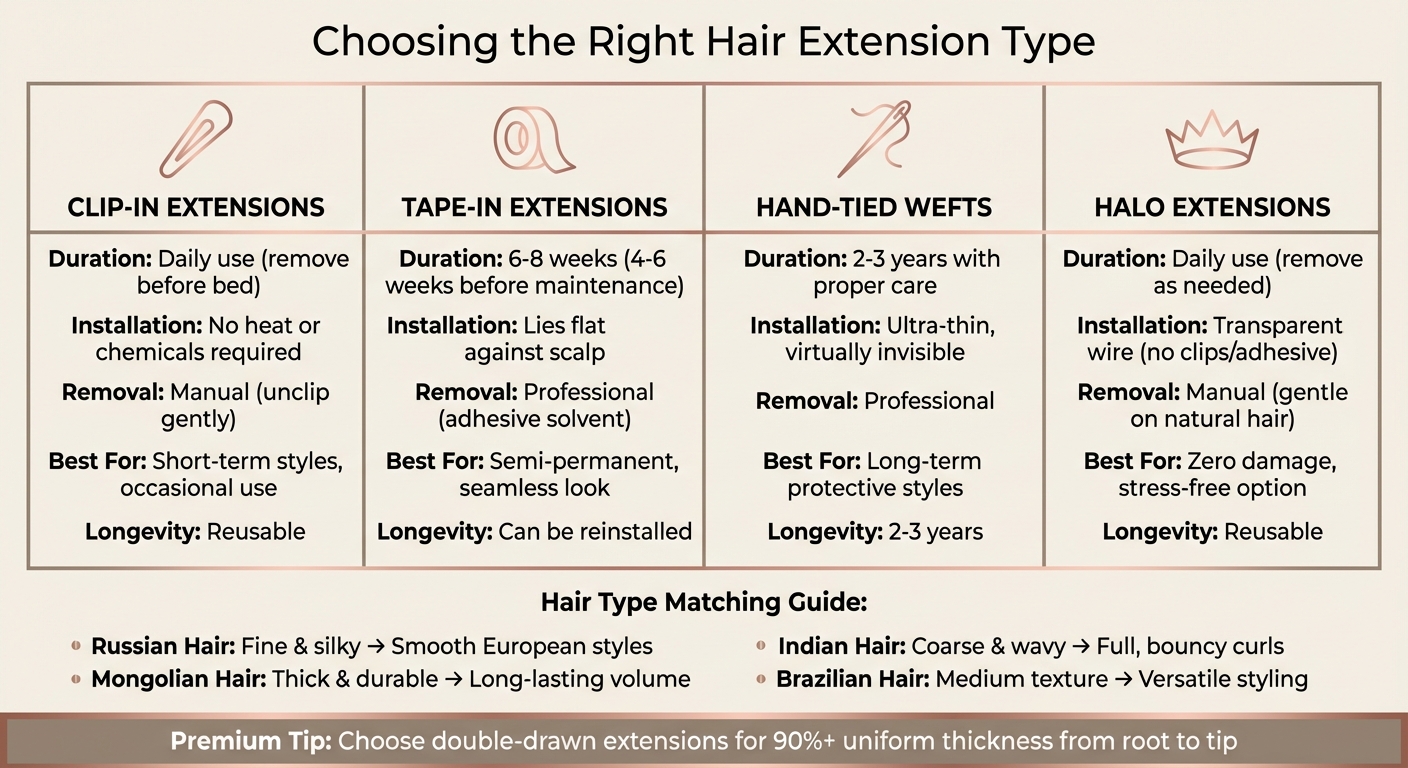
Hair Extension Types Comparison: Duration, Removal Method, and Best Use Cases
Types of Hair Extensions
When it comes to protective styles, not all extensions are made equal. Each type offers unique benefits depending on your goals. Clip-in extensions are a fantastic option for short-term styles. They don’t require heat or chemicals, can be removed daily, and are perfect for occasional use. If you’re looking for something semi-permanent, tape-in extensions might be your answer. These lie flat against your scalp for a seamless look and last about 6–8 weeks. For those seeking a long-term solution, hand-tied wefts are often the go-to. Known for their ultra-thin, virtually invisible construction, they can last 2–3 years with proper care, making them ideal for extended protective styles.
Another option is halo extensions, which use a transparent wire instead of clips or adhesives. These are gentle on your natural hair, eliminating unnecessary stress. The type of extension you choose should align with how long you plan to keep the style. Once you’ve decided on the duration, take the texture and density of the extensions into account to ensure they blend naturally with your hair.
Matching Extensions to Your Hair Type
Matching extensions to your hair isn’t just about colour - texture and density play a huge role too. For those with Type 4 hair (4a, 4b, or 4c), understanding your curl pattern is key to finding extensions that blend seamlessly. Different hair types suit different extensions. For example:
- Russian hair: Fine and silky, great for smooth, European-inspired styles.
- Mongolian hair: Slightly thicker and more durable, perfect for long-lasting volume.
- Indian hair: Coarser with a wavy texture, ideal for full, bouncy curls.
- Brazilian hair: Medium texture and highly versatile for various styles.
If your natural curls are tighter than the extensions, a heavier leave-in conditioner can help weigh them down for a smoother finish.
For protective styling, double-drawn extensions are worth considering. These have over 90% of the shorter hairs removed, ensuring consistent thickness from root to tip - perfect for high-density natural hair. Many brands now offer virtual colour-matching tools or physical swatches, so you can find the perfect match before buying. Choosing the right texture and density ensures your extensions look natural and complement your protective style.
Premium Extensions for Protective Styling
When it comes to protective styles, investing in quality extensions is non-negotiable. Premium materials make all the difference. Russian/Mongolian extensions are a standout choice, offering a balance of silkiness and durability that can last up to 2–3 years. These extensions are designed to minimise stress on your natural hair, making them an excellent option for Australia’s climate and the demands of long-term styling.
At Hair Wonderland, we offer premium double-drawn Russian/Mongolian human hair extensions tailored to Australian standards. Our Seamless Set, priced at $499.00 for 22 inches (200 grams), features 100% Remy European Human Hair with Invisi® weft technology. This ensures lightweight comfort, natural blending, and long-lasting wear - everything you need for protective styles like braids, twists, or sleek buns. The double-drawn process guarantees uniform thickness from root to tip, while the hand-tied design ensures discreet, nearly invisible seams. These extensions are built for durability and a flawless, natural look, making them a smart choice for protective styling.
Preparing Your Hair for Protective Styling
Cleanse and Condition Your Hair
Before adding extensions, start with a proper cleanse. Begin by detangling dry hair with a wide-tooth comb to remove knots and avoid matting. Then, massage shampoo into your scalp to eliminate oils and buildup. As Christian Michael Salon wisely notes:
A clean scalp is the foundation of healthy hair.
If you're using tape-in extensions, freshly washed hair is a must. Use a clarifying shampoo to ensure the adhesive bonds securely.
For those with thick or coarse hair, consider a double cleanse: start with a clarifying shampoo, followed by a hydrating one. Apply conditioner to the mid-lengths and ends only, leaving it on for about five minutes. Comb it through evenly, rinse with warm water, and finish with a cool rinse to seal the hair cuticles. Gently blot your hair dry to avoid damage.
Moisturise and Protect Your Scalp
Since your hair won't receive natural oils from your scalp once styled, it's important to moisturise beforehand. Use a light treatment oil like argan oil or a leave-in conditioner on the mid-lengths and ends of damp hair. This helps prevent dryness, itchiness, and flakiness while reducing product buildup. Avoid heavy oils or conditioners on the roots or near extension bonds, as these can cause slippage or weaken the attachment.
If you plan to blow-dry before installation, always use a heat protectant spray to shield your hair from damage. For naturally silky hair, a light texturising spray or dry shampoo can improve the grip of clips or bonds. Properly moisturising and protecting your scalp creates a strong foundation for a long-lasting style.
Tools for Easier Preparation
Using the right tools can make the preparation process much smoother. A high-quality detangling brush is a must. Hair Wonderland's Tangle Tamer Brush ($21.95) works wonders, gliding through knots without causing breakage. Always detangle starting from the ends, gradually working your way up to the roots. A rat-tail comb is another handy tool for creating clean, precise sections during installation.
When drying, reach for a microfibre towel. It effectively removes excess water while being gentle on the cuticle, minimising frizz. And if you're using heat tools, a heat protectant spray is non-negotiable - it helps shield your hair from damage. Investing in these tools now can save you time, effort, and unnecessary hair damage down the road.
Popular Protective Styling Techniques with Extensions
Braids and Twists
Braids and twists are go-to protective styles that offer versatility and durability when paired with extensions. Box braids are a timeless favourite, lasting about four to six weeks when properly maintained. Another popular option is feed-in braids, which involve gradually adding hair to reduce scalp tension, helping to prevent headaches and traction alopecia.
When it comes to twists, there are several styles to consider. Havana twists use thicker hair for a bold, voluminous look, while Marley twists are a textured yet budget-friendly alternative. For a sleeker, shinier finish, Senegalese (rope) twists made with Kanekalon hair are a great choice. These twist styles typically last four to eight weeks. The crochet method has also gained popularity due to its quicker installation time compared to traditional individual braiding.
If you're looking to match extensions with natural 4C hair, "afro kinky curly" or "coarse kinky coily" textures blend seamlessly. As Ashley Glenn explains:
Protective styling is a term we constantly hear in the natural hair community. It is used to protect the ends of our hair, which can help with length retention.
These styles not only protect your hair but also allow for creative expression.
Cornrows and Faux Locs
Cornrows and faux locs are protective styles that minimise daily hair handling while offering a chance to showcase personal style. Cornrows shield your hair from environmental damage and promote healthy growth by reducing manipulation. Popular variations include straight-back cornrows, Fulani braids, Lemonade braids, and stitch braids. Depending on care and upkeep, cornrows can stay intact for two to eight weeks.
For those who admire the look of traditional locs but aren't ready for the commitment, faux locs are a fantastic alternative. Typically made with Marley hair or yarn, faux locs last around four to six weeks. Some people even opt for hybrid styles, combining sleek cornrows at the front with voluminous crochet curls or natural hair at the back, adding dimension and flair.
It's essential to avoid overly tight cornrows during installation, as excessive tension can lead to scalp damage and hair loss.
Sleek Buns and Ponytails
Sleek buns and ponytails offer a low-maintenance yet polished alternative to braids and twists. These styles are perfect for those looking for elegance without the long-term commitment. Clip-in extensions and drawstring ponytails are excellent tools for achieving these looks. Yaki or Light Yaki textures are especially effective for creating a sleek, blown-out finish.
Drawstring ponytails are easy to use and beginner-friendly. Simply gather your hair into a high or low ponytail, secure the drawstring piece around the base, and you’re ready to go. These styles are incredibly flexible - you can wear them during the day, remove them at night, and reapply them as needed. This reduces daily manipulation of your natural hair while giving you the freedom to switch up your look effortlessly.
Maintaining and Caring for Protective Styles
Nightly Maintenance
Taking care of your protective style at night is just as important as your skincare routine. Start by brushing your hair gently to remove any tangles. Then, apply 2–3 pumps of treatment oil to the ends of your extensions - this step is crucial because extensions don’t benefit from your scalp’s natural oils. To minimise friction while you sleep, secure your hair in a low, loose braid or ponytail.
For extra protection, sleep with a silk or satin bonnet. Cotton pillowcases can absorb moisture, which might lead to dryness and damage. And here’s a big no-no: never go to bed with wet extensions. Excess moisture can lead to severe tangling, scalp irritation, or even mould. If your extensions are damp, use a blow dryer on low heat to dry the attachment points. This nightly routine works hand-in-hand with the pre-installation and styling tips mentioned earlier.
Washing and Conditioning
Keeping your protective style well-moisturised extends its lifespan. Limit washing your extensions to 2–3 times per week. Before washing, use a wide-tooth comb or an extension brush to detangle your hair - this helps prevent matting during the wash. When shampooing, focus on your scalp and the areas between the rows, rather than scrubbing the extension hair itself. Tilt your head back and let the water flow down your hair naturally to avoid tangles at the attachment points.
After shampooing, apply conditioner or a hair mask from the mid-lengths to the ends, steering clear of the roots to prevent the extensions from slipping. Rinse with lukewarm water and gently blot your hair dry with a towel. Finally, use a blow dryer on low heat to ensure the attachment points are completely dry - this helps prevent mould and reduces tangling.
Detangling and Reinstalling Extensions
Gentle handling is key to keeping both your natural hair and extensions in great shape. When detangling, hold your hair firmly at the installation point with one hand and brush with the other to avoid pulling on your roots. For wet detangling, a gentle detangling brush is your best friend - try using Hair Wonderland’s Tangle Tamer Brush ($21.95), which is designed specifically for extensions and reduces breakage.
To maintain your extensions and natural hair, professional upkeep is recommended every 5–6 weeks, though those with finer hair may need maintenance as often as every four weeks. If you’re reinstalling tape-in extensions at home, tools like Hair Wonderland’s Tape Sheets ($78.00) and Styling Comb ($12.95) can make the process easier and safer. Between salon visits, avoid products with protein, keratin, sulfates, or high alcohol content, as these can make extensions harder to manage.
Common Mistakes and How to Avoid Them
Taking care of your protective style with extensions requires attention to detail. Here are some common errors and how to steer clear of them to keep your hair healthy and your style lasting longer.
Overtightening Extensions
One of the most damaging mistakes is installing extensions too tightly. Excessive tension can lead to traction alopecia, a type of hair loss caused by constant pulling on the hair follicles. Signs of trouble include breakage around the hairline, bald spots, redness, and scalp pain. This is especially common with sew-in extensions and beaded rows, where too much weight is placed on a single row of natural hair. Additionally, "crossovers" - when hair from another section gets caught - can cause discomfort and damage.
"Traction alopecia is a form of hair loss caused by excessive tension and constant pulling on the hair follicles." - Noelle Salon
To avoid this, extensions should be installed at least 1/4 inch (around 0.6 cm) away from the scalp, allowing for natural movement without pulling. Choose the right method for your hair type: sew-ins for thicker hair and pull-thru techniques for finer hair. Regular moisturising is also key to maintaining healthy hair.
Neglecting Moisturisation
Extensions don’t benefit from the natural oils produced by your scalp, making them prone to dryness and matting. To combat this, apply 1–2 pumps of treatment oil to the mid-lengths and ends twice daily. Brush gently three times a day using a loop or detangling brush, starting from the ends to minimise pulling. Avoid products with protein, keratin, sulfates, or high alcohol content, as these can strip moisture from your hair.
Regular care also means being mindful of how extensions are removed to prevent lasting damage.
Improper Removal Techniques
Permanent extensions like tape-ins, nano rings, and weaves should always be removed by a professional. Leaving them in too long can lead to matting at the roots and may damage your natural hair.
| Extension Type | Recommended Wear Duration | Removal Method |
|---|---|---|
| Clip-ins | Daily (Remove before bed) | Manual (Unclip gently) |
| Tape-ins | 4–6 Weeks | Professional (Adhesive Solvent) |
| Nano Rings / I-Tips | 6–8 Weeks | Professional (Pliers/Tool) |
| Keratin Bonds | 3–4 Months | Professional (Bond Remover) |
"Alopecia, permanent hair loss, breakage, and infection are all risks associated with not properly caring for extensions." - Mahisha Dellinger, CEO and Founder, CURLS
If you’re removing tape-ins at home, use a product like Hair Wonderland's Tape Removal Solution for a gentler process. Detangle thoroughly before starting, work in small sections beginning at the nape, and finish with a strengthening hair mask for 30 minutes to restore your hair’s health.
Conclusion
Protective styling with extensions is a great way to keep your natural hair safe, but success comes down to three main factors: quality, preparation, and consistency. This guide has covered everything from picking the right extensions to maintaining them daily.
Starting with quality, investing in premium extensions pays off in the long run. For example, double-drawn vs single-drawn Russian or Mongolian hair extensions can last 9–12 months with proper care. These extensions maintain thickness from root to tip and blend seamlessly with natural hair. While the initial cost might seem high - like Hair Wonderland's Seamless Set 22" priced at $499.00 - it offers excellent long-term value and reliable hair protection.
However, even the best extensions need proper preparation. Before installation, your natural hair should be in top shape. Use a sulphate-free shampoo to cleanse, follow up with a deep conditioner to make your hair more manageable, and ensure it's fully detangled. Keeping your scalp healthy is equally important - address dryness or irritation quickly and opt for installation methods that reduce tension to avoid issues like traction alopecia.
Consistency is the final piece of the puzzle. Regular upkeep ensures your protective style works as intended. Professional maintenance should be scheduled every 5–6 weeks (or every 4 weeks for finer hair). At home, apply 2–3 pumps of treatment oil to the mid-lengths and ends twice daily, and sleep with your hair in a low, loose plait on silk or satin pillowcases. As Hair Wonderland wisely puts it:
Leaving extensions in for too long can damage your natural hair.
FAQs
How can I choose the best hair extensions for protective styling?
When picking hair extensions for protective styling, it's important to think about your hair type, lifestyle, and styling preferences. Start by choosing extensions that closely match your natural hair texture. This ensures a seamless, natural-looking blend.
For a quick and easy option, clip-in extensions are a fantastic choice. They're simple to install and remove, making them perfect for temporary styles. If you're after something longer-lasting, it’s a good idea to consult a professional stylist about options like sew-in wefts or other attachment methods.
The quality of the extensions is just as important. Look for extensions made from 100% Remy human hair - these are less likely to tangle and give a more natural appearance. For example, Hair Wonderland provides premium double-drawn Russian/Mongolian human hair extensions. These are known for their durability and comfort, making them a great fit for protective styles.
Lastly, always consult a stylist to determine the best type of extensions and attachment methods for your hair. Sticking to a proper care routine will help maintain both your natural hair and the extensions, ensuring they look their best for longer.
How can I care for my extensions to keep them looking great and lasting longer?
Taking care of your extensions properly can make all the difference in how they look and how long they last. Regular upkeep, both in the salon and at home, is key.
In-Salon Maintenance
It's a good idea to visit your stylist every 4–6 weeks. These appointments allow them to reposition your extensions, ensuring the weight is evenly distributed. This step is crucial to avoid putting unnecessary stress on your natural hair, which could lead to breakage.
At-Home Care Tips
Treat your extensions gently and use the right products. Stick to hair care items that are free from sulphates, keratin, protein, or high alcohol content - these ingredients can weaken the extensions over time.
Here are a few tips to keep your extensions in great shape:
- Use a detangling brush before showering to prevent knots.
- Always apply a heat protectant before using styling tools.
- Limit your use of heat to reduce wear and tear.
By following these steps, you’ll help preserve the natural look, feel, and comfort of your extensions for as long as possible.
How can I protect my natural hair while wearing extensions?
To keep your natural hair in great condition while wearing extensions, it's crucial to stick to a proper care routine. Schedule regular maintenance appointments with your stylist every 4–6 weeks. These visits allow your stylist to adjust the extensions as your hair grows and sheds, helping to minimise unnecessary tension on your natural strands.
At home, opt for gentle hair care products that are sulphate-free and alcohol-free to lock in moisture and avoid damage. Steer clear of products containing keratin or proteins, as these can weaken both your natural hair and the extensions over time. Use a specialised extension brush daily to prevent tangling, and always apply a heat protectant before using any styling tools. Limiting heat exposure and avoiding harsh chemicals are key steps to keeping your natural hair strong and your extensions looking their best.