


When you sleep, your hair extensions can face damage from friction, tangling, and dryness. Protective hairstyles are an easy way to prevent issues like frizz, breakage, and thinning. These styles reduce strain, lock in moisture, and help your hair look smooth and healthy by morning. Here’s a quick rundown of the best options:
- Loose Braids: Minimise tangling and friction.
- Low Bun: Compact and gentle on extension bonds.
- Low Ponytail: Simple with a silk scrunchie to prevent snags.
- Pineapple Method: Ideal for curls and waves.
- Twisted Rope Braid: Keeps hair secure and reduces matting.
- Bubble Braids: Sectioned style to prevent tangles.
- Pigtails: Great for layered extensions.
- Silk or Satin Head Covering: Adds extra protection and retains moisture.
- French Braids: Distributes tension evenly and reduces friction.
- Flat Twists: Gentle and close to the scalp.
Quick Tips for Prep:
- Dry your hair completely before bed - wet extensions are prone to damage.
- Use a detangling brush designed for extensions.
- Apply a lightweight serum or oil to keep extensions hydrated.
- Opt for silk or satin scrunchies and pillowcases to minimise friction.
These simple steps and styles can protect your extensions, reduce morning styling time, and extend their lifespan.
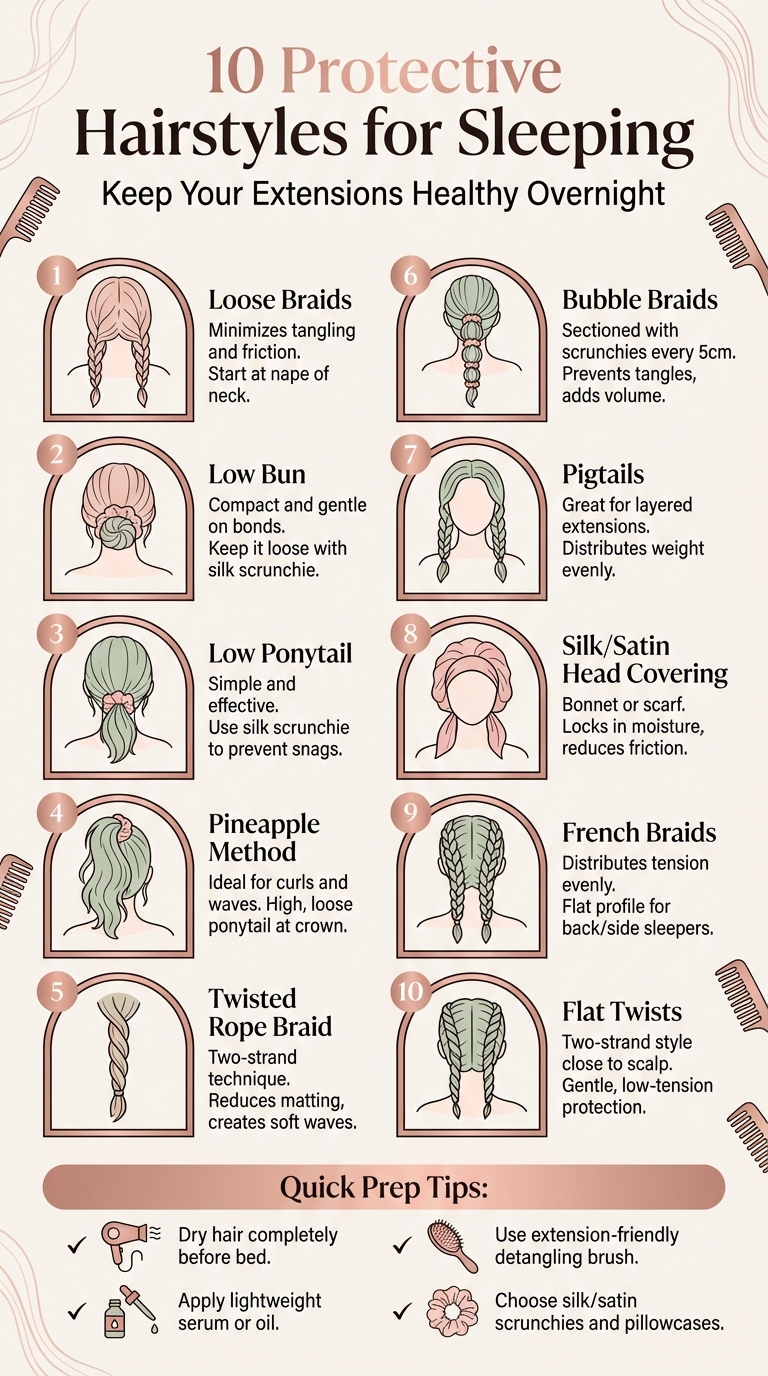
10 Protective Hairstyles for Sleeping with Hair Extensions
How to Sleep with Hair Extensions
Preparing Your Hair Before Bed
Getting your hair ready before bedtime is key to keeping your extensions in good shape and easy to manage by the next morning.
Dry your hair completely. Damp hair can lead to breakage and tangles, which are especially harmful to extensions. According to Beauty Works, sleeping with wet hair damages extensions, while Vixen Hair warns that wet hair creates an ideal environment for bacteria to grow. If you've just washed your hair, use a microfibre towel to gently remove excess water, apply a heat protectant, and blow-dry until your hair is thoroughly dry.
Detangle with an extension-friendly brush. Regular brushes can pull too hard on delicate areas, risking damage to both your natural hair and the extension bonds. Instead, choose a brush specifically designed for extensions, like a boar bristle, loop, or soft-bristle brush. Start detangling from the ends and gradually work your way up to the roots to minimise strain. For instance, Hair Wonderland's Tangle Tamer Brush, priced at $21.95, is a great option for safely removing knots without catching on tapes, wefts, or bonds.
Add moisture with a lightweight serum or oil. Extensions don’t benefit from your scalp’s natural oils, so they can become dry over time. Apply 2–3 pumps of argan serum or a lightweight oil to the mid-lengths and ends to keep them hydrated overnight. When tying your hair back for sleep, use silk or satin scrunchies instead of regular elastic bands. These materials are gentler, helping to prevent dents, pulling, and unnecessary tension.
Once your hair is prepped, you're ready to secure it in a protective style for the night.
1. Loose Braids
A single loose braid is one of the easiest and gentlest ways to protect your extensions while you sleep. By braiding your hair, you minimise friction, prevent tangling, and reduce the risk of breakage during the night.
"A loose braid is an easy and damage-free way to sleep with hair extensions. Putting your hair in a loose braid will help to prevent your extensions from tangling as you sleep and reduce friction as you move during the night." - Beauty Works
Start the braid at the nape of your neck to follow the natural direction of your hair, which helps avoid unnecessary tension on the extension bonds. Keep the braid secure but loose enough to prevent strain. If you've applied a lightweight serum as part of your bedtime routine, the braid can help lock in the product, allowing it to nourish your hair overnight.
Use a silk or satin scrunchie to tie off the braid. These materials are gentle on your hair, preventing snags or dents in its texture. For added protection, consider sleeping on a silk or satin pillowcase. These smooth fabrics let your hair glide freely, reducing friction and keeping your extensions in great condition. Ready to try another simple overnight hairstyle? Let’s move on to the next idea.
2. Low Bun
The low bun is a practical and compact way to protect your hair extensions overnight, offering a snug alternative to loose braids. Positioned at the nape of your neck, this style helps safeguard your extensions while keeping you comfortable through the night. By reducing friction, it helps prevent frizz, split ends, and matting, all while protecting the extension bonds.
The trick to a good low bun is keeping it loose. Using a silk scrunchie is ideal - it holds the bun in place without pulling on your hair or causing tension. Before you start, make sure your extensions are detangled, completely dry, and moisturised (you can refer back to the pre-bed preparation steps if you need a refresher).
Avoid making the bun too tight; if your scalp feels uncomfortable, it’s a sign to loosen it up. Also, never style your hair while it’s wet - wet hair is more prone to breakage, matting, and weakened bonds.
For added security, you can create a braided bun by wrapping a loose braid around a low ponytail. Not only does this keep your extensions in place, but it can also leave you with soft, natural waves by morning - potentially cutting down on the need for heat styling.
3. Low Ponytail with Silk Scrunchie
For a no-fuss yet effective style, opt for a low ponytail secured with a silk scrunchie. This approach keeps your hair in place without the hassle of braiding or twisting, and it’s gentle on extension bonds. Positioning the ponytail at the nape of your neck helps align with your hair’s natural direction, reducing strain on keratin bonds, tapes, or wefts. It’s a straightforward addition to your pre-bed routine that prioritises extension care.
"Just ensure all styles are kept low so the natural follicle direction is kept (so not tying hair on top of the head to sleep for example)." - Vixen Hair
A silk scrunchie is a great choice for minimising friction. Unlike traditional elastics that can snag or damage your hair, silk glides smoothly, reducing friction between your hair and the pillowcase. This not only helps prevent frizz, split ends, and matting, but also retains moisture in your extensions, keeping them soft and hydrated overnight.
Before styling, prep your hair as previously outlined. Apply 1–2 pumps of treatment oil to the mid-lengths and ends to lock in moisture while you sleep. When securing the scrunchie, keep it loose - tight ties can put unnecessary tension on your extensions.
This style is particularly comfortable for back and side sleepers. The low placement avoids pressure on your head, and you’ll wake up with extensions that are tangle-free and retain their natural texture, saving you time on morning touch-ups.
4. Pineapple Method
The pineapple method is a simple yet effective way to protect your hair extensions while you sleep. It involves flipping your hair forward and loosely securing it into a high ponytail at the crown of your head. This keeps most of your extensions off the pillow, helping to maintain curls, waves, and volume while minimising friction on the extension bonds.
"The pineapple hair technique is one of the best ways to protect curls overnight. By loosely piling your curls into a pineapple shape on the top of your head before you go to bed, your hair will be less prone to tangles and your curls will not get squashed." - The Muse Salon
The trick here is to keep it loose. Use a silk or satin scrunchie and loop it just once or twice to avoid creating tension. Tight ties can cause breakage or discomfort, especially when you're sleeping. If your hair is shorter or your extensions feel heavy, you can try a 'multi-pineapple' - divide your hair into two or three sections and secure them separately.
This method is ideal for side and back sleepers, as it keeps your hair away from your face and neck. By morning, your extensions will still have their texture and volume intact, saving you time on touch-ups. Just remember, this technique works best on dry hair - damp extensions can easily develop kinks.
For even more protection, combine this method with a silk pillowcase. The smooth surface will allow your hair to move freely without snagging, ensuring your extensions stay in great shape overnight.
5. Twisted Rope Braid
The twisted rope braid is a fantastic choice for protecting long hair extensions, as it keeps everything secure from the bonds to the tips . Unlike a loose ponytail, which can leave your hair vulnerable, this two-strand technique ensures your extensions stay neat and protected throughout the night.
Here’s how to create it: A rope braid involves just two strands instead of the usual three. Start by dividing your hair into two even sections. Twist each section tightly in one direction, then wrap them around each other in the opposite direction. This creates a spiral braid that reduces friction and matting by keeping your hair off the pillow .
When you take it out in the morning, you’ll be greeted with soft, natural waves rather than a crimped texture. For even better results, apply a lightweight leave-in conditioner or a bit of hair oil to the mid-lengths and ends before braiding. This helps lock in moisture overnight and enhances the waves .
To finish, secure the braid with a silk or satin scrunchie, which prevents breakage and avoids leaving dents in your hair . Start braiding at the nape of your neck for added comfort, especially if you’re a back or side sleeper. This also helps minimise tension on your extension bonds. Whether you braid your hair dry for soft waves or slightly damp for more defined curls, this style is a simple yet effective way to protect your hair.
6. Bubble Braids
Bubble braids are a clever way to keep your hair extensions neat and protected overnight. Start by gathering your hair into a low ponytail at the nape of your neck, using a silk scrunchie to secure it. Then, place additional scrunchies roughly every five centimetres along the length of the ponytail. Gently tug at the sections between each scrunchie to create "bubbles." This not only adds volume but also ensures the style isn’t too tight on your scalp, offering a comfortable and practical solution for bedtime hair care. By segmenting your hair, you reduce the risk of tangles, and the design helps minimise friction with your pillowcase, which can otherwise lead to frizz.
"This... is a great no-heat styling option to create soft texture overnight. Brush through your hair and use an oil or serum for moisture, then gather your hair with a silk scrunchie into a ponytail, and add scrunchies about two inches apart until you reach the end." - Vanessa Ocando, Professional Hairstylist
Before you begin, make sure your hair is completely dry. Applying a lightweight leave-in conditioner or a few drops of hair oil to the mid-lengths and ends can help seal in moisture while you sleep. Always choose silk or satin scrunchies - they’re gentler on your hair and help prevent snags.
Keeping the ponytail low at the nape of your neck ensures your hair stays in its natural direction without causing unnecessary tension.
"Avoid tying your scrunchies too tightly, or you could wake up to harsh creases instead of wavy bends." - Vanessa Ocando
In the morning, simply take out the scrunchies, and you’ll be left with soft, textured waves - no heat required. It’s an effortless way to wake up with a polished look.
sbb-itb-dcde78e
7. Pigtails
Pigtails are a simple and practical way to keep your hair extensions secure and tangle-free while you sleep. Start by parting your hair down the middle and gathering each half into a low ponytail near the nape of your neck. This approach evenly distributes the weight of your extensions, reducing tension on the bonds and minimising the risk of matting overnight.
To maximise comfort, especially for back and side sleepers, position your pigtails low so they rest flat against your head. Use silk or satin scrunchies to secure them - these materials are gentle on your extensions, preventing creases and avoiding snagging. This style aligns with the low-tension, secure hairstyles we've discussed earlier.
"A loose side braid or two low braids prevents friction... and helps maintain wave or curl pattern overnight." - Paramount Hair & Extensions
For a bit of versatility, you can loosely braid each pigtail to wake up with soft, natural waves, or leave them as ponytails for a sleek, smooth look. Both options reduce friction against your pillowcase, protecting your extensions from frizz and potential damage.
Pigtails are especially handy if you have layered extensions. Dividing your hair into two sections makes it easier to manage varying lengths, keeping everything neat and controlled through the night.
8. Silk or Satin Head Covering
Using a silk or satin head covering is like giving your hair a spa treatment while you sleep. These materials help reduce friction and keep moisture locked in, which is particularly important for extensions. While protective hairstyles minimise wear and tear, adding a silk or satin layer takes it a step further by maintaining hydration. Unlike cotton, which can strip away natural oils and act harshly against your hair, these smooth fabrics let your hair glide freely, preserving both your extensions and any leave-in treatments you’ve applied. This is especially crucial since extensions don’t benefit from the natural oils produced by your scalp.
"The softness of the fabric guarantees zero friction on fragile hair strands." – Zara Kenyon & Edward Sweeney, Wella Professionals
The moisture-retaining qualities of silk and satin help prevent your extensions from drying out or becoming brittle overnight. Depending on your needs, you can choose a head covering that works best for your hair type and extensions.
For example, you might go for a bonnet, costing about A$39 for mulberry silk, or a silk scarf, priced around A$47 for silk squares. Bonnets are great for curly extensions or if you tend to move a lot in your sleep, offering full coverage. On the other hand, scarves are perfect for securing long extensions or wrapping protective styles like loose braids.
9. French Braids
French braids start at the crown of the head and work their way down towards the nape, seamlessly incorporating additional strands as you go. This method creates a smooth, flat profile that keeps hair extensions secure - making it an excellent choice for those who sleep on their back or side. Unlike high buns that can press uncomfortably into the scalp, French braids distribute tension evenly, providing better protection for your extension bonds. Plus, they help reduce friction between your hair extensions and pillowcase, a common culprit behind breakage and split ends. This style offers a practical and protective twist compared to other braid techniques, staying true to the goal of minimising overnight hair damage.
"Keeping your hair in a neat style also minimises the friction between your hair and the pillow, which can cause hair breakage and split ends." – Marissa Palmer, Author
For added care, consider applying a lightweight leave-in conditioner to each section as you braid. Use a silk or satin scrunchie to secure the ends instead of a rubber band, which can snag and damage your hair - this tip applies to all protective styles. Remember to keep the braids loose, especially near the scalp, to avoid unnecessary stress on your natural hairline and extension bonds. This gentle approach aligns perfectly with other braid techniques and reinforces the focus on reducing damage while you sleep.
The best part? When you take out your French braids in the morning, you'll wake up to soft, heatless waves.
10. Flat Twists
Flat twists are a two-strand hairstyle that sits snug against your scalp, making them a great option for side and back sleepers. Unlike traditional cornrows that use three strands, flat twists rely on just two, making them quicker to create and gentler on your scalp and extension bonds. This reduced tension is particularly beneficial if you're wearing extensions, as it helps protect your edges and prevents unnecessary strain on attachment points over time.
To get started with flat twists, take a section of hair at your hairline and split it into two even parts. Then, cross the strands over each other, adding small sections of hair as you move towards the nape. Make sure your hair is completely dry before twisting - wet extensions are more fragile and prone to breakage, tangling, and even fungal issues. Applying a lightweight leave-in conditioner or hair oil can help nourish your hair and add slip, making the twisting process easier. Avoid twisting too tightly to minimise the risk of breakage. Done properly, this method ensures smooth, protective results.
Flat twists are excellent for keeping your extensions secure and close to your scalp, which helps reduce friction and prevents matting. This style also locks in moisture and smooths the cuticle overnight. Pair it with a silk or satin bonnet or pillowcase for added protection. When you take the twists out in the morning, you'll be left with soft, heat-free waves.
For those using premium extensions, flat twists are an ideal low-tension, protective style that maintains natural blending and durability while you sleep. High-quality options, like the double-drawn Russian/Mongolian hair extensions from Hair Wonderland (https://hairwonderland.com.au), work particularly well with this technique.
Additional Sleep Practices for Extension Care
Taking care of your extensions while you sleep goes beyond just picking the right protective hairstyle - what you sleep on can make a big difference too. Cotton pillowcases can cause friction and soak up moisture, which often leads to breakage and matting. Instead, opt for silk or satin pillowcases. These materials are gentler on your hair, reducing friction and helping to retain moisture. Your sleeping position also plays a key role in keeping your extensions in top shape.
Different sleeping positions call for different hairstyles to protect your extensions. For back sleepers, loose plaits work well; side sleepers might find a high messy bun more effective; and front sleepers can benefit from boho braids.
When you wake up, give your hair a few minutes to settle before starting your routine. Begin by massaging your scalp for about 30 seconds - this helps boost blood circulation and refresh your roots. When detangling, always start at the ends and gently work your way up to the roots. Use a wide-tooth comb or a brush specifically designed for extensions to avoid pulling on attachment points and causing damage. To keep your extensions soft and manageable, apply 1–2 pumps of argan oil or a treatment serum to the mid-lengths and ends each morning.
Another important tip: make sure your hair is at least 90% dry before heading to bed. Wet extensions are far more fragile and prone to breakage. If you're in a rush, use a blow dryer on a cool setting to speed up the process. Together, these morning habits and overnight protective measures will help maintain the health and longevity of your extensions.
Choosing Hairstyles Based on Extension Type
The type of hair extensions you have plays a big role in how you should care for them at night. Picking the right bedtime hairstyle can help reduce breakage and keep your extensions in great shape.
If you’re using temporary clip-in extensions, it’s best to remove them before bed. This prevents tangling and friction while you sleep. To keep them in good condition for future use, store your clip-ins in a dedicated bag or container that keeps them detangled and protected.
For semi-permanent and permanent extensions, such as tape-ins, sew-ins, micro-links, or keratin bonds, a loose and gentle protective style is key. Popular options include a low, loose plait or a low, loose ponytail secured with a silk or satin scrunchie. These styles help keep your hair secure overnight without putting too much tension on the bonds or attachment points.
If you’ve just had tape-in extensions applied, stick to low ponytails during the first week to give the adhesive time to fully set. For sew-in extensions, Dutch braids are a great choice. Not only do they keep the tracks secure, but they can also create heat-free waves by morning. Professional hairstylist Vanessa Ocando highlights the importance of avoiding tight styles:
"No matter the style you choose, avoid tying your hair too tightly, because constant tension will result in breakage and hair loss".
Avoid high-tension styles, like tight buns or high ponytails, especially with semi-permanent extensions. These styles can pull on the roots and potentially lead to traction alopecia or damage to the extension bonds. Before styling your hair for sleep, gently detangle it using a wide-tooth comb or a brush designed specifically for extensions.
Conclusion
Taking care of your extensions while you sleep is more important than you might think. Without proper protection, your extensions can suffer from friction and tangling during the night, leaving you with a mess to detangle in the morning. Over time, this wear and tear can reduce their lifespan and make them harder to manage.
Simple protective styles like loose braids, low buns, or the pineapple method can work wonders. These styles minimise tension and help lock in moisture, especially since extensions don’t benefit from your scalp’s natural oils. Just make sure your hair is completely dry before bed to avoid any unnecessary damage.
By following these straightforward practices, you’ll not only make caring for your extensions easier but also help them last longer. Plus, you’ll likely cut down on the need for heat styling in the morning - a win for both your time and your hair’s health.
If you’re using premium extensions from Hair Wonderland (https://hairwonderland.com.au), these nightly care routines can make an even bigger difference. With just a little effort, you can keep your extensions looking healthy, vibrant, and ready to shine.
FAQs
Why are silk or satin materials recommended for protecting hair while sleeping?
Silk and satin fabrics are perfect for protecting your hair and extensions while you sleep. Their smooth texture minimises friction, which means fewer split ends, less breakage, and reduced frizz. The result? You wake up with hair that feels healthier and easier to manage.
Unlike cotton, which tends to soak up moisture, silk and satin let your hair retain its natural oils and any overnight treatments. This helps keep your hair hydrated, soft, and less prone to tangling or dryness.
These fabrics are also kind to your skin. They reduce irritation and help prevent those pesky sleep creases. All in all, sleeping on silk or satin not only extends the life of your extensions but also promotes healthier hair and scalp care.
What’s the best protective hairstyle for sleeping with hair extensions?
The best protective hairstyle for you depends on the type of extensions you’re using. If you’re wearing clip-in extensions, it’s a good idea to remove them before bed to avoid tangling or damage. For tape-in, sew-in, or other professional extensions, styles like a loose braid, low ponytail, or a soft twisted bun are excellent choices. These options help minimise friction and evenly distribute weight. On the flip side, steer clear of tight buns or high ponytails, as they can cause tension and increase the risk of breakage.
Before styling, make sure your hair is completely dry and gently detangle it with a wide-tooth comb or a soft-bristle brush. To keep your hairstyle protected overnight, use a silk or satin pillowcase or wrap your hair in a silk scarf. If you’re using Hair Wonderland extensions, these tips will help preserve their silky texture and keep them looking fabulous for longer.
Why should hair extensions be completely dry before going to bed?
Sleeping with wet hair extensions can weaken the strands, leaving them more vulnerable to breakage, tangling, and split ends due to the friction between your hair and pillow. Wet extensions are also more likely to lose their shape and form stubborn knots, making them harder to manage when you wake up.
Drying your extensions properly is key to avoiding moisture-related issues like mildew or frizz, helping both your natural hair and extensions stay in good condition. To achieve this, gently pat your hair dry using a microfibre towel, follow up with a low-heat blow-dry, and apply a heat-protectant spray to seal in moisture and maintain the extensions' strength.
Hair Wonderland’s premium double-drawn Russian/Mongolian extensions are designed to last, but ensuring they are completely dry before styling them into protective hairstyles - such as braids, buns, or twists - can help keep them in excellent shape while you sleep.