


Hair extensions need regular care to stay in good condition. How often you wash them depends on the type of extensions, your lifestyle, and environmental factors. Here's a quick guide:
- Clip-in Extensions: Wash every 10–20 wears. Remove them before washing to protect the clips.
- Tape-in Extensions: Wash 1–2 times per week. Avoid washing for 48–72 hours after application to let the adhesive set.
- Sew-in Extensions: Wash every 1–2 weeks. Focus on the scalp and tracks, ensuring they dry completely to prevent issues.
Key tips:
- Use sulfate-free shampoos and condition only the mid-lengths to ends.
- For active lifestyles, use a "half wash" to clean the roots without over-drying the extensions.
- Avoid sleeping with wet extensions to prevent tangling and damage.
Tailor your routine to your daily activities and climate. For example, in Australia's humid regions, you may need to wash more frequently due to sweat and product buildup. Proper care ensures your extensions stay soft, smooth, and long-lasting.
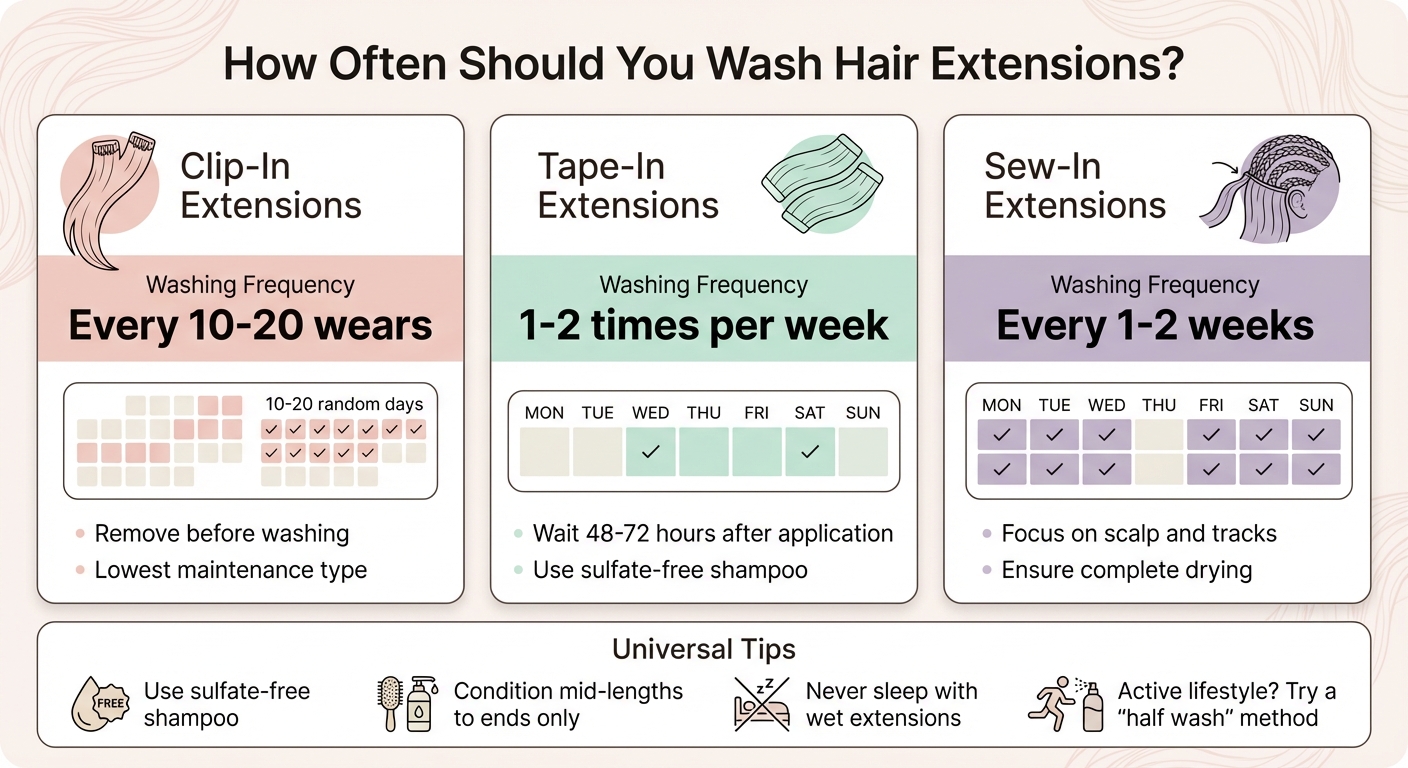
Hair Extension Washing Schedule by Type: Clip-In, Tape-In, and Sew-In Care Guide
How To Wash Clip-In Hair Extensions | Luxy Hair

How Often Should You Wash Hair Extensions?
The right washing schedule for hair extensions depends largely on how they're attached and how often you wear them. Different types of extensions require unique care routines to keep them looking and feeling their best.
Clip-In Extensions
Clip-in extensions are low-maintenance when it comes to washing. Experts suggest cleaning them every 10–20 wears. Since clip-ins are removed nightly, they don't accumulate as much oil or product as other types. You'll know it's time for a wash when they start to feel heavy, sticky, or lose their shine.
"Over washing can lead to dryness, so a gentle cleanse every 10 to 15 wears is usually enough." - Heather Collier, Cliphair US
To avoid stripping moisture and cutting their lifespan short, wash clip-ins sparingly. If you use little to no styling products, you might even stretch the interval further. Always remove clip-ins before washing to protect the clips and your natural hair.
Now, let's look at tape-in extensions.
Tape-In Extensions
For tape-in extensions, the general recommendation is washing 1–2 times per week. However, if you work out often or use a lot of styling products, you may need to wash them up to three times weekly. After the initial application, wait 48–72 hours before washing to ensure the adhesive bonds have fully set.
Protecting the adhesive is key. Use sulphate-free shampoos and apply conditioner only from the mid-lengths to the ends to keep the bonds intact. For those with an active lifestyle, a 'half wash' - rinsing the roots with warm water while lightly conditioning the ends - can help maintain cleanliness without over-drying the extensions.
Now, let’s move on to sew-in extensions.
Sew-In Extensions
Sew-in extensions generally require washing once or twice per week. For coarse, coiled, or tightly curled hair, washing every two weeks may be enough to maintain both scalp and hair health. The goal is to strike a balance between keeping the scalp clean and preserving the security of the wefts, as overly vigorous washing can loosen the bonds and harm your natural hair.
When washing sew-ins, focus on cleansing the scalp and the tracks where the extensions are attached. Gently massage these areas to remove buildup and excess oil. After washing, make sure the roots and tracks are completely dry to avoid matting or potential scalp issues.
What Affects Washing Frequency
How often you should wash your hair extensions depends on a mix of personal habits and environmental factors. By understanding these influences, you can tailor a routine that keeps both your scalp and extensions in great shape.
Your Hair Type and Texture
Your scalp naturally produces oils that protect your hair, but extensions don’t benefit from this. While your roots may get oily, the extensions themselves usually stay much drier.
If you have an oily scalp or fine hair prone to greasiness, you might need to wash your roots more often - but not necessarily the extensions. The "half wash" method can help: rinse just the roots with warm water and refresh the mid-lengths with conditioner instead of doing a full shampoo.
"Extensions don't get oily the same way natural hair does, because they aren't attached to your scalp. Washing too often can dry them out, cause tangling, and shorten their lifespan." - EH Hair & Extensions
For those with naturally dry or coarse hair, you can often go longer between washes. When washing, focus conditioner on the mid-lengths and ends to avoid loosening bonds or adding extra oil to the scalp. Between washes, dry shampoo is a great option to manage oil at the roots without exposing your extensions to water and detergent.
How often you wash also depends on your daily routine and activities.
Your Daily Activities
If you exercise regularly, sweat can make your scalp feel heavy or dirty. After workouts, try the half wash technique to freshen up the roots. For swimming, rinse with fresh water first, then follow up with shampoo and deep conditioner.
Swimming poses its own set of challenges. Chlorine and salt water can dry out extensions and cause tangling, so extra care is needed. Before swimming, detangle your hair and apply a leave-in conditioner to create a protective barrier. Afterward, use a double shampoo and a deep treatment mask to restore moisture. Tying your hair in a low, loose plait while swimming can help prevent tangling - avoid tight buns or top knots, which can cause severe matting.
"The pool is full of chemicals that can damage your hair and make it dry. If you can't wear a cap, try to wash your hair out with fresh water as soon as possible after you swim." - Foxy Locks
Never sleep with wet extensions, especially after a late workout or swim, as this can lead to tangling and damage to the bonds.
Environmental factors, particularly in Australia, also influence how often you’ll need to wash your extensions.
Australian Climate Conditions
Australia’s varied climate plays a big role in how you care for your extensions. In hot or humid weather, sweat and product buildup can occur more quickly. If you notice this, you might need to wash up to three times per week, using the half wash method to maintain moisture.
In dry heat, extensions can become brittle faster than natural hair due to the lack of natural oils. Applying a small amount of treatment oil, like argan or rose oil, to the mid-lengths and ends daily can help keep them hydrated.
Humid conditions often require more styling products to control frizz, which can lead to buildup and make hair feel heavy. After washing, ensure that extension tapes or tracks are completely dry to prevent mildew. Activities like swimming in saltwater, common in the Australian lifestyle, call for the post-swim care routine mentioned earlier.
"If you feel you have a lot of product build up or it has been a particularly warm week then 3 times per week is the maximum." - Abbey Wilson, Cliphair
sbb-itb-dcde78e
How to Wash Hair Extensions: Step-by-Step
Taking proper care when washing your hair extensions is key to keeping them in great condition and extending their lifespan. Since extensions require a slightly different approach compared to natural hair, following the correct steps makes all the difference.
Getting Your Extensions Ready
Before washing, make sure your extensions are fully detangled. Start at the ends and work your way up to avoid damaging the bonds. Use a gentle tool like the Hair Wonderland Tangle Tamer Brush (available for $21.95) or a wide-tooth comb for this step.
"Always brush from the bottom and work your way up to minimise breakage." - Prue, Lady and the Hair
To protect the attachment points, hold the weft securely at the top while brushing. For clip-in extensions, stack or align the wefts on a flat surface before washing to keep the clips from tangling. If there’s any noticeable product buildup or stubborn tangles, take extra care to address those before moving on.
Washing and Conditioning Process
Fill a basin with lukewarm water (around 32–38°C). Avoid hot water, as it can weaken both the strands and the bonds, and steer clear of cold water, which might not effectively clean the extensions. Apply a sulfate-free shampoo, focusing on the mid-lengths and ends while avoiding the bonds or tapes. Smooth the shampoo through the strands gently - no scrubbing or rubbing.
Rinse thoroughly to remove all shampoo, then apply conditioner to the mid-lengths and ends, steering clear of the roots and attachment points. Let the conditioner sit for about 2–3 minutes before rinsing it out with cool water, which helps close the cuticle. For clip-in extensions, wash them in a sink or basin, keeping the wefts aligned throughout the process. Once rinsed, you’re ready to move on to drying and styling.
Drying and Styling Your Extensions
After washing, gently squeeze out any excess water using a microfibre towel. This reduces friction and helps prevent frizz. For clip-in extensions, lay the wefts flat on a clean towel and allow them to air dry naturally.
If you’re in a hurry, you can use a blow-dryer, but keep it on low to medium heat. Direct the airflow downward and start drying at the attachment points to ensure they’re fully dry before moving on to the rest of the hair.
While the extensions are still slightly damp, apply 1–2 pumps of treatment oil to the mid-lengths and ends for added nourishment. Avoid brushing until the extensions are almost completely dry, as wet hair is more prone to stretching and breakage. And one last tip - never sleep with wet extensions, as this can lead to matting and tangling.
Products for Hair Extension Care
Using the right products is just as important as proper washing and styling techniques when it comes to maintaining the durability and shine of your hair extensions. High-quality care products can significantly extend the life of your extensions. Hair Wonderland extensions, crafted from 100% Remy European human hair, require moisture-rich products to stay soft and manageable.
Shampoos and Conditioners
When selecting shampoos and conditioners, it's crucial to avoid certain ingredients. Hair Wonderland advises:
"Avoid products containing: protein, keratin, sulfates, and high alcohol content. These can damage your extensions and make them unmanageable after just one use."
For hydration, try Moisture Magic ($39.95), a shampoo designed to provide the extra moisture extensions need. Apply a small amount of shampoo to the scalp only, then follow with conditioner on the mid-lengths and ends. To give your extensions a deeper boost, use a treatment mask once a week. Leave it on for at least 5 minutes and rinse with cool water for the best results.
Hair Wonderland Tools and Accessories

The right tools can make all the difference in maintaining your extensions and ensuring the products work effectively.
- Tangle Tamer Brush ($21.95): Perfect for detangling before and after washing, this brush is gentle on extension bonds and prevents damage or snagging.
- The Detangle Brush ($29.95): An alternative option suitable for all hair types, designed to minimise breakage while detangling.
- Clip In Bag ($54.00): Ideal for storing clip-in extensions, this bag helps keep them organised and prevents matting or tangling between uses.
- Styling Comb ($12.95): Great for evenly distributing treatment oils or heat protectants through damp hair after washing.
To maintain your 6-week service warranty, remember to use Hair Wonderland’s recommended products from The Hair and The Honey range. These tools and products ensure your extensions stay in top condition while prolonging their life.
Conclusion
Caring for your hair extensions should align with both the attachment method and your daily habits. The right washing routine depends on your extension type and lifestyle, balancing the need for cleanliness with the fact that extensions don’t benefit from natural scalp oils to retain moisture.
Your hair type and activities play a big role in determining how often to wash. Finer hair may need more frequent professional upkeep, while an active lifestyle might require a "half wash" - a quick scalp refresh that avoids over-drying your extensions. In Australia's warmer months, when sweat and product buildup are more common, you might find yourself washing your extensions as often as three times a week.
Before washing, always detangle your hair thoroughly. Use lukewarm water and apply conditioner only from the mid-lengths to the ends. The products you choose matter too - steer clear of shampoos and conditioners with sulphates, proteins, keratin, or high alcohol content, as these can make your extensions hard to manage. With the right care and moisture-rich products, Remy human hair extensions can stay in great condition for six months or more.
FAQs
How can I keep my hair extensions soft and tangle-free?
To keep your hair extensions feeling soft and free from tangles, proper care is key. Start by detangling them gently with an extension-safe brush before washing. This helps to minimise knots and makes the washing process smoother. Use lukewarm water paired with a sulphate-free shampoo, concentrating on the roots. For added moisture and softness, apply conditioner to the mid-lengths and ends.
Whenever you can, let your extensions air-dry to reduce the risk of heat damage, which can cause dryness and tangling. Scheduling in-salon maintenance every 5–6 weeks is also essential. This allows your stylist to reposition the extensions and address any issues caused by natural hair shedding. Stick to products recommended by your stylist, avoid harsh chemicals, and brush gently every day to keep your extensions looking great.
What is the 'half wash' method, and how can I use it with hair extensions?
The 'half wash' method is a clever way to freshen up your hair without fully washing your extensions. This technique focuses on cleaning just the crown area (the top part of your natural hair) while leaving the extensions untouched. It’s especially useful around day 4 after your last full wash, though this may vary depending on your hair type and daily routine.
Here’s how to do it: Carefully section off the top part of your hair and cleanse it with a mild shampoo. Be sure to avoid getting water or product on the extensions. Once done, rinse thoroughly and style as you normally would. By sticking to this method, you can help preserve the longevity of your extensions, as it minimises over-washing and reduces unnecessary wear.
What products should I avoid when caring for hair extensions?
To keep your hair extensions looking their best, it's important to avoid products with sulfates, keratin, proteins, or high alcohol content. These ingredients can strip moisture from the extensions, leaving them dry, brittle, and difficult to manage. Instead, choose sulfate-free shampoos and other gentle products specifically designed for extensions to help maintain their quality.
If you have tape-in or keratin bond extensions, be extra cautious with your product choices. Harsh chemicals or anything that causes buildup can weaken the bonds, potentially shortening their lifespan. It's always a good idea to follow your stylist's recommendations for the right products to keep your extensions healthy, shiny, and lasting longer.