


Yes, they can. Using regular hair products on extensions can cause dryness, tangling, and even shorten their lifespan. Extensions lack the natural oils from your scalp, making them more vulnerable to harsh ingredients like sulfates, high alcohol levels, protein, and keratin. These ingredients strip moisture and can weaken adhesives in tape extensions, leading to slippage or damage.
Key Points:
- Avoid harmful ingredients: Sulfates, short-chain alcohols, heavy silicones, and protein can dry out and damage extensions.
- Use extension-friendly products: Opt for sulfate-free shampoos, lightweight oils, and specialised brushes.
- Handle with care: Brush your extensions gently, focus shampoo on the scalp, and avoid heavy styling products near bonds.
Switching to the right products and techniques can keep your extensions smooth, tangle-free, and long-lasting. Proper care is essential to protect your investment and maintain the look of your extensions.
5 Tips to STOP Hair Extension Damage + Fallout | ellebangs
sbb-itb-dcde78e
Can Regular Hair Products Damage Extensions?
Yes, they can. Regular hair products are typically designed for natural hair, which benefits from natural oils, known as sebum, produced by the scalp. Extensions, however, don't have access to this natural nourishment, making them more susceptible to damage from standard formulations. Everyday shampoos often contain ingredients like sulfates, high alcohol content, protein, and keratin, which can strip moisture from the extensions and weaken them over time.
Sulfates, in particular, are a common culprit. They not only dry out the extensions but can also weaken the adhesives in tape-in extensions, causing them to slip or detach earlier than expected. This damage can also make it harder to blend extensions with natural hair for a seamless look. Additionally, many shampoos have an alkaline pH, which creates a negative charge on the hair shaft. This increases friction, leading to tangling and further wear and tear.
Why Extensions Are More Prone to Damage
Extensions are at a disadvantage because they lack the natural nutrient and moisture supply that comes from being attached to a scalp. Each wash with unsuitable products strips away moisture, and unlike natural hair, extensions can't replenish it.
While natural hair can recover due to the scalp's ability to repair and nourish, extensions accumulate damage over time. This ongoing moisture loss can result in brittleness, tangling, and a dull, lifeless appearance.
The attachment points for extensions - whether tape-ins, keratin bonds, or sew-ins - are also highly sensitive to certain chemicals. For example, silicones can create a film around the hair shaft, blocking moisture and building up around the bonds, which increases the likelihood of slippage. Because of these vulnerabilities, many professional extension brands only honour warranties if you use their recommended products.
Harmful Ingredients Found in Regular Hair Products
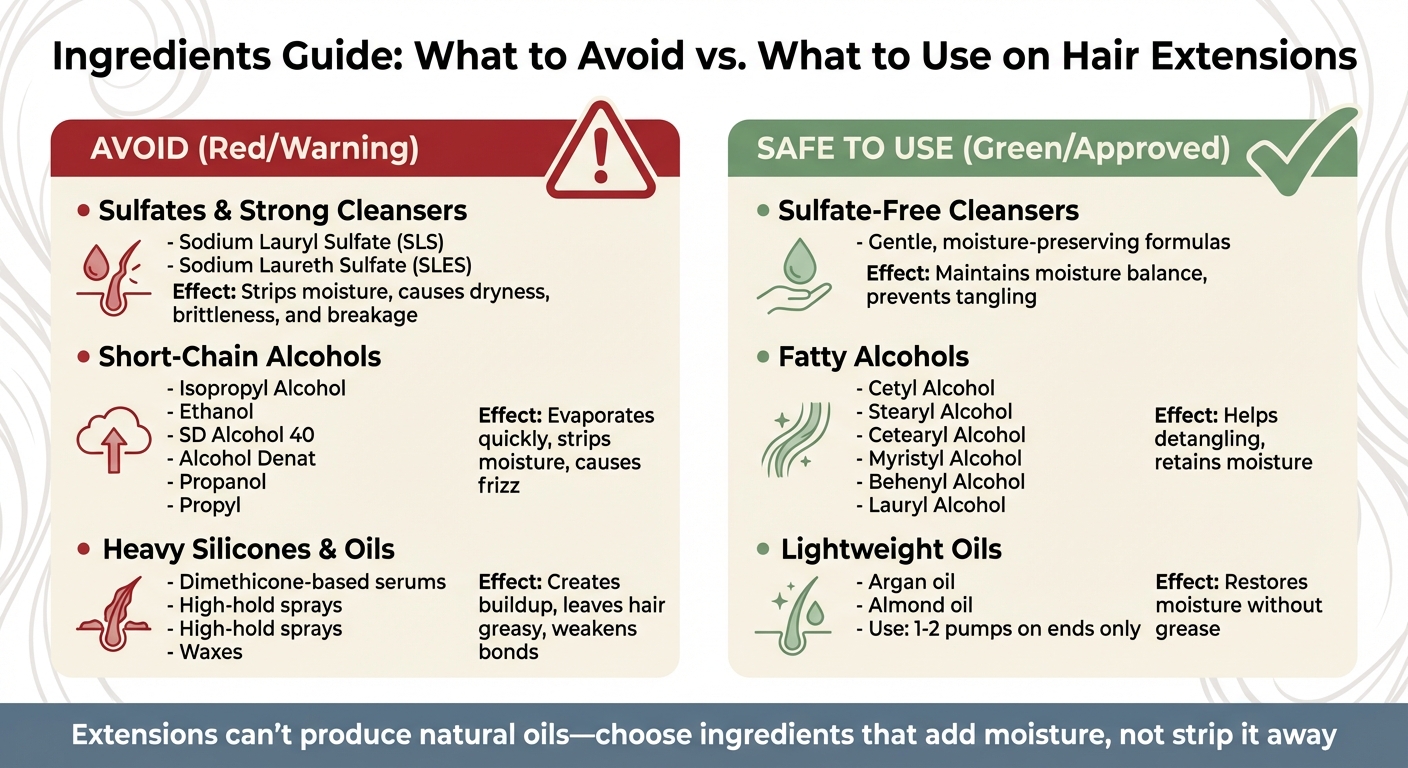
Harmful vs Safe Ingredients for Hair Extensions Care
Understanding the ingredients in your hair products is key to protecting your extensions. Unlike natural hair, extensions don’t benefit from scalp oils, making them more vulnerable to harsh chemicals. Knowing which ingredients to avoid can save you from unnecessary damage and extend the life of your investment.
Sulfates and Strong Cleansers
Sodium Lauryl Sulfate (SLS) and Sodium Laureth Sulfate (SLES) are common foaming agents in shampoos. While they create that satisfying lather, they also strip moisture from hair. For extensions, which can’t replenish moisture naturally, this leads to dryness, brittleness, and eventual breakage.
"Hair extensions washed with sulfate products will be left dry, brittle, and eventually will start to tangle and experience irreparable breakage." – Haley Dagan
If you’ve spent anywhere from A$150 to over A$1,000 on extensions, using sulfate-based shampoos could drastically shorten their lifespan. Every wash with these products accelerates tangling and damage, leaving your extensions unmanageable.
Alcohols and Drying Agents
Not all alcohols are harmful, but short-chain alcohols - like Isopropyl, Ethanol, SD Alcohol 40, Alcohol Denat, Propanol, and Propyl - are particularly damaging. These ingredients evaporate quickly, stripping away moisture and leaving extensions frizzy and dull.
On the other hand, fatty alcohols such as Cetyl, Stearyl, Cetearyl, Myristyl, Behenyl, and Lauryl are a different story. Derived from oils, these alcohols help with detangling and moisture retention, keeping your extensions smooth and manageable.
Heavy Oils and Silicones
Lightweight oils can be beneficial for extensions, but heavy silicones and thick oils can create buildup. Over time, this buildup leaves extensions greasy, flat, and lifeless. Worse, it often leads to more frequent washing, which further dries out the hair and weakens the bonds.
Products like high-hold sprays, waxes, and dimethicone-based serums can clog the hair cuticle. What starts as a styling fix can turn into a damaging cycle - product buildup forces more washing, which strips even more moisture, leaving you reliant on additional styling products to maintain a polished look.
How to Protect Your Extensions
Now that you know which ingredients to steer clear of, it’s time to establish a hair extension care routine that keeps your extensions looking their best. Extensions thrive on consistent external moisture, and the right products and techniques can make all the difference. With proper care, your extensions can stay silky and tangle-free for months instead of becoming dull and knotted in weeks. Let’s start with choosing the right cleansing products.
Choose Sulfate-Free Shampoos and Conditioners
Sulfate-free shampoos and conditioners are a must for extensions. Regular shampoos can strip away moisture, leaving extensions dry and prone to tangling. Look for products like Design Essentials Moroccan Oil Sulfate-Free Conditioning Shampoo (A$7.95 for 180ml) or Redken Color Extend Magnetics Shampoo (A$54.95 for 1L), which help maintain moisture balance and protect colour vibrancy.
When washing, focus shampoo application on the scalp, gently massaging it in, and apply conditioner only to the mid-lengths and ends to avoid weakening the bonds. Finish with a cool water rinse to seal the cuticles and lock in moisture. To prevent over-washing, stick to cleansing your hair 2–3 times a week.
Use Lightweight Styling Products
Heavy products like oils, waxes, and silicone-based formulas can weigh extensions down and even cause bonds to slip. Instead, choose lightweight oils such as argan or almond oil. Just 1–2 pumps applied to the ends can restore moisture without leaving a greasy residue.
"Avoid heavy oils, waxes, and silicone-based products as they can cause residue buildup and make nano rings slip or become visible."
Always use a heat protectant before styling with hot tools, and keep styling products away from the bonds to prevent weakening or slipping.
Brush Extensions Correctly
Proper handling is just as important as product choice. To avoid damage, start brushing at the ends and work your way up to the roots. This reduces tension on the bonds and minimises breakage. Aim to brush your hair twice daily - once in the morning and again at night - to keep it smooth and tangle-free.
Invest in a specialised extension brush like the Tangle Tamer (A$21.95). Unlike standard brushes with ball-tipped bristles that can snag on tapes or beads, this type glides gently over the bonds. Before showering or swimming, detangle your dry hair thoroughly to prevent severe matting when wet. For extra protection, hold your hair in a loose ponytail or grip near the scalp while brushing the lengths. This helps support the weight of the extensions and shields the bonds from unnecessary strain.
Hair Wonderland Extensions and Care Products
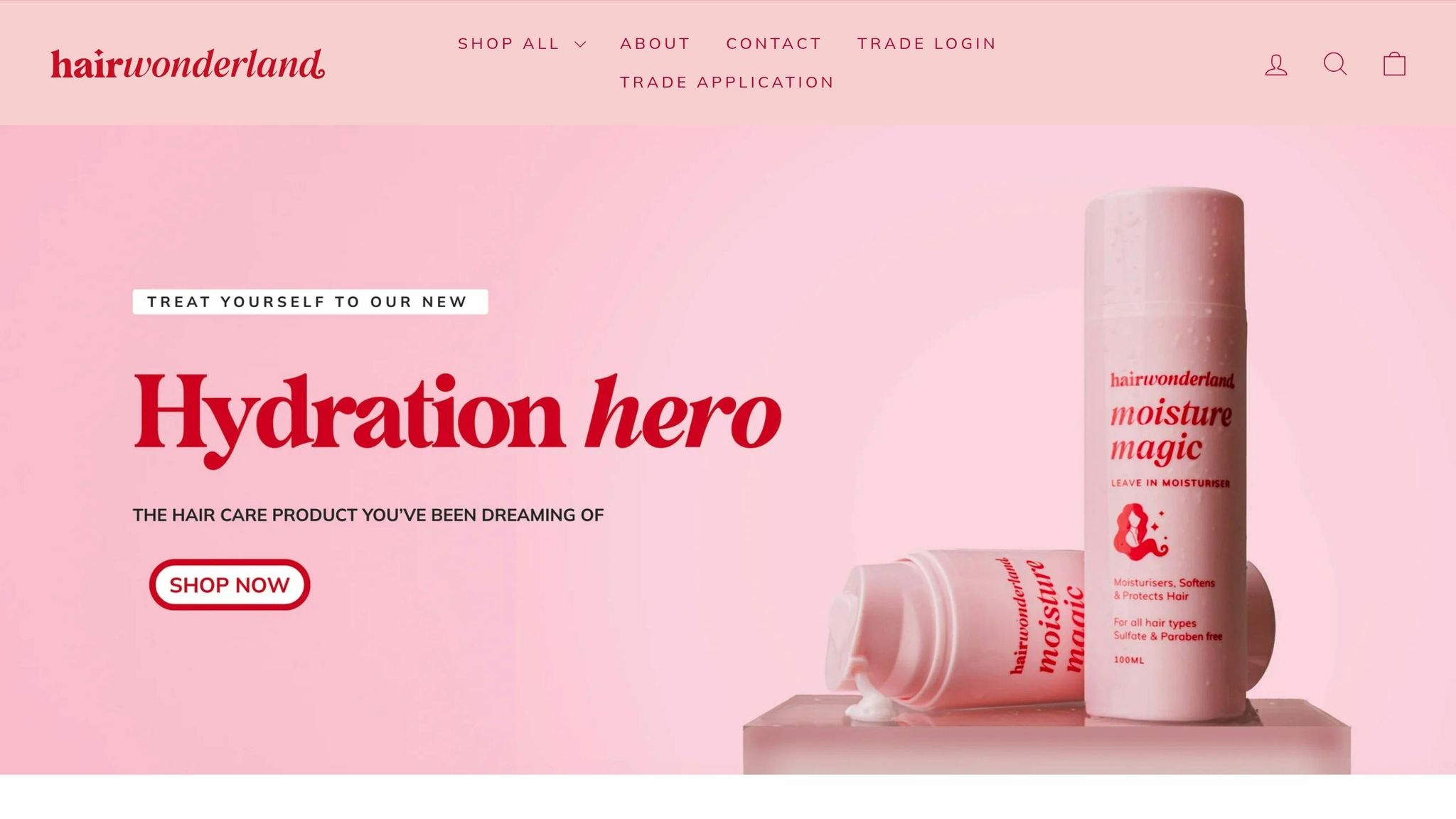
Hair Wonderland goes beyond offering premium extensions by providing specialised products to help protect and prolong the life of your extensions.
Why Quality Extensions Last Longer
Hair Wonderland's Russian and Mongolian human hair extensions are designed for durability, especially when given proper care. These premium extensions are built to handle daily use while maintaining their luxurious appearance.
Take the Seamless Set 22" as an example. Priced at A$499.00, it weighs 200 grams and features Invisi® weft technology, ensuring a seamless, flat-to-scalp fit. This lightweight design not only provides full, natural-looking volume but also reduces strain on your natural hair. To keep them in top condition, schedule regular salon maintenance every 6–8 weeks and wash them 2–3 times per week. Use a hair extension maintenance planner to stay on track. With this routine, these extensions can last significantly longer compared to lower-quality alternatives.
However, maintaining the quality of your extensions isn't just about the hair itself - it’s also about using the right tools.
Care Tools That Protect Extensions
The tools you use can make or break the lifespan of your extensions. Take the Tangle Tamer Brush for instance. At A$21.95, this brush is specifically crafted to glide smoothly over bonds and wefts without snagging. Unlike traditional brushes with ball-tipped bristles that can pull on attachment points, this brush reduces tension on your scalp and prevents damage to your extensions.
For those with tape-in extensions, Hair Wonderland offers professional-grade Tape Sheets for A$78.00 and Removal Solution for A$54.00. These products ensure secure application and safe removal, protecting both your extensions and your natural hair. Always use the professional removal solution to avoid unnecessary damage when detaching extensions. These tools are essential for refreshing your extensions while safeguarding your natural hair and the investment you've made in premium extensions.
Conclusion
Regular hair products can harm extensions. Unlike natural hair, extensions can’t restore moisture on their own, leaving them prone to damage from harsh ingredients like sulfates, high alcohol levels, protein, and keratin. These can make extensions difficult to manage, while sulfates specifically can weaken tape adhesives, causing further issues.
Switching to extension-friendly products is essential. Sulfate-free shampoos, lightweight argan oil, and specialised brushes can help prevent dryness, tangling, and shedding. Premium human hair extensions, when cared for properly, can last between 12 and 24 months, far outlasting the 3 to 6 months typical of lower-grade options. This difference underscores how much proper care matters.
For premium extensions, choosing the right products is key. Hair Wonderland’s double-drawn Russian and Mongolian human hair extensions are designed for durability, but they still need a tailored maintenance routine. Products like Moisture Magic (A$39.95) and the Tangle Tamer Brush (A$21.95) are specifically recommended to keep your extensions in top shape. Plus, Hair Wonderland’s warranty for the first six weeks is valid only if you use their recommended care products.
FAQs
What ingredients in hair products can harm extensions?
To keep your hair extensions in great condition, it’s important to avoid products containing sulfates like Sodium Lauryl Sulfate and Sodium Laureth Sulfate. These ingredients can strip away essential oils, leaving extensions dry and prone to breakage. Likewise, stay away from products with high levels of alcohol, such as Alcohol Denat, Ethanol, Propanol, and Isopropyl, as these can weaken the bonds and lead to long-term damage.
Opt for gentle, extension-friendly products instead. This will help preserve the strength, comfort, and natural appearance of your extensions, allowing them to last longer and blend effortlessly with your hair.
Can regular hair products damage my extensions?
Yes, using the wrong hair products can damage your extensions and shorten their lifespan. To keep them in great condition, steer clear of products with sulfates, keratin, protein, or high alcohol content, as these ingredients can weaken the extensions or dry them out.
For the best results, use products your stylist recommends and gently brush your extensions every morning with a detangling brush. If you’re using heat styling tools, always apply a heat protectant spray and avoid using too much heat to preserve the quality of the hair. Don’t skip regular in-salon maintenance either - visiting your stylist every 5–6 weeks is key to keeping your extensions secure and your natural hair in good shape.
Can regular hair products damage hair extensions?
Yes, using regular hair products on extensions can lead to damage. Unlike natural hair, extensions don’t benefit from the scalp’s natural oils, leaving them more vulnerable to dryness and breakage. Many common hair products, like shampoos and conditioners, include sulfates, parabens, or high levels of alcohol. These ingredients can strip moisture, weaken the bonds, and cause tangling or even slipping of the extensions.
To keep your extensions in great shape, it’s crucial to use products specifically designed for extensions. These are made to be gentle, free from harsh chemicals, and help maintain the softness, shine, and durability of your extensions. Choosing the right products is key to preserving their look and lifespan.