


Creating natural-looking extensions requires either cutting or shaping techniques. Here’s the difference:
- Cutting: Trims length and bulk for clean lines. Ideal for removing blocky ends, creating specific styles, or revitalising worn extensions.
- Shaping: Focuses on blending extensions with natural hair seamlessly using layering and texturising. It softens harsh lines, adds movement, and ensures a seamless transition.
Both methods require precision to avoid issues like uneven layers or over-thinning, which can shorten the lifespan of extensions.
Quick Tip: Cutting works best for length adjustments, while shaping is perfect for blending and creating fluidity. Always consult a professional for the best results.
how to: cut extensions for blending on yourself (beginner friendly)
sbb-itb-dcde78e
What is Cutting Hair Extensions?
Cutting hair extensions involves trimming them with tools like scissors, razors, or thinning shears. This process adjusts the length, reduces bulk, or shapes the extensions to achieve a desired style. It's a key part of customising extensions, laying the groundwork for further styling adjustments.
For the best results, work with clean, dry, and smooth hair, ensuring the extensions are clipped in properly to evaluate how they naturally fall. Charlotte Hickey, Founder of North Hair, emphasises:
"Extensions are much easier to cut dry for a precise blend. Cutting extensions wet will leave uneven results."
There are four main techniques professionals use: blunt cutting for sharp lines, point cutting to add movement, thinning to reduce weight, and face-framing to blend the extensions seamlessly with the natural hairline. Each method has its own approach, timing, and benefits, which are essential to understand before starting.
How the Cutting Technique Works
Cutting extensions requires a careful, step-by-step approach. Stylists typically begin with the bottom layers and work their way up, finishing with detailed touches around the face. Matching the length of the extensions to your natural hair is the starting point. Tools like standard shears, combs, razors, and texturising scissors are used to achieve the desired effect.
The process is all about precision. Since extensions don’t grow back, it’s crucial to trim gradually, removing small amounts at a time to avoid irreversible mistakes. High-quality extensions often arrive with thick, blunt ends, which can look unnatural unless softened. As Charlotte Hickey explains:
"Good quality hair extensions will be thick and blunt, which is great, but once fitted to achieve a natural looking finish they need to be softened, especially around the face."
When to Use Cutting
Cutting plays an important role in several situations. First, during the initial fitting, it helps blend the extensions with natural hair and removes the V-shape that occurs when extensions sit higher at the sides of the head. Second, it’s ideal for shorter styles or specific looks like curtain bangs or face-framing layers. Lastly, cutting is useful when the ends of the extensions become worn or damaged over time.
This technique is essential for removing heavy, blocky ends and creating a smooth transition between your natural hair and the extensions. However, timing is critical. Extensions shed naturally over six to nine months, so it's important not to overdo it during the first cut. Removing too much length early on can reduce their lifespan and limit their reusability.
Pros and Cons of Cutting
| Pros | Cons |
|---|---|
| Accurately adjusts length to blend with natural hair | Length cannot be restored once cut |
| Revitalises extensions by removing damaged ends | Poor technique can result in uneven or choppy layers |
| Smooths out blocky or unnatural shapes | Over-texturising can lead to thinning too quickly |
| Allows for specific styles like face-framing layers | Requires professional skills for a flawless finish |
If you're not confident in your hairdressing skills, it’s best to consult a professional. Improper cutting can compromise the look and lifespan of your extensions, making expert guidance worth the investment.
What is Shaping Hair Extensions?
Shaping hair extensions involves layering and texturising techniques to blend extensions seamlessly with natural hair. The goal is to create a natural flow, volume, and movement while avoiding the "shelf effect" - that visible line where extensions and natural hair don't merge smoothly.
This process goes beyond basic trimming, which often leaves blunt ends. Instead, shaping uses point cutting to soften the edges and texturising to reduce bulk, ensuring the extensions move naturally. It focuses on blending the extensions with your natural hair rather than simply altering their shape.
How the Shaping Technique Works
Shaping requires precision and a focus on blending rather than just adjusting length. The main technique used is point cutting, where hair is cut at an angle to soften harsh lines and create movement while keeping the length intact. Texture scissors are also used to remove excess weight, preventing extensions from looking heavy or wedge-like.
Stylists often perform a gentle sliding cut around the face, working diagonally downward to blend the extensions naturally. Long layers are added to the sides and back to enhance softness and movement. Importantly, shaping is done on dry, styled hair so the stylist can see how the hair naturally falls. This method ensures the extensions not only look natural but also align with your everyday hairstyle.
When to Use Shaping
Shaping is especially useful when blending extensions with layered natural hair, ensuring they don't appear blocky. It's ideal for short-haired individuals adding length, creating curtain bangs, or avoiding the V-shape that can happen when extensions are placed higher on the head.
For curly or wavy extensions, shaping is critical to ensure different textures blend naturally. This technique allows curls to fall at varying heights, creating a rounded and realistic look rather than a triangular or pyramid effect.
Pros and Cons of Shaping
| Pros | Cons |
|---|---|
| Seamlessly blends extensions with natural hair | Requires advanced skills and precision |
| Adds natural movement and dimension | Irreversible length removal |
| Eliminates the shelf effect and unwanted V-shape | Over-texturising can lead to faster shedding |
| Maintains volume while reducing bulk | More time-consuming than basic cutting |
| Can thin extensions if overdone |
When done correctly, shaping softens the ends and maintains durability without excessive removal. However, improper techniques can create stress points, leading to damage over time. This is why it’s crucial to rely on professional expertise for the best results.
Cutting vs. Shaping: Main Differences
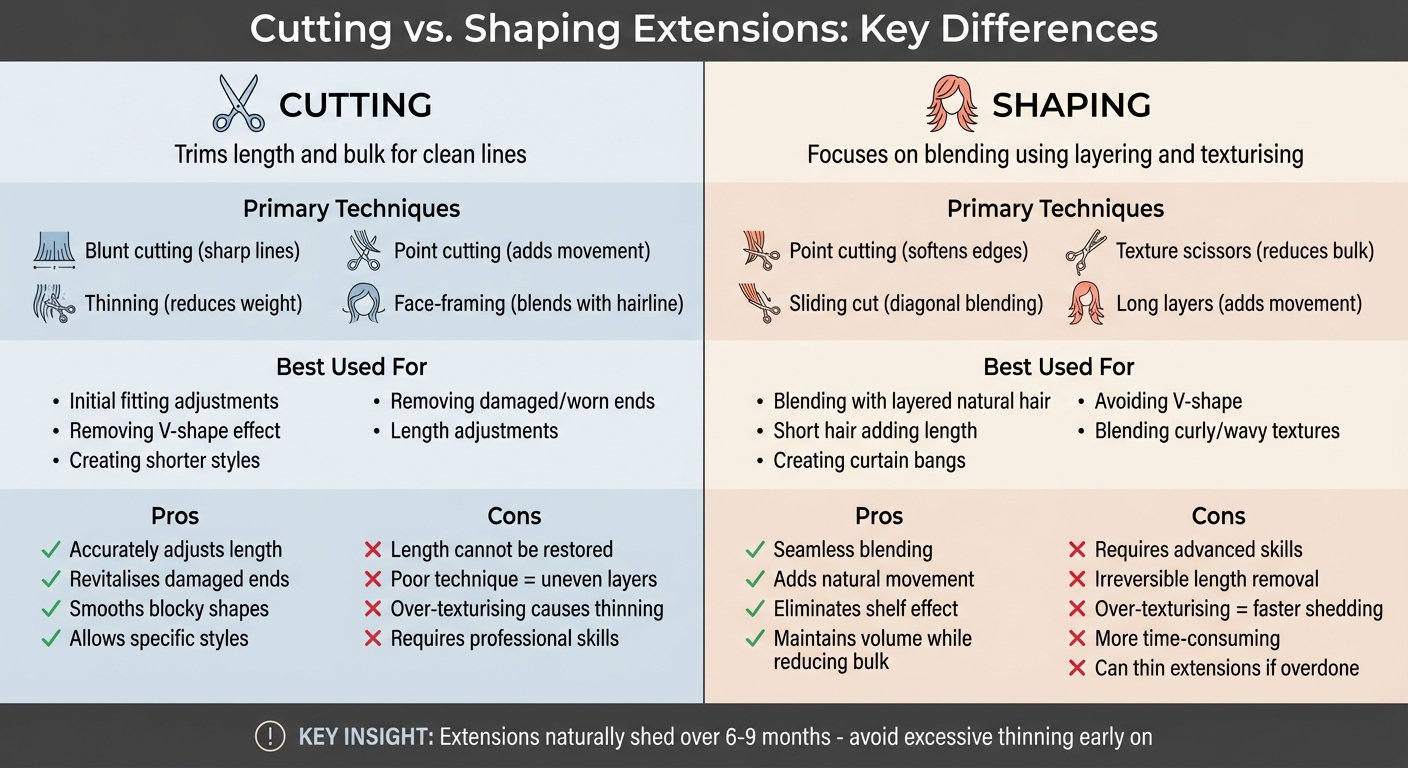
Cutting vs Shaping Hair Extensions: Techniques, Benefits and Drawbacks Comparison
How the Techniques Differ
Both cutting and shaping aim to achieve a natural blend between your hair and extensions, but they work in distinct ways to address aesthetics and extension longevity. While both techniques involve scissors, their goals differ. Cutting focuses on adjusting length and removing the blunt ends common in high-quality extensions. This ensures a smooth, uniform finish without a harsh, unnatural line at the bottom.
Shaping, on the other hand, is all about seamless integration. It uses methods like point cutting, texture scissors, and sometimes razors to create face-framing layers and reduce bulk. While cutting typically softens ends with straightforward point cutting, shaping incorporates a dragging technique with scissors or razors to blend natural hair with the extensions for a polished, cohesive look.
How Each Method Affects Extension Durability
Natural shedding is a key consideration when deciding between these methods. Extensions naturally shed over 6–9 months, so any initial thinning or texturising can become more noticeable over time.
Cutting, when done conservatively, has minimal impact on durability since it only removes blunt ends without significantly reducing density. Shaping, however, requires more precision. Charlotte Hickey highlights this point:
"Avoid adding too much texture as the extensions will naturally shed over the next 6–9 months".
Excessive thinning early on can lead to premature loss of volume.
Maintenance is another factor to keep in mind. Extensions need re-blending at each fitting, so removing too much length initially can complicate future adjustments. Hickey advises:
"At the next fitting, the extensions will need to be blended again, so removing too much length at this stage will make it more difficult on the next fitting".
Balancing these factors ensures your extensions remain both stylish and durable.
How to Choose the Right Method
Your choice depends on your hair texture, the application method, and your styling preferences. For example, if you're adding a lot of length or your extensions are fitted higher on the sides, shaping is crucial to avoid a noticeable V-shaped gap. On the other hand, if your natural hair has a relatively even length and just needs trimming to match the extensions, cutting may be all you need. For those with curly or wavy hair, shaping is particularly helpful to blend textures naturally at different heights.
It’s always a good idea to consult your stylist about your hair routine and desired outcome. As Hickey notes:
"Extensions will leave a solid thick line if cut bluntly. Point cutting will soften this, while maintaining a blunt style that looks natural".
Choosing the right technique not only enhances your look but also helps protect your investment, ensuring your extensions remain beautiful and long-lasting.
Why Hair Wonderland is Your Go-To for Premium Extensions
When it comes to extensions, achieving a polished look and ensuring they last requires high-quality products and proper care. Hair Wonderland stands out as a trusted choice for premium extensions.
Hair Wonderland's Quality Standards
Hair Wonderland uses double-drawn Russian/Mongolian hair, known for its full-bodied ends and natural appearance. This type of hair blends effortlessly with your own, making it ideal for cutting or shaping extensions to perfection. Its fine texture not only feels comfortable but also moves naturally, offering a lifespan of 12–18 months when cared for correctly. This durability is a game-changer, especially for advanced cutting and shaping techniques, as it reduces shedding and keeps your extensions looking flawless.
Tools and Accessories for Better Results
Maintaining extensions, especially after cutting or shaping, requires the right tools. Hair Wonderland provides accessories designed specifically for premium human hair:
- Detangling brushes with flexible bristles ($21.95 and $29.95) to gently remove tangles without damaging your extensions.
- Wide-tooth styling combs ($12.95) to minimise shedding while blending extensions seamlessly.
- Reusable tape sheets ($78.00) for secure reinstallation, perfect for adjustments after cutting.
These tools are tailored to support professional techniques, ensuring your extensions maintain their natural look and feel.
The Hair Care Guide
Proper care is the key to extending the life of your expertly cut and shaped extensions. Without it, the lifespan of extensions can be reduced by as much as half. Hair Wonderland addresses this with a comprehensive Hair Care Guide, packed with practical advice. Their tips include:
- Washing with sulphate-free products every 7–10 days.
- Air-drying clip-ins to prevent damage.
- Weekly conditioning treatments to keep hair hydrated.
- Protecting extensions from UV damage during Australia's sunny summers.
- Storing extensions in cool conditions (under 25°C) to avoid heat damage.
To make maintenance even easier, Hair Wonderland offers video tutorials, downloadable checklists, and access to salon-partner consultations. With these resources, you'll have everything you need to keep your beautifully cut and shaped extensions looking their best for the long haul.
Conclusion
Knowing the difference between cutting and shaping extensions is key to achieving your desired look while keeping your extensions in great condition. Cutting is ideal for precise length adjustments or creating blunt finishes, while shaping focuses on adding soft layers and blending extensions naturally with your own hair. Each approach serves a specific purpose, so the choice depends on the style you're aiming for and the state of your extensions.
High-quality extensions play an important role in achieving the best results. Hair Wonderland's double-drawn Russian/Mongolian hair offers excellent durability and blends effortlessly for a natural, long-lasting finish.
For a polished result, trim extensions about 1–2 inches longer than your natural hair, and add 2–3 inches of vertical layering off-head before blending them in. This method gives you more control over the outcome while protecting the extensions' integrity.
Whether you're working with a professional stylist or managing your extensions at home, having the right tools is essential. Hair Wonderland offers detangling brushes, styling combs, and a detailed Hair Care Guide to help you maintain your extensions. Combining the right techniques with quality tools ensures your extensions look natural, move beautifully, and feel just like your own hair.
FAQs
Can I cut or shape extensions at home?
Yes, you can trim or style extensions at home, particularly if they’re made from human hair. For the best outcome, use professional hair scissors and always cut them while dry. On the other hand, synthetic extensions should generally not be trimmed unless the manufacturer specifically states it’s safe to do so. Always check the type of extensions you’re working with to maintain their quality and achieve the look you’re aiming for.
How do I know if I need cutting or shaping?
Deciding between trimming or shaping extensions comes down to the look you want and the condition of the extensions. Shaping works well for adding layers, smoothing out density, or blending the extensions with your natural hair. On the other hand, trimming is perfect for shortening the length or reducing volume to match your haircut. Done properly, both approaches help create a seamless, natural finish.
Will shaping make my extensions shed faster?
Shaping your extensions the right way won't lead to faster shedding. However, if shaping is done poorly or involves rough handling, it can weaken the attachment points, making shedding more likely. Always treat your extensions with care to help them last longer and stay in good condition.