


When choosing between ceramic and titanium tools for styling hair extensions, the decision comes down to your extension type and how you style them. Ceramic tools are gentle, heat evenly, and help retain moisture, making them ideal for fine, fragile, or colour-treated extensions. Titanium tools, on the other hand, heat up faster and work well for thick, coarse, or curly extensions, but they require careful handling to avoid damage.
Key Takeaways:
- Ceramic tools: Best for delicate extensions; even heat, moisture retention, and frizz control.
- Titanium tools: Great for thicker textures; fast heating and fewer styling passes but higher heat risks.
- Both tools should be used with heat protectants and proper care to maintain extension quality.
Quick Comparison Table
| Feature | Ceramic Tools | Titanium Tools |
|---|---|---|
| Heat Distribution | Even (infrared) | Intense, surface heating |
| Heat-Up Time | 30–60 seconds | Under 30 seconds |
| Extension Suitability | Fine, fragile, colour-treated | Thick, coarse, curly |
| Damage Risk | Lower | Higher |
| Durability | Fragile, prone to chipping | Durable, lightweight |
Choose wisely based on your extension type and ensure proper care for long-lasting results.
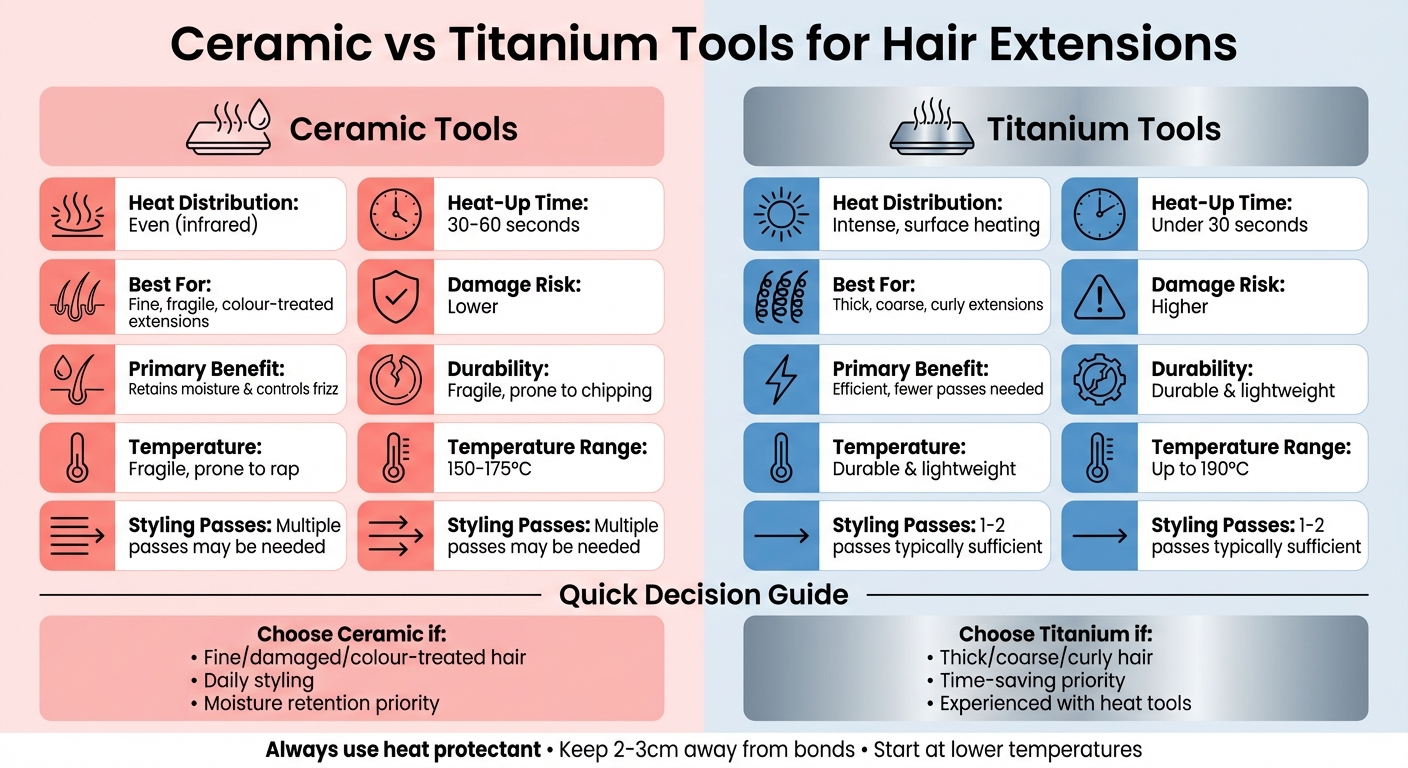
Ceramic vs Titanium Hair Extension Tools Comparison Chart
How Ceramic and Titanium Heat Tools Work
Ceramic Tools Explained
Ceramic plates use infrared heat to warm the hair from the inside out, rather than just heating the surface. This approach ensures the heat is spread evenly across the plates, avoiding those pesky hot spots that can lead to uneven styling or damage.
An added bonus of ceramic tools is their ability to naturally produce negative ions. These ions help seal the hair cuticle and counteract the positive ions that cause frizz. While ceramic tools might take an extra 10 to 30 seconds to heat up compared to titanium, they provide a gentler, more controlled styling experience that helps lock in moisture.
Titanium Tools Explained
Titanium, being a highly conductive metal, delivers intense heat directly to the hair's surface. These tools heat up in under 30 seconds, making them incredibly fast. However, this speed can come with a drawback - temperature inconsistencies. The edges of titanium plates can become hotter than the centre, which may lead to uneven styling. And because they can reach much higher temperatures, extra caution is needed when using titanium tools on delicate or processed hair, such as extensions, to prevent damage.
Why Extensions Need Different Heat Tool Handling
Hair extensions require special care because they don’t benefit from the natural oils produced by the scalp, which protect biological hair. Without this natural barrier, extensions are more prone to dryness and heat damage, especially from the intense surface heat titanium tools produce.
Ceramic tools, with their inside-out heating method, are a better choice for maintaining the moisture in extensions. For example, high-quality ceramic tools like the ghd Platinum+, which monitors heat 250 times per second to maintain a steady 185°C, provide the precision needed for styling premium extensions like Russian or Mongolian hair. Unlike natural hair, extensions can’t repair themselves, so using the right tool is essential for keeping them in top condition.
Ceramic Tools: Benefits, Drawbacks, and When to Use Them
Why Ceramic Tools Work Well for Extensions
Ceramic heat styling tools are a great option for protecting fragile extensions, like those from Hair Wonderland. They distribute heat evenly, which helps prevent singeing and keeps moisture locked into the hair - especially important since extensions don’t benefit from natural scalp oils. Plus, ceramic plates release negative ions that smooth the hair cuticle, reducing frizz and leaving extensions looking polished.
"Ceramic plates heat up evenly, meaning that you have consistent heat over your hair so you don't need to choose such a high heat, and less heat means less hair damage." - Vivo
For extensions that are colour-treated or lightened, ceramic tools offer a gentler daily styling solution. If you're working with fine or fragile types like Russian or Mongolian extensions, start at 150°C and only increase the temperature if absolutely necessary to maintain the hair's structure.
That said, ceramic tools do have their challenges, particularly when dealing with thicker or coarser hair textures.
Limitations of Ceramic Tools
While ceramic tools protect delicate strands effectively, they can struggle with thicker or more resistant hair. Achieving sleek results on coarser textures often requires multiple passes, which can make styling more time-consuming. For curlier textures, such as 3C to 4C curls, ceramic tools may not provide enough heat to fully straighten or smooth the hair.
Another downside is durability. Solid ceramic plates are fragile and prone to cracking or chipping if dropped, making them less travel-friendly. Budget options with ceramic-coated metal plates wear down over time, exposing the metal underneath and creating uneven hotspots that can damage hair. Additionally, ceramic tools generally take about 30 seconds to heat up, which feels slow compared to titanium tools that are ready in roughly 10 seconds.
Best Candidates for Ceramic Tools
Given their strengths and weaknesses, ceramic tools are best suited for delicate hair types. They’re especially effective for fine, thin, or chemically treated extensions that need frequent styling. Their even heat distribution and gentler approach help protect the hair cuticle, reducing the risk of long-term damage.
"If your hair is fine, damaged, colour-treated... ceramic is your safest bet. It's gentler on the strands, provides a smoother glide, and won't overdo it on heat exposure." - Tyme Style
For Hair Wonderland’s premium double-drawn extensions, which are often processed and benefit from moisture-retaining infrared heat, ceramic tools are a solid choice. Whether you're a beginner with heat styling or prefer a safer, lower-risk option, ceramic tools offer consistent results with enhanced control. They’re perfect for anyone who styles their extensions multiple times a week and wants to prioritise hair health.
Titanium Tools: Benefits, Drawbacks, and When to Use Them
Why Titanium Tools Work Well for Extensions
Titanium tools are known for their speed and power, making them a popular choice for styling premium extensions. Thanks to their excellent heat conductivity, these tools reach high temperatures quickly and maintain consistent heat levels. This rapid heating - often within 30 seconds - makes them a time-saver compared to ceramic tools.
"Titanium tools are the speed demons of the heat styling world. They heat up fast - like, under 30 seconds fast." – Tyme Style
When working with thicker or coarser Hair Wonderland extensions, titanium's intense surface heat is a game-changer. Unlike ceramic tools, which warm hair from the inside out, titanium heats from the outside in. This approach requires fewer passes to smooth out stubborn textures, delivering sleek, polished results more efficiently. Additionally, titanium tools are lightweight and durable, making them ideal for frequent use or travel with premium extensions. Their high ionic output also speeds up heat transfer, cutting down styling time.
While these advantages are impressive, titanium tools demand careful handling, as their intensity can pose risks if not managed properly.
Limitations of Titanium Tools
The same high heat that makes titanium tools effective can also make them risky. Their aggressive heat conductivity leaves little room for error, especially with fragile or chemically treated extensions that lack natural scalp oils. Overheating can lead to permanent damage, including a condition called bubble hair. This occurs when damp extensions are exposed to high heat, causing trapped moisture to flash-boil and create steam bubbles that weaken or rupture the hair shaft.
"Usually, any temperature above 200ºC/392ºF will cause damage to the hair – in fact the hair can start to melt at 220ºC/428ºF!" – Schwarzkopf Professional
Excessive heat - anything over 200°C - can crack the hair cuticle, strip away the protective lipid layer, and weaken keratin strands, causing a loss of elasticity. Uneven hotspots on some titanium tools can further increase the risk of singeing hair in a single pass. Warning signs like a burnt smell, sizzling sounds, or hair turning stiff and matte should prompt you to stop styling immediately.
Best Candidates for Titanium Tools
Titanium tools are best suited for healthy, sturdy extensions that need quick, professional-level styling. They shine when used on thicker or coarser textures, such as curly or coily extensions, as they straighten hair in fewer passes, reducing overall heat exposure.
"If your hair is thick, coily, curly, or hard to straighten, titanium can be your holy grail. It straightens in fewer passes, which means less time under heat overall." – Tyme Style
To minimise risks, start with a lower temperature - around 150°C (approximately 300°F) - and increase gradually by 10–15°C only if necessary. Ensure extensions are completely dry before styling to prevent internal damage. Applying a high-quality heat protectant with silicones or polymers can also form a barrier against thermal shock.
For occasional use on Hair Wonderland's premium extensions, titanium tools can deliver salon-quality results quickly. However, if the extensions already show signs of dryness, split ends, or chemical damage, ceramic tools may be a safer alternative.
Ceramic vs Titanium: Side-by-Side Comparison
Heat Performance and Control
Titanium heats up in less than 30 seconds, while ceramic typically takes between 30 and 60 seconds. But the real difference lies in how they distribute heat. Ceramic plates offer consistent infrared heat across their surface, which eliminates those pesky hot spots that can scorch hair extensions. On the other hand, titanium provides quick, intense heat and maintains a steady high temperature, though some models may still develop uneven heating.
"Ceramic plates generate far infrared heat that penetrates hair evenly. This reduces the risk of localized overheating and ensures a consistent finish." – Alan Truman
Some premium ceramic tools, like the ghd Platinum+, go the extra mile by monitoring heat 250 times per second to maintain an optimal temperature of 185°C. This precision makes ceramic a safer option for daily styling, as it helps reduce damage to the cuticle. Titanium, with its powerful heat conductivity, is effective but less forgiving - especially for delicate extensions that lack the natural oils provided by the scalp.
These differences in heat performance directly influence which tool is better suited for specific types of hair extensions.
Which Tool for Which Extension Type
Choosing the right tool depends on the texture and condition of your extensions. Ceramic tools are a go-to for fine, thin, or colour-treated extensions because their even, gentle heat reduces the risk of breakage. If your Hair Wonderland extensions are already dry or chemically treated, ceramic is the safer bet to maintain their longevity.
For thicker, coarser, or curly extensions, titanium tools are often the better choice. They deliver the higher heat needed to smooth these textures efficiently. Plus, titanium's ability to straighten hair in fewer passes can reduce overall heat exposure when used carefully by a skilled stylist. If you do opt for titanium on finer extensions, keep the temperature between 150–170°C and always apply a heat protectant first.
"Ceramic straighteners are more versatile and gentler on hair and suitable for all hair types, especially fine or damaged hair." – Veaudry
The condition of your extensions is as important as their texture. Since extensions don't benefit from natural scalp oils, they are more prone to dryness and heat damage. For older or frequently styled extensions, ceramic's ability to retain moisture makes it the better long-term choice.
Below is a quick comparison of the key differences between ceramic and titanium tools.
Comparison Table
| Feature | Ceramic Tools | Titanium Tools |
|---|---|---|
| Heat Distribution | Uniform and even (infrared heating) | Intense, surface heating; may develop hotspots |
| Heat-Up Time | 30–60 seconds | Under 30 seconds |
| Extension Suitability | Fine, fragile, or colour-treated | Thick, coarse, or curly |
| Damage Risk | Lower – minimises hot spots | Higher – potential for hotspots |
| Primary Benefit | Retains moisture and controls frizz well | Efficient; fewer styling passes |
| Durability | More fragile; prone to cracking if dropped | Durable and lightweight |
| Frizz Control | Excellent – seals cuticles with negative ions | Good |
sbb-itb-dcde78e
How to Style Hair Wonderland Extensions Safely with Heat
Recommended Temperature Settings
Hair Wonderland extensions, crafted from 100% Remy European human hair, can handle heat styling when done correctly. For most styling, aim for a temperature range of 150°C to 175°C. If you're using high-quality tools like GHD or Cloud 9 - both suggested by Hair Wonderland - you can occasionally go up to 185°C for more challenging sections or thicker textures.
For finer or colour-treated extensions, stick to the lower end of the range (150–160°C) to reduce stress. On the other hand, thicker or coarser extensions can safely handle up to 190°C when using titanium tools.
Proper Styling Methods
Start by detangling the extensions with a gentle brush. Apply a heat protectant spray along with 1–2 pumps of treatment oil to the mid-lengths and ends. This creates a barrier to lock in moisture and protect the hair while styling.
When straightening, glide the iron smoothly from root to tip without stopping. For curling, wrap small sections of hair around the barrel for 8–10 seconds for thicker extensions or 3–5 seconds for finer ones. Aim to achieve your desired style in as few passes as possible. Titanium tools are particularly effective, often needing just one or two passes due to their excellent heat conductivity.
Avoid applying heat directly to the bonds (whether tape, keratin, or rings), as this can cause damage or slippage. Keep tools at least 2–3 centimetres away from attachment points. When blow-drying, use a medium heat setting and avoid direct contact with the bonds.
Caring for Extensions After Heat Styling
Let the extensions cool completely before brushing. Afterward, apply 2–3 pumps of treatment oil every evening to maintain moisture and shine.
For clip-in extensions, store them in a protective bag - such as Hair Wonderland's Clip In Bag, available for $54.00 - or hang them to prevent tangling. For permanent extensions, secure your hair in a low, loose plait or ponytail before bed to reduce friction. Use a specialised extension brush or tangle teaser every morning and evening to prevent matting. Additionally, professional maintenance every 4–6 weeks will ensure the extensions stay securely attached as your natural hair grows. Following these steps, alongside a consistent care routine, will keep your extensions looking flawless.
Ceramic vs Titanium Flat Iron: What’s the REAL Difference?
Conclusion
When deciding between ceramic and titanium tools, it all comes down to your extensions and styling needs. Ceramic tools are a go-to for fine, colour-treated, or delicate extensions. They provide even, infrared heat that helps lock in moisture and ensures consistent warmth - making them ideal for daily styling while minimising damage. On the other hand, titanium tools excel with thick, coarse, or curly extensions, offering faster, more efficient styling with fewer passes, thanks to their high heat conductivity.
For Hair Wonderland's premium extensions, ceramic tools are particularly effective. Their gentle heat protects delicate strands, while negative ions help reduce frizz, leaving a smooth, polished finish. If you're working with thicker extensions or need to save time, titanium tools can be a great option. However, keep a close eye on the temperature to avoid overheating and potential damage.
"If your hair is fine, damaged, colour-treated... ceramic is your safest bet. It's gentler on the strands, provides a smoother glide, and won't overdo it on heat exposure." - Tyme Style
Durability is another factor to weigh. Titanium tools are lightweight and resistant to cracking, making them reliable for frequent use or travel. In contrast, ceramic plates, while effective, can be more fragile and prone to chipping if mishandled. For Hair Wonderland's double-drawn extensions, starting at 150–160°C with a heat protectant ensures your styling is both safe and effective.
Choosing the right tool for your extension type and styling habits is key to maintaining healthy, long-lasting results.
FAQs
How do I tell if my extensions are too fragile for titanium?
If you're wondering whether your extensions can handle titanium tools, start by checking for any signs of damage. Look out for excessive shedding, hair falling out when brushed, or fibres that seem weaker than usual. A quick test for your natural hair is to see if it stretches slightly without breaking - this can hint at whether your extensions might withstand the heat. Always make sure your extensions are in good shape before using high-heat tools to minimise the risk of further damage.
What heat protectant works best on human hair extensions?
When it comes to protecting your human hair extensions, the ideal heat protectant is one that's specially designed for delicate or extension hair. These products are crafted to shield the extensions from heat damage while preserving their quality and longevity. If you're unsure about which protectant to pick, Hair Wonderland provides expert recommendations specifically tailored for extensions.
Can I use heat tools near tape, keratin or ring bonds?
When using heat tools, avoid applying them directly near tape, keratin, or ring bonds. Temperatures above 82°C (180°F) can compromise these bonds, making them less durable and shortening their lifespan. To keep your extensions intact, focus on styling the mid-lengths and ends of your hair, steering clear of the bond areas.