


Dyeing hair extensions can be tricky because they’re more delicate than natural hair. Extensions don’t get nutrients from the scalp, making them prone to dryness and damage during chemical treatments. To achieve great results, it’s crucial to use the right techniques, tools, and products while understanding how different types of extensions react to dye.
Key Takeaways:
- Stick to darker shades: Lightening or bleaching extensions can cause permanent damage.
- Choose human hair extensions: Synthetic ones can’t be dyed with chemical products.
- Use semi- or demi-permanent dyes: These are gentler and better suited for extensions.
- Avoid dyeing attachment points: Protect clips, tape, or keratin bonds to prevent weakening.
- Prep and care are essential: Proper washing, conditioning, and storage keep extensions looking their best.
Quick Tips for Success:
- Only dye 100% human hair extensions (e.g., Remy or virgin hair).
- Avoid harsh chemicals like high-ammonia dyes or strong developers.
- Protect attachment points with foil or tape during the process.
- After dyeing, use sulphate-free shampoo, hydrate regularly, and limit heat styling.
With the right preparation and aftercare, you can safely dye your extensions and maintain their quality for months.
Coloring Hair Extensions - DO'S & DONT'S TO AVOID SPOTTY HAIR COLOR ON EXTENSIONS #hairextensions
Preparation: Check Your Extensions and Gather Your Supplies
Before you dive into dyeing, it’s crucial to assess the condition of your extensions. Different types of extensions respond differently to dye, and damaged or unsuitable ones can lead to disappointing results. Taking the right preparatory steps will help you achieve the best outcome.
Human Hair vs Synthetic Extensions
First, figure out what type of extensions you’re working with. Only 100% human hair extensions can be dyed with chemical products. For example, Hair Wonderland’s premium double-drawn extensions are made from genuine Remy hair, which features aligned cuticles for better dye absorption. On the other hand, synthetic extensions are made from plastic fibres. These don’t take colour and can even melt when exposed to chemical dyes.
If you’re uncertain about the type of extensions you have, try the burn test. Take a strand at least 7 cm long, and carefully hold it over a flame. Human hair gives off a burnt smell and turns to ash, while synthetic hair melts instead.
Check the Condition of Your Extensions
Inspect your extensions for signs of damage like dryness, brittleness, or split ends. Extensions that have already been bleached to platinum blonde are often too fragile to handle additional chemical treatments.
Also, check for any buildup from styling products or silicone coatings, as these can prevent the dye from penetrating evenly. If you notice buildup, wash the extensions with a sulphate-free shampoo and let them dry completely before starting.
Tools and Products You'll Need
Make sure you have everything you need before you begin. Here’s a quick checklist:
- Professional hair dye (semi- or demi-permanent)
- Low-volume developer (10–20 volume)
- Mixing bowls and application brushes
- Gloves
- Tin foil or plastic wrap to protect attachment points
- Detangling brush, clips, and a timer
A good detangling brush is especially important for even dye application. Hair Wonderland’s Tangle Tamer Brush ($21.95) is a great option - it’s gentle on extensions and helps ensure the dye spreads evenly.
Having the right tools and prepping your extensions properly will set you up for success when it’s time to dye.
Selecting the Right Colour and Dye Products
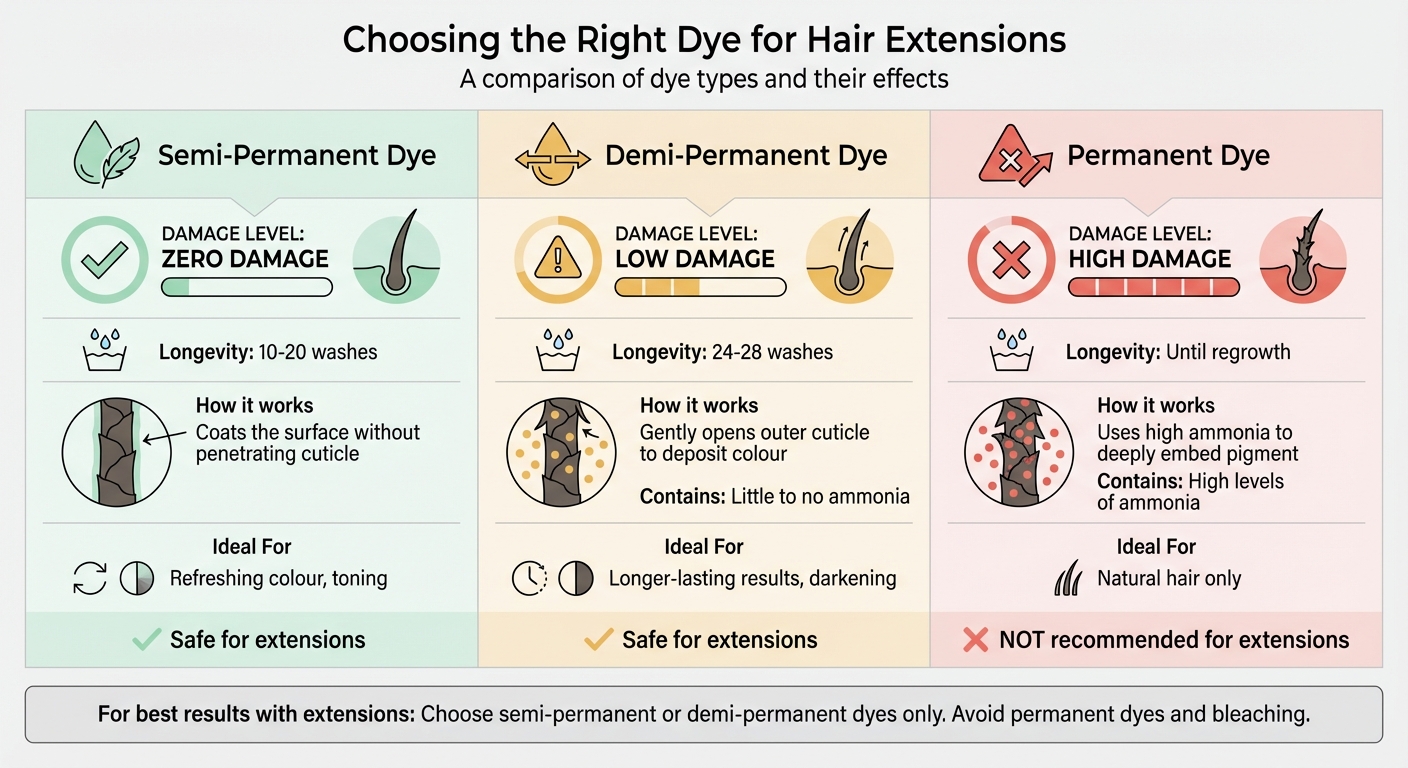
Hair Extension Dye Types Comparison Chart
Once you've prepped your extensions, it's time to make smart choices about colour and dye products. The right selection ensures your extensions look great and stay healthy.
Setting Achievable Colour Goals
When colouring extensions, it's best to stick to darker shades or make subtle tonal adjustments within the same colour family. Lightening extensions, on the other hand, isn't recommended - it involves bleaching, which can severely damage the hair. Bleaching strips away the protective cuticle and natural proteins, leaving the extensions brittle and prone to breakage.
"Bleaching weakens extensions, stripping them of natural proteins and oils, leading to brittleness and breakage." – Lady & the Hair Salon
If you're dreaming of a lighter shade, it's usually a better idea to buy extensions in that colour rather than risk damaging your current set. Attempting to lighten extensions often leads to unwanted brassy tones and irreparable harm.
Semi-Permanent, Demi-Permanent, or Permanent Dye?
Not all dyes are created equal, and some are better suited for extensions than others. For the safest results, semi-permanent or demi-permanent dyes are your best options. Here's a quick breakdown:
- Semi-Permanent Dye: This type coats the surface of the hair without penetrating the cuticle, making it a zero-damage option. It typically lasts 10 to 20 washes. Perfect for refreshing colour or toning.
- Demi-Permanent Dye: This gently opens the outer cuticle to deposit colour, providing longer-lasting results (24 to 28 washes). It uses little to no ammonia, making it a low-damage choice.
- Permanent Dye: While effective on natural hair, permanent dye is too harsh for extensions. It uses high levels of ammonia to deeply embed pigment, which can compromise the already delicate structure of processed extensions.
| Dye Type | Damage Level | Longevity | Ideal For |
|---|---|---|---|
| Semi-Permanent | Zero damage | 10–20 washes | Refreshing colour, toning |
| Demi-Permanent | Low damage | 24–28 washes | Longer-lasting results, darkening |
| Permanent | High damage | Until regrowth | Not recommended for extensions |
In addition to picking the right dye, prioritise gentle, nourishing formulas to keep your extensions looking and feeling their best.
Stay Away from Harsh Chemicals
When dyeing extensions, avoiding harsh chemicals is just as important as choosing the right colour. Professional-grade dyes with nourishing ingredients are a must. Steer clear of products with high ammonia content, as they can dry out and damage the hair. If your chosen dye requires a developer, opt for a low-volume (10-volume) developer. This helps deposit colour without lifting the hair's natural pigment, reducing the risk of damage.
How to Dye Different Types of Extensions
Dyeing extensions isn't a one-size-fits-all process. Each type of extension demands a specific approach to protect its bonds and achieve an even colour. Once you've gathered your supplies, adjust your technique based on the type of extensions you're working with.
Dyeing Clip-In Extensions
Clip-in extensions are the most straightforward to dye since they can be completely removed. Start by detangling the extensions while they're dry, using a wide-tooth comb or the Hair Wonderland Tangle Tamer Brush ($21.95). Work gently from the ends upward. Lay the wefts flat on a surface covered with tin foil. To protect the clips and top weft from discolouration or oxidation, cover them with plastic wrap or painter's tape.
Apply the dye evenly, starting just below the clips and working toward the ends. Avoid rubbing the hair, as this can cause frizz and tangling. Processing times typically range from 20 to 40 minutes. Once applied, loosely wrap the extensions in plastic wrap to prevent the dye from drying out. When rinsing, use cool or lukewarm water at low pressure for 15 to 20 minutes, holding the extensions by the clips to ensure water flows downward. This helps minimise tangles and maintains the hair's smoothness.
Dyeing Tape-In Extensions
Tape-in extensions require extra care due to their adhesive strips. The safest option is to remove the extensions before dyeing, which ensures even coverage and protects the adhesive. If you decide to dye them while still attached, shield the adhesive with tin foil, plastic wrap, or blue painter's tape.
Apply the dye with a tint brush, starting just below the adhesive and working toward the ends. Work in small sections to ensure precision, and avoid letting the dye touch the adhesive strips, as it can weaken the bond. After the dyeing process, rinse thoroughly and allow the extensions to dry completely. If the adhesive has been compromised, replace it with new tape sheets, like the Hair Wonderland Tape Sheets, before re-installing the extensions.
Dyeing Keratin Bond Extensions
Keratin bond extensions demand an even gentler approach. The bonds are sensitive to chemicals, and applying dye near them can lead to breakdown, shedding, or even breakage. To avoid these issues, wait at least four weeks after installation before dyeing keratin extensions. When dyeing, focus only on the mid-lengths to the ends, steering clear of the first 2–3 centimetres near the bonds.
Use a tint brush for precise application, ensuring the dye is evenly distributed. Rinse the hair with cool water, allowing the water to flow downward to protect the bonds. This careful method helps maintain the integrity of the keratin while achieving your desired colour.
sbb-itb-dcde78e
Caring for Dyed Extensions
Dyeing your hair extensions can transform your look, but it also makes them more delicate. The dyeing process changes the structure of the hair, leaving it more porous and prone to dryness. Without proper care, the colour may fade quickly, and the hair can become brittle. A consistent aftercare routine is key to maintaining the vibrancy and health of your extensions over time.
Washing and Moisturising Your Extensions
After dyeing permanent extensions, wait 48–72 hours before washing them to allow the colour to fully set. When you do wash them, stick to sulphate-free, paraben-free, and alcohol-free shampoos and conditioners. These gentle formulas help retain moisture and keep the colour intact.
For permanent extensions, limit washing to no more than 1–2 times per week. Clip-in extensions, on the other hand, need washing only after 10–20 wears or when you notice product buildup. Always use lukewarm water to help preserve the colour, and apply shampoo to the roots using downward strokes. Finish with a cool rinse to seal the hair cuticles and lock in moisture.
"Extensions are 100% Remy European human hair, but they require moisture and care." - Hair Wonderland
Conditioning is just as important. Focus on applying conditioner or a hydrating mask to the mid-lengths and ends of the hair only. Avoid the roots and attachment points - such as clips, tape, or bonds - as excess oils can weaken adhesives or cause slippage. For added hydration, use a weekly treatment like Hair Wonderland's Moisture Magic ($39.95) to restore moisture lost during the dyeing process. After washing, gently blot your extensions with a microfibre towel instead of rubbing, which can damage the hair.
Brushing, Detangling, and Storing Extensions
Always brush your extensions when they're dry to prevent tangling and matting. Use a detangling brush designed specifically for extensions, such as the Hair Wonderland Tangle Tamer Brush ($21.95). Start brushing from the ends and work your way up toward the roots. Avoid brushing wet extensions, as this can put unnecessary strain on the seams and lead to breakage.
For clip-in extensions, secure the clips after removing them to prevent snags. Store them in a breathable material like cotton or silk, as plastic can trap moisture and cause dryness. The Hair Wonderland Clip In Bag ($54.00) is a great option, protecting your extensions from dust, humidity, and unwanted moisture while helping to maintain their colour. Before storing, ensure the extensions are completely dry. A light spritz of leave-in conditioner on the mid-lengths and ends can help keep them moisturised and tangle-free.
If you wear permanent extensions, consider sleeping with your hair in a loose plait or ponytail to reduce tangling. Using a silk pillowcase can also minimise friction and prevent fading overnight.
Protecting Extensions from Heat Damage
Heat styling tools like straighteners, curling irons, and blow dryers can dry out your extensions, making them brittle and causing the colour to fade faster. Always use a heat protectant before styling and keep the temperature as low as possible - ideally no higher than 180–190°C. Going beyond 190°C significantly increases the risk of damage.
When blow-drying, stick to medium heat and use downward airflow to minimise stress on the hair. Ensure the roots are fully dried to prevent any lingering moisture from weakening the bonds. If you’re heading to the pool or beach, apply a leave-in conditioner or hair oil beforehand to shield your extensions from chlorine and saltwater. Rinse your hair thoroughly after exposure. Direct sunlight can also cause fading, so store your extensions away from windows and opt for a heat protectant with UV protection when spending time outdoors.
Fixing Common Dyeing Problems
Dyeing hair extensions can sometimes lead to uneven colour, overly dark tones, or dry, brittle strands. The good news? Many of these issues can be addressed at home with the right techniques. Knowing when to take matters into your own hands and when to seek professional help is key to preserving your extensions. Let’s tackle some common challenges, starting with uneven or patchy colour.
Correcting Uneven or Patchy Colour
Uneven colour is often the result of poor product application - such as not saturating the hair evenly - or the presence of a protective coating on the extensions. Many extensions are treated with a silky layer during manufacturing, which can prevent dye from penetrating properly.
"Some extensions come pre-conditioned with a silky coating that must be removed to allow even dye absorption."
To remove this coating, soak your extensions in lukewarm water with a few dollops of shampoo before applying dye. If you’ve already dyed them and notice patchy areas, focus on re-colouring only those sections. For longer or thicker extensions, make sure to use two boxes of dye to ensure full coverage. If the colour turns out darker than expected, wash the extensions immediately with a clarifying shampoo - avoid using a colour-safe one, as it won’t help fade the pigment.
"If the spots are obvious, we recommend colouring your hair one more time and focusing on the blotchy bits. Next time, you can grab two boxes of colour instead of one to make sure every strand is covered." - Clairol
For a more even tone, try the shampoo bath method: mix water with a toning shampoo and submerge your extensions to achieve a cooler, ash-toned look. Always test on a small weft before committing to the entire set to avoid unexpected results.
Treating Dryness and Tangling
Dyeing can strip moisture from extensions, leaving them rough and prone to tangling. Unlike natural hair, extensions don’t benefit from the scalp’s natural oils, so they need extra care to stay soft and manageable. After washing, apply a deep conditioning treatment, comb it through with a wide-tooth comb, wrap the extensions in a towel, and let the treatment sit for at least an hour.
To maintain hydration between washes:
- Use 1–2 pumps of argan oil on the mid-lengths and ends in the morning, and 2–3 pumps in the evening.
- Spray on a leave-in conditioner or a daily hydrating mist generously.
- Choose products with nourishing oils to restore elasticity and shine.
After washing, rinse with cool water to seal the cuticles and lock in moisture. When brushing, make sure the extensions are dry and use a detangling brush like the Hair Wonderland Tangle Tamer Brush ($21.95). Start brushing from the ends and work your way up. Store your clip-ins in a breathable bag, away from sunlight and humidity, to prevent brittleness.
When to Get Professional Help
Sometimes, at-home fixes just aren’t enough. Certain dyeing mishaps, like overly dark or severely damaged extensions, require professional attention. Avoid bleaching or lightening extensions at home, as this can cause irreversible damage. If you’ve used permanent dye and find the colour too dark, a stylist will be better equipped to address the issue, as standard colourants won’t lighten previously dyed hair.
"If you've used permanent colour and decide after a few days [it is too dark], you should consult with a professional (since colourants won't lighten hair that's been previously coloured)." - Clairol
Seek professional help if:
- Your extensions become extremely dry or brittle after dyeing.
- Tape or keratin bonds start to loosen or fall apart.
- You experience scalp irritation or itching after dyeing installed extensions.
If multiple clarifying washes don’t lighten overly dark extensions or if the bonds appear compromised, a professional colour correction may be necessary. Additionally, complex colour changes or significant shade transitions are best left to an experienced colourist who can assess the extensions' condition and recommend the safest approach.
Conclusion: Get Great Results with Proper Technique
Achieving great results when dyeing extensions comes down to preparation, safe application, and consistent aftercare. Start by ensuring your extensions are made from 100% human hair - only Remy or virgin hair can hold colour effectively. Once dyed, maintaining a proper care routine is essential to keep both the colour and the hair's integrity intact.
For colouring, stick to semi-permanent or demi-permanent dyes and steer clear of bleach, as it can cause irreversible damage. Work methodically in sections, making sure to saturate the hair evenly using a wide-tooth comb. Avoid getting dye on clips, tapes, or keratin bonds to prevent weakening these attachment points. After applying the dye, rinse thoroughly with cool water for at least 15 minutes. This helps seal the cuticle and locks in moisture. If you plan to style your extensions, always use a heat protectant to minimise damage.
Post-dye care is especially important since extensions don’t benefit from natural oils produced by the scalp. Regular deep conditioning and daily use of argan oil can help maintain moisture levels. Opt for sulphate-free shampoos and conditioners, such as the Hair Wonderland Moisture Magic ($39.95), to gently cleanse and hydrate without stripping the hair. To prevent tangling and breakage, detangle your extensions twice a day with the Hair Wonderland Tangle Tamer Brush ($21.95), starting at the ends and working your way up. Finally, store your extensions in a cool, dry, breathable bag, keeping them out of direct sunlight to preserve their quality.
FAQs
Can synthetic hair extensions be dyed?
Synthetic hair extensions are crafted from plastic fibres, making them incompatible with regular hair dye. Traditional dyes simply won’t bond to the material and could even cause permanent damage to the strands. If you’re determined to change their colour, you’ll need to turn to specialised synthetic dyes and handle the process with great caution. That said, the outcome can be quite unpredictable, and dyeing synthetic extensions often reduces their durability.
What is the best type of dye to use on hair extensions?
When it comes to dyeing human hair extensions, the best choice is a semi-permanent or demi-permanent hair dye. These types of dyes are much gentler compared to permanent ones, helping to preserve the softness and natural appearance of the extensions. It's crucial to select a dye specifically designed for human hair and steer clear of products with harsh chemicals like ammonia or bleach, as these can cause significant damage.
If you're aiming for vibrant colours or pastel tones, direct dyes or temporary colour conditioners are excellent alternatives. They’re less harsh and fade gradually over time, making them a safer option. Just remember, always confirm that the extensions are made from 100% human hair - synthetic extensions don't take dye well and can end up ruined.
How should I care for my hair extensions after dyeing them?
To keep your dyed hair extensions looking vibrant and feeling soft, follow these easy care tips:
- Wait before washing: Give the colour time to settle by waiting 24–48 hours before washing your extensions. This helps minimise fading.
- Choose gentle products: Use a sulphate-free and alcohol-free shampoo, focusing on the roots. For conditioner, stick to the mid-lengths and ends to protect the bonds.
- Detangle with care: Use a brush designed specifically for extensions. Start at the ends and gently work your way up to avoid breakage.
- Shield from heat: Always apply a heat protectant spray before using hot tools, and keep the temperature as low as possible to maintain both the colour and texture.
- Keep them hydrated: A light, colour-safe leave-in treatment or oil, such as argan or jojoba, can add softness and shine without making the hair feel heavy.
- Store wisely: When not wearing your extensions, store them in a cool, dry spot. Place them loosely coiled or on a stand to avoid tangling.
For the best results, visit your salon every 4–6 weeks for maintenance. This will help keep your extensions secure and the colour looking fresh.