


When it comes to caring for hair extensions, the type of shampoo you use matters. Sulfate-free shampoos are gentler, helping to maintain moisture and protect the bonds in extensions, while regular shampoos with sulfates can strip oils, weaken adhesives, and shorten the lifespan of your extensions. Here's a quick breakdown:
- Sulfate-Free Shampoos: Use mild, plant-based cleansers that retain hydration and prevent tangling. Ideal for preserving bonds, colour, and texture.
- Regular Shampoos: Contain strong surfactants like SLS and SLES, which clean deeply but can leave extensions dry, brittle, and prone to damage.
Quick Comparison
| Feature | Sulfate-Free Shampoo | Regular Shampoo |
|---|---|---|
| Cleaning Strength | Gentle, retains moisture | Strong, strips natural oils |
| Effect on Bonds | Protects adhesives and keratin bonds | Weakens bonds, causes slipping |
| Hydration | Keeps extensions soft and smooth | Dries out extensions |
| Colour Retention | Preserves vibrancy | Fades colour |
| Lather | Low, creamy | Rich, foamy |
For extensions, sulfate-free shampoos are the better choice to keep them soft, manageable, and long-lasting. Regular shampoos may clean effectively but risk causing long-term damage to your extensions.
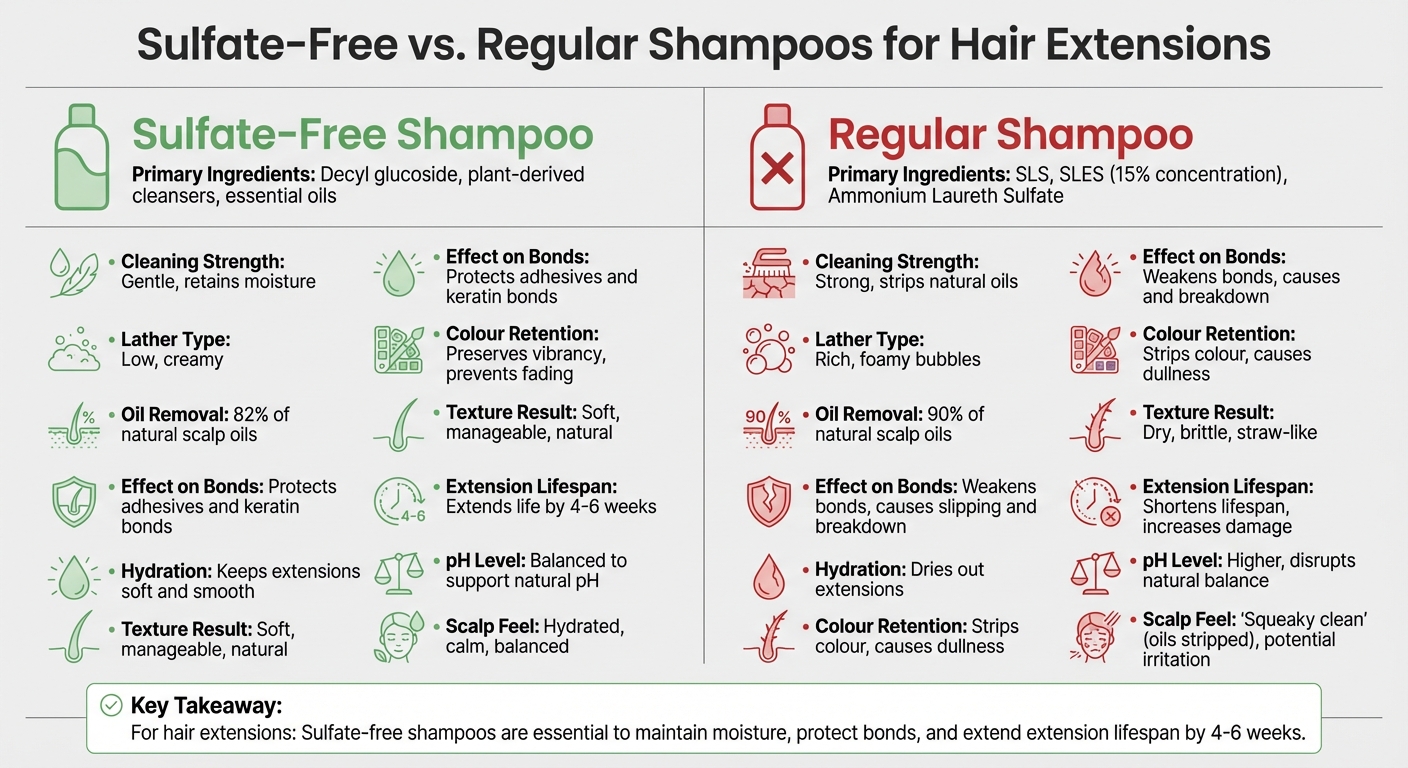
Sulfate-Free vs Regular Shampoo Effects on Hair Extensions Comparison Chart
What Are Sulfate-Free Shampoos?
Sulfate-free shampoos are hair cleansers made without strong synthetic detergents like Sodium Lauryl Sulfate (SLS) or Sodium Laureth Sulfate (SLES). Instead, they use gentler surfactants that clean your hair while preserving its natural moisture and protective oils. This softer approach is especially beneficial for hair extensions, which need extra hydration to stay in good condition.
Research shows that sulfate-free shampoos remove about 82% of natural scalp oils, compared to 90% with sulfates. While both clean effectively, the milder option helps retain more of the oils that keep hair soft and healthy.
Let’s break down the key ingredients in these shampoos and how they work.
Main Ingredients in Sulfate-Free Shampoos
Instead of harsh detergents, sulfate-free shampoos rely on plant-based alternatives, often derived from coconut, corn, or sugar. These gentler surfactants still lift away dirt and oil but don’t strip your hair of its essential moisture.
To further enhance hydration, these shampoos often include ingredients like jojoba oil, glycerin, aloe vera, and essential oils. These additions are particularly helpful for hair extensions, which don’t benefit from natural scalp oils. By keeping extensions moisturised, these shampoos help prevent dryness and that dreaded straw-like texture. Since they produce less foam, make sure to massage them thoroughly into your hair for an even clean.
How Sulfate-Free Shampoos Help Extensions
The benefits for hair extensions are hard to ignore. Sulfate-free shampoos protect keratin bonds and adhesives, reducing shedding and preserving moisture. This helps minimise tangling, matting, and breakage.
For chemically treated or coloured extensions, these shampoos are especially useful. They help maintain colour vibrancy and slow fading. This is crucial for high-quality extensions like double-drawn Russian or Mongolian hair, where maintaining the hair’s integrity ensures a flawless blend and longer wear.
What Are Regular Shampoos?
Regular shampoos are the go-to hair cleaning products you’ll find on most store shelves. Their main cleaning agents are sulfates - especially Sodium Lauryl Sulfate (SLS) and Sodium Laureth Sulfate (SLES). These are strong surfactants, designed to give your hair a deep clean by removing dirt, oil, and product build-up.
While sulfates do their job effectively, they can also strip away your hair’s natural oils (sebum), which are essential for keeping it nourished. In fact, most regular shampoos contain sulfates at concentrations of around 15%, much higher than the 2% threshold known to irritate the skin. This intense cleaning power is precisely why they can be problematic for hair extensions.
How Sulfates Clean Hair
Sulfates work as surfactants, meaning they have a dual-action role: one end of the molecule binds to oil and grease, while the other binds to water. When you lather up, the oil-binding end clings to dirt and grime, and the water-binding end helps rinse it all away. This mechanism makes sulfates incredibly effective at deep cleaning, tackling everything from sebum to environmental debris and styling residue.
However, there’s a downside. Studies show that sodium dodecyl sulfate can lead to significant protein loss in hair. That luxurious, frothy lather may feel satisfying, but it often comes at the expense of your hair’s health - especially for extensions, which can’t replenish lost moisture naturally. This makes the powerful cleaning action of sulfates a risky choice for extensions.
How Regular Shampoos Affect Extensions
When it comes to extensions, regular shampoos can create a host of problems. Unlike your natural hair, extensions don’t benefit from the scalp’s natural oil production. As a result, the sulfates in these shampoos can leave extensions excessively dry, leading to a brittle, straw-like texture.
The aggressive cleansing action doesn’t just strip moisture - it can also weaken the structural integrity of extensions. Sulfates may damage keratin bonds or adhesives, causing extensions to loosen over time. If your extensions are chemically treated or coloured, the situation gets even trickier. Sulfates can speed up colour fading and leave extensions looking dull. Plus, the lack of natural oils increases friction, making extensions more prone to tangling, matting, and breakage.
In short, while regular shampoos are effective for cleaning, their harshness makes them less than ideal for maintaining the health and longevity of hair extensions.
Main Differences Between Sulfate-Free and Regular Shampoos
When it comes to caring for your hair and extensions, the choice between sulfate-free and regular shampoos can make a big difference. These two types of shampoos differ not only in their ingredients but also in how they affect your scalp and extensions. Understanding these differences can help you make the best choice for your hair care routine.
Comparison Table: Ingredients and Cleaning Power
Regular shampoos often rely on strong surfactants like SLS (Sodium Lauryl Sulfate) and SLES (Sodium Laureth Sulfate), which are powerful cleaners. In contrast, sulfate-free shampoos use gentler, plant-based alternatives such as decyl glucoside and essential oils. Here's a breakdown of how they compare:
| Feature | Regular (Sulfate-Based) Shampoo | Sulfate-Free Shampoo |
|---|---|---|
| Primary Surfactants | SLS, SLES, Ammonium Laureth Sulfate | Decyl glucoside, plant-derived cleansers, essential oils |
| Cleaning Strength | High (strong degreasing action) | Gentle (mild and selective cleansing) |
| Lather Type | Large, foamy bubbles | Low, creamy, or conditioning lather |
| pH Level | Higher, can disrupt natural balance | Balanced to support the scalp's natural pH |
| Effect on Extension Bonds | May weaken adhesives and keratin bonds | Safe for bonds, tapes, and wefts |
| Scalp Sensation | "Squeaky clean" (can strip natural oils) | Hydrated, calm, and balanced feel |
On Line Hair Depot points out that the "squeaky clean" sensation left by regular shampoos often indicates that protective oils have been stripped away. These ingredient differences directly affect both scalp comfort and the longevity of extensions.
Effects on Scalp and Hair Health
The choice of shampoo doesn’t just affect how clean your hair feels - it can also have lasting effects on scalp health and the condition of your extensions. Sulfates are known to cause irritation, redness, and itching, particularly for those with sensitive skin or conditions like eczema. If not washed out completely, sulfates like SLS can remain in the hair follicles, potentially causing irritation that may slow hair growth or even contribute to thinning.
For hair extensions, the stakes are even higher. Danielle HowKee, Founder of Platinum Lockz, highlights the risks:
Sulfates can strip the hair of natural oils and cause the extensions to become dry, tangled, and brittle.
Since extensions don’t receive natural oils from your scalp, they rely entirely on external hydration to stay healthy. Sulfate-free shampoos help maintain this moisture, leaving your extensions soft, smooth, and less prone to tangling or breakage. Regular shampoos, on the other hand, can leave extensions dry and straw-like, making them harder to manage.
sbb-itb-dcde78e
How Each Shampoo Type Affects Hair Extensions
Hair extensions are not living hair, meaning they depend entirely on external moisture to stay soft and manageable. The shampoo you use plays a key role in determining how long your extensions last and how good they look.
Moisture Levels and Tangling
Shampoos containing sulfates, like Sodium Laureth Sulfate, can strip moisture from your extensions, leaving them dry, brittle, and prone to frizz or matting. This makes them harder to brush and more likely to tangle. On the other hand, sulfate-free shampoos use gentler cleansers and often include hydrating ingredients like argan oil, aloe vera, or coconut oil. These ingredients help seal the hair cuticle and lock in moisture. This not only keeps your extensions soft and manageable but also helps prevent tangling and reduces stress on the bonds holding the extensions in place.
Bond Strength and Extension Lifespan
Moisture loss doesn’t just affect manageability - it can also weaken the bonds securing your extensions. KmXtend Hair Extensions highlights the damage sulfates can cause:
When the sulfate comes in contact with the hair extension, it strips all the oils and moisture from the hair. Additionally, the sulfates break down the keratin bond. They will destroy it completely so that the hair extensions will start to fall out.
Sulfates can break down keratin bonds, leading to extensions loosening and eventually falling out. By switching to high-quality sulfate-free shampoos, you can extend the life of your extensions by 4 to 6 weeks. Pam Stewart from Xtreme Lengths adds:
Using a quality product is more expensive, yes, but it makes your hair last longer.
To keep your extensions in top condition, avoid shampoos designed for dandruff, as they often contain high levels of sulfates. Also, limit washing to 1–2 times per week. Pam Stewart further explains:
When you wet the hair you are breaking sulphur bonds. Your hair is like a rubber band and the more you wash, the more you break.
Colour Protection for Chemically Treated Extensions
If your extensions are coloured or chemically treated, preserving their vibrancy is just as important as maintaining moisture and bond strength. Sulfate-based shampoos and those with high alcohol content can strip pigments, leaving your extensions looking dull.
| Feature | Sulfate-Free Shampoo | Regular (Sulfate-Based) Shampoo |
|---|---|---|
| Colour Retention | Protects pigments, prevents premature fading | Strips colour, causing dullness |
| Moisture Levels | Retains hydration with nourishing ingredients | Dries out hair by removing oils |
| Hair Texture | Keeps extensions soft and natural | Can leave hair brittle or straw-like |
| Washing Frequency | 1–2 times per week to preserve bonds | Same frequency increases damage risk |
Prue from Lady and the Hair advises:
Avoid shampoos with alcohol content if your extensions are colour-treated since the alcohol content will result in a dull and brittle look.
For best results, wash extensions with lukewarm water and finish with a cool rinse to seal the cuticle and lock in both moisture and colour. If you use purple or toning shampoos, limit their use to once every two weeks to avoid over-processing.
Choosing the Right Shampoo for Your Extensions
When caring for Hair Wonderland extensions, using the right shampoo is non-negotiable. Sulfate-free formulas are a must - not just for keeping your extensions in great shape but also for maintaining warranty coverage. Hair Wonderland extensions come with a six-week warranty, but only if you stick to the recommended hair care products. Even a single use of the wrong product can lead to unmanageable extensions and void your warranty.
Sulfate-free shampoos are crucial because they help retain moisture and protect the bonds in your extensions. To stay within warranty guidelines, avoid products containing sulfates, protein, keratin, or high alcohol levels. These ingredients can strip moisture, weaken bonds, and make your extensions stiff and brittle.
For tape-in extensions, the rules are even stricter. Sulfate-free products are essential to prevent the adhesives from loosening. Limit washing to just 2–3 times a week, and wait at least 48–72 hours after application before washing for the first time.
Hair Wonderland offers an exclusive product range specifically designed to meet these care standards.
Recommended Products for Hair Wonderland Extensions
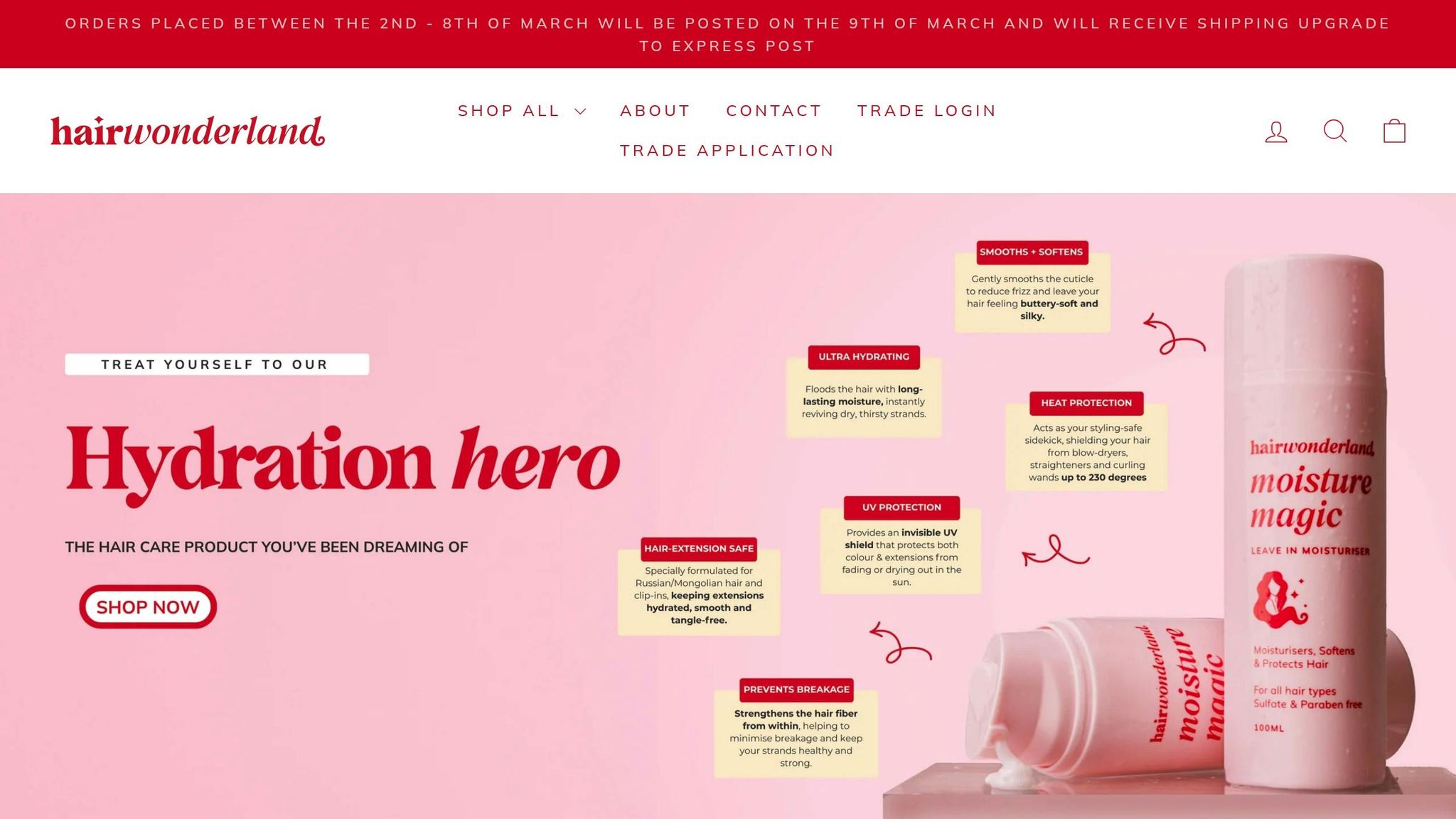
Hair Wonderland’s Moisture Magic shampoo and conditioner are tailored for their premium double-drawn Russian and Mongolian human hair extensions. At $39.95, this sulfate-free duo cleanses gently while preserving the moisture essential for soft, tangle-free extensions.
Pair these with the Tangle Tamer Brush ($21.95), designed to detangle without pulling on bonds or causing breakage. Brushing before washing is a simple but vital step - it prevents matting and makes the washing process smoother.
How to Use Sulfate-Free Shampoos on Extensions
Using the right shampoo is only half the battle; proper application is just as important. Follow these steps to get the best results:
- Before washing: Use your Tangle Tamer Brush to detangle your extensions while they’re dry. This prevents knots and tangles from forming when wet.
- Shampooing: Apply a coin-sized amount of sulfate-free shampoo to your scalp only. Gently lather and massage it in, then rinse with warm water. Repeat this step once.
- Conditioning: Apply conditioner or a treatment mask to the mid-lengths and ends only - never near the bonds, tapes, or beads. Let it sit for about five minutes before rinsing with cool water to seal the cuticles and lock in moisture.
- Drying: After washing, gently blot your hair with a towel instead of rubbing it. Then, apply two pumps of argan oil to the mid-lengths and ends to keep them hydrated. Blow-dry your extensions on medium heat for the best results.
Conclusion
Sulfate-free shampoos and regular shampoos take very different approaches to cleaning your hair. Regular shampoos rely on strong surfactants like Sodium Laureth Sulfate, which can strip away moisture and weaken keratin bonds. On the other hand, sulfate-free shampoos use gentler cleansers that help retain hydration and protect the integrity of your extensions.
Since hair extensions don’t benefit from the natural oils your scalp produces, sulfate-based shampoos can leave them dry, brittle, and prone to tangling. These shampoos can also damage the adhesives or bonds securing your extensions, leading to tape-ins slipping or bonded extensions falling out too soon. Sulfate-free options, however, help maintain moisture, keep colours vibrant, and protect the hair cuticle - ensuring your extensions stay soft, manageable, and long-lasting.
When it comes to Hair Wonderland extensions, using sulfate-free products isn’t just a recommendation - it’s a must to maintain both quality and warranty coverage. Hair Wonderland’s Moisture Magic shampoo and conditioner ($39.95) are specially designed for their premium double-drawn Russian and Mongolian hair, helping your extensions stay in top condition. By pairing quality extensions with the right care products, you can enjoy the stunning results you’re looking for.
FAQs
Can I use regular shampoo on extensions?
Regular shampoo might work on extensions, but it’s usually not the best choice. Many shampoos are packed with sulfates, silicones, or proteins, which can lead to dryness, buildup, or even make extensions brittle. Sulfates, in particular, are harsh and can strip away moisture, leaving extensions frizzy and fragile. To keep extensions soft, shiny, and long-lasting, stick to lightweight, hydrating shampoos made specifically for extensions. Ideally, go for a sulfate-free option for better care.
What ingredients should I avoid on tape-ins or keratin bonds?
Avoid sulfates in shampoos because they can strip away natural oils, leaving your hair dry, frizzy, and prone to damage - especially for extensions, which don't benefit from the scalp's natural oil supply. Harsh surfactants, often found in dandruff shampoos, can also weaken or even break the bonds of your extensions. To keep them intact and lasting longer, choose gentle alternatives like sulfate-free or micellar shampoos.
How do I stop extensions tangling after washing?
To keep tangles at bay after washing, opt for a sulfate-free shampoo. This helps avoid dryness and product buildup, which can lead to knots. Use a wide-tooth comb or detangling brush, working gently from the ends upward to minimise breakage. Adding a leave-in conditioner or detangling spray can make the process smoother. Skip rough towel drying - pat your hair dry instead to cut down on friction and reduce tangling.