


When choosing between plastic and metal sectioning clips for styling or maintaining hair extensions, the best option depends on your hair type and styling needs. Here's a quick breakdown:
- Plastic Clips: Lightweight, flexible, and gentle on fine or delicate hair. They’re great for home use and are less likely to cause scalp irritation. High-quality plastic options, like plant-based acetate clips, can handle slippery hair better and are resistant to drops. A 12-pack costs around A$9.95.
- Metal Clips: Strong, durable, and ideal for thick hair or professional salon work. They offer a firm grip for heavy or tightly coiled hair but can feel heavier on the scalp. Metal duckbill clips are budget-friendly, with a 12-pack priced at approximately A$7.40.
Quick Comparison
| Feature | Plastic Clips | Metal Clips |
|---|---|---|
| Durability | Can snap if made from cheap materials; premium options last longer | Extremely durable for daily use |
| Grip Strength | Secure hold for fine/slippery hair | Best for thick or heavy hair |
| Comfort | Lightweight and scalp-friendly | Heavier, may cause irritation |
| Heat Resistance | Limited; high-quality options resist some heat | High resistance but can get hot |
| Price Range | A$1.95–A$9.95 per pack | A$7.40–A$31.95 per pack |
For home use, plastic alloy clips are affordable and effective. For salon professionals, metal clips or nylon-aluminium hybrids provide the strength needed for demanding tasks. Both options have their strengths - choose based on your hair type and styling habits and styling routine.
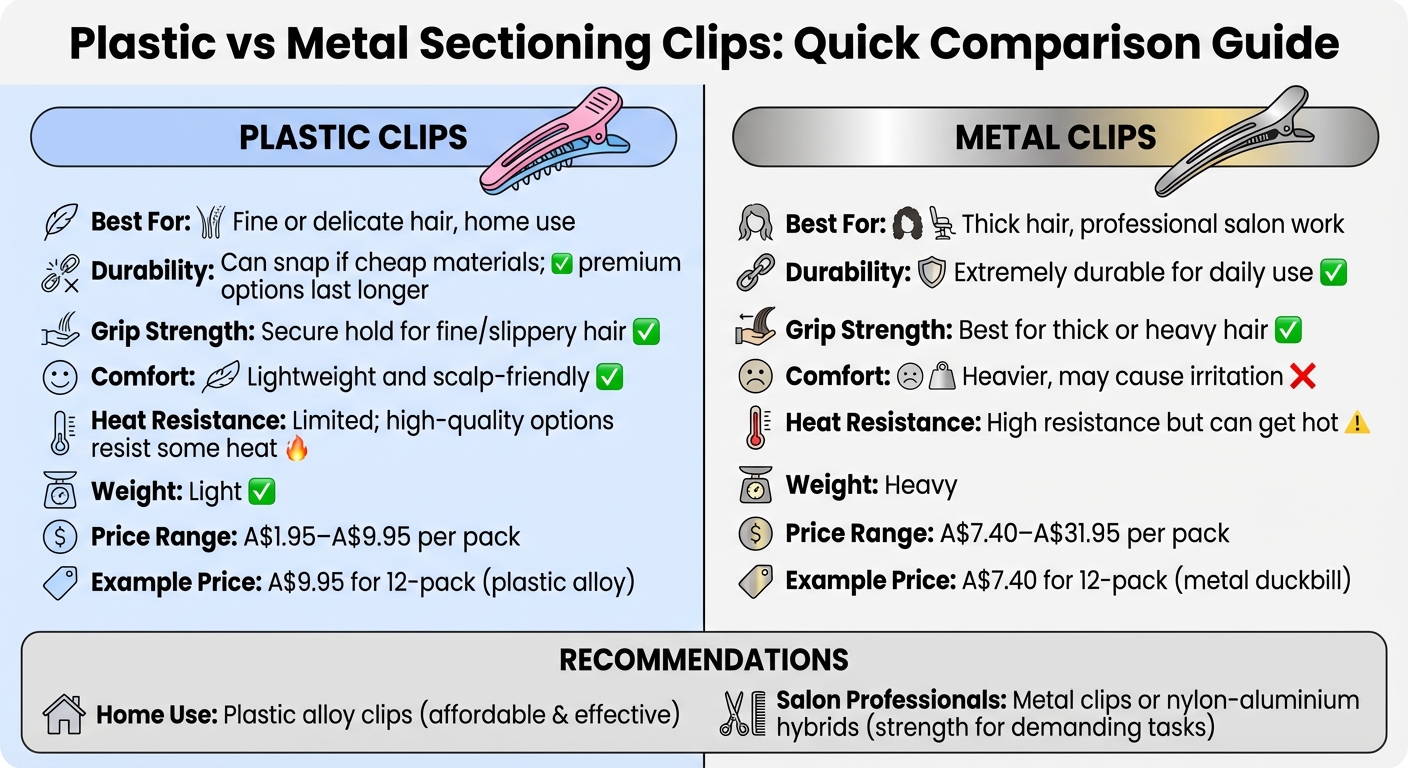
Plastic vs Metal Hair Sectioning Clips Comparison Chart
How To Select Hair Sectioning Clips
Proper sectioning is also essential when brushing hair extensions to prevent tangles and maintain hair health.
sbb-itb-dcde78e
Plastic vs Metal: Understanding the Materials
The material of your sectioning clips can make a big difference in how they perform during styling. Plastic and metal clips each have distinct characteristics that influence their weight, flexibility, and how they interact with hair. Knowing these differences can help you choose the best option for your needs. Let’s break down the unique features of each material and how they affect everyday use.
Plastic Clips: Light and Flexible
Plastic alloy clips are known for being lightweight yet sturdy, featuring "extra grip" designs that hold hair securely without adding unnecessary bulk. Their flexibility makes them ideal for fine hair or thick hair extensions since they can bend without breaking. For a more durable option, plant-based acetate clips - crafted from cotton and wood pulp - offer a non-slip, drop-resistant alternative, making them perfect for holding fine or slippery hair in place. A 12-piece pack of these plastic alloy clips typically costs around $9.95. These qualities make plastic clips a go-to choice for those prioritising grip and resilience during styling.
Metal Clips: Strong and Long-Lasting
Metal clips, particularly duckbill styles, are prized for their durability and are a staple in professional salon settings for precise sectioning. Their rigid structure provides a firm grip, making them especially useful for handling heavy sections of thick hair or tightly coiled textures. However, their added weight can sometimes lead to scalp irritation or scratches if not used carefully. Metal duckbill clips are also budget-friendly, with 12-piece packs priced at approximately $7.40. For larger needs, hybrid nylon-aluminium options come in 36-piece tubs, ranging from $29.95 to $31.95. These features make metal clips a reliable choice for more demanding styling tasks.
Direct Comparison: How They Perform
Durability and Lifespan
Metal clips are known for their toughness, standing up to daily professional use without breaking. High-quality cellulose acetate also performs well, resisting drops and bending to avoid damage - perfect for demanding environments. On the other hand, standard plastic clips made from cheaper materials often snap or crack after limited use.
To make any clip last longer, avoid overstretching the spring mechanism and clean them regularly to remove product buildup. Now, let’s see how these materials influence grip strength and hold.
Grip Strength and Hold
Metal clips excel when it comes to grip strength, especially for thick sections or heavy hair, making them a go-to for working with double-drawn or single-drawn extensions. Their rigid construction and reinforced springs ensure a firm hold during extended sessions. Some designs even feature double hinges for extra grip on thick or layered hair.
For finer or slippery hair, clips with non-slip coatings or specialised designs can help prevent sliding while being gentle on delicate strands. Look for clips with well-aligned teeth and rust-resistant springs to maintain a secure and reliable hold over time.
Comfort and Ease of Use
While grip strength is critical, comfort matters too - especially during long styling sessions. Lightweight plastic clips are easier on the scalp, reducing strain during extended use. Metal clips, however, provide the strength needed for thicker or coarser hair.
Plastic clips are generally kinder to the hair and scalp, minimising the risk of scratches, particularly when working close to the roots. Additionally, curved designs that follow the natural shape of the head offer a more secure and comfortable fit. For thick or tightly coiled hair, the strength of metal clips may outweigh their heavier feel, while lighter plastic clips are often better suited for fine hair.
Heat Resistance During Styling
Hair clips used during styling must handle heat exposure from tools like curling irons or blow dryers. Metal clips are typically more heat-resistant than plastic, standing up to high temperatures without warping or melting - though they can become hot to the touch. High-quality cellulose acetate also holds up well in most styling scenarios, while cheaper plastic clips are more likely to fail under heat stress.
For a balanced option, nylon-aluminium combinations provide heat resistance along with a lighter weight. Regardless of material, it’s always a good idea to keep clips at a safe distance from direct heat to protect both the clip and your hair.
Price and Overall Value
| Material | Price Range | Cost Per Clip | Best Value For |
|---|---|---|---|
| Standard Plastic | A$1.95 (2-pack) | ~A$0.98 | Occasional home use |
| Plastic Alloy | A$9.95 (12-pack) | ~A$0.83 | Regular styling |
| Nylon Aluminium | A$8.95–A$29.95 (12–36 pieces) | A$0.75–A$0.83 | Professional use |
| Premium Metal | A$12.95 (value pack) | Varies | Heavy-duty salon work |
Though metal and premium plastic clips come with a higher upfront cost, they provide excellent long-term value. For instance, a A$9.95 pack of plastic alloy clips or an A$8.95 pack of nylon-aluminium clips can outlast multiple packs of cheaper alternatives. While price matters, durability and grip strength should take priority for both home and professional use. For heavy-duty tasks, investing in metal or premium-grade plastic clips pays off with reliability and performance, especially when working with hair extensions.
Which Clips Work Best for Hair Extensions
When it comes to choosing the right clips for hair extensions, the best option often depends on whether you're styling at home or working in a professional salon. Here's a breakdown of the top choices for each setting.
For Home Use
If you're styling clip-in extensions at home, plastic alloy clips are a fantastic choice. They're affordable and reliable, with a pack priced at just A$9.95. These clips are designed to handle the weight of clip-in extensions while maintaining a secure grip, which is essential for effective sectioning. Their lightweight design ensures they're easy to use, even during longer styling sessions. Plus, the variety of colours available makes it simple to organise different sections of your hair visually.
These clips pair especially well with Hair Wonderland's seamless clip-in extensions, which are popular for their natural look and comfort. Knowing how to blend extensions with your natural hair is key to achieving this seamless finish. Whether you're a beginner or someone who styles extensions regularly, these clips offer a practical and budget-friendly solution. For those with more advanced needs, the next section explores options tailored for salon professionals.
For Salon Professionals
For salon professionals, durability and performance are key. Professional Super Clips are a go-to option, offering high-tension sectioning capabilities. Priced at A$10.95 for a pack of six, these clips are built to withstand the demands of daily, high-volume use.
If you're looking for an even larger supply, nylon aluminium sectioning clips are available in bulk tubs of 36 for A$29.95. These hybrid clips combine the lightweight benefits of nylon with the strength of metal, making them ideal for intricate installations. They're particularly handy for salons handling premium extensions from Hair Wonderland, as their enhanced grip ensures hair sections stay firmly in place. The bulk packaging also guarantees you'll always have enough clips on hand, no matter how busy your schedule gets.
Conclusion
When choosing between plastic and metal hair clips, factors like durability, grip, comfort, and heat resistance play a big role in determining the best option for your styling needs. Metal clips are perfect for thick hair and high-volume salon work, thanks to their strength and secure hold. However, their heavier weight can sometimes cause minor scalp irritation if not handled gently. On the other hand, premium plastic clips offer a lightweight alternative that’s gentler on both the scalp and hair, especially for those with extensions.
For delicate, extension-bonded hair, plastic clips are a great choice. They minimise scalp strain and avoid unnecessary tension on extension bonds. Meanwhile, metal clips shine when working with thicker hair sections, even though their weight might be noticeable during longer styling sessions.
Whichever option you go with, pairing your clips with high-quality extensions is key to achieving the best results. Hair Wonderland provides seamless clip-in extensions and a range of professional styling tools to make your hair journey even smoother.
Ultimately, your decision should align with your hair type, extension style, and how often you style your hair. Both plastic and metal clips are valuable tools in any styling kit - select the one that meets your needs and elevate your styling game with top-notch extensions from Hair Wonderland.
FAQs
Will metal clips damage hair extensions or bonds?
Metal clips can be safe for hair extensions and bonds when used properly. The key is to choose well-made clips with smooth edges and a light grip to avoid unnecessary stress or breakage. Be cautious about applying too much tension or using them too often, as this can lead to damage over time. To keep your extensions and bonds in good condition, focus on gentle handling and careful application.
Which clip type stops slipping on fine or silky hair?
Plastic clips work well for keeping fine or silky hair in place without slipping. They often offer a better grip than metal clips, which, though sturdy, might not hold as tightly on these hair types. When applying hair extensions, it's best to use strong, durable sectioning clips. These ensure a secure hold, especially when working with finer hair, preventing any unwanted movement.
How many sectioning clips do I need for a full install?
The number of sectioning clips you'll need for a full install of clip-in extensions depends on how thick your hair is and how much fullness you want. Generally, you'll need 8 to 12 clips to ensure even placement and a natural appearance. For a lighter, more subtle finish, stick to around 8 clips. If you're after a fuller, more secure look, go for up to 12. Adjust the number based on your hair's density and the level of coverage you're aiming for.