


Noticing some hair shedding with your extensions? It’s normal. Hair extensions don’t cause extra hair loss - they just hold onto the strands your scalp naturally sheds every day (50–150 strands). Proper installation, high-quality extensions, and good maintenance can minimise shedding and keep your hair healthy.
Here’s what you need to know:
- All extensions shed a little: Quality and construction matter. Well-made wefts and double-drawn hair reduce shedding.
- Shedding doesn’t mean poor quality: Initial shedding often comes from leftover production hairs, not bad craftsmanship.
- Extensions don’t increase natural hair loss: They trap naturally shed hair, which releases when removed.
- Care can reduce shedding: Use sulphate-free products, hydrate daily, brush gently, and avoid sleeping with wet hair.
- Early shedding signals installation issues: Poor adhesive curing or mishandling during installation can cause problems.
With the right products and habits, your extensions can last up to 12 months.
How much hair shedding is normal when removing extensions? | Texture+Sage
Myth 1: All Hair Extensions Shed Too Much
The idea that hair extensions are constantly shedding is a bit of an exaggeration. Here’s the truth: all hair extensions shed a little, much like your natural hair does. However, the amount of shedding depends heavily on the quality of the extensions and how they’re made.
What Normal Shedding Looks Like
So, what’s considered normal? High-quality Remy human hair extensions are designed to shed very little during everyday use. Thanks to their intact and aligned cuticles, these extensions tend to stay smooth and securely in place within their wefts. When shedding does happen, it’s usually just a few strands - not an alarming amount.
Your natural hair also sheds within a certain range. If you notice excessive shedding, especially when brushing or washing, it might point to an issue with the quality of the extensions or how they’re being maintained.
How Quality Reduces Shedding
The quality of hair extensions directly impacts how much they shed. Premium options, like double-drawn Russian or Mongolian hair, are processed by hand to remove shorter strands, ensuring consistent thickness from root to tip. This reduces loose hairs that might otherwise fall out over time.
Construction is another key factor. Extensions with well-sewn wefts and reinforced stitching help keep individual strands securely in place. As an expert from Sitting Pretty Halo Hair explains:
"Shedding isn't so much an issue relating to Remy or non-remy hair. It's more of an issue relating to good/poor workmanship. Well-sewn wefts minimise shedding."
For instance, Hair Wonderland’s seamless sets use double-drawn hair, weighing 200 grams for their 22" length, and are priced at $499.00. This high-quality construction means these extensions shed far less than traditional options, and with proper care, they can maintain their look for 9–12 months.
Myth 2: Shedding Always Means Poor Quality
While minimal shedding is completely normal, it’s important to note that not all shedding is a sign of poor quality. In fact, some shedding occurs naturally or is simply the result of leftover strands from the manufacturing process. A few loose hairs don’t mean the extensions are subpar.
Why New Extensions Might Shed
When you first unpack a set of extensions, it’s common to notice a small amount of shedding. This happens because of residual stray hairs left over during production. To put it into perspective, natural hair sheds about 80–100 strands every day. As one expert from Sitting Pretty points out:
"With the exception of a few stray hairs... that's to be expected. Even your real hair sheds a few strays every now and then. But shedding should never be excessive."
The distinction lies in the amount of shedding. Excessive shedding is a red flag, often pointing to poor craftsmanship, such as sloppy stitching or poorly secured wefts, rather than the quality of the hair itself.
Recognising these early shedding patterns is key to identifying well-made extensions.
Features of High-Quality Extensions
Top-tier extensions are designed to minimise shedding and maintain their integrity. For instance, double-drawn hair undergoes a meticulous process where shorter strands are removed by hand, ensuring consistent thickness from root to tip. This method significantly reduces the chance of loose hairs slipping out over time.
Hair Wonderland’s Seamless Set 22" ($499.00) is a great example of this. Crafted from Russian human hair, it uses the double-drawn technique. As the brand explains:
"Double drawing means we've carefully removed the shorter strands by hand, ensuring that the ends are fuller and thicker for a luscious, seamless look."
Additionally, premium extensions often feature seamless technology, which incorporates a flat silicone base. This, paired with high-quality stitching, ensures the hair stays securely in place within the weft. With proper care, these extensions can last 9–12 months, far outlasting cheaper alternatives that shed excessively due to thin ends and substandard construction.
Myth 3: Extensions Make Your Natural Hair Shed More
Extensions don’t cause your hair to shed more than usual. On average, people naturally lose 80–100 strands of hair per day. When you wear extensions, these loose strands can get trapped in the bonds or wefts. So, when you remove the extensions, it might seem like you’re losing an excessive amount of hair, but it’s just the natural shedding that’s been held in place.
As Circles of Hair explains:
"Extensions don't make you lose more hair; they simply hold onto the strands that would normally fall out."
The real concern often lies in how the extensions are applied and maintained. If they’re too heavy or installed with excessive tension, this can strain your natural hair, potentially leading to issues like traction alopecia.
Why Proper Installation Matters
Getting the installation right is critical to keeping your hair healthy and minimising any perception of increased shedding. Extensions need to match both the weight and method of application to suit your specific hair type. If the extensions are too heavy or improperly attached, they can weaken the hair’s anchorage, especially with daily shedding. This is why regular professional maintenance every 4–6 weeks is so important. It allows for re-sectioning of the hair and redistributing the weight to prevent strain.
Improper placement can also cause extensions to pull your hair in unnatural directions, leading to discomfort or even breakage. Michael Kelly, Founder of Salon HER, highlights the importance of timely maintenance:
"Extensions grow out as the hair does and you need to refresh them around the six week mark to minimise the risk of hair loss from the weight of the extension drag."
For those looking for a safer, temporary option, clip-in extensions are a great choice. Since they’re removed daily, they allow your scalp and roots to rest.
How to Keep Your Natural Hair Healthy
Proper installation is just one part of the equation. Regular care and maintenance are equally important to ensure both your extensions and natural hair stay in great condition.
Using the right tools is essential. A specialised extension brush - like the Tangle Tamer (priced at $21.95) - or a detangling brush with flexible teeth can help prevent tugging at the bonds. Always brush gently, starting at the ends and working your way up to the roots. If you have a sensitive scalp, consider positioning extensions about 2.5 centimetres away from the roots to reduce tension.
Your nighttime routine also plays a big role. Avoid sleeping with wet extensions, as this can cause matting and friction damage. Instead, secure your hair in a loose plait or ponytail and sleep on a silk or satin pillowcase to minimise friction.
When applying products like conditioner or oils, focus on the mid-lengths and ends of your hair. Keep these products away from the bonds to avoid slippage or uneven weight distribution. For long-term care, the American Academy of Dermatology Association suggests taking breaks from semi-permanent extensions every 2–3 months. This allows your natural hair time to recover, which is especially important considering that around 40% of people experiencing hair loss are women.
sbb-itb-dcde78e
Myth 4: You Can't Stop Extension Shedding
Shedding extensions isn't something you just have to accept. With the right care and tools, you can significantly reduce shedding and even extend the life of your extensions to as long as 12 months.
Shakira Dickinson from Hair Candy emphasises this point:
"Without proper care, even the highest quality hair extensions can tangle, shed, or lose their natural shine."
As we’ve touched on before, extensions don’t benefit from natural oils like your own hair does. This lack of natural hydration makes them prone to dryness, brittleness, and, ultimately, shedding. But with consistent maintenance - hydration, gentle handling, and proper storage - you can keep your extensions looking their best for much longer.
Daily Care Routines That Make a Difference
Brushing is key. Brush your extensions two to three times a day, starting from the tips and working your way up to the roots. This prevents knots from forming and travelling up the hair shaft, which can cause tension and lead to shedding.
Choose the right products. Stick to sulphate-free and alcohol-free shampoos and conditioners, as these are gentler on your extensions and won’t strip them of moisture or weaken the adhesives in semi-permanent extensions. Angel Extensions puts it best:
"Sulphate-free and alcohol-free products... are your insurance policy for luscious locks."
Limit washing to two or three times a week to avoid over-drying. When conditioning, focus on the mid-lengths and ends, steering clear of the roots and bonds to prevent slippage or premature shedding.
Hydration is non-negotiable. Beyond regular conditioning, use leave-in serums or hair oils daily on the mid-lengths and ends to combat brittleness. A deep conditioning mask once or twice a month can also help replenish much-needed moisture.
Night-time habits matter. Always go to bed with dry extensions. Sleeping with wet hair creates friction, which can cause tangling and disturb the bonds. Instead, loosely braid or tie your hair in a ponytail before bed and use a silk or satin pillowcase to minimise friction. For heat styling, always apply a heat protectant spray to shield your extensions from damage.
Tools and Products That Support Healthy Extensions
In addition to daily care, the right tools and products can make a world of difference in reducing wear and tear. Specialised brushes, such as the Tangle Tamer Brush ($21.95) and The Detangle Brush ($29.95), are designed with flexible teeth or soft bristles to gently work through extensions without pulling. The Detangle Brush, in particular, has received glowing reviews, earning a 5/5 rating for its effectiveness on both wet and dry hair.
Leave-in treatments are another must-have. Products like Moisture Magic ($39.95) keep extensions soft and hydrated, compensating for the lack of natural oils.
Storage also plays a role. When you’re not wearing clip-in extensions, store them in a Clip In Bag ($54.00). This keeps them free from tangles, dust, and moisture damage, ensuring they stay in great condition for longer.
Megan McCauley, a stylist from Bend Extensions, underscores the link between dryness and shedding:
"When your extensions are drier they can break easier, which can lead to more shedding and require you to replace your extensions more often."
Myth 5: Shedding Starts Right After Installation
Let’s dive into another common misconception about extensions: the belief that shedding begins immediately after installation.
If your extensions start shedding heavily within the first few days, it’s a sign that something went wrong during the installation process. This could be due to improper techniques, mishandling, or interference with the product itself.
Why Extensions Shed Right Away
The leading cause of immediate shedding is issues with the adhesive. For example, applying products like conditioner, oils, or serums directly to the tape bonds can weaken the adhesive and cause strands to slip out. Similarly, skipping a clarifying shampoo before your appointment can leave behind natural oils or product residue, which compromises the adhesive’s ability to stick.
Another common mistake is over-tightening during the installation. This creates unnecessary tension on the extensions, making them more likely to dislodge. Washing your hair too soon - within 48 to 72 hours of installation - doesn’t give the adhesive enough time to cure properly. Rough handling, like tugging or aggressive brushing near the roots, can also loosen the wefts before they’ve had a chance to settle.
Understanding these causes is the first step towards preventing them.
How to Prevent Installation Problems
To avoid these issues, it’s crucial to follow proper installation practices.
Start by choosing a professional stylist with experience in extensions. They’ll know how to place the wefts correctly and apply the right amount of tension. Before your appointment, wash your hair thoroughly with a clarifying shampoo and skip the conditioner to ensure the adhesive has a clean surface to bond with.
After the extensions are installed, give the adhesive time to cure by waiting at least 48 to 72 hours before washing your hair. During the first week, stick to low ponytails or loose hairstyles to minimise stress on the attachments. When brushing, hold your hair near the attachment point with one hand to avoid pulling on the seams.
Using high-quality products is just as important. For example, professional-grade supplies like Hair Wonderland’s tape sheets offer a secure and durable application. Their specialised removal solutions also help reduce damage when it’s time to take the extensions out. Keep in mind, it’s normal to lose a few extensions - between one and five - between maintenance appointments. Your stylist can easily reapply them during your next visit.
How to Prevent Shedding and Extend Extension Life
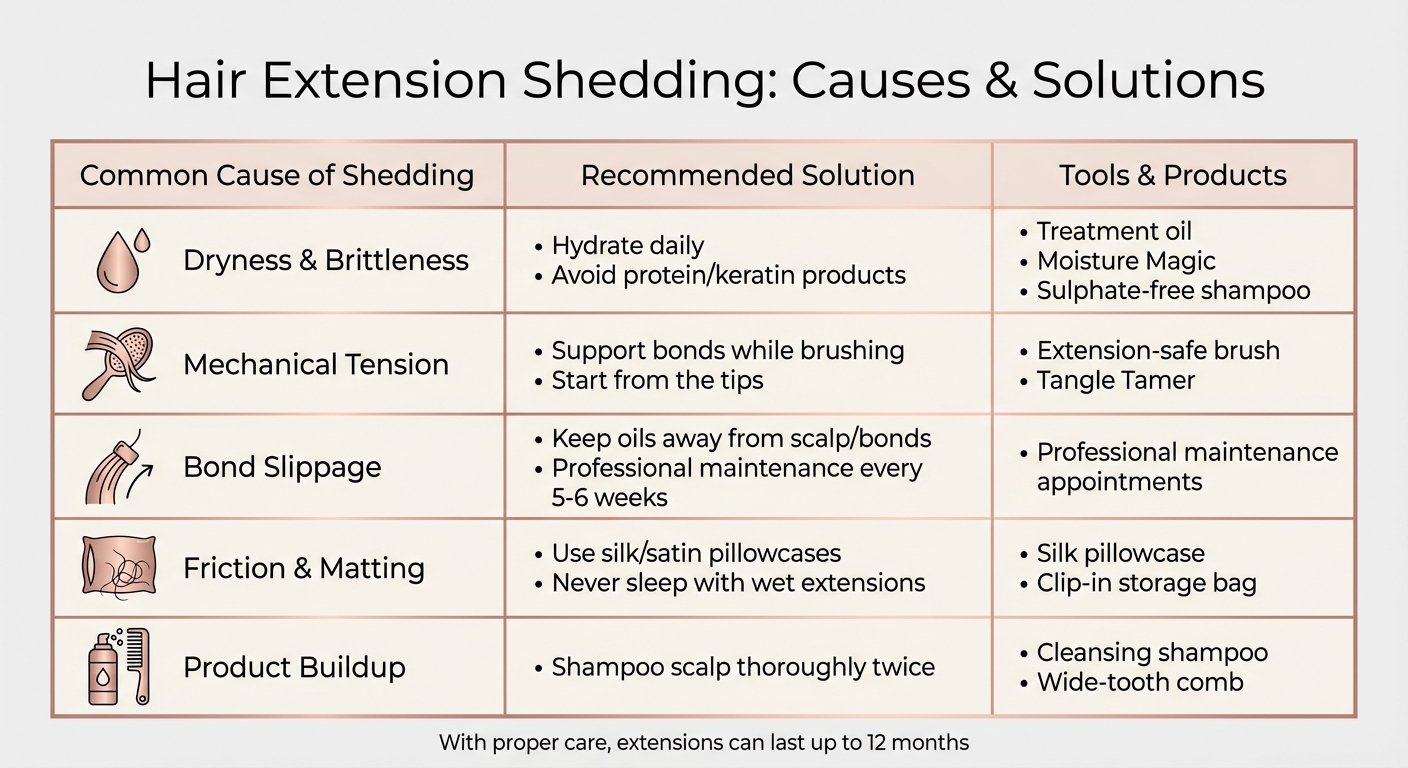
Hair Extension Shedding: Common Causes and Prevention Solutions
Taking care of hair extensions requires more than just basic upkeep. To keep your extensions looking their best and lasting longer, here are some practical strategies to prevent shedding and maintain their quality.
Start by focusing on daily care and hydration. Extensions don’t benefit from natural scalp oils, so it’s essential to replenish moisture regularly with oil treatments. When brushing, always begin at the ends and work your way up, holding the extension row to reduce tension. Use a brush specifically designed for extensions to avoid pulling or causing breakage.
For hydration, apply 1–3 pumps of treatment oil - like Hair Wonderland's Moisture Magic ($39.95) - to the mid-lengths and ends daily. This keeps the extensions soft and manageable. Be cautious with products containing sulphates, high alcohol content, protein, or keratin. While these might benefit natural hair, they can make extensions brittle and more prone to damage.
Nighttime routines also play a crucial role. Never go to bed with wet extensions - this can lead to matting and tangling. Instead, secure your hair in a loose plait and sleep on a silk or satin pillowcase to minimise friction. For clip-in extensions, proper storage is just as important. Use a designated storage bag, such as Hair Wonderland's Clip In Storage Bag ($54.00), to shield them from environmental damage when not in use.
Causes and Solutions Comparison
| Common Cause of Shedding | Hair Wonderland-Recommended Solution | Recommended Tools/Products |
|---|---|---|
| Dryness & Brittleness | Hydrate daily; avoid protein/keratin-based products | Treatment oil, Moisture Magic, sulphate-free shampoo |
| Mechanical Tension | Support bonds while brushing; start from the tips | Extension-safe brush, Tangle Tamer |
| Bond Slippage | Keep oils and conditioners away from the scalp and bonds | Professional maintenance every 5–6 weeks |
| Friction & Matting | Use silk/satin pillowcases; never sleep with wet extensions | Silk pillowcase, clip-in storage bag |
| Product Buildup | Shampoo the scalp thoroughly twice | Cleansing shampoo, wide-tooth comb |
Conclusion: Making Informed Choices About Hair Extensions
Knowing the facts about extension shedding allows you to make better decisions about your hair and helps you tell the difference between normal hair loss and potential quality concerns.
The longevity of hair extensions hinges on three main factors: selecting high-quality products, professional application, and diligent upkeep. Extensions made from double-drawn Russian or Mongolian hair provide consistent thickness, which helps minimise noticeable shedding. When installed by a skilled professional, these extensions not only look natural but can also shield your hair from the effects of heat styling and external elements. Together, these aspects ensure a polished and natural finish.
"When done professionally and cared for properly, extensions do not damage your hair - they can even protect your natural strands from heat styling and environmental damage!" - Circles of Hair
Using sulphate-free products, applying treatments like Moisture Magic ($39.95) for daily hydration, and brushing gently are essential for keeping extensions in great shape for up to 12 months. Since extensions don’t benefit from natural scalp oils, regular moisturising helps prevent dryness and breakage.
FAQs
How do I know if my hair extensions are shedding too much?
Excessive shedding in hair extensions becomes noticeable when you see a lot of hair coming out while brushing, washing, or taking them off. If the extensions start looking thinner, develop noticeable gaps, or lose significantly more than the typical 80–100 strands per day, it could signal a problem.
To reduce shedding, stick to good care practices. Use a gentle detangling brush, steer clear of harsh products, and handle your extensions with care. Extensions from brands like Hair Wonderland are made to last, but how well they hold up depends greatly on how you look after them.
How can I care for my hair extensions to make them last longer?
To keep your hair extensions in great condition and make them last longer, here are some simple care tips:
- Wash them regularly, but not too often: Aim to clean your extensions every 4–5 wears or at least once a week. This helps remove product build-up while keeping them soft and manageable.
- Choose gentle, sulphate-free products: Opt for shampoos and conditioners designed for extensions to avoid drying them out or damaging the bonds.
- Be gentle when detangling: Use a soft-bristle detangling brush, like the Hair Wonderland Detangle Brush, to prevent pulling or breaking the strands.
- Limit heat styling: Try to reduce your use of straighteners or curling irons. When heat styling is necessary, always apply a heat protectant to shield the hair.
For clip-in extensions, it’s best to remove them before washing. Also, consider scheduling regular touch-ups with a professional to keep them looking flawless and securely in place. With proper care, your extensions can stay smooth, shiny, and natural-looking for months!
Will hair extensions damage my natural hair?
Hair extensions, when done right, don’t damage your natural hair. If a professional applies them using the correct technique and ensures the extensions match the weight of your hair type, they simply blend with your strands without causing unnecessary shedding or breakage.
Problems, however, can occur if extensions are too heavy, pulled too tightly, or left in for too long. To steer clear of these issues, prioritise proper application and choose high-quality options, like the double-drawn Russian or Mongolian hair available at Hair Wonderland. Maintaining a gentle care routine is equally important - use sulphate-free shampoos, brush carefully, and give your hair regular breaks. This way, you can enjoy extensions without compromising your natural hair’s health.