


When it comes to storing your hair extensions, the right method can make a big difference in maintaining their quality. Extensions are delicate, and improper storage can lead to tangling, damage, or even mould. Two popular options are hangers and storage bags, each with its specific uses:
- Hangers: Great for keeping extensions straight, tangle-free, and ready for daily use. They allow easy access and styling but don’t protect against dust or moisture.
- Storage Bags: Ideal for long-term storage or travel. They protect extensions from dust, humidity, and sunlight but can cause creasing if not stored properly.
Key Takeaways:
- Hangers are best for frequent use and maintaining styled extensions.
- Storage Bags are better for protection during travel or long-term storage.
- Always clean, detangle, and fully dry extensions before storing to avoid damage.
- A hybrid approach - using a hanger inside a bag - offers the best protection and convenience.
By matching your storage method to your routine and environment, you can extend the life of your extensions while keeping them looking their best.
How to Store Clip In Hair Extensions | Instant Beauty ♡
How to Prepare Extensions Before Storage
Getting your extensions ready for storage isn’t just a nice-to-have step - it’s essential. Skipping proper preparation can lead to tangles, mould, and unnecessary wear. Here’s how to keep your extensions in top shape while they’re stored away.
Clean and Detangle Your Extensions First
Detangling comes first. Before washing or storing, gently work through knots using a wide-tooth comb or a Tangle Tamer (A$21.95). Always start at the ends and work your way up to avoid pulling or breaking the hair. This simple step ensures that tangles don’t worsen while in storage.
When it’s time to wash, stick to sulphate- and paraben-free shampoos. Avoid products with protein, keratin, or high alcohol content, as these can dry out the hair and make it brittle. For conditioning, focus on the mid-lengths and ends - steer clear of the roots or attachment points to prevent slippage.
Drying is non-negotiable. Extensions must be completely dry before storage. Any leftover dampness can invite mould, mildew, or unpleasant odours that are hard to remove. Use a microfibre towel to pat them dry. Air-drying is ideal, but if you’re short on time, a blow dryer on a low-to-medium heat setting works - just don’t forget to use a heat protectant spray.
Keep Extensions Away from Heat and Moisture
Direct sunlight is a no-go, as it can fade colours and dry out the fibres. Similarly, humidity and moisture can roughen the hair cuticles, causing frizz and matting.
For storage, choose a cool, dry spot like a closet shelf. Bathrooms are too humid, and windowsills expose hair to damaging UV rays. If you’re using storage bags, silk or satin options are your best bet - they allow airflow while protecting the hair. Avoid airtight plastic bags, as they can trap moisture and lead to condensation issues.
Storing Extensions on Hangers
Hangers are a great way to store extensions because they keep the hair vertical, which helps maintain its flow and texture without putting unnecessary strain on the fibres. Professional hangers often come with a locking mechanism. You simply lower the hook, position the wefts, and secure them by lifting the hook back into place. This allows the hair to hang straight, preserving its natural look. Proper storage like this helps reduce tangling, keeps dust at bay, and prevents stress on the fibres. Let’s dive into how to use these hangers effectively.
How to Use Extension Hangers Properly
Start by ensuring that all clips on your clip-in extensions are securely fastened. This step prevents the clips from snagging strands or causing tangles during storage. When placing the wefts on the hanger, distribute them evenly across the bar. This keeps the weight balanced, which helps prevent slipping or misshaping.
Once secured, hang your extensions in a cool, dry area, away from direct sunlight. If you’re not using a dedicated storage bag, cover the extensions with a breathable silk scarf or cloth to shield them from dust. Hangers can also be helpful during styling - just hang them on a door hook for easy access while working.
Benefits of Hanger Storage
One of the biggest perks of storing extensions on hangers is quick and easy access. Your extensions stay organised and ready to wear, without the hassle of detangling or reshaping. This method is especially useful for clip-ins and halo extensions. As Brenda L. from Cliphair explains:
"Specific extension hangers allow you to hang your extensions in a tangle-free manner, preserving their shape and texture".
Hangers also save space by keeping extensions off the floor and away from surfaces where they might collect dirt or get crushed. For added protection, consider pairing the hanger with a zippered storage bag, which shields the hair from dust, moisture, and UV exposure.
Drawbacks of Hanger Storage
The main downside of hanger storage is dust exposure. Without proper covering, extensions can lose their shine and appear dull over time. Marie Pett, founder of RiRi Hair Extensions, emphasises:
"Storing hair extensions properly is pretty much life or death. Not for you. But for your extensions".
Crowded storage spaces can also distort the natural flow of the hair. To avoid this, make sure hangers have enough room to hang freely. Another potential issue is slippage - extensions may fall and tangle if the hanger doesn’t have a secure grip. Opting for padded hangers with a wide grip and storing them inside a protective bag can address most of these concerns. These simple steps go a long way in keeping your extensions in top condition.
Storing Extensions in Bags
Using storage bags is a smart way to shield extensions from dust, moisture, and other harmful elements. These bags, often made from silk, satin, or soft mesh, reduce friction damage while allowing air to circulate. Unlike standard plastic bags, which can trap moisture and cause static frizz, these materials are designed to offer better care. While hangers work well for frequent use, storage bags are a safer bet for long-term storage and travel.
How to Use Storage Bags Correctly
Before placing your extensions in a storage bag, make sure they're completely dry and free of tangles. Start by gently brushing the hair, working from the ends upward, and securing the clips. Gather the hair at the base of each weft, securing it with a hair tie to create a ponytail-like shape. Then, coil the hair loosely into a circle, ensuring the ends are tucked in to maintain the natural direction and reduce tangling.
For human hair extensions, applying a small amount of hair serum to the ends before storing can help keep them hydrated and prevent split ends. Once prepared, place the coiled extensions into a breathable storage bag. Store the bag in a cool, dry spot away from direct sunlight. Adding a silica gel packet can also help absorb any lingering moisture, offering extra protection against mildew.
Benefits of Bag Storage
Storage bags offer a protective barrier that keeps extensions safe from dust, dirt, and airborne particles. Their sealed or zippered designs also guard against lint and bacteria while preventing exposure to sunlight, which can fade colour and dry out the hair. Bags are also travel-friendly - compact, lightweight, and easy to pack into luggage or drawers. For example, the Hairdo Storage Bag, suitable for extensions up to 45 cm, is priced at approximately A$17.00, and the PA Hair Extensions Storage Bag with Hanger is available for A$22.00.
Drawbacks of Bag Storage
While storage bags are useful, they can sometimes cause issues like creasing, flattening, or tangling if the hair is stored too tightly or cramped. Additionally, placing damp extensions in a bag can lead to mould or mildew. To avoid these problems, always ensure your extensions are completely dry, use breathable materials, and avoid overcrowding by storing each set of extensions in its own bag.
sbb-itb-dcde78e
Hangers vs Bags: Direct Comparison
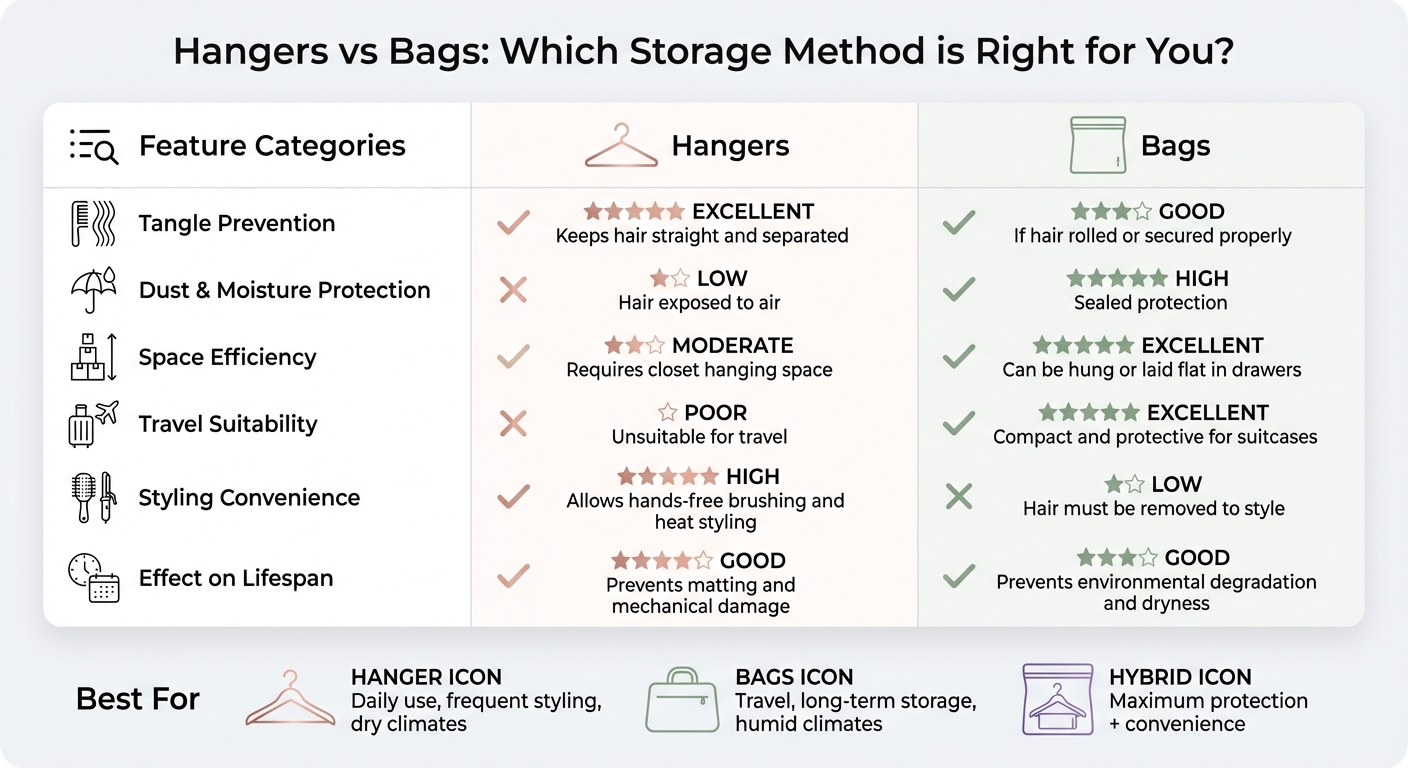
Hair Extension Storage: Hangers vs Bags Comparison Chart
Let’s break down the differences between hangers and bags for storing hair extensions. The right choice depends on how you use your extensions. Hangers are ideal for daily styling, keeping hair tangle-free and ready to go. On the other hand, bags offer long-term protection by shielding hair from dust, moisture, and sunlight. Neither is inherently better - it all depends on whether you prioritise convenience or preservation.
Hangers shine when it comes to ease of use. You can brush, curl, or straighten your extensions while they remain clipped to the hanger, saving you time. However, they leave hair exposed to humidity and airborne particles, which can affect its quality. Bags solve this issue by creating a sealed environment, but they aren't as convenient for quick styling. This trade-off makes it essential to align your storage method with your routine.
For travel, bags are the clear winner. They’re lightweight, compact, and protect your extensions from getting crushed in your luggage. Hangers, by contrast, are impractical for transportation and offer no real protection.
Storage Method Comparison Table
Here’s a quick look at how hangers and bags compare:
| Feature | Hangers | Bags | Best For |
|---|---|---|---|
| Tangle Prevention | Excellent; keeps hair straight and separated | Good; if hair is rolled or secured properly | Hangers |
| Dust & Moisture Protection | Low; hair is exposed to the air | High; sealed protection | Bags |
| Space Efficiency | Requires closet hanging space | Can be hung or laid flat in drawers | Bags |
| Travel Suitability | Poor; unsuitable for travel | Excellent; compact and protective for suitcases | Bags |
| Styling Convenience | High; allows for hands-free brushing and heat styling | Low; hair must be removed to style | Hangers |
| Effect on Lifespan | Prevents matting and mechanical damage from tangles | Prevents environmental degradation and dryness | Both (Combined) |
The BFB Hair Extension Hanger, with a 4.8-star rating from 28 reviews, highlights the benefits of hangers for organisation. However, some users note that extensions can slip out if brushed too vigorously. For a hybrid solution, the Cliphair Hanger & Carrier, priced at A$28.00, combines a wooden hanger with a PU leather carrier. This setup protects against dust while maintaining the hair’s shape. Many users find that the best results come from combining both methods - clipping extensions to a hanger for styling and then storing them in a bag for protection.
Which Storage Method to Choose
For day-to-day use, hangers are ideal as they maintain the shape of your hair extensions and prevent unwanted kinks. On the other hand, storage bags are better suited for occasional use or long-term storage, offering protection against dust and moisture. Your choice largely depends on how often you use your extensions and the conditions they are stored in.
Marie Pett, Founder of RiRi Hair Extensions, emphasises:
"Storing hair extensions properly is pretty much life or death... if you don't care for your hair extensions by properly storing them when they aren't worn, their life span will seriously reduce".
This advice is especially important in Australia, where the climate varies significantly. Coastal areas with high humidity can lead to frizz, while the dry heat inland can cause extensions to lose moisture. In damp environments, a sealed bag is a must to prevent mould, while hangers work best in dry, air-conditioned spaces.
For the best of both worlds, try a hybrid approach: clip your extensions onto a hanger and then place the hanger inside a zippable storage bag.
Hair Wonderland Storage Products

Hair Wonderland offers solutions to make proper storage simple. The Hair Wonderland Clip In Bag (AUD 54.00) provides a secure and protective home for your extensions when they’re not being used. It shields them from dust, sunlight, and humidity - key factors that can shorten their lifespan. Before storing, gently detangle your extensions using the Tangle Tamer Brush (AUD 21.95), starting from the ends and working upwards. For precise sectioning, follow up with the Styling Comb (AUD 12.95).
For premium sets like the Seamless Set 22" (AUD 499.00), proper storage is even more critical. These extensions, made from 100% Remy European Human Hair and weighing 200 grams, need extra care to maintain their quality. Always ensure they are completely dry before storage to avoid mildew. Applying 1–2 pumps of treatment oil to the mid-lengths and ends can help keep them hydrated, as extensions don’t benefit from your scalp’s natural oils.
Storage Tips for Different Extension Types
For clip-in extensions like the Seamless Set 22", aim to wash them every 30 wears or about once a month to prevent dryness. After washing, finish with a cool rinse to seal the cuticles and lock in moisture. Allow your extensions to air-dry fully on a hanger before placing them in a storage bag. To maintain the silky texture of Remy hair, keep heat styling tools below 120°C.
As mentioned earlier, steer clear of products containing protein, keratin, sulphates, or high alcohol content. In Australia’s climate, store your extensions in a cool, dry place - a wardrobe or dresser drawer works well - away from direct sunlight and heat sources. If you live in a humid coastal area, a sealed bag is essential to prevent frizz and bacterial growth. For those with multiple sets, labelling your storage bags can help you organise them and reduce unnecessary exposure to air when accessing them frequently.
Conclusion
Hangers help keep your extensions in shape and tangle-free for daily use, while silk or satin bags offer protection from dust, moisture, and other elements during long-term storage or travel.
Taking care of how you store your extensions can significantly extend their lifespan. As Fabulive puts it:
"Storage is essentially an extension of your care routine, and treating it seriously can double the usable life of your hair extensions".
This is especially important for protecting your investment.
In Australia's diverse climate, adjusting your storage method to suit local conditions is key. Coastal areas with high humidity benefit from sealed bags to ward off mould, while drier inland regions see excellent results with hangers in air-conditioned spaces. For the best of both worlds, you can clip your extensions onto a hanger and place them inside a protective bag - a method we've already explored.
If you're looking for a one-stop solution, Hair Wonderland's Clip In Bag (AUD 54.00) offers all-around protection. Pair it with their Tangle Tamer Brush (AUD 21.95) to detangle your extensions with ease. Since extensions don't get the benefit of your scalp's natural oils, every extra step you take to protect them ensures they stay looking salon-fresh for longer.
FAQs
What’s the best way to store hair extensions without them tangling?
To keep your hair extensions free from tangles while in storage, it's crucial to detangle them first. Gently work through the strands with a wide-toothed comb or a detangling brush, starting at the ends and gradually moving upward to minimise any risk of damage. Once detangled, consider using a specialised extension hanger to store them. These hangers securely hold the wefts, allowing for proper air circulation and helping to prevent knots.
If you prefer using storage bags, make sure the extensions are completely dry and smooth before placing them inside. Avoid packing the bag too tightly, as this can cause friction and lead to tangling. Taking these simple steps and using the right tools will go a long way in maintaining the quality and durability of your extensions.
How should I store hair extensions in humid conditions to keep them in good shape?
To keep your hair extensions looking their best in humid conditions, it's crucial to protect them from moisture. Humidity can cause tangling, matting, or even damage. One of the best ways to safeguard your extensions is by using a protective storage bag with a hanger. This allows you to hang them in a cool, dry place, keeping them safe from excess moisture and dust.
Before storing, make sure your extensions are completely dry - this helps prevent mould or bacteria from forming. Gently detangle them, let them air-dry thoroughly, and place them in a well-ventilated space, away from direct sunlight and humidity. With proper care and the right storage setup, you can keep your extensions in great condition for much longer.
Can I use both hangers and bags to store my hair extensions?
Storing your hair extensions properly can make a big difference in their longevity and quality. Combining hangers and storage bags is a smart approach. Hangers are perfect for keeping your extensions tangle-free and maintaining their shape, making them a great option for short-term storage in your wardrobe or closet. Meanwhile, storage bags shield your extensions from dust and moisture, making them ideal for long-term storage or when you're travelling.
Using both methods together - hangers for quick access and storage bags for added protection - helps keep your extensions clean, smooth, and ready to use whenever you need them.