


Hair extensions can be a great way to change your look, but the costs and effort involved depend on whether you go to a salon or maintain them at home. Here's what you need to know:
- Salon Maintenance: Expect to spend $160–$850 every 6–8 weeks for upkeep, depending on the type of extensions and location. Professional care ensures proper application and reduces risks like hair damage but comes with a significant time and financial commitment.
- Home Maintenance: Clip-ins and halo extensions cost $160–$750 upfront and require daily care, including brushing, oiling, and styling. While cheaper overall, maintaining semi-permanent extensions at home still requires occasional salon visits for adjustments.
Quick Comparison
| Factor | Salon Maintenance | Home Maintenance |
|---|---|---|
| Cost | $150–$850 every 6 weeks | $160–$750 upfront, $200/year products |
| Time Commitment | 15 mins–2 hrs every 4–8 weeks | 20–30 mins daily |
| Skill Level | Handled by professionals | Requires learning proper techniques |
| Lifespan | 6–12 months with proper care | 6–12 months with diligent upkeep |
If you value convenience and professional care, salons are the way to go. For a budget-friendly option, at-home care with clip-ins is ideal, but it requires daily effort and attention to detail.
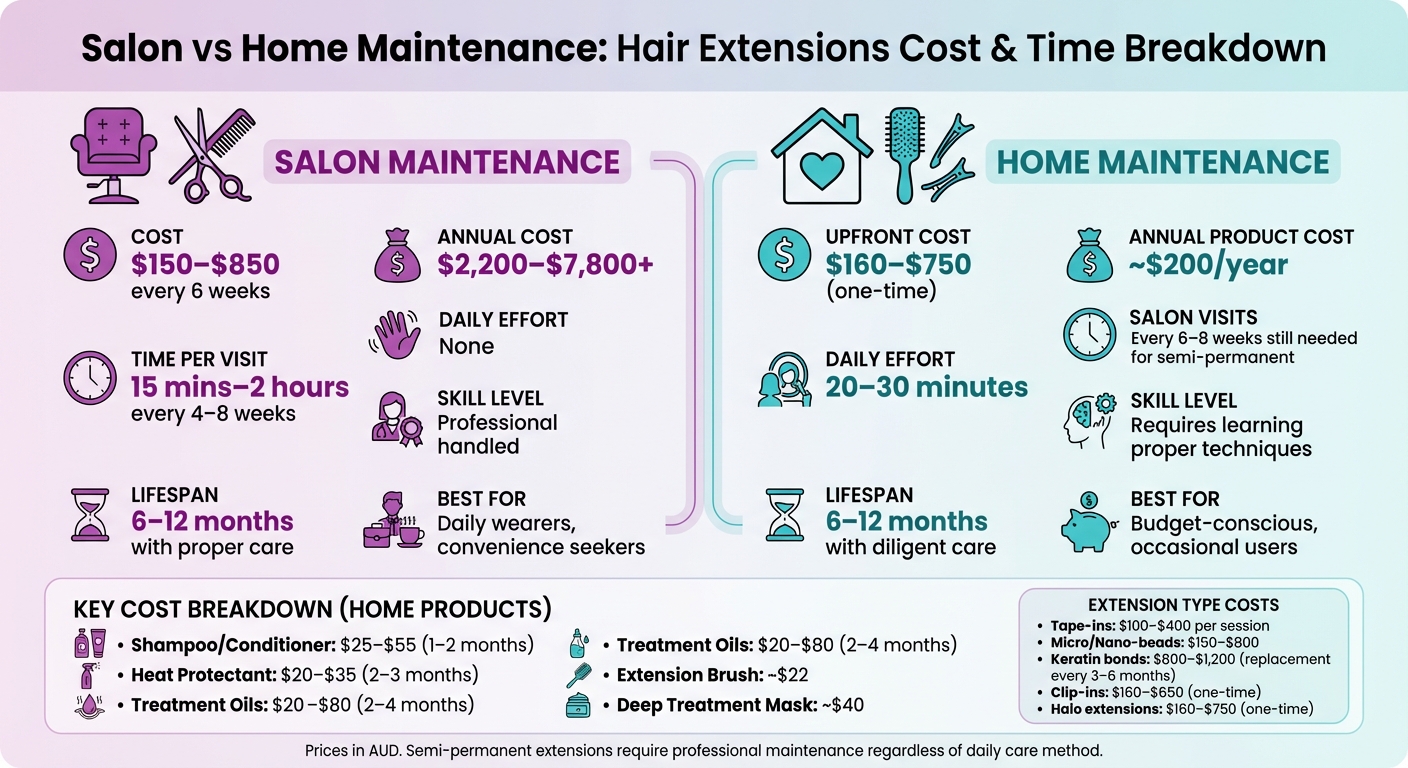
Hair Extension Maintenance: Salon vs Home Cost and Time Comparison
1. Salon Maintenance
Cost
In Australia, maintaining semi-permanent extensions professionally can set you back anywhere from $160 to $850 every 6–8 weeks. The price varies based on the extension method, the number of hair packs, and the salon's location. Tape-in extensions are the most budget-friendly option, costing around $100–$400 per session. On the other hand, micro-bead and nano-bead extensions range from $150 to $800.
Keratin bond extensions are a different story. These aren’t reusable, so you’ll need to have them completely removed and replaced every 3–6 months, which can cost between $800 and $1,200. Prices also differ depending on the city. For example, in Sydney, maintenance can range from $270 to $2,000, while Melbourne prices fall between $400 and $1,500. Perth is a bit more affordable, with options starting at $250.
You’ll also need to factor in the price of aftercare products. Salon-exclusive sulphate-free shampoos typically cost $25–$55, while heat protectants range from $20–$35 - both are often required to maintain your warranty.
Time Investment
Maintaining extensions isn’t quick. Each appointment involves removing, cleaning, and reattaching the extensions, which can take anywhere from 45 minutes to 2 hours, depending on the method used.
Michael Kelly, Founder of Salon HER, explains: "Extensions grow out as the hair does and you need to refresh them around the six week mark to minimise the risk of hair loss from the weight of the extension drag".
Appointments are typically scheduled every 5–8 weeks to keep your natural hair in good condition. If you have fine hair, you might need to go as often as every 4 weeks to avoid breakage. This regular upkeep highlights the importance of professional expertise.
Skill Required
The cost of salon maintenance reflects the skill required for proper extension care. Stylists carefully re-section your hair to ensure each extension is attached to a section of natural hair that can handle the weight. They also check for issues like traction alopecia, scalp sores, or breakage, which can occur if extensions are applied too tightly or left in too long.
Specialised techniques like hot fusion, cold fusion, and weaves demand advanced training to ensure the process is done safely and effectively. These methods involve managing heat, keratin bonds, or intricate sewing, all of which require a delicate touch to avoid damaging your hair.
As Michael Kelly notes: "Extensions are akin to cosmetic treatments, requiring expert application for a discreet, balanced look".
Trying to remove semi-permanent extensions at home can lead to serious damage to your natural hair, making professional care even more essential.
Long-Term Value
When it comes to long-term value, tape-in and bead extensions stand out. With proper maintenance, the hair can be reused for 6–12 months, making these options more economical than keratin bonds, which need to be replaced with each cycle. Many salons also offer perks like discounted aftercare packs or include the initial cut and blend with installation, which can help offset the ongoing costs. While the upfront investment is high, the durability and potential savings on aftercare make professional salon services worth considering.
Next, we’ll dive into how at-home maintenance compares in terms of cost and effort.
2. Home Maintenance
Cost
When it comes to upfront costs, at-home hair extensions are generally easier on the wallet compared to semi-permanent salon options. For instance, clip-ins typically range from $160 to $650, while halo extensions can cost between $160 and $750. A good example is Hair Wonderland's Seamless Set in 22", priced at $499.00. This set features premium Remy European human hair, known for its quality and durability, lasting anywhere from 6 to 12 months with proper care.
Ongoing costs include maintaining your extensions with the right products. Expect to spend between $25 and $55 for sulphate-free shampoo and conditioner (lasting 1–2 months), $20 to $35 for a heat protectant spray (every 2–3 months), and $20 to $80 for treatment oils (every 2–4 months). You'll also need tools like an extension brush, such as the Tangle Tamer for $21.95, and storage solutions like a bag priced around $54.00. Weekly deep treatment masks, like Moisture Magic at $39.95, are another essential. If you're maintaining semi-permanent extensions, additional items like tape replacement packs ($20–$50) or bead reattachment packs ($10–$25) might also be required.
Time Investment
Taking care of extensions at home demands a steady routine. Each day, you'll need to brush your extensions in the morning and evening using a specialised brush, apply treatment oil (1–2 pumps in the morning and 2–3 at night), and tie your hair into a low plait or ponytail before bed. Washing should be limited to 2–3 times per week, and it's crucial to blow-dry your hair completely on medium heat before sleeping to protect the bonds.
"Styling extensions can require more effort in terms of blow drying and heat styling, as you simply have more hair - hair that's fuller and also potentially longer", explains Michael Kelly, Stylist and Founder of Salon HER.
If you're using clip-ins, be prepared to spend at least 30 minutes applying and styling them each time you wear them. During washing, conditioner and deep treatment masks should be left on the mid-lengths and ends for at least five minutes to ensure proper hydration.
Skill Required
The level of skill needed for home maintenance largely depends on the type of extensions you choose. Clip-ins are the easiest to manage and beginner-friendly. On the other hand, semi-permanent options like tape-ins and microbeads require more precision and care.
"Hair extensions are not overly high maintenance, but they do require proper care and attention. The level of maintenance largely depends on the type of hair extensions you choose", says Shakira Dickinson, Hair Specialist.
For best results, you'll need to master a few techniques. Shampoo should only be applied to the scalp, while conditioner is reserved for the ends to avoid loosening bonds. Brushing should start from the ends and work upwards to prevent tugging at the attachment points. Also, steer clear of products with protein, keratin, sulphates, or high alcohol content, as these can make extensions difficult to manage after just one use.
Long-Term Value
With diligent care, human hair extensions can last between 6 and 12 months, making them a solid choice compared to synthetic alternatives. Consistency is key - daily brushing, using the right products, and washing sparingly all help maximise their lifespan. However, some Australian suppliers only offer a 6-week warranty if you exclusively use their recommended hair care products, so it's worth considering this when making your purchase.
While at-home maintenance is more budget-friendly than regular salon visits, semi-permanent extensions still require professional upkeep every 6–8 weeks to avoid damaging your natural hair. This means you might not be able to entirely eliminate salon costs, depending on the type of extensions you choose.
sbb-itb-dcde78e
Pros and Cons
Salon and at-home maintenance come with their own sets of advantages and challenges, particularly when it comes to cost, time, and skill requirements. Here's a breakdown to help you weigh your options:
| Factor | Salon Maintenance | Home Maintenance |
|---|---|---|
| Cost | Expect higher recurring expenses: typically $150–$850 every six weeks, adding up to $2,200–$7,800+ annually. | More budget-friendly, with product costs averaging $200 per year. Clip-ins, like Hair Wonderland's Seamless Set ($499.00), are a one-time investment. |
| Time Commitment | Requires 15 minutes–2 hours every 4–8 weeks for professional upkeep. No daily effort needed. | Daily care takes about 20–30 minutes, including brushing, oiling, and styling. |
| Skill Level | Professionals ensure proper re-sectioning and weight balancing, reducing the risk of damage. | You’ll need to learn techniques for washing, brushing, and drying. Using the wrong products, like those with sulphates or excess protein, can cause damage. |
| Key Benefits | Helps prevent hair loss and extension drag through proper repositioning. Also extends the lifespan of extensions. | Saves money and eliminates the need for appointments. Products such as Hair Wonderland's Moisture Magic ($39.95) and Tangle Tamer ($21.95) support effective at-home care. |
| Potential Risks | Long-term financial commitment; delaying maintenance beyond six weeks could lead to hair loss. | Incorrect brushing can cause matting, and using unsuitable products may lead to bond slippage and void warranties. |
This comparison underscores the trade-off between the expertise of salon care and the affordability and independence of at-home maintenance.
Conclusion
Deciding between salon and home maintenance comes down to your lifestyle, budget, and how often you use extensions. For those wearing semi-permanent extensions like tape-ins or wefts daily, salon maintenance every 5–6 weeks is a smart choice. Professionals can re-section the extensions, which helps prevent damage from drag on your natural hair and keeps the extensions in great shape for 9 to 12 months. This is ideal if you enjoy the convenience of a polished, ready-to-go look every day.
On the other hand, home maintenance can be a budget-friendly option, especially for occasional extension users. Clip-in sets - such as Hair Wonderland's Seamless Set - completely cut out ongoing salon costs. Still, this saving comes with the responsibility of diligent daily care and precise application to avoid any damage.
Regular salon visits, approximately every four weeks, are crucial to prevent strain on your hair follicles. If you prefer more flexibility and don’t mind dedicating extra time to your routine, combining clip-ins with high-quality home care products can be a great way to balance cost and results.
FAQs
What’s the best way to care for hair extensions at home without causing damage?
To keep your hair extensions looking their best at home, start with products specifically designed for extensions. Choose a sulphate-free shampoo with low alcohol content and pair it with a lightweight conditioner to help retain moisture. Steer clear of anything containing protein, keratin, or harsh sulphates, as these can dry out the extensions and lead to brittleness. When washing, use lukewarm water - hot water can weaken the fibres - and aim to wash them about once a week or after 10–12 wears, depending on your styling routine.
For everyday maintenance, detangle your extensions carefully using a wide-tooth comb or a brush made for extensions. Always start from the ends and work your way up to minimise breakage. If you’re styling with heat tools, apply a heat protectant and stick to low or medium heat settings to avoid damage. When you’re not wearing your clip-in extensions, store them properly in a breathable pouch or on a stand, keeping them away from sunlight and moisture. These simple habits will help your extensions stay natural-looking and last longer.
What are the main skills needed for maintaining hair extensions at a salon versus at home?
The skills needed to care for hair extensions vary quite a bit between professional salon visits and what you do at home.
When you visit a salon, a trained stylist takes care of tasks like repositioning extensions, making sure they’re securely attached to healthy sections of your natural hair, and checking for any issues with bonding or scalp health. These appointments, usually scheduled every 4–6 weeks, are key to keeping your extensions in good shape and avoiding damage.
At home, it’s all about gentle and consistent care. This means brushing with a brush designed specifically for extensions, applying heat protectant sprays before styling, and steering clear of products containing protein, keratin, sulphates, or high alcohol levels. While you don’t need advanced skills, handling your extensions carefully and using the right products can make a big difference in how long they stay looking great.
Is professional salon maintenance worth the extra cost compared to caring for hair extensions at home?
Maintaining hair extensions at a salon can set you back anywhere from $200 to $500 per visit, while taking care of them at home typically costs about $100. While the salon option is pricier, it often delivers benefits that make the extra expense worthwhile. Professional care not only safeguards your natural hair but also helps prevent damage to the extensions and prolongs their lifespan, ensuring they stay in top condition for longer.
On the other hand, at-home care is easier on the wallet but comes with its own challenges. You'll need the right tools, products, and techniques to avoid causing unintentional damage. If you're after convenience, expert handling, and results that last, salon maintenance might just be the better option.