


When your hair extensions start looking less than their best, it's important to figure out whether you're dealing with dryness or frizz. These two issues may seem similar but require completely different solutions:
- Dry extensions lack moisture and natural oils, making them brittle, dull, and prone to breakage.
- Frizzy extensions result from lifted or damaged cuticles, causing the hair to swell with environmental moisture, leading to puffiness and flyaways.
The wrong treatment can make things worse. For dryness, focus on deep hydration with masks and oils. For frizz, use smoothing products to seal the cuticle and reduce friction. Here's a quick breakdown:
| Feature | Dry Extensions | Frizzy Extensions |
|---|---|---|
| Cause | Lack of moisture, over-washing | Humidity, cuticle damage |
| Texture | Brittle, rough, stiff | Fuzzy, tangled, soft |
| Appearance | Dull, matte, split ends | Puffy, flyaways, "halo" effect |
| Triggers | Sulphates, chlorine, sun exposure | Humidity, rough brushing, static |
Both problems can occur simultaneously, so it's essential to identify the root issue. Use the right care routine to restore your extensions and extend their lifespan.
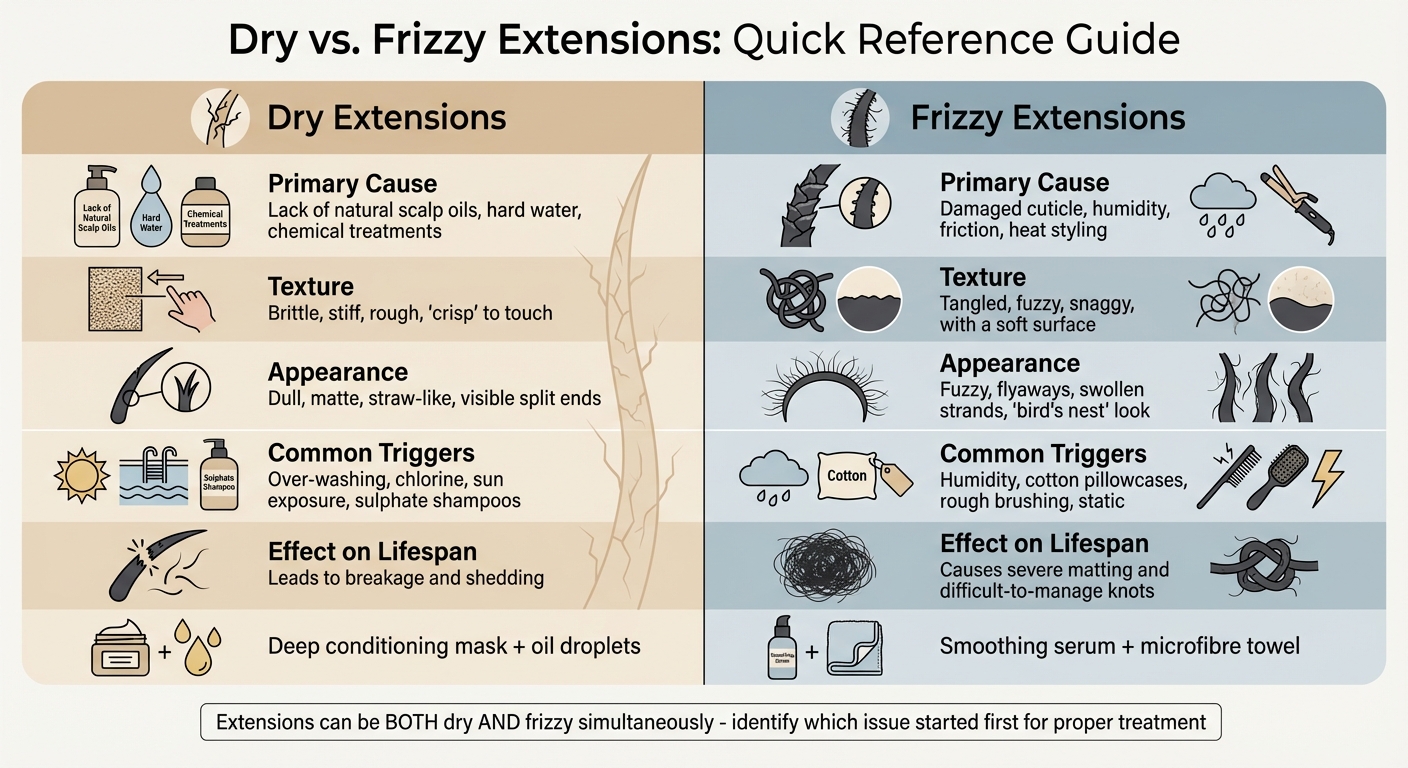
Dry vs Frizzy Hair Extensions Comparison Chart
How To Save Your Dry Extensions!
What Causes Dry Extensions?
Dry extensions are often the result of losing both moisture and lipids. Unlike your natural hair, extensions don't benefit from the scalp's sebum, which acts as a natural moisturiser. Instead, they depend entirely on external sources of hydration. Without this extra care, extensions can easily fall victim to factors that strip away their already limited lipids.
Let’s break down the most common culprits behind dry extensions.
Common Causes of Dryness
One major cause is over-washing. Washing extensions more than two or three times a week can strip away the oils that keep them soft and manageable. The problem gets worse if you’re using shampoos with sulphates, as they’re notorious for removing natural oils. On top of that, hard water, often packed with minerals like calcium and magnesium, can cling to the hair shaft, leaving extensions stiff and coarse.
Heat styling and chemical treatments like bleaching or colouring are also big offenders. These processes damage the cuticle layer, allowing moisture to escape. And let’s not forget the harsh environmental conditions in Australia. The strong UV rays and exposure to saltwater can dry out the fibres and weaken the cuticle. Devin Graciano from Goldie Locks explains:
"Sun can dehydrate the hair... Chlorine exposure strips moisture, fades colour, and disrupts the hair's protective cuticle layer".
Signs of Dry Extensions
Dry extensions are easy to spot. They lose their shine, look dull, feel rough to the touch, and are more prone to tangling. Over time, this can lead to split ends and breakage.
What Causes Frizzy Extensions?
Frizz happens when the hair's cuticle lifts, allowing moisture from the environment to swell the hair shaft. Zara Kenyon and Edward Sweeney from Wella Professionals explain it best:
"When you have dry hair, it seeks moisture in humid air, causing the cuticle to swell and frizz."
Extensions, unlike natural hair, lack sebum - the natural oil that protects and hydrates strands. This makes them more likely to absorb ambient moisture. In Australia's diverse climate, ranging from humid coastal regions to the arid inland, this issue can be even more noticeable. Several key factors contribute to frizz in extensions.
Common Causes of Frizz
- Humidity: Dry extensions are like sponges, soaking up moisture from the air. This causes the cuticle to swell, leading to puffiness. It's a common issue in Australia's coastal areas, especially during summer.
- Rough Towel Drying: Rubbing extensions with a towel can rough up the cuticle, making frizz worse.
- Harsh Brushing: Using the wrong brush or being too forceful when detangling can damage the cuticle, leaving hair frazzled and uneven.
- Product Build-Up: Overusing heavy products like serums, hairsprays, or dry shampoos can leave a residue. This prevents proper hydration, making extensions look dull and unmanageable.
- Hard Water Deposits: Minerals from hard water can cling to the hair shaft, leaving it stiff and more prone to frizz.
These factors all contribute to the visible signs of frizz, which are easy to identify.
Signs of Frizzy Extensions
Frizzy extensions are hard to miss. They often create a "halo" effect with fuzzy strands and flyaways around your head. The hair might look puffy and feel unruly to the touch. A tell-tale sign is when extensions that appear smooth indoors suddenly puff up in humid weather, unlike dry extensions that remain consistently rough and coarse.
Dry vs. Frizzy Extensions: Key Differences
Building on the causes and signs mentioned earlier, let’s dive into how dry and frizzy extensions differ. While both are common issues with hair extensions, they stem from different causes and require unique care routines. Dry extensions suffer from a lack of internal moisture, while frizzy extensions are the result of damaged cuticles that allow environmental moisture to swell the hair shaft.
You can easily distinguish between the two by touch and appearance. Dry extensions feel brittle, stiff, and lacklustre, with no natural shine. On the other hand, frizzy extensions have a tangled, fuzzy texture, often accompanied by a halo of flyaways that refuse to settle, even after brushing. Recognising these differences is key to addressing the specific needs of each type.
Comparison Table: Dry vs. Frizzy Extensions
Here’s a quick breakdown of their differences:
| Feature | Dry Extensions | Frizzy Extensions |
|---|---|---|
| Primary Cause | Lack of natural scalp oils, hard water, chemical treatments | Damaged cuticle, humidity, friction, heat styling |
| Texture | Brittle, stiff, rough, "crisp" to touch | Tangled, fuzzy, snaggy, with a soft surface |
| Appearance | Dull, matte, straw-like, visible split ends | Fuzzy, flyaways, swollen strands, "bird's nest" look |
| Common Triggers | Over-washing, chlorine, sun exposure, sulphate shampoos | Humidity, cotton pillowcases, rough brushing, static |
| Effect on Lifespan | Leads to breakage and shedding | Causes severe matting and difficult-to-manage knots |
When Extensions Are Both Dry and Frizzy
Sometimes, extensions can show signs of both dryness and frizz at the same time. In fact, dryness often paves the way for frizz. When the hair lacks moisture, the cuticle lifts, making it more prone to catching environmental moisture, which results in frizz.
Understanding which issue started first is crucial because the treatments differ. For instance, applying heavy oils to tackle frizz when the root problem is dryness can lead to product build-up without actually solving the problem. Here’s a tip: run your fingers down the hair shaft. If it feels crisp and breakable, dryness is the issue. If it feels fuzzy and soft, frizz is likely the culprit.
sbb-itb-dcde78e
Care Routines for Dry and Frizzy Extensions
Dry and frizzy extensions can be a challenge, but with the right care, they can regain their softness and smoothness.
Restoring Moisture to Dry Extensions
Dry extensions crave hydration from within - not just a superficial gloss. To address this, wash them 2–3 times a week using a sulphate-free shampoo, focusing only on the scalp. Follow up with a deep conditioning mask, like Moisture Magic ($39.95), applying it to the mid-lengths and ends. Let it sit for five minutes before rinsing with cool water to seal in moisture.
"Hair extensions are dead hair and do not receive nutrients from your scalp. Avoid using products with protein, keratin, sulphates, and high alcohol contents."
– Hair Wonderland Care Guide
For extreme dryness, try leaving a repair mask on overnight. Secure the extensions loosely while you sleep, and rinse them thoroughly in the morning. Each evening, apply 2–3 pumps of argan oil to the ends, then gently detangle using the Tangle Tamer Brush ($21.95), starting at the ends and working upward. If you’re storing clip-ins, protect them from environmental dryness by keeping them in the Clip In Bag ($54.00).
On the other hand, frizzy extensions need a routine centred on taming the cuticle and reducing friction.
Smoothing Frizzy Extensions
After washing, gently blot your extensions with a microfibre towel - don’t rub, as this can roughen the cuticle. When blow-drying, use medium heat and direct the nozzle downward to smooth the hair and minimise flyaways. Daily, work 1–2 pumps of treatment oil through the mid-lengths to control frizz and boost shine.
Friction during sleep is a common cause of frizz. To prevent this, loosely plait installed extensions before bed. For clip-ins, always remove them before sleeping, as wearing them overnight can cause damage. If you're heading to the beach or pool, apply a leave-in cream beforehand to create a protective barrier against salt and chlorine, which can worsen frizz. As with dry extensions, detangle gently twice a day with a specialised brush to avoid snags and tangles that can make frizz more noticeable.
When to Replace or Reassess Extensions
If your hair extensions have been affected by humidity or hard water, a simple adjustment might bring them back to life. Start by applying a repair mask and rinsing with cool water to seal in moisture. However, if these efforts don’t improve the texture, it might be time to evaluate whether your extensions need replacing.
There are certain tell-tale signs that your extensions may be beyond saving. Persistent matting, noticeable thinning, or a texture that no longer blends with your natural hair are strong indicators that it’s time for a new set. If your extensions remain rough and brittle even after regular oil treatments and deep conditioning, it’s likely the hair cuticle is too damaged for repair.
As Hair Wonderland explains:
"Generally, your extensions will stay gorgeous for about 9–12 months before it's time to swap them out for a fresh set."
– Hair Wonderland
Investing in premium extensions, like double-drawn hair, can make a difference. These extensions are thick from root to tip, reducing the risk of premature thinning. Additionally, their intact, aligned cuticles help resist tangling and frizz. For example, Hair Wonderland’s Seamless Set (22"), priced at $499.00, offers this level of quality and can last up to 12 months with proper care.
To maximise the lifespan of your extensions, schedule professional maintenance every 6–12 weeks. These regular check-ups not only keep your extensions in top shape but also help identify whether dryness can be repaired or if replacement is the better option. A trusted salon can provide expert advice to guide your decision.
Conclusion
Figuring out whether your extensions are dry or frizzy is a crucial first step in giving them the care they need. Dry extensions often lack the natural oils that come from your scalp, leaving them brittle and prone to breakage. On the other hand, frizzy extensions are usually the result of cuticle damage caused by heat, humidity, or friction. Using the wrong treatment can worsen the problem - for instance, applying heavy conditioners to frizzy extensions can lead to product buildup and more tangling. Understanding this distinction helps you customise your care routine and extend the life of your extensions.
For dry extensions, focus on deep conditioning masks and treatment oils applied to the mid-lengths and ends. If frizz is the issue, smoothing serums and heat protectants can help tame the cuticles. Hair Wonderland offers this valuable advice:
"Extensions are 100% Remy European human hair, but they require moisture and care. Avoid products containing: protein, keratin, sulfates, and high alcohol content. These can damage your extensions and make them unmanageable after just one use."
Simple changes to your routine - like sleeping with your hair in a loose plait and using a silk pillowcase - can also make a big difference in maintaining your extensions. These small habits, combined with targeted care, can help restore your extensions and protect your overall investment.
Choosing premium extensions is another way to maximise the benefits of your efforts. High-quality options, such as Hair Wonderland's Seamless Set (22", $499.00), are made from double-drawn hair with aligned cuticles, which naturally resist tangling and frizz. Pairing these with professional maintenance every 5–6 weeks and consistent at-home care ensures your extensions stay looking fresh and polished.
FAQs
How do I know if my extensions are dry or frizzy?
To figure out whether your Hair Wonderland extensions are dry or frizzy, focus on how they feel and react when you brush or touch them.
- Dry extensions often feel brittle and stiff, lacking shine and appearing dull or matte. They might break easily and feel rough to the touch, especially if they’ve been over-washed, exposed to harsh shampoos, or subjected to too much heat styling.
- Frizzy extensions tend to look fluffy or puffy, with fly-away strands and an uneven texture. They’re prone to puffing up in humid conditions and can feel tangled or difficult to smooth out.
Here’s a quick way to check: gently brush a small section with a brush designed for extensions. If the hair feels rough and hard, it’s likely dry. If it separates into puffed-up strands, you’re dealing with frizz. Once you know the issue, you can treat it appropriately - use hydrating products for dryness or smoothing treatments to tame the frizz. This will help keep your extensions soft, shiny, and natural-looking.
What are the best products to care for dry hair extensions?
To keep your hair extensions soft and hydrated, it’s essential to use gentle, moisture-packed products made specifically for human hair extensions. Start with a sulphate-free shampoo - this will cleanse your hair without stripping away its natural oils. Follow it up with a sulphate-free, alcohol-free conditioner, focusing on the mid-lengths and ends for targeted hydration. For an extra boost, add a hydrating mask to your routine once a week, and finish with a lightweight oil like argan or jojoba to lock in moisture and reduce frizz.
If you’re using heat styling tools, don’t skip the heat protectant spray. It’s a must for preventing dryness and damage caused by high temperatures. Hair Wonderland suggests sticking to products recommended by your stylist, especially those designed for 100% Remy human hair extensions. These are often free from harsh ingredients like protein, keratin, and high-alcohol formulas. By choosing the right products, you can keep your extensions looking soft, shiny, and feeling great for longer.
How often should I replace my hair extensions, and how can I keep them in good condition?
For clip-in or other temporary extensions, you’ll usually need to replace them every 3–6 months, depending on how often you use them and how well you care for them. Semi-permanent options like tape-ins, wefts, or nano-tips can last up to 12 months if maintained properly.
To keep your extensions looking their best, it’s a good idea to book professional in-salon maintenance every 5–6 weeks. This helps ensure they stay secure, tangle-free, and blend naturally with your hair. Using quality products and sticking to a regular care routine can also go a long way in preserving their luxurious appearance.