


Tape-in extensions can transform your hair, but they often come with challenges like slippage, sticky residue, peeling edges, and poor adhesion. These issues typically stem from improper preparation, low-quality tools, or incorrect application techniques. Here’s what you need to know to fix and prevent these problems:
- Slippage: Caused by product buildup, oily hair, or thick sections. Fix it by using clarifying shampoo, thin sections (3 mm), and proper curing time (48–72 hours).
- Sticky Residue: Use 91% isopropyl alcohol or natural oils to remove adhesive safely. Avoid yanking extensions off.
- Peeling Edges: Ensure tapes seal fully by leaving 0.5 cm of tape on each side. Repair peeling with new tape and low heat.
- Poor Adhesion: Prep hair with clarifying shampoo, avoid touching adhesive, and apply thin sections with firm pressure.
Proper care extends the life of your extensions. Use sulphate-free products, avoid conditioner near roots, and brush gently with an extension-safe brush. For removal, always use professional-grade removers to protect your natural hair.
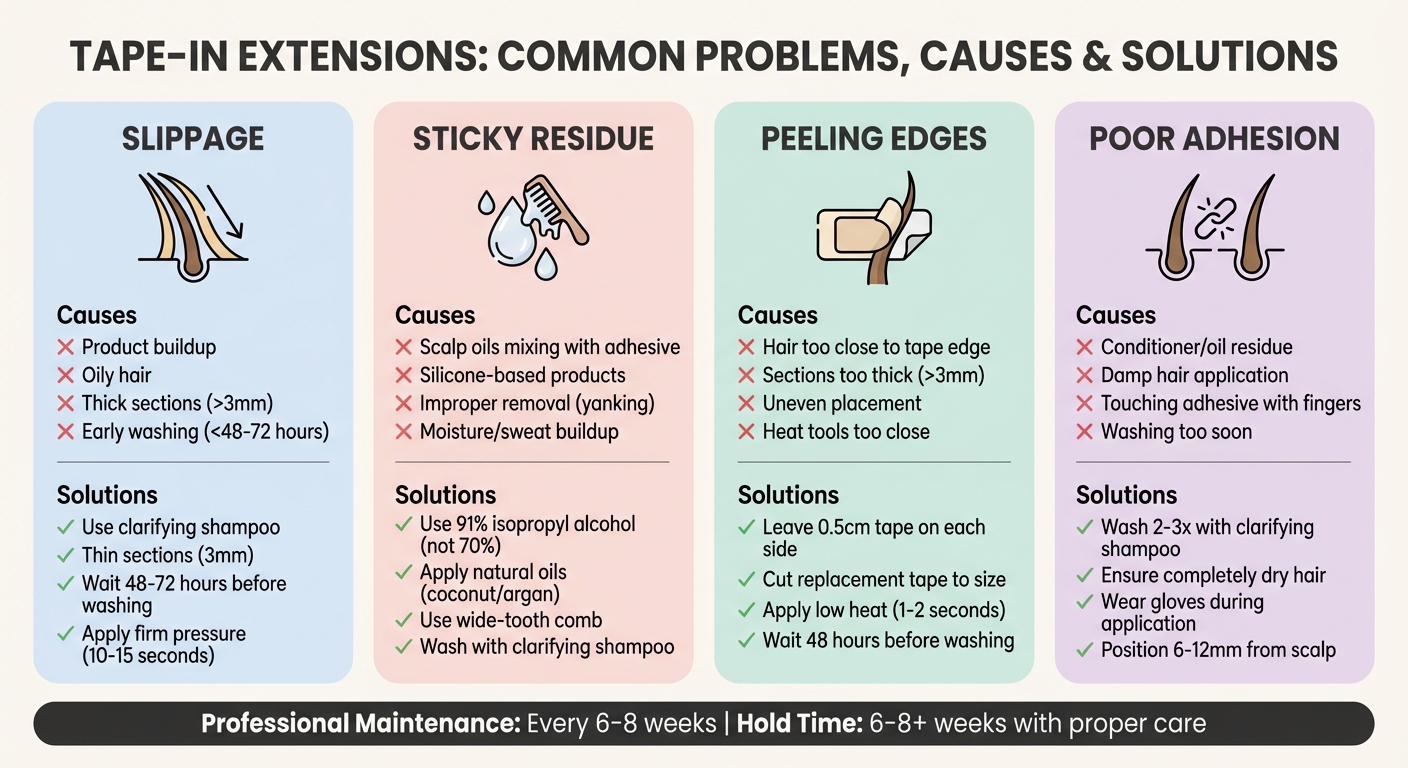
Common Tape-In Extension Problems: Causes, Solutions & Prevention Guide
Why Tape-In Extensions Slip and How to Fix It
What Causes Tape Slippage
Several factors can lead to tape-in extensions slipping. Residual silicone, dry shampoo, or product buildup can create a barrier that interferes with the adhesive's ability to stick properly. Heather Collier from Cliphair points out:
"Slipping tapes can be caused by oily hair, improper application, or low-quality extensions".
Incorrect sectioning also plays a role. If the hair sections are thicker than about 3 millimetres, the tape tabs may not make proper contact. On the flip side, sections that are too thin may not provide the support needed. Washing your hair too soon after installation is another common culprit, as the adhesive generally requires 48 to 72 hours to fully set.
Products containing sulphates, alcohols, or oils can weaken or break down the adhesive over time. Heat styling tools used too close to the tape tabs can have a similar effect, and even the natural oils from your fingers can compromise the bond if they come into contact with the adhesive.
Understanding these causes is key to preventing tape slippage.
How to Prevent Slipping
To address these issues, proper preparation and application techniques are essential. Start by washing your hair two to three times with a clarifying shampoo to remove any oils or silicone residues. Avoid using conditioner near the roots - apply it only from the mid-shaft to the ends. Ensure your hair is completely dry before applying the extensions, as even slight dampness can interfere with adhesion.
When sectioning your hair, aim for thin sections around 3 millimetres thick. This allows the adhesive from both tape tabs to meet and form a secure "sandwich". Press each tape firmly for 10–15 seconds, and use a flat iron on low heat for 1–2 seconds to activate the adhesive. Position the tapes about 6 to 13 millimetres away from your scalp. This placement reduces tension and allows for natural movement.
For long-lasting results, consider using products like Hair Wonderland's professional-grade tape sheets. These feature medical-grade adhesive designed to stay secure for 6 to 8 weeks when applied correctly. After installation, avoid washing your hair for 48 to 72 hours, and stick to sulphate-free, alcohol-free products to preserve the bond. If you have an oily scalp, you may need to schedule maintenance every 4 to 5 weeks to keep your extensions in place.
Removing Sticky Residue and Buildup
What Causes Sticky Residue
Sticky residue on tape-in extensions and tools can result from a few common culprits. Natural scalp oils mixing with the adhesive, product buildup from silicone-based or oil-heavy shampoos and styling products, and moisture from sweat, humidity, or trapped water after washing are all contributing factors. Additionally, improper removal methods - like yanking the tapes off without enough adhesive remover - can leave behind stubborn glue deposits on both your natural hair and the extension tabs. Over time, hair shedding during the recommended 6- to 8-week wear period can also get caught in the adhesive, making the residue worse.
Recognising where the residue comes from is the first step towards cleaning it effectively.
How to Clean Residue Properly
For tackling sticky residue, 91% isopropyl alcohol is your best ally. A GOO GOO Hair expert shares this tip:
"Make sure that you get 91% [alcohol], not 70%. I've made that mistake before and it is not effective".
Start by applying the alcohol directly to the sticky areas and letting it sit for about a minute to soften the adhesive. Then, gently wiggle the extensions to loosen them - avoid pulling too hard. For any leftover residue in your hair, natural oils like coconut or argan oil work wonders to break down the adhesive safely. Use a wide-tooth or rat tail comb to carefully remove the softened glue.
Once the residue is gone, wash your hair with a clarifying shampoo to remove any remaining oils or adhesive. Follow up with a deep conditioning treatment to restore moisture. To clean tools and extension tabs for reuse, apply rubbing alcohol and scrub gently with a fine-tooth comb or toothbrush.
For ongoing care, stick to sulphate-free shampoos and avoid applying conditioner near the tape area - focus on the mid-lengths to ends. This routine will help keep your extensions clean and in good condition.
Fixing Peeling or Unsticking Tape Edges
Why Tape Edges Peel
Dealing with peeling tape edges can be incredibly frustrating, especially since it often boils down to application issues. The most common reason? The tape tabs aren't fully sealed during the process. This usually happens when natural hair is placed too close to the tape's edge. SimplyHair explains:
"If natural hair is sandwiched between the tapes too close to the edge, this will mean the tape cannot fully seal, and over time the tape will begin to unstick".
When the corners of the tape can't seal properly, oils and water can seep in, breaking down the adhesive. Other factors include using too much hair between the tapes - sections should ideally be about 3 millimetres thick - and uneven placement, which can create tension and pull the edges apart. Heat styling tools held too close to the tabs can also weaken or melt the adhesive over time.
Understanding these common mistakes is the first step in fixing and preventing peeling tape edges.
How to Repair Peeling Edges
If you notice peeling edges, start by examining the unstuck areas while ensuring the middle of the tape is still secure. Measure the gap and cut a piece of tape from Hair Wonderland Tape Sheets to match the size you need.
Carefully slide the new tape piece into place, remove its backing, and press it firmly to reseal. Using a styling comb can help you align the tape perfectly without transferring oils from your fingers to the adhesive. Once the tape is in place, apply low heat with a flat iron for 1–2 seconds to secure the bond.
To avoid peeling altogether, always leave at least 0.5 centimetres of hair-free tape on each side when sectioning. SimplyHair advises:
"Simply make sure that when you section a piece of hair to go inside your tape, the piece of hair you chose leaves at least 0.5cm at each side. This means that when you seal the hair shut, at each side the tape will seal against itself, creating a nice secure hold".
After applying or repairing tape, give the adhesive at least 48 hours to fully cure before washing your hair. This extra patience can make all the difference in maintaining a strong, lasting bond.
Solving Poor Adhesion and Bond Failure
Why Tape Bonds Fail
Poor adhesion and bond failure often come down to preparation mistakes. Contamination from scalp oils, skin oils, and residues from conditioners or silicone-based products creates a slippery barrier on the hair, making it tough for the adhesive to stick properly. As Sam Conan, CEO of USA Hair, puts it:
"Sticky tape-in extensions are often the result of oil buildup, improper care, or using low-quality tape".
Moisture is another common culprit. Applying tape to damp hair or trapping sweat in the bonds shortly after installation weakens the adhesive, which is designed to work best under dry conditions.
Technique matters, too. Using hair sections that are too thick prevents the two adhesive strips from sealing properly during the sandwiching process. Heather Collier from Cliphair highlights the importance of sectioning:
"Thin sections ensure the adhesive bonds securely".
Other mistakes, like rushing through the application, failing to apply enough pressure, placing tapes too close to the scalp, or washing hair too soon (within 48 hours), can also lead to weak bonds. These issues emphasise the need for careful and precise application, which we’ll break down next.
How to Achieve Strong Bonding
Once you've prepped the hair correctly, follow these steps to ensure a durable bond. Start by washing the hair thoroughly with a clarifying, sulphate-free shampoo and make sure it’s completely dry. This eliminates any residue that could interfere with adhesion. To avoid transferring oils to the adhesive, wear gloves during the application process. Sam Conan stresses:
"Avoid touching the adhesive with fingers, as oils from the skin can reduce effectiveness".
When applying the tapes, press each one firmly for about 10 seconds, and then activate the adhesive with a low-heat flat iron. Position the tapes 6 to 12 millimetres away from the scalp to ensure proper placement. For added precision during the sandwiching process, tools like Hair Wonderland Tape Sheets with Just-Rite style positioning can be helpful. Finally, let the bond cure for at least 48 hours before washing the hair to give it the best chance to set securely.
sbb-itb-dcde78e
Tape Hair Extension Unsticking At The Edges FIX | SimplyHair

How to Remove Tape-In Extensions Safely
After dealing with adhesion issues and repairs, it's crucial to focus on safe removal to keep your natural hair in good condition.
Problems with Improper Removal
Removing tape-in extensions without the right solvent can lead to serious hair damage. This includes breakage, thinning, and even scalp irritation. On top of that, improper techniques often leave behind sticky adhesive residue on your hair and styling tools, making future applications much more difficult.
To avoid these problems, use a proper solvent like 91% isopropyl alcohol or a professional-grade remover. Avoid 70% isopropyl alcohol - it’s not strong enough to break down the adhesive bonds effectively. Following the correct removal process helps maintain your hair's health and ensures a smooth transition to your next application.
Step-by-Step Removal Process
- Detangle and Section: Start by gently detangling your hair. Use clips to section it off, exposing the tape tabs clearly.
- Apply the Remover: Use 91% isopropyl alcohol or a specialised product like Hair Wonderland Removal Solution. Apply it directly to the tape bonds.
- Let It Work: Allow the remover to sit for 1–15 minutes, giving it time to dissolve the adhesive.
- Test the Bond: Gently wiggle the extension to check if it loosens. If it doesn’t, reapply the remover and wait a little longer. Never force it.
- Remove Residue with Oil: Apply a hair oil - like coconut, olive, or almond oil - to any leftover adhesive. Let it sit for 10–15 minutes, then use a fine-tooth comb to gently remove the sticky residue.
- Clean Tools: Don’t forget to clean your tools after the process to remove any adhesive build-up.
- Wash and Condition: Wash your hair 2–3 times with a clarifying shampoo to get rid of any lingering residue. Follow up with a deep conditioning treatment to restore moisture. Keep in mind, some hair fall during this step is normal. These are strands that naturally shed over the 6–8 weeks the tape was in place.
Maintenance Tips for Long-Lasting Extensions
Daily Care and Maintenance
Taking care of your extensions daily is key to keeping them looking flawless for over a year. Start by waiting 48–72 hours after installation before washing your hair. Once you're in the clear, limit washing to 2–3 times a week and stick to sulfate-free, alcohol-free shampoos. Sulfates can dry out your hair and weaken the bonds, while alcohol can break down the adhesive.
When conditioning, applying oils, or using hair masks, focus on the mid-lengths to the ends of your hair - never near the tape bonds. As NZ Superior Hair explains:
"Conditioners near the scalp can cause the adhesive to break down faster".
Avoid sleeping with wet hair, as damp roots can soften the adhesive and cause slippage. After washing, gently pat your hair dry with a microfibre towel, then use a low-heat blow-dryer to dry the tape bonds before finishing the rest of your hair.
Brushing is another important step. Use a specialised extension brush, like the Hair Wonderland Tangle Tamer Brush, and brush your hair 2–3 times daily. Start at the ends and work your way up, holding the roots to avoid pulling on the bonds. Before bed, secure your hair in a loose braid or low ponytail with a silk or satin scrunchie. For hot styling tools, keep the temperature below 180°C to protect the bonds.
Lastly, schedule professional repositioning every 6–8 weeks to prevent matting and reduce strain on your natural hair. With proper care, high-quality Remy hair extensions can be reused two to six times, lasting anywhere from six months to over a year.
Tool Comparison: Standard vs Hair Wonderland
Investing in the right tools can make all the difference in maintaining your extensions. Here's a quick comparison:
| Feature | Standard Tools | Hair Wonderland Premium Tools |
|---|---|---|
| Hold Time | 4–6 weeks; prone to slipping | 6–8+ weeks with medical-grade adhesive |
| Gentleness | May snag or pull bonds | Flexible bristles glide smoothly over tapes |
| Ease of Use | Basic design; can require more effort | Ergonomic design reduces scalp tension |
| Hair Health | Higher risk of breakage and shedding | Silk-based accessories minimise frizz and damage |
Professional maintenance in Australia typically costs between A$200 and A$365 per session, covering removal, cleaning, retaping, and reapplication. Replacement adhesive tabs usually cost between A$20 and A$50. By following these maintenance tips and using premium tools, you'll not only extend the life of your extensions but also protect your natural hair. Every step you take ensures your extensions remain secure and beautiful for as long as possible.
Conclusion
Fixing tape-in tool problems becomes much easier when you understand the main culprits behind slippage, residue buildup, peeling edges, and bond failure. The key is preparation: start with a clarifying shampoo, position extensions carefully 0.5–1 cm away from the roots, and allow a curing time of 48–72 hours before washing. As Heather Collier from Cliphair explains:
"If you're skipping this prep step [cleansing and drying], your tapes are likely to slip between refits".
Daily care also plays a big role. Brush your extensions 2–3 times a day with a specialised extension brush, stick to sulphate-free products, and make sure your hair is completely dry before sleeping to avoid tangles and slippage. When it’s time to remove your extensions, use a professional-grade remover with 91% isopropyl alcohol to safely dissolve the adhesive without harming your natural hair.
FAQs
How can I stop my tape-in extensions from slipping out?
To keep tape-in extensions from slipping, it all starts with proper hair prep. Begin by washing your hair thoroughly with a clarifying shampoo. This step removes oils, dirt, and any product buildup that could weaken the adhesive bond. After washing, ensure your hair is completely dry and skip using conditioners or styling products before applying the extensions.
When it's time to apply the extensions, work with thin, even sections of hair. Using smaller sections ensures the tape bonds securely, whereas larger chunks can compromise the hold. Choosing high-quality adhesive tapes and sticking to a regular maintenance routine also plays a big role in keeping your extensions firmly in place. In short, the combination of proper prep, careful application, and reliable products will help you avoid any slippage.
How can I safely remove sticky residue from tape-in extensions?
To remove sticky residue from tape-in extensions safely, start with a gentle adhesive remover. Options like oil-based solutions or rubbing alcohol work well. Apply the remover directly to the tape bonds to loosen the adhesive, and then carefully peel off the extensions to minimise any risk of damage to your natural hair or the extensions themselves.
If any residue remains, a fine-tooth comb can help lift it away. Alternatively, you can use household oils, such as coconut oil, as a natural option for breaking down the adhesive. Once the extensions are removed, wash your hair thoroughly to clear out any leftover product. Avoid using harsh tools or excessive pulling to keep both your hair and the extensions in good condition.
Why are the edges of my tape-in extensions peeling, and how can I fix it?
Peeling edges on tape-in extensions usually happen when the adhesive isn't sealed well, allowing natural oils or moisture to weaken the bond. To avoid this, leave a small gap at the edges during installation and ensure the extensions aren’t placed too close to the scalp, where oils can interfere with adhesion.
If peeling has already started, you can fix it by reapplying the tape with replacement adhesive strips. Before doing this, make sure to clean the extensions thoroughly and remove any leftover residue to achieve a firm hold. Sticking to proper installation methods and regular upkeep can help your extensions stay secure and look seamless.