


When it comes to maintaining hair extensions, the shampoo you choose plays a big role. Extensions don’t get natural oils from your scalp, so they’re more prone to dryness, damage, and product build-up. Here’s the difference between clarifying and regular shampoos for extensions:
- Clarifying Shampoo: Deep cleans, removes heavy product build-up, chlorine, and minerals. Best used occasionally (every 4–6 weeks). Can leave extensions dry if overused.
- Regular Shampoo: Gentle, sulphate-free formulas that hydrate and clean lightly. Ideal for routine care 2–3 times a week. Helps maintain softness and bond integrity.
Key takeaway: Use clarifying shampoo sparingly for deep cleans and regular shampoo for everyday maintenance. Both are essential for keeping extensions clean, soft, and long-lasting. Following a hair extension care routine and using proper hydration are also critical.
What is Clarifying Shampoo?
Clarifying shampoo is designed to provide a deep clean by removing stubborn build-up from hair. It effectively targets residues from styling products, chlorine, hard water minerals, sebum, dead skin cells, and other pollutants that regular shampoos might leave behind.
What makes it so powerful? It’s all about the surfactants. These stronger cleansing agents break down oils and residues more thoroughly than everyday shampoos. As AMR Beauty Group explains:
The ingredients in clarifying shampoos work a bit like magnets. They bind to unwanted particles and lift them from the hair and scalp to then be rinsed out.
For those who wear hair extensions, clarifying shampoo can be a game-changer. Extensions often feel heavy, limp, or dull due to product build-up, as they don’t benefit from the natural oils produced by the scalp. This build-up creates a coating that weighs them down, but a clarifying wash can strip away this residue, restoring bounce and shine. It’s especially useful for maintaining the longevity and appearance of extensions through proper care and brushing.
How often should you use it? That depends on your styling habits. Some may need it weekly, others fortnightly, or just once a month. It’s also a go-to product before applying new tape-in extensions, ensuring the hair is clean for a secure bond. The unique formulation of clarifying shampoos is what makes them so effective.
Main Ingredients in Clarifying Shampoo
The secret to the cleaning power of clarifying shampoos lies in their ingredients. Many formulas rely on strong detergents, like Sodium Lauryl Sulfate (SLS), which are excellent at breaking down heavy build-up, allowing it to be rinsed away.
In recent years, some products have started using micellar technology as a gentler alternative to traditional sulphates. Micelles are tiny molecules that trap and lift impurities without being overly harsh. You’ll also find ingredients like citrus extracts or Kakadu Plum in some formulas, which help balance the deep-cleaning process while still delivering effective results.
The difference between clarifying shampoos and regular ones lies in the strength of their surfactants. While everyday shampoos use milder agents to maintain moisture, clarifying shampoos are designed to tackle the kind of build-up that regular cleansers can’t manage.
Benefits of Clarifying Shampoo for Extensions
Using clarifying shampoo on extensions offers several advantages. It removes the product residue that dulls extensions, restoring their natural shine and movement. This deep cleanse also helps extensions blend more seamlessly with your natural hair, creating a consistent texture.
For swimmers, clarifying shampoos are particularly handy. They remove chlorine and salt water, which can cause dryness or even discolouration in extensions. If your extensions feel brittle or look brassy after a beach day, a clarifying treatment can help reverse the damage.
Drawbacks of Clarifying Shampoo for Extensions
While clarifying shampoos offer many benefits, they can also have downsides. Their powerful cleaning action can strip away essential moisture. Since extensions don’t receive nutrients from the scalp, they’re more prone to becoming dry and brittle if overused.
Wella Professionals cautions:
Using a deep cleanser too often could leave the hair shaft dry and porous, creating gaps and tears that color molecules can escape through.
Overuse can also weaken extension bonds. Strong surfactants may interfere with the adhesive in tape-in extensions or cause rings to slip if attachment points are scrubbed too harshly. Additionally, the deep cleansing process can open the hair shaft, potentially speeding up colour fade in dyed extensions. For these reasons, clarifying shampoo should be used sparingly, as an occasional treatment rather than a regular part of your routine.
sbb-itb-dcde78e
What is Regular Shampoo?
Regular shampoo is designed to clean your hair gently, removing daily impurities like sweat, dust, and light product residue without stripping away essential moisture. Unlike clarifying shampoos, which are more aggressive and can leave hair feeling dry, regular shampoos maintain a balance between cleanliness and hydration. This makes them especially suitable for hair extensions, which require external moisture to stay soft and manageable.
As Hair Wonderland points out, extensions depend entirely on external hydration since they don’t benefit from the natural oils produced by your scalp. A good regular shampoo ensures your extensions remain hydrated while still providing a gentle cleanse.
These shampoos often use milder, sulphate-free surfactants that are less harsh on both your natural hair and the bonds of your extensions. Abbey Wilson from Cliphair highlights the importance of this balance:
The best shampoo and conditioner for hair extensions offers the perfect balance of hydration without weighing down the hair.
For most extension wearers, washing 2–3 times a week is ideal. Over-washing can lead to dryness and tangling since extensions don’t produce oils like your scalp. When you do wash, apply a small, coin-sized amount of shampoo to your scalp and let the lather naturally cleanse the lengths. This method helps maintain the delicate balance extensions need.
Main Ingredients in Regular Shampoo
Shampoos formulated for extensions prioritise hydration and protection. Key ingredients include:
- Humectants like glycerin and aloe vera to retain moisture.
- Lightweight hydrators such as coconut water and pro-vitamin B5.
- Natural oils like argan, macadamia, linseed, and olive oils for shine and softness without adding weight.
To make washing easier and prevent tangling, these shampoos often include slip agents like Stearamidopropyl Dimethylamine and Lactic Acid. These ingredients create a smooth glide during washing, reducing matting and making detangling less of a hassle. Other components, such as cationic polymers like Guar Hydroxypropyltrimonium Chloride, minimise friction and protect extension bonds during the washing process.
For added benefits, some formulas include hydrolysed keratin and citric acid to smooth the hair cuticle, enhancing shine and helping extensions blend seamlessly with natural hair. pH balancers are also included to lock in moisture and reduce frizz.
However, there are some ingredients to avoid. Hair Wonderland advises:
Avoid products containing: protein, keratin, sulfates, and high alcohol content.
If your shampoo creates excessive foam or leaves your hair feeling overly clean, it may contain harsh sulphates, which can be damaging to extensions.
Benefits of Regular Shampoo for Extensions
Regular shampoo offers several benefits for maintaining extensions. Its hydrating properties prevent dryness and breakage, while conditioning agents help reduce tangling and matting - common issues since extensions don’t receive natural lubrication from scalp oils.
Sulphate-free formulas are particularly beneficial as they don’t interfere with adhesive bonds in tape-ins or cause slippage in beaded extensions. This ensures your extensions stay secure between salon visits, which typically occur every 5–6 weeks. By sealing the cuticle and incorporating lightweight oils, these shampoos also help extensions blend naturally with your hair, maintaining a shiny and polished look.
Drawbacks of Regular Shampoo for Extensions
The gentle nature of regular shampoos means they aren’t always effective at removing heavy build-up. If you frequently use styling products like hairsprays, serums, or dry shampoos, regular formulas might not fully cleanse your hair. Over time, this residue can weigh down extensions and dull their appearance.
Regular shampoos are not designed for deep cleaning. They lack the stronger surfactants required to tackle stubborn residues such as silicones, waxes, or mineral deposits from hard water. For those who swim or are exposed to chlorine and saltwater, a regular shampoo alone might not be sufficient to remove these elements.
Understanding the difference between regular and clarifying shampoos is crucial. Regular shampoos are perfect for routine maintenance, while clarifying treatments should be used occasionally to remove heavy build-up. This approach ensures your extensions stay clean, hydrated, and damage-free.
Clarifying Shampoo vs Regular Shampoo: Main Differences
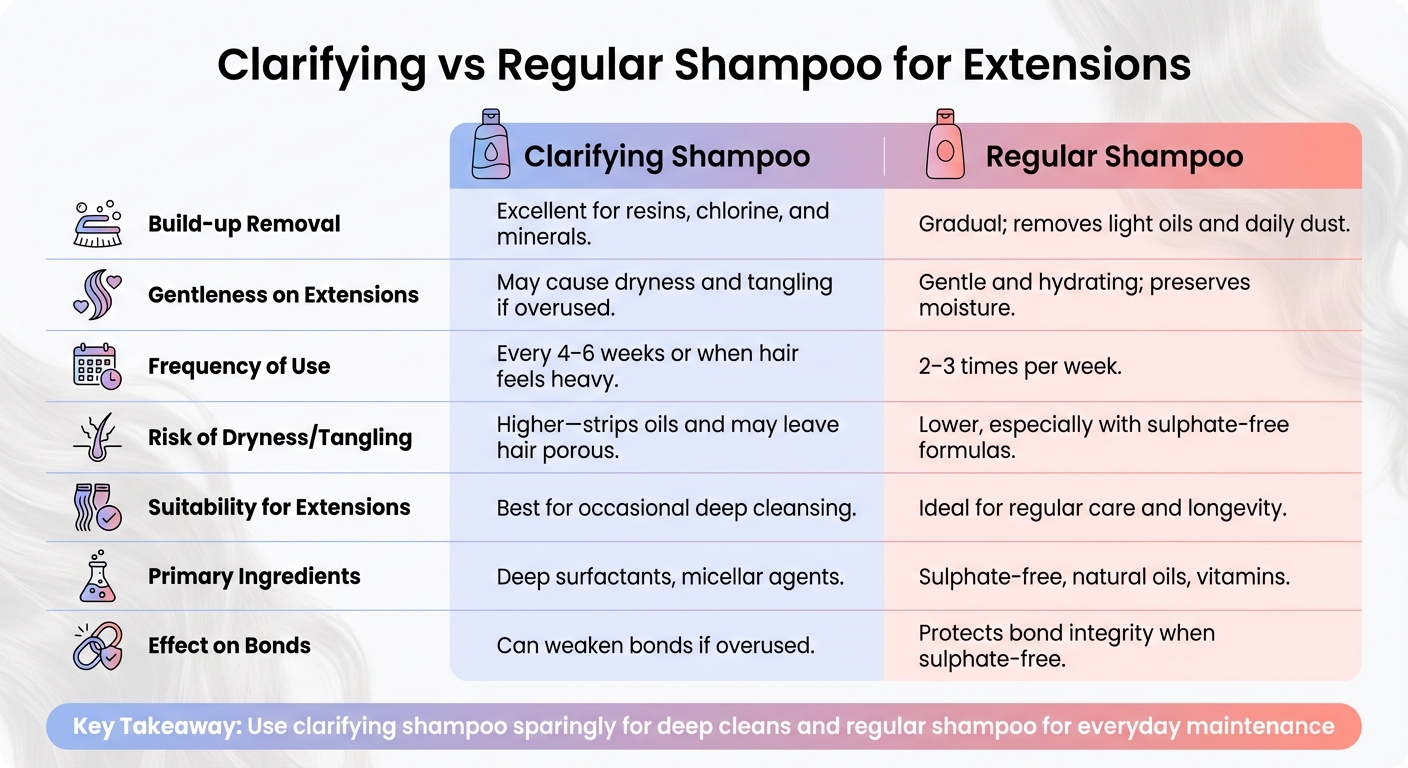
Clarifying vs Regular Shampoo for Hair Extensions Comparison Chart
When it comes to hair extensions, understanding the distinction between clarifying and regular shampoos is essential. The primary difference lies in their intensity and purpose. Clarifying shampoos work as a "reset button", using powerful surfactants to strip away stubborn residue like product build-up, chlorine, minerals, and excess oils in one go. On the other hand, regular extension-safe shampoos are designed for gentle, everyday maintenance, focusing on cleansing while preserving moisture and managing light oils.
Clarifying shampoos provide a deep detox for your hair. They’re ideal for removing build-up from products like hairsprays, gels, mousses, and dry shampoos that can weigh down extensions and leave them looking dull, regardless of whether you use Russian or Mongolian hair extensions. In contrast, regular shampoos are your go-to for routine care. Formulated with hydrating ingredients like shea butter, argan oil, and rice proteins, they keep extensions soft, manageable, and well-nourished.
The formulations of these shampoos reveal their distinct purposes. Clarifying shampoos rely on potent cleansing agents to tackle residue that regular shampoos might miss. Regular shampoos, particularly those safe for extensions, are typically sulphate-free and enriched with moisturising components, recognising that extensions don’t benefit from natural scalp oils.
Abbey Wilson from Cliphair highlights the risks of using the wrong shampoo:
Regular shampoo manufacturers often load their products with sulphates. These nasties may clean your hair... but they additionally strip your hair of natural oils, damage bonds and dry your hair and extensions out.
The impact on extension longevity is another key difference. Clarifying shampoos can help prevent bond slippage by removing excess oil but may dry out the hair shaft if overused. Regular shampoos, with their hydrating properties, are better suited for maintaining moisture and bond integrity during routine washes.
For a quick reference, here’s a comparison table:
Comparison Table: Clarifying vs Regular Shampoo
| Feature | Clarifying Shampoo | Regular Shampoo |
|---|---|---|
| Build-up Removal | Excellent for resins, chlorine, and minerals | Gradual; removes light oils and daily dust |
| Gentleness on Extensions | May cause dryness and tangling if overused | Gentle and hydrating; preserves moisture |
| Frequency of Use | Every 4–6 weeks or when hair feels heavy | 2–3 times per week |
| Risk of Dryness/Tangling | Higher - strips oils and may leave hair porous | Lower, especially with sulphate-free formulas |
| Suitability for Extensions | Best for occasional deep cleansing | Ideal for regular care and longevity |
| Primary Ingredients | Deep surfactants, micellar agents | Sulphate-free, natural oils, vitamins |
| Effect on Bonds | Can weaken bonds if overused | Protects bond integrity when sulphate-free |
How to Use Each Shampoo for Extensions
Using Clarifying Shampoo
Using clarifying shampoo on extensions requires a bit of care. Start by brushing your extensions gently, working from the ends up to avoid tangles before wetting them. Always wash your hair while standing upright in the shower - never upside down or over a bath - as this can stress the bonds and lead to matting.
When applying the clarifying shampoo, focus on your “halo” area - the top of your head without extensions. Let the lather naturally flow down over the extensions rather than scrubbing them. Use soft, downward strokes and avoid circular motions, especially near the bonds or rings. Sarah McKenna from Vixen & Blush highlights the importance of drying extensions promptly:
Hair Extensions NEED to be dried at the root within 30 minutes of washing. The extensions cannot be left wet for long periods of time.
Rinse thoroughly - twice as long as you might with regular shampoo - to ensure all product and loosened build-up are completely removed. Afterward, apply a deep conditioner to the mid-lengths and ends only, steering clear of the bonds to prevent slippage. Finally, dry the extension roots within 30 minutes, using a cool blast to secure the bonds.
Using Regular Shampoo
For everyday maintenance, a sulphate-free shampoo is your go-to. Aim to wash your hair 2–3 times per week to maintain moisture and manageability. As with clarifying shampoo, start by brushing your extensions from the ends up before wetting.
When shampooing, concentrate on your scalp and natural hair, gently massaging to remove oils. Let the suds rinse down through the extensions without scrubbing them. Use lukewarm water for washing, as hot water can weaken both the strands and the bonds. Finish with a cool rinse to seal the cuticles and lock in moisture.
After washing, gently blot your hair with a microfibre towel to minimise frizz and damage. Blow-dry using medium or cool heat, and avoid applying direct heat to the bonds.
Hair Wonderland Products for Extension Care
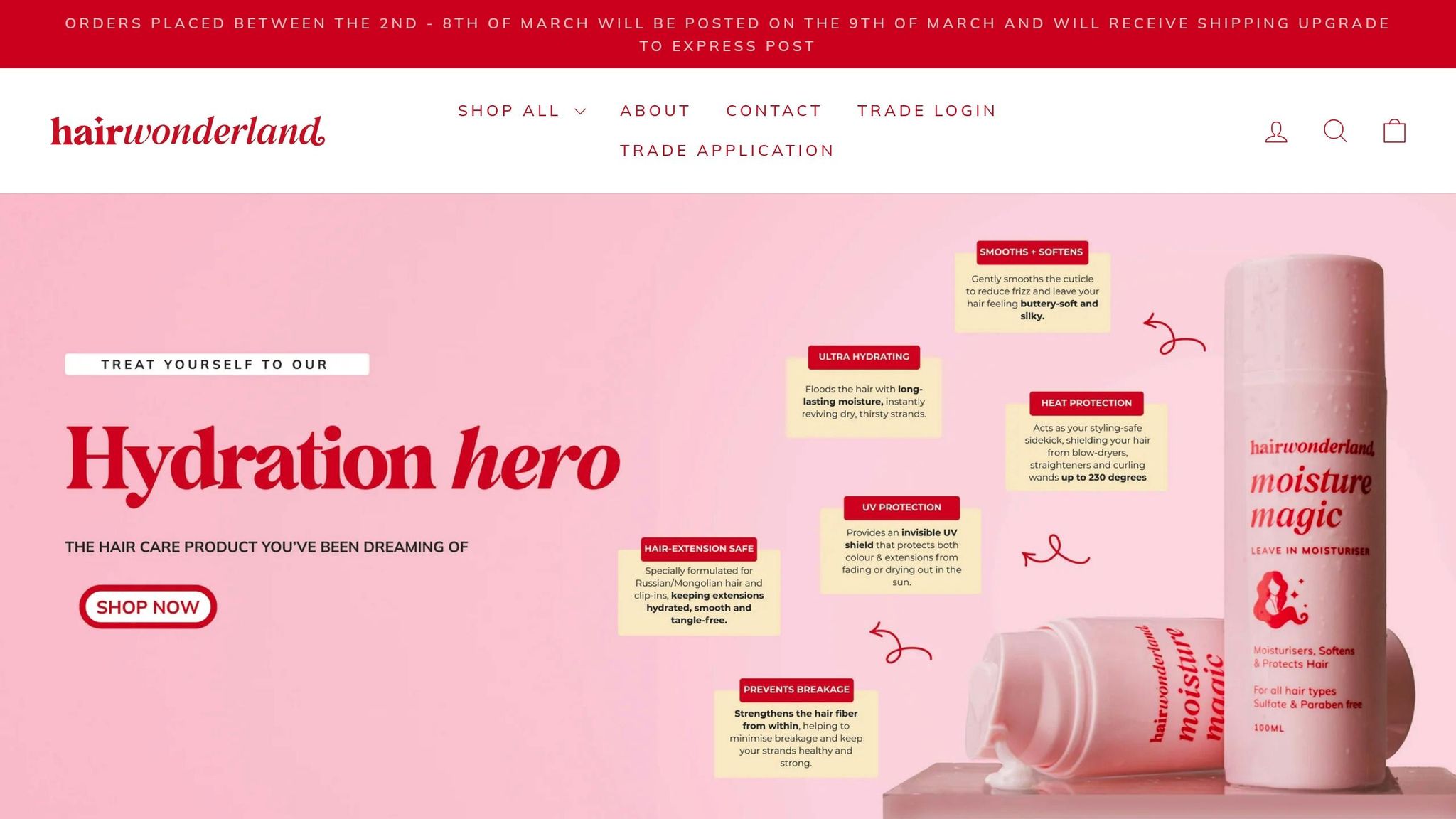
Keep your extensions looking flawless by incorporating specialised Hair Wonderland products into your care routine.
Hair Wonderland's Tangle Tamer Brush
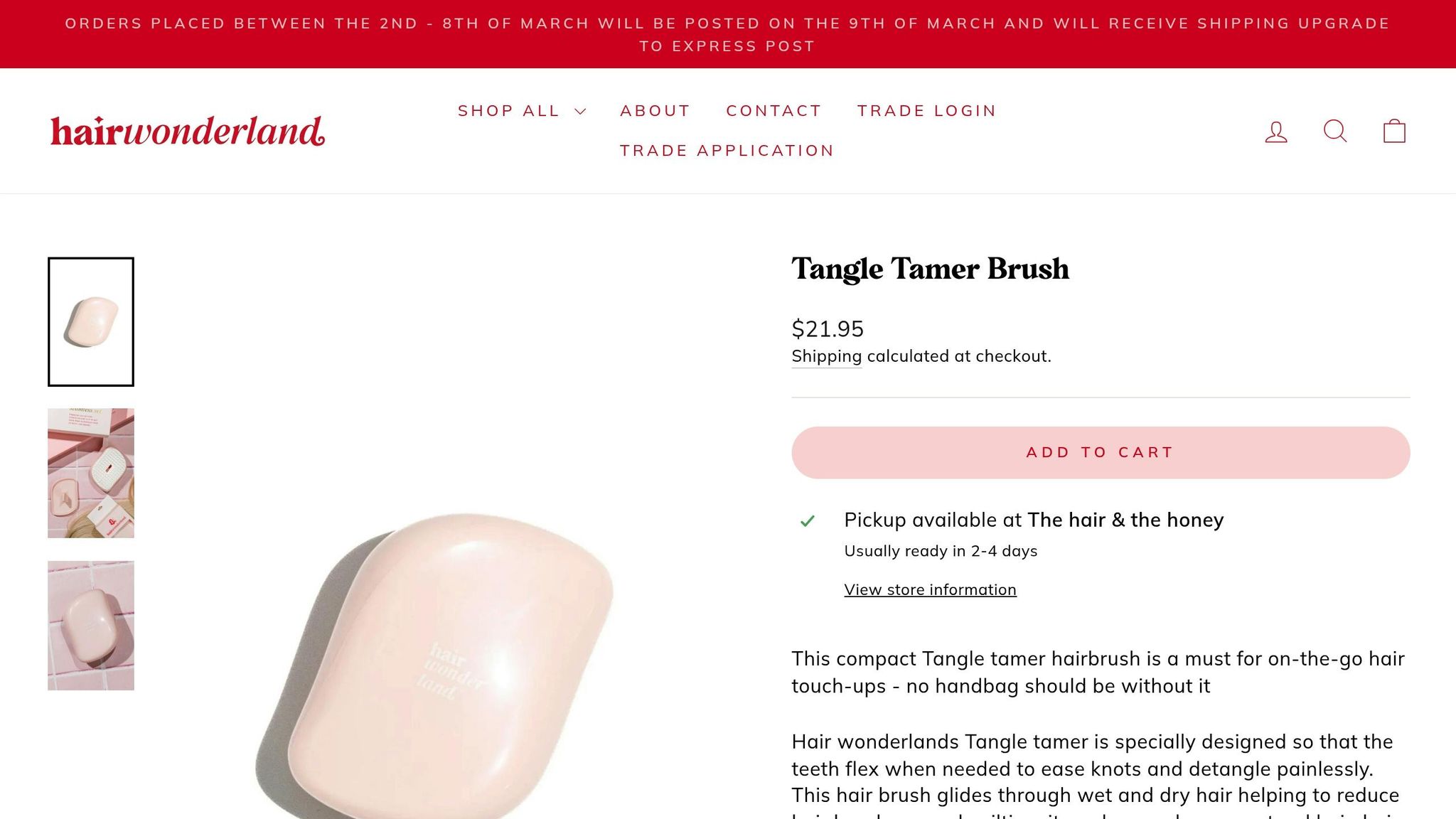
The Tangle Tamer Brush ($21.95) is a must-have for maintaining your extensions during and after washing. Brushing your extensions before wetting them helps prevent tangles from worsening during shampooing. After washing, it helps evenly distribute treatments and makes blow-drying more effective. Its flexible teeth are particularly handy after treatments that might increase hair friction. As Hair Wonderland puts it:
Hair Wonderland's detangling brushes are specially designed so that the teeth flex when needed to ease the knots and detangle painlessly.
This brush works wonders on both wet and dry hair, making it an essential tool for daily care. Using it morning and night helps extend the life of your extensions and keeps them looking salon-fresh. It’s designed to work seamlessly with any shampoo routine, ensuring your extensions remain smooth and vibrant.
Pairing tools like the Tangle Tamer Brush with high-quality extensions elevates your overall look.
Seamless Clip-In Extensions
Hair Wonderland's Seamless Set 22" ($499.00) is the ultimate choice for those seeking premium extensions. Made from thick Russian Mongolian human hair, these clip-ins blend naturally and are crafted with 100% Remy European human hair for a luxurious finish.
Since extensions don’t benefit from the scalp's natural oils, they require extra care. Regular cleansing removes build-up and minerals from hard water, while using a clarifying shampoo every 3–5 washes "resets" the hair. This allows moisturising treatments to penetrate deeply, keeping the extensions soft, bouncy, and looking like they just walked out of the salon.
Investing in proper tools and premium extensions ensures your hair remains stunning and well-maintained for longer.
Conclusion
Taking care of build-up on extensions means choosing the right shampoo and using it wisely. Both regular and clarifying shampoos play a role in keeping your extensions looking their best.
Sulphate-free regular shampoos are ideal for gentle cleansing and hydration, perfect for use 2–3 times a week. Since extensions don't produce natural oils, they rely on this moisture to stay soft, smooth, and manageable between deeper cleans.
Clarifying shampoos, on the other hand, act as an occasional "reset." They’re great for tackling stubborn product build-up, minerals, and excess oils that regular shampoos might miss. When your extensions feel heavy or coated, a single wash with a clarifying shampoo can make a big difference. Just remember to follow up with conditioner on the mid-lengths and ends to restore moisture.
The trick is finding the right balance. Overusing clarifying shampoos can strip moisture and fade colour, while sticking solely to regular shampoos can let build-up sneak in. And don’t forget, proper washing techniques - discussed earlier - are just as important in maintaining your extensions.
FAQs
How do I know my extensions need a clarifying wash?
If your extensions start to feel greasy, heavy, or lifeless, or if they appear limp and lack volume, it’s likely time for a clarifying wash. These are classic signs of product build-up. Additionally, any noticeable changes in texture or sudden heaviness can signal the need for a deep cleanse. Paying attention to how your extensions look and feel on a regular basis is a simple way to know when they need extra care to stay fresh and maintain their healthy appearance.
Which shampoo ingredients should I avoid with tape-ins or beaded extensions?
Avoid shampoos containing sulfates, oils, synthetic fragrances, or drying alcohols. These ingredients can strip moisture from extensions, weaken the adhesive bonds, or even make them slip out. Always read product labels carefully to ensure they’re suitable for tape-in or beaded extensions, helping to keep them in place and in good condition for longer.
What’s the safest way to wash and dry extensions to protect the bonds?
To keep your extensions looking their best and to safeguard the bonds, start by gently brushing them before washing to remove any tangles. When washing, use lukewarm water and a sulphate-free shampoo, applying it softly without scrubbing or tugging at the hair. Make sure to rinse thoroughly to avoid any residue.
When it’s time to dry, carefully squeeze out any excess water - avoid twisting or wringing the hair. You can let your extensions air-dry naturally or use a blow dryer on a low heat setting, but be sure to keep the heat away from the bonds. Following these steps helps maintain the bonds and ensures your extensions last longer.