


Yes, you can perm human hair extensions, but it's a delicate process with risks. Extensions made from 100% human hair, particularly high-quality Remy hair, can handle perming better than synthetic or blended options. However, extensions are more prone to damage because they don’t receive natural oils from the scalp. Perming can lead to dryness, brittleness, and a shorter lifespan for the extensions.
Key Points:
- Suitable Extensions: 100% Remy human hair or virgin hair. Avoid synthetic, blended, or heavily processed extensions.
- Risks: Dryness, breakage, and reduced lifespan. Perming adds stress to already processed hair.
- Timing: Perm before installation for better control and to avoid weakening bonds or tapes.
- Aftercare: Use sulphate-free products, apply treatment oils, avoid excessive heat, and limit washing to 1–2 times per week.
Quick Tips:
- Always test a small section first.
- Consult a professional stylist for the safest results.
- Perming is not recommended for older or damaged extensions.
While perming can provide long-lasting curls and save time on daily styling, it requires careful planning and maintenance to avoid damaging the extensions.
The Perming Process for Human Hair Extensions
What is a perm?
A perm is a chemical process that reshapes the hair's structure to create curls or waves. It works by wrapping the hair around rods and applying a perm solution that breaks down the disulfide bonds in the hair. These bonds make up about 95% of the hair's keratin structure. Once the bonds are broken, a neutraliser is used to rebuild them in the new, curled or wavy shape. While natural hair eventually grows out, extensions hold their styled form until they are replaced.
The perming process typically takes 15–25 minutes, followed by a 10-minute neutralising step. Keep in mind that hair shrinks by about 20% during this process. For example, if you want a finished length of 40 cm, you'll need to start with extensions that are approximately 50 cm long.
Now, let’s explore why processed extensions are more delicate when it comes to perming.
Why processed extensions react differently
Processed extensions don’t behave the same way as natural hair during chemical treatments like perming. Unlike natural hair, extensions lack the ability to nourish themselves, making them more prone to damage from the drying effects of the perm solution. Before reaching you, human hair extensions often go through treatments like acid washing, colouring, or texturising. Adding another chemical process, such as perming, increases the chances of dryness, breakage, and loss of texture.
Additionally, many extensions are coated with factory-applied layers that need to be removed using a clarifying shampoo. This step ensures the perm solution can penetrate the hair shaft effectively. However, because extensions cannot produce natural oils like sebum, they absorb the perm solution more quickly and deeply than natural hair. Their higher porosity makes them more vulnerable to over-processing, which can lead to brittleness. While top-quality human hair extensions can last 9 to 12 months with proper care, chemical treatments like perming can significantly shorten their lifespan.
How To Perm Your Hair Extensions | Perming Hair Tutorial
Which Extensions Can Be Permed?
Choosing the right type of hair extension is key before deciding on a perm. High-quality human hair extensions tend to handle chemical treatments better, reducing the risk of damage.
Safe Options for Perming
Not all extensions are suitable for perming, but 100% Remy human hair is a safe choice. These extensions have intact, aligned cuticles, making them durable enough for chemical processes. Virgin extensions, which haven’t been treated with chemicals, are another great option due to their natural texture and resilience.
Starting with straight, minimally processed extensions is ideal. For instance, Hair Wonderland offers premium double-drawn Russian and Mongolian human hair extensions, which are excellent candidates for perming. However, it’s worth noting that additional chemical treatments can shorten their lifespan.
Extensions to Avoid Perming
Some extensions should never be permed. Synthetic or mixed-fibre extensions are a no-go because they lack the keratin structure needed to react properly with perm solutions. Attempting to perm these materials can result in melting or irreversible frizz. Similarly, heavily bleached or lightened extensions are risky - they’re often too fragile and prone to breakage due to compromised structural integrity.
Older or damaged extensions, especially those with split ends or a straw-like texture, should also be avoided. As Hair Wonderland explains:
Hair extensions are dead hair and do not receive nutrients from your scalp. Avoid using products with protein, keratin, sulfates, and high alcohol contents.
Extensions with high porosity are another concern. They tend to absorb perm solutions too quickly, leading to excessive dryness and brittleness.
Timing: Before or After Installation
When it comes to perming, timing is just as important as the type of extension.
Perming extensions before installation is generally safer. This approach allows for better control over the curl pattern and keeps your natural hair away from chemical exposure. Testing a small section first can help you fine-tune the curl and avoid damaging the bonds or tapes that secure the extensions. It also ensures no chemical residue gets trapped, which could irritate the scalp.
On the other hand, perming after installation poses greater risks. While it helps match the curls more precisely to your natural hair, the perm solution can weaken keratin bonds, tape adhesives, or seams, potentially causing the extensions to slip out. If you choose this route, it’s crucial to consult a professional stylist experienced in working with extensions. Opt for gentler, acid-balanced formulas instead of harsh alkaline perms to minimise damage.
Pros and Cons of Perming Extensions
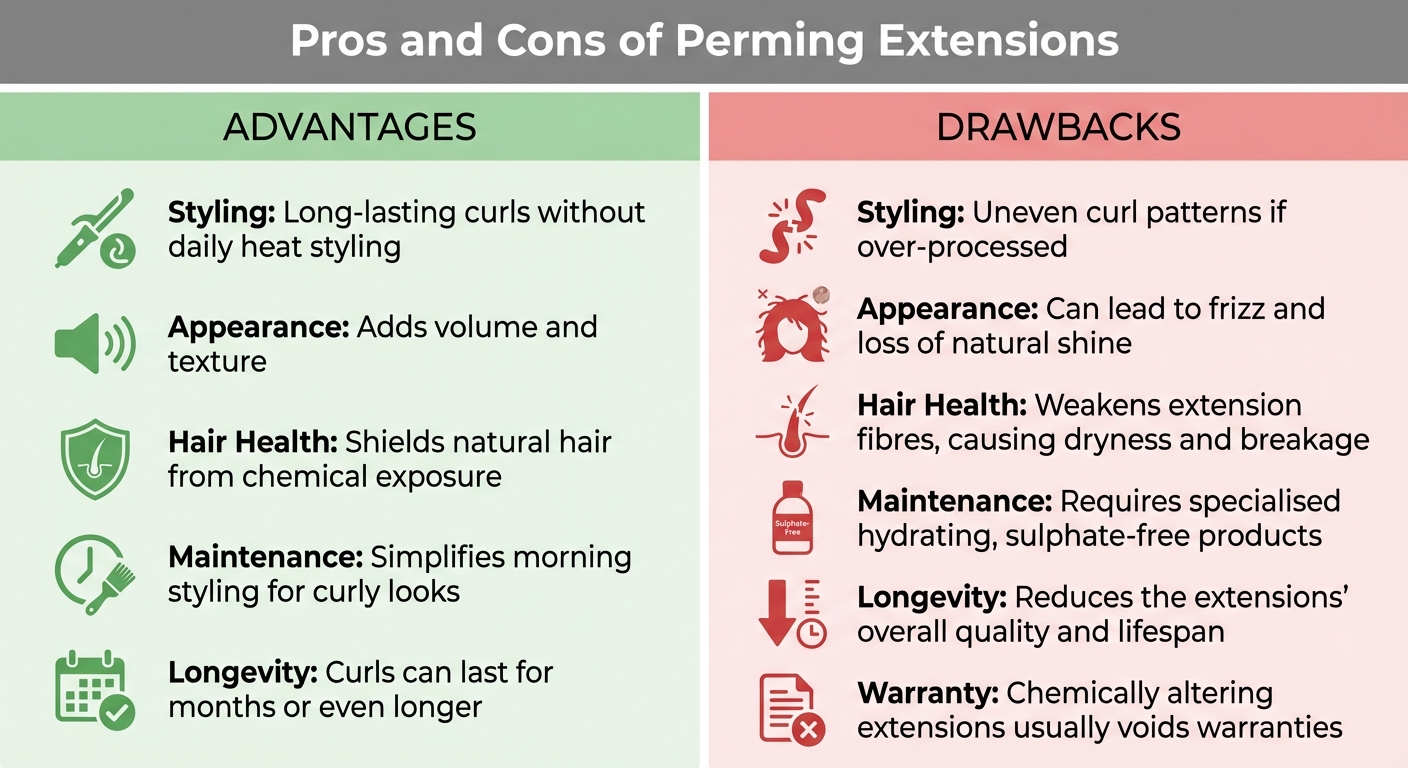
Pros and Cons of Perming Human Hair Extensions Comparison Chart
Let’s dive into the upsides and challenges of perming extensions, building on what we’ve already covered about the process and suitability.
Advantages of Perming Extensions
Perming extensions can give you long-lasting curls or waves, making your styling routine quicker and reducing the need for daily heat tools. Plus, it allows for a seamless, natural look by matching the curl pattern of your extensions with your own hair. For those curious about trying out a perm style without fully committing, extensions offer a great trial option. As Private Label puts it:
Getting that Perm hair look with extensions is great because it's less of a commitment.
But while these perks are appealing, it’s important to weigh them against the potential downsides.
Drawbacks and Potential Problems
Perming extensions comes with its fair share of risks. Because extensions are often already processed, adding another chemical treatment can weaken them further. In fact:
Perms shorten the usable life of extensions dramatically, often reducing months of wear to a few weeks.
The chemical process can strip extensions of moisture and natural oils, making them dry, brittle, and prone to frizz. This often means more upkeep and maintenance. Additionally, many manufacturers void warranties on chemically altered extensions. If the perming process isn’t done properly, it can result in uneven curls, tangling, shedding, or even damage like melting.
Pros and Cons Comparison
Here’s a quick side-by-side look at the main advantages and drawbacks:
| Feature | Advantages | Drawbacks |
|---|---|---|
| Styling | Long-lasting curls without daily heat styling. | Uneven curl patterns if over-processed. |
| Appearance | Adds volume and texture. | Can lead to frizz and loss of natural shine. |
| Hair Health | Shields natural hair from chemical exposure. | Weakens extension fibres, causing dryness and breakage. |
| Maintenance | Simplifies morning styling for curly looks. | Requires specialised hydrating, sulphate-free products. |
| Longevity | Curls can last for months or even longer. | Reduces the extensions’ overall quality and lifespan. |
| Warranty | N/A | Chemically altering extensions usually voids warranties. |
sbb-itb-dcde78e
How to Perm Extensions Safely
Taking the right steps is key to protecting your extensions when perming. Like any chemical treatment, a thoughtful approach helps maintain the integrity of human hair extensions. Opting for premium extensions, such as those from Hair Wonderland, can make a big difference since they tend to handle chemical processes more effectively.
Preparation and Testing
Before diving into the perming process, double-check that your extensions are made from 100% human hair. Synthetic fibres don’t mix well with perm solutions and can be damaged. Start by washing the extensions with a gentle shampoo, applying a hair-perfector treatment, and detangling them thoroughly. These steps help ensure the hair is ready for the treatment.
Next, conduct a strand test on a small, hidden section of the extensions. This will show how the hair reacts to the chemicals. Protect your workspace with foil, wear gloves, and handle the perm solution carefully. If you’re planning to colour the extensions later, perm them first and wait at least three to four weeks before adding colour.
Once you’ve prepped and tested the extensions, you’re ready to move on to the actual perming process.
The Perming Steps
Perming human hair extensions is surprisingly quick. As Babe Hair Extensions points out:
Doing a perm on extensions will be the fastest perm you will ever do -- under five minutes.
Start by wrapping the damp extensions around rollers, working from the tips toward the roots. Apply the perm solution, but keep in mind that extensions require a shorter processing time compared to natural hair. After rinsing the hair while it’s still on the rollers, apply a neutraliser and leave it on for five minutes to secure the curl pattern.
Aftercare Immediately Following the Perm
Once the perm is done, the next 48 hours are crucial for ensuring the curls set properly. According to WebMD:
The most important rule in caring for your perm is to let the curl set during the first 48 hours. Avoid touching your hair or getting it wet while it sets.
During this time, keep your hands off the hair and avoid any moisture. Let the extensions air-dry naturally, steering clear of heat styling tools. Stick to gentle products, avoiding anything harsh, to maintain the health of the curls. Proper aftercare will help your newly permed extensions look their best.
Maintaining Permed Extensions
Taking care of permed extensions is essential to keep them looking great and lasting longer. As EH Hair & Extensions points out:
The biggest factor in how long your extensions last is what you do between wash days. Everyday care makes the greatest difference to their longevity.
Since the chemical process involved in perming can make the hair more porous and prone to dryness, these extensions need extra attention.
Daily Care Routine
To keep your extensions in top shape, brush them 2–3 times a day using a specialised brush like the Hair Wonderland Tangle Tamer Brush, priced at $21.95. Always start brushing from the ends, working your way up while supporting the hair below the bonds to avoid unnecessary tension.
Each morning, apply 1–2 pumps of a treatment oil or serum to the mid-lengths and ends of your hair, and increase to 2–3 pumps at night. Hair Wonderland highlights the importance of this step:
Extensions are 100% Remy European human hair, but they require moisture and care.
Before going to bed, gently brush your extensions and secure them in a loose plait or ponytail to minimise friction. Avoid sleeping on wet or damp hair, and consider using a silk pillowcase to further reduce friction and protect the strands.
A thoughtful washing and conditioning routine will also help maintain your curls.
Washing and Conditioning
Keep washing to just 1–2 times a week to prevent stripping moisture from the chemically treated hair, which can lead to dryness and brittleness. Use products that are sulphate-free, alcohol-free, and paraben-free. Avoid shampoos and treatments with high levels of protein or keratin, as these can make the hair brittle.
When shampooing, focus on the scalp and roots, using lukewarm water. Apply conditioner or a hair mask to the mid-lengths and ends, leaving it on for 5–10 minutes before rinsing with cool water to seal the cuticles. Be careful to keep conditioning products away from the bonds or attachment points to avoid slippage. After washing, gently blot your hair with a microfibre towel instead of rubbing it, and let it air-dry whenever you can.
Maintaining moisture with gentle washing habits also sets the stage for safer heat styling.
Heat Styling Precautions
When using heat tools, keep the temperature below 120°C and always apply a heat protectant. Since permed extensions are more porous due to chemical processing, they are especially vulnerable to heat damage. Remy Hair Extensions explains:
It is important for you to understand that because extension hair no longer has its own natural supply of natural oils, it lacks the ability to protect itself.
For curly textures, heat-free styling methods like scrunching can help maintain curl definition without risking damage. If you need to blow-dry your hair, use a medium heat setting and finish with a cool shot to seal the cuticles. Incorporating heat-free styling days into your routine can also help preserve the elasticity and softness of your curls.
Conclusion
Perming human hair extensions is possible, but it comes with considerable risks. The chemical process involved can severely damage extensions, as they lack the natural nourishment found in growing hair. As Sophia Hair Australia clearly states:
Perming [is] strictly not recommended and will cause extreme damage to hair extensions.
If you’re set on adding curls, the quality of the extensions is crucial. Opt for high-grade, 100% Remy hair, such as those available from Hair Wonderland. Remy hair, with its intact and aligned cuticles, is better equipped to handle the stress of perming, reducing the chances of tangling and matting.
Professional expertise is non-negotiable here - attempting to perm extensions at home is a recipe for disaster. Without proper handling, the process can strip away any remaining natural oils and weaken the hair structure. A trained stylist can evaluate the hair quality, perform necessary strand tests, and use techniques designed to minimise damage.
If you decide to go ahead, strict aftercare is a must. Use sulphate-free, hydrating products, incorporate daily treatment oils, avoid excessive heat, and limit washing to preserve the extensions.
Ultimately, the decision to perm extensions should involve careful consideration of both the risks and the desired outcome.
FAQs
Can you perm human hair extensions, and what are the risks?
Perming human hair extensions is doable, but it’s not without risks. The chemicals involved can weaken the hair strands, potentially causing breakage, dullness, and an uneven texture. These issues are even more likely if the extensions aren’t top-quality human hair.
If perming is on your radar, make sure the extensions are 100% human hair. For example, premium double-drawn Russian or Mongolian extensions, like those from Hair Wonderland, are better suited for this process. Synthetic or lower-quality extensions simply can’t handle the stress. To minimise damage and keep your extensions looking their best, always work with a professional stylist.
What’s the best way to care for permed human hair extensions?
To keep your permed human hair extensions in great shape, there are a few essential care tips to follow. Start with gentle, sulphate-free and alcohol-free shampoos and conditioners - these help preserve the curls and minimise damage. Stick to washing your extensions just 2–3 times a week, using lukewarm or cool water. Over-washing can dry them out and lead to unwanted frizz.
When it comes to styling, always apply a heat protectant and keep any heat tools at a low-to-medium setting (no higher than 180°C). For detangling, use a soft-bristle or loop brush, starting at the ends and working your way up to avoid putting stress on the bonds. Additionally, scheduling regular in-salon maintenance every 4–6 weeks will help your extensions stay in excellent condition and last for months.
Can I perm my human hair extensions after they’ve been applied?
Yes, you can perm human hair extensions after they’ve been applied, but only if they are made from 100% high-quality human hair. Synthetic extensions won’t handle the process - perming chemicals can damage them beyond repair.
Before going ahead, it’s crucial to consult with a professional stylist. They’ll assess whether your extensions can handle the perming process without compromising their condition. Since perming involves strong chemicals, improper techniques can weaken the extensions or even shorten their lifespan. To keep them looking great, always follow your stylist’s advice and stick to recommended aftercare products designed to protect both the extensions and your natural hair.