


Silk accessories are a must-have for anyone with hair extensions. They protect your extensions from damage, keep them hydrated, and reduce the need for frequent maintenance. Here's why silk is the best choice:
- Minimises Damage: Silk reduces friction compared to cotton, preventing tangling, breakage, and stress on attachment points.
- Locks in Moisture: Unlike cotton, silk doesn’t absorb natural oils, helping extensions stay soft and hydrated.
- Prevents Tangles: The smooth surface of silk keeps your extensions free from knots and matting, even during sleep.
- Supports Attachment Points: Silk protects bonds like tape-ins or keratin bonds by reducing pulling and strain.
- Gentle on Scalp: Silk is hypoallergenic and breathable, reducing irritation and keeping your scalp healthy.
Switching to silk pillowcases, bonnets, and scrunchies is a small change that can make a big difference in the lifespan and appearance of your extensions. Pair these with proper care products for the best results.
Does a SILK BONNET work for hair? | I tested it for 2 weeks bare hair, nothing but net. #haircare
1. Reduces Friction and Prevents Breakage
The rough texture of cotton pillowcases can create friction, causing extensions to tangle and break as your head moves during sleep. Unlike natural hair, extensions don’t benefit from the protective natural oils produced by your scalp, making them more vulnerable to damage. Silk, on the other hand, offers a smooth, luxurious surface that allows hair to glide effortlessly, minimising resistance and protecting both the strands and their attachment points.
"The main benefit of sleeping on silk is reducing friction, which damages both new hair follicles growing and existing strands."
- Dr. Shammi Theesan, Founding Dermatologist at ODE Dermatology
This reduction in friction is crucial for maintaining the integrity of attachment points. Whether you’re wearing tape-ins, bonds, or clip-ins, the constant pulling caused by rough fabrics can weaken these connections, leading to slippage or early shedding. Silk accessories, such as pillowcases and bonnets, act as a protective barrier, easing the strain on your extensions and keeping them secure.
Silk scrunchies are another game-changer. Unlike traditional elastic bands that tug at hair, causing breakage or leaving unsightly dents, silk scrunchies provide a gentle hold. They’re especially useful for extensions, helping to preserve their structure while keeping your style intact.
2. Retains Moisture and Prevents Dryness
Silk does more than just reduce friction - it also helps your hair extensions hold onto much-needed moisture. Since hair extensions are no longer connected to your scalp, they miss out on the natural oils and nutrients that keep hair healthy and hydrated. This makes them prone to dryness, which can lead to brittleness, breakage, and an unmanageable, frizzy look. What your extensions rest on at night can have a big impact on keeping them moisturised.
Cotton pillowcases are known to pull moisture from your hair while you sleep. Silk, on the other hand, is a non-absorbent fibre that keeps hydration intact by allowing your hair’s natural oils to stay where they should.
"Cotton tends to absorb moisture, which can leave your hair feeling dry and brittle."
Silk accessories, like bonnets or caps, not only prevent moisture loss but also help spread natural oils evenly through your hair, giving dry ends a nourishing boost. This can cut down on the need for frequent washes or heavy treatments. Plus, silk's temperature-regulating properties help manage heat and prevent sweating at night, further protecting your extensions from drying out.
These perks make caring for your extensions much easier. For the best results, apply 2–3 pumps of treatment oil to the mid-lengths and ends of your extensions before bed, then cover them with a silk bonnet. When not wearing clip-in extensions, store them in a satin-lined carrier to keep them soft and prevent brittleness.
3. Reduces Tangling and Matting
Silk does more than just protect against breakage - it’s also a game-changer when it comes to keeping tangles and matting at bay.
When you toss and turn in bed, your hair rubs against your pillowcase. If that pillowcase is cotton, the rough texture can snag your hair, leading to knots and tangles. Silk, on the other hand, provides a smooth, friction-free surface that allows your extensions to glide effortlessly, protecting them from unnecessary wear and tear.
"Silk does not generate friction, so use silk pillowcases to save your hair from tangles when you're in bed."
Silk bonnets are another fantastic way to shield your extensions. By wrapping your hair in a silk bonnet, you minimise movement during sleep, reducing the chance of knots - perfect for those who tend to toss around at night. But silk’s benefits don’t stop when the sun comes up.
Silk scrunchies are a must-have for daytime protection. Unlike traditional elastic ties, which can create dents and even lead to matting, silk scrunchies hold your hair gently without causing damage. Whether you’re heading to the gym or styling your hair for the day, they’re a simple way to keep your extensions looking smooth and healthy.
4. Protects Bonds and Attachment Points
Silk’s ability to minimise tangling isn’t just great for your natural hair - it also plays a key role in protecting the attachment points of your extensions.
Whether you have tape-ins, keratin bonds, or sew-in extensions, keeping those attachment points secure is essential. Silk’s smooth texture reduces the mechanical stress that can weaken bonds over time. For tape-in extensions, which are particularly vulnerable to adhesive strain, silk allows your hair to move freely without pulling, helping the bonds stay intact for longer.
"For those who wear wigs or sew-in extensions, silk bonnets also help protect the integrity of the hair while reducing stress on the attachment points."
- Cliphair UK
Using silk accessories also prevents the tugging and friction caused by rougher fabrics, keeping your extensions secure and reducing the need for frequent maintenance. Plus, silk helps prevent root tangling, so you won’t have to deal with harsh brushing that could loosen your bonds.
sbb-itb-dcde78e
5. Hypoallergenic and Better for Scalp Health
Silk accessories are a game-changer for reducing scalp irritation caused by extensions. Made from natural protein fibres produced by silkworms, silk is free from synthetic materials that can trigger allergies. Its tightly woven surface naturally resists common allergens like dust mites, pollen, mould, and fungus - substances that often collect on cotton pillowcases and can irritate your scalp.
Silk also helps maintain hydration, thanks to its fibroin protein, which acts as a barrier to prevent dryness. Dr. Shammi Theesan, Founding Dermatologist at ODE Dermatology, highlights another key benefit:
"Silk pillowcases and hair wraps have antimicrobial properties, meaning they kill microorganisms including bacteria and mould."
Beyond its protective qualities, silk is highly breathable and moisture-wicking. It promotes airflow around your scalp, keeping it cool and reducing sweat. Unlike cotton, which absorbs and holds onto moisture, silk regulates temperature and prevents overheating. This is especially important for those with extensions, as excessive sweating and trapped moisture around bonds or tape-ins can encourage bacterial growth. Silk’s ability to keep things dry and comfortable makes it an ideal choice.
For individuals with sensitive scalps or conditions like eczema, psoriasis, or dandruff, silk can be a soothing alternative. Its smooth surface minimises friction and mechanical stress on extension attachment points, which helps maintain both scalp comfort and the durability of your bonds.
Silk vs. Cotton: A Comparison
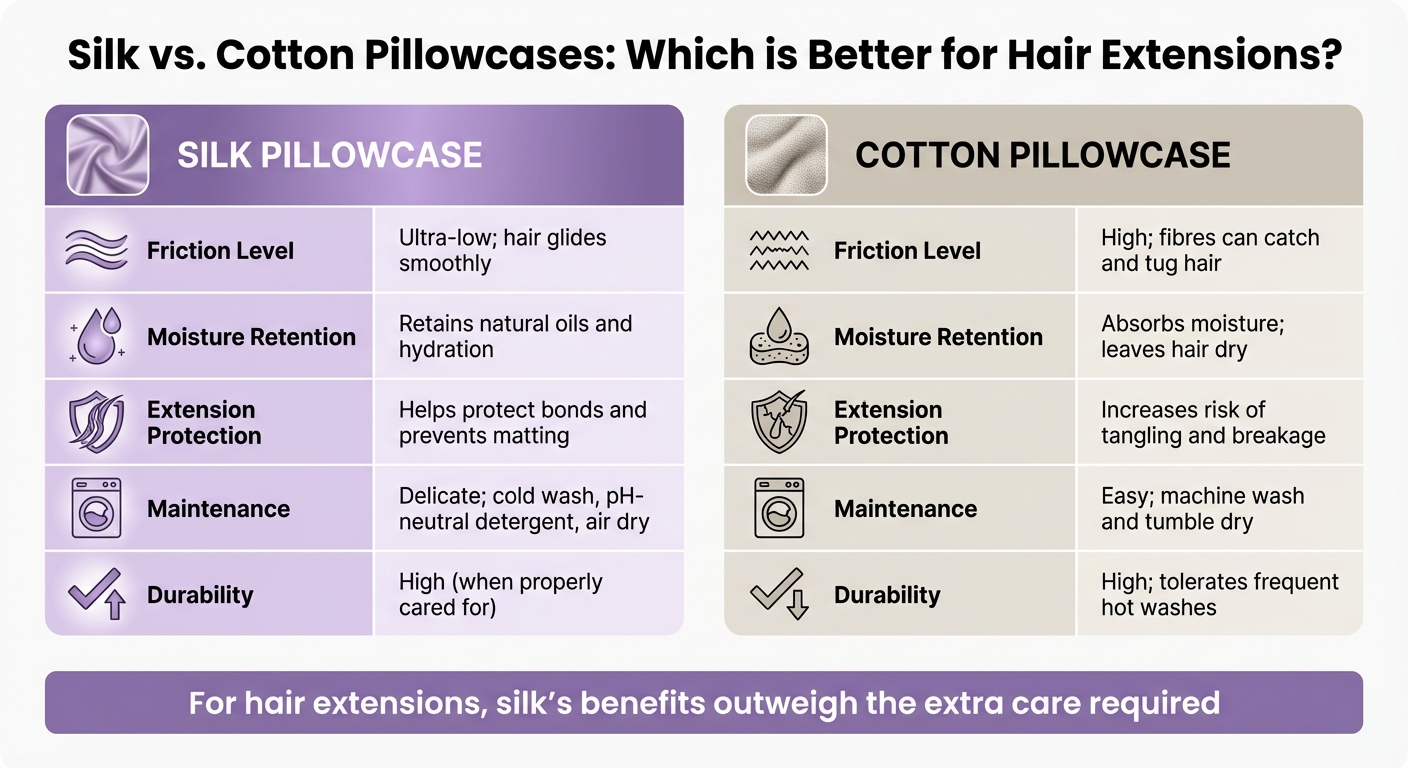
Silk vs Cotton Pillowcases for Hair Extensions Comparison
When it comes to protecting hair extensions, silk pillowcases outshine cotton ones. Silk offers an ultra-smooth surface that lets your hair glide freely, reducing the risk of snagging or pulling. This fabric not only minimises friction but also plays a crucial role in maintaining moisture levels.
Silk is excellent at retaining moisture. Unlike cotton, which absorbs moisture and strips away essential oils, silk helps extensions stay hydrated. According to Cliphair UK, cotton’s absorbent nature can leave hair dry and brittle. Silk, on the other hand, preserves these natural oils, reducing frizz and keeping your extensions looking their best.
The care requirements for these fabrics also differ significantly. Cotton pillowcases are low-maintenance - you can toss them in with your regular laundry and tumble dry without a second thought. Silk, however, demands a gentler touch. Washing in cold water with pH-neutral detergents and air drying is necessary to maintain its smooth texture and longevity. With proper care, high-quality silk pillowcases boasting a momme count of 22 to 25 can last for years. These distinctions make silk the preferred choice for preserving the integrity of hair extensions. The table below highlights the main differences between silk and cotton pillowcases:
| Feature | Silk Pillowcase | Cotton Pillowcase |
|---|---|---|
| Friction Level | Ultra-low; hair glides smoothly | High; fibres can catch and tug hair |
| Moisture Retention | Retains natural oils and hydration | Absorbs moisture; leaves hair dry |
| Extension Protection | Helps protect bonds and prevents matting | Increases risk of tangling and breakage |
| Maintenance | Delicate; cold wash, pH-neutral detergent, air dry | Easy; machine wash and tumble dry |
| Durability | High (when properly cared for) | High; tolerates frequent hot washes |
For those who wear hair extensions, the extra care silk requires is well worth it. Silk pillowcases not only help maintain the bonds but also reduce the hassle of detangling in the morning.
How to Use Silk Accessories with Extensions
Follow these simple steps to keep your extensions in great shape for longer.
Start by detangling your extensions with the Hair Wonderland Tangle Tamer (AUD $21.95). Work gently from the tips upward to avoid unnecessary pulling. Once detangled, apply 2–3 pumps of treatment oil to the mid-lengths and ends. Then, loosely secure your hair in a low plait using a silk scrunchie. This not only prevents matting but also avoids the creases caused by regular hair elastics. Hair extension expert Shantella Rios, the owner of Tamed by Tella, shares this tip:
"Always wrap your extensions when you sleep to prevent tangling, frizz and breakage."
Once your extensions are secured for the night, it’s time to adjust your daytime routine to ensure they stay protected during your busy hours.
For nighttime care, make sure your hair is completely dry before putting on a silk bonnet. If you prefer a low ponytail under the bonnet, adjust its position to minimise friction. According to Strands of Silk, wearing a silk cap:
"will prevent your hair from getting tugged and tangled throughout the night" and "may help alleviate some of the pressure on the extension bonds."
During the day, silk scrunchies are perfect for gym-friendly updos or casual styles. They hold your hair securely without the tightness that can lead to breakage. If you’re heading to the pool, style your extensions in a low ponytail or plait using a silk tie, and apply a leave-in conditioner to protect them from salt and chlorine exposure. Combining Hair Wonderland's tools with silk accessories provides easy styling options while helping to maintain your extensions for the long haul.
Conclusion
Silk accessories are a game-changer for protecting your hair extensions. They tackle key challenges like friction, moisture loss, and tangling - issues that can shorten the life of your extensions. Since quality extensions are an investment, adding silk accessories to your routine makes sense. These small changes help maintain the softness, shine, and attachment points of your extensions, all while cutting down on salon upkeep.
The difference between silk and cotton goes beyond comfort. Cotton can strip away moisture and increase tangles, while silk creates a smoother surface that helps your extensions retain hydration and stay manageable. This means less brushing, fewer repair appointments, and more time enjoying your extensions without the hassle of constant maintenance.
Pairing Hair Wonderland's premium extensions with silk accessories gives you a complete care routine. Whether it’s a silk bonnet for bedtime or silk scrunchies for daytime styling, these simple tools can make a big impact. The initial cost of silk accessories is small compared to the savings you’ll see in reduced salon visits and longer-lasting extensions.
FAQs
How can silk accessories improve the longevity of hair extensions?
Silk accessories like pillowcases and caps are a smart choice for keeping hair extensions in great shape. Their smooth texture minimises friction during sleep, which helps to avoid tangling and breakage. Plus, silk does a better job at holding onto moisture compared to other fabrics, leaving your extensions softer and less likely to dry out.
Adding silk to your hair care routine can help preserve the silky, natural appearance of your extensions, keeping them comfortable and looking fabulous for longer.
Why are silk scrunchies better than regular hair ties for hair extensions?
Silk scrunchies are an excellent option for hair extensions, thanks to their smooth, non-abrasive surface. They help reduce breakage, avoid dents, and protect the fragile ends of your extensions. Unlike standard elastic hair ties that can tug, crease, and dry out your strands, silk scrunchies are much gentler and help maintain moisture, leaving your extensions looking sleek and well-maintained.
What’s more, silk is hypoallergenic, making it a great choice for those with sensitive scalps. It’s a practical yet indulgent way to care for your extensions while ensuring they stay in top condition.
Why is silk better than cotton for keeping hair extensions hydrated?
Silk is much kinder to hair extensions than cotton, primarily because it doesn’t strip moisture from the hair. This allows your extensions to hold onto their natural oils, keeping them well-hydrated and reducing the chance of dryness or brittleness.
In contrast, cotton tends to absorb moisture, which can leave hair prone to frizz and potential damage over time. Incorporating silk accessories, like pillowcases or caps, into your routine can help protect your extensions, ensuring they stay smooth and glossy for longer.