


Weft extensions can last 8–12 weeks with proper care, and even longer with regular maintenance. Neglecting them shortens their lifespan significantly. Maintaining extensions involves daily brushing, using the right tools, proper washing techniques, and regular salon visits. Here's what you need to know:
- Daily Care: Brush 2–4 times a day, starting at the ends and working up. Avoid brushing wet hair and use tools like The Detangle Brush ($29.95 AUD) or Tangle Tamer Brush ($21.95 AUD). Secure hair in a loose braid before bed.
- Washing: Clean extensions every 7–10 days with sulphate-free, hydrating products. Focus shampoo on the scalp and conditioner on mid-lengths to ends. Always dry extensions thoroughly to prevent bacteria.
- Styling: Use heat tools under 180°C with a heat protectant. Avoid direct heat near attachment points.
- Storage: Use a breathable bag like the Clip In Bag ($54.00 AUD) to keep extensions tangle-free when not in use.
- Professional Maintenance: Visit your stylist every 6–8 weeks to tighten wefts, check for damage, and ensure healthy hair growth.
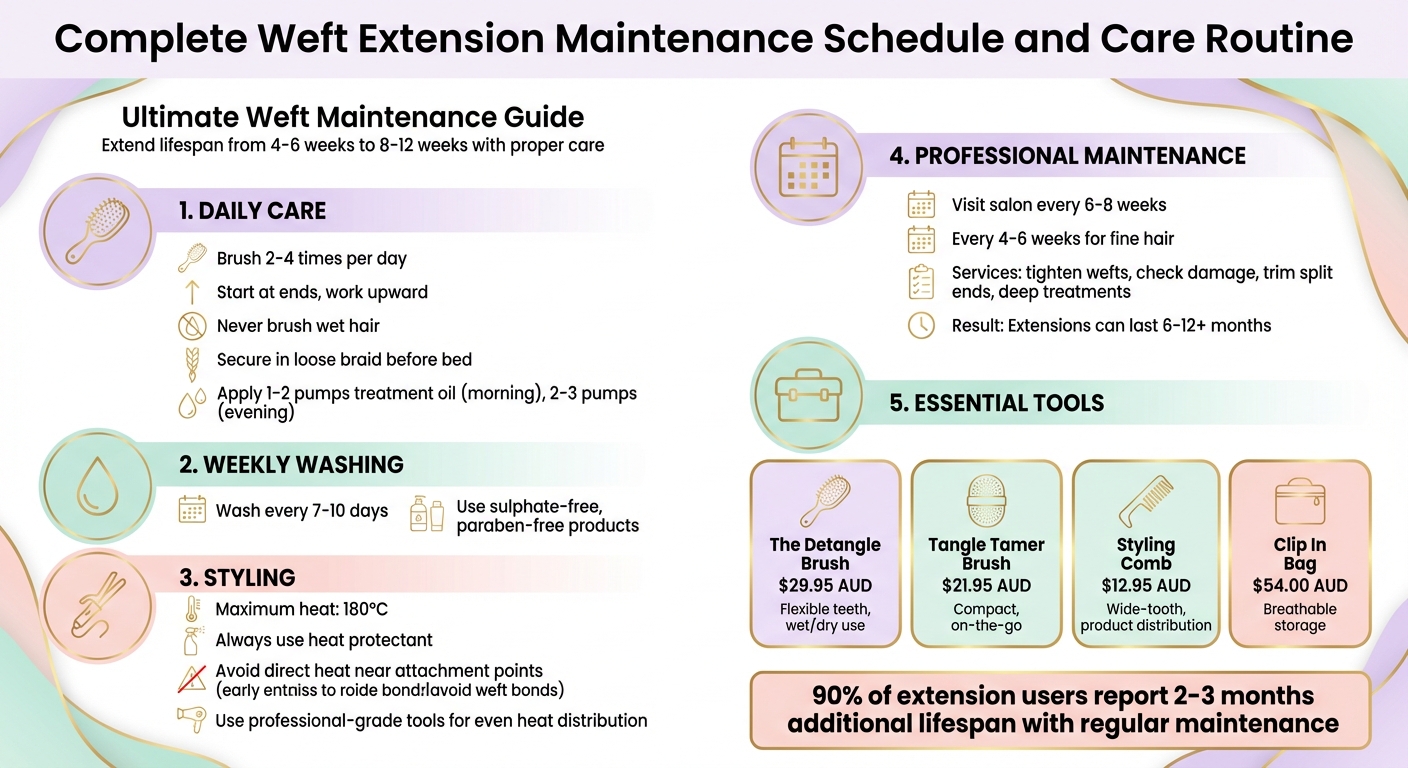
Complete Weft Extension Maintenance Schedule and Care Routine
HAIR EXTENSION CARE TUTORIAL - at home maintenance for weft hair extensions
Tools You Need for Weft Maintenance
To keep your wefts in top condition for 6–12 months, having the right tools is non-negotiable. These essentials not only maintain the appearance of your extensions but also protect your natural hair. Here's a breakdown of the must-have tools for daily care and maintenance.
Daily Care Tools
The Detangle Brush ($29.95 AUD) is designed with flexible teeth that glide through knots without tugging on your weft attachments. This makes it perfect for both wet and dry hair. Hair Wonderland describes it as:
This hair brush glides through wet and dry hair. It works wonders on natural hair, hair extensions, wigs and weaves.
For best results, run it through your hair twice daily to keep bonds free from natural shedding.
The Tangle Tamer Brush ($21.95 AUD) is your go-to for compact, on-the-go detangling. It’s especially handy before activities like showering or swimming, where thorough detangling can prevent severe matting. Its smaller size makes it easy to slip into your handbag for quick touch-ups during the day.
A Styling Comb ($12.95 AUD) with wide teeth is ideal for separating weft rows without causing frizz or slippage. It’s also great for evenly distributing conditioner through wet hair. To avoid product buildup, focus on applying conditioner from mid-shaft to the ends of your hair.
The Clip In Bag ($54.00 AUD) keeps your extensions safe during storage. Made with breathable fabric, it reduces friction and tangling while allowing airflow. This ensures your extensions remain in excellent condition when not in use.
Tool Comparison: Features and Prices
| Tool | Price (AUD) | Key Features | Benefits for Weft Maintenance |
|---|---|---|---|
| The Detangle Brush | $29.95 | Flexible teeth, wet/dry use | Painless detangling; reduces breakage |
| Tangle Tamer Brush | $21.95 | Compact, extension-safe | Perfect for daily use and pre-wash detangling |
| Styling Comb | $12.95 | Wide-tooth design | Separates weft rows; evenly distributes products |
| Clip In Bag | $54.00 | Breathable, structured | Protects from dust and tangling during storage |
Using extension-safe tools not only keeps your wefts looking their best but also saves you from the expense of premature replacements. With these tools in your arsenal, maintaining your daily weft care routine becomes effortless and effective.
Daily Weft Care Routine
Taking care of your wefts daily can stretch their lifespan from 4–6 weeks to an impressive 8–12 weeks. This routine isn’t just about the wefts themselves - it also helps protect your natural hair. A key part? Brushing your extensions 2–4 times a day, especially in the morning, evening, and before washing or sleeping. This keeps small tangles from turning into major knots.
How to Brush Your Extensions Correctly
When brushing, always start at the ends and work your way up. Hold the hair near the weft with one hand to stabilise the attachment point, which helps avoid unnecessary pulling on your natural hair. This method stops knots from bunching together and reduces strain on the weft.
For tough knots, use your fingers to gently separate them. Adding a small amount of treatment oil can make brushing easier. Tools like the Tangle Tamer Brush are great for quick detangling before activities like showering or swimming, while The Detangle Brush works wonders on both wet and dry hair during your morning and evening routines.
Never brush soaking wet extensions. Wet hair is fragile and more likely to stretch or break. Before bed, give your extensions a gentle brush and secure them in a low, loose plait. This helps prevent tangles caused by friction while you sleep.
By brushing properly and avoiding common mistakes, you can keep your extensions looking flawless.
Common Mistakes to Avoid
One of the most common mistakes is brushing from the roots down to the ends. This can actually tighten knots rather than loosen them. Also, steer clear of fine-tooth combs with less than 1cm spacing and brushes with nylon bristles - both can snag on the weft and create static.
Another no-go? Applying conditioner or oils directly to the weft line. This can cause the wefts to slip out of place. After washing, don’t rub your hair with a towel; instead, gently blot it to soak up excess water.
Interestingly, over 90% of people who wear extensions say that regular maintenance adds an extra 2–3 months to their wefts’ lifespan compared to those who skip the care routine. Just a few minutes of daily upkeep can translate into months of gorgeous, tangle-free hair.
How to Wash Weft Extensions
When to Wash and What Products to Use
To keep your weft extensions looking their best, aim to wash them every 7–10 days. If you’re someone who works out frequently or uses a lot of styling products, you might need to wash them a bit more often - around 2–3 times a week. For clip-in wefts, washing is less frequent; every 10–15 wears should be enough, and only when you notice visible product buildup.
Choosing the right products is key. Stick to sulphate-free and paraben-free shampoos to protect both the hair itself and the bonds holding the extensions in place. Avoid anything with protein, keratin, or high alcohol content, as these can leave your extensions dry and brittle. Instead, go for shampoos and conditioners packed with hydrating ingredients like argan oil, aloe vera, rice protein, or coconut oil. Unlike your natural hair, extensions don’t benefit from scalp oils, so they need that extra moisture. When it comes to conditioner, pick a lightweight option to avoid weighing down the hair or creating a greasy look near the roots.
"Extensions are 100% Remy European human hair, but they require moisture and care." - Hair Wonderland
Stick to these product tips and follow the steps below for a smooth washing routine.
Washing Steps
Start by detangling your extensions with a wide-tooth comb before you get them wet. Always use lukewarm water during the washing process - hot water can weaken the bonds and damage the hair.
When applying shampoo, focus on your scalp and gently massage it in, letting the suds naturally flow down the lengths of your hair. For conditioner, concentrate on the mid-lengths to the ends of the hair and avoid the weft bonds entirely. Finish up with a cool water rinse to help seal the cuticles and lock in moisture.
After washing, gently blot your extensions with a microfibre towel - don’t rub, as this can cause tangling or damage. To dry the weft track properly, use a blow dryer on a cool or low setting. This step is essential to prevent moisture buildup, which could lead to bacteria or unpleasant odours.
"As weaves/wefts are made from a thick band of hair, they need to be fully dried after every wash to prevent bacteria from forming which can cause irritation or odour." - Heather Collier, Cliphair US
sbb-itb-dcde78e
Styling and Heat Protection
Safe Heat Styling Guidelines
Heat styling can bring out the best in your weft extensions, but it’s important to do it carefully. Keep your tools at a maximum of 180°C to protect the hair fibres. Unlike natural hair, extensions don’t receive oils or nutrients from your scalp, making them more prone to heat damage.
Always use a heat protectant on damp or dry hair before reaching for your straighteners or curling irons. When blow-drying, stick to medium or cool settings to minimise stress on the hair.
Be extra cautious around the attachment points of your wefts. Direct heat near these areas can weaken adhesives, cause slippage, or even harm your natural hair. For tape-in or adhesive wefts, avoid using heat near the roots for the first 48–72 hours after application. Opt for professional-grade tools that distribute heat evenly to avoid hot spots. By incorporating these practices into your daily routine, you’ll help your extensions last longer.
Products for Better Styling Results
Because extensions don’t produce natural oils, you’ll need to step in to keep them hydrated. Use 1–2 pumps of treatment oil on the mid-lengths and ends in the morning, and increase to 2–3 pumps in the evening. This simple habit helps maintain moisture and prevents brittleness caused by frequent styling.
For an extra boost, try Hair Wonderland's Moisture Magic treatment. It’s designed to nourish extensions without making them feel heavy. To finish, apply a lightweight serum to the ends for added shine, steering clear of the roots to avoid a greasy look. Stick to products that are free of sulphates, protein, keratin, and high alcohol content to keep your extensions in top condition.
Overnight Care and Storage
Protective Styles for Sleep
Sleeping with loose wefts can lead to tangles and matting. Before bed, make sure your hair is completely dry - moisture combined with friction can irritate your scalp and cause knots.
Start by brushing your extensions from the ends upward, using an extension-safe brush. Hold the weft line gently to avoid pulling. Apply 2–3 pumps of treatment oil to the mid-lengths and ends to keep your hair soft and reduce overnight friction. After that, secure your hair in a loose braid. Whether you choose a classic three-strand plait, a fishtail, or a rope braid, this step helps evenly distribute the weight of your extensions and prevents tangling while you sleep.
For added protection, consider wrapping your braid into a loose bun and securing it with a silk tie. Avoid tight hairstyles like high ponytails or tight buns, as these can strain your roots and potentially shift your wefts. To further minimise friction, pair your chosen style with a silk or satin pillowcase. Unlike cotton, these fabrics are gentler on your hair, reducing frizz and snags.
Once you've prepped your hair for sleep, proper storage is the next step in maintaining your extensions when they're not in use.
How to Store Your Extensions
When you're not wearing your clip-in extensions, storing them correctly is crucial. Start by brushing each piece to eliminate tangles and ensure they're completely dry - any lingering moisture can lead to mould, frizz, or unpleasant odours.
For this, Hair Wonderland offers a Clip In Bag ($54.00), specially designed to keep your extensions safe from dust, tangling, and environmental damage while keeping them neatly organised. Store this bag in a cool, dry, and dark place - avoid humid or sunlit areas like bathrooms, cars, or window sills, as these conditions can damage your extensions.
If you're storing them for an extended period, loosely tie or roll your extensions with a silk or hair tie to maintain their shape. Adding silica gel packets to the storage container can help control moisture and prevent frizz. Make it a habit to check your stored extensions monthly. Brush them out and apply a small amount of leave-in conditioner to keep the ends smooth and hydrated.
Professional Maintenance and Salon Appointments
How Often to Visit the Salon
To keep your weft extensions secure and looking their best, plan professional maintenance every 6–8 weeks. This schedule matches the natural shedding cycle of your hair - about 100 strands per day. Over time, the section of hair supporting your weft thins out, making it weaker. Without regular upkeep, this thinning can lead to stress on your natural hair, increasing the chances of breakage and discomfort.
If you have fine hair, it’s better to visit the salon more frequently - around every 4–6 weeks. This prevents undue strain on thinner hair. During these appointments, your stylist will remove the grown-out wefts, clean the attachment area, and re-section your hair so the extensions rest on a healthy, fresh part of your scalp. These sessions also provide an opportunity to trim split ends on both your natural hair and the extensions, ensuring a smooth and natural blend.
Salon visits also include professional deep-cleansing and moisture treatments, which are essential for keeping extensions soft and shiny. Unlike natural hair, extensions don’t receive oils from your scalp, so these treatments deliver the nourishment they need - something at-home products just can’t fully replicate. Additionally, many stylists perform scalp health checks during these visits, looking for signs of tension, irritation, or inflammation that could lead to long-term issues.
These appointments aren’t just about appearance - they’re about protecting both your extensions and your natural hair.
Why Professional Care Matters
Consistent salon maintenance doesn’t just keep your extensions looking flawless; it also helps preserve the health of your natural hair.
"Leaving extensions in for too long can damage your natural hair. As your extensions grow, the section of natural hair they're attached to becomes smaller due to daily shedding." - Hair Wonderland
Delaying appointments can lead to severe matting or tangling at the roots where the extensions are attached. This not only compromises the extensions but can also harm your natural hair. On the other hand, with regular care, 100% Remy human hair wefts can last anywhere from 6 to 12 months or more. This makes professional maintenance a smart investment in extending the life of your extensions.
Many salons also tie their warranties to a strict maintenance schedule, typically every 6 weeks, and the use of approved products. If you notice your wefts shifting or tracks loosening before your next appointment, it’s important to contact your stylist promptly to avoid lasting damage.
Conclusion
This guide has covered essential tips for daily care, washing, styling, and professional maintenance to help you keep your weft extensions looking their best. With the right habits and regular salon visits, you can extend the lifespan of your extensions from the typical 4–6 weeks to an impressive 8–12 weeks.
Daily routines matter. Gently detangle your extensions from the ends to the roots, use sulphate-free products, and apply hydrating treatments to make up for the lack of natural scalp oils. Before bed, ensure your wefts are completely dry, and secure them in a low, loose braid. Sleeping on a silk or satin pillowcase also helps reduce friction and maintain softness. For heat styling, keep your tools below 180°C and always use a heat protectant spray to minimise damage.
Choosing the right tools is just as important. A wide-tooth comb and brushes designed specifically for extensions help prevent snagging and tangling. Be cautious with products - those with high levels of alcohol, protein, or keratin can make your extensions difficult to manage.
Don’t overlook professional care. Visiting your stylist every 6–8 weeks allows them to address wear and thinning bonds, which protects both your natural hair and extensions. In fact, over 90% of extension users say that regular salon maintenance adds an extra 2–3 months to their extensions' lifespan.
Stick to these care routines, treat your extensions gently, and stay consistent with salon appointments. With these steps, you can enjoy soft, shiny, and secure extensions for months on end.
For more expert advice, check out Hair Wonderland.
FAQs
How do I know if my wefts need a tighten?
If your wefts start feeling loose, begin to slip, or show visible gaps, it might be time to tighten them. You might also notice other signs, like your extensions not blending well with your natural hair, tangling more than usual, or shedding excessively. Scheduling regular maintenance appointments with your stylist can help catch these problems early, keeping your extensions secure and looking flawless.
What should I do if my wefts start slipping?
If your wefts are slipping, it’s usually because of improper installation. This can happen if the beads or tape weren’t applied tightly enough or weren’t aligned correctly. To fix this, it’s best to see a professional stylist who has experience with weft extensions - they’ll know how to secure them properly.
Your hair type and the products you use can also play a role. For example, fine or slippery hair might require special techniques to keep the wefts in place. Regular maintenance and choosing the right products can go a long way in preventing slipping and ensuring your extensions last longer.
Can I swim with weft extensions?
Yes, you can swim with weft extensions, but taking the right steps is crucial to keep them in good condition. Before diving in, apply a light oil or leave-in conditioner to the mid-lengths and ends of your hair - just make sure to steer clear of the bonds. Secure your hair in a plait or low ponytail to minimise tangling, and rinse thoroughly with fresh water as soon as you're out of the pool. If you're swimming in chlorinated water, consider wearing a swim cap or avoiding it altogether. Afterwards, gently shampoo your hair and dry it completely to help preserve the extensions' quality.