


Hair extensions can transform your look, adding length and volume instantly. But without proper care, they may cause damage to your natural hair. Here's how to keep both your extensions and natural hair in great condition:
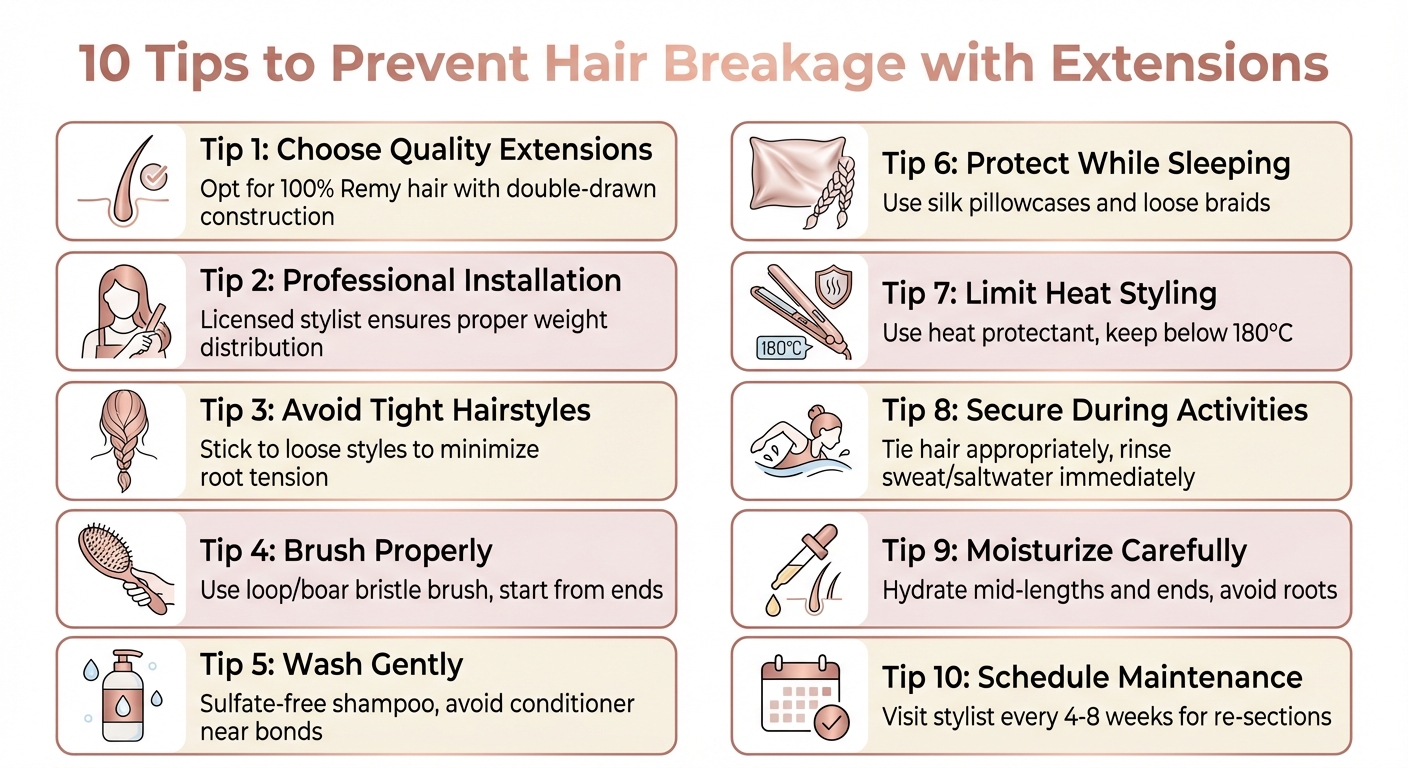
- Choose quality extensions: Opt for 100% Remy hair with double-drawn construction for durability and reduced tangling.
- Professional installation: A licensed stylist ensures proper weight distribution, preventing strain on your scalp.
- Avoid tight hairstyles: Stick to loose styles to minimise tension on your roots.
- Brush properly: Use a loop or boar bristle brush and start detangling from the ends.
- Wash gently: Use sulfate-free shampoo, avoid conditioner near bonds, and always blow-dry the roots.
- Protect while sleeping: Use silk pillowcases and secure hair in a loose braid or ponytail.
- Limit heat styling: Use a heat protectant and keep tools below 180°C.
- Secure hair during activities: Tie hair appropriately for workouts or swimming, and rinse sweat or saltwater immediately.
- Moisturise carefully: Hydrate the mid-lengths and ends with lightweight products, avoiding the roots.
- Schedule maintenance: Visit your stylist every 4–8 weeks for re-sections and trims.
10 Essential Tips to Prevent Hair Extension Breakage
How to prevent hair damage from a weave or extensions
1. Select Quality Extensions and Get Professional Installation
Choosing high-quality extensions is the first step to avoiding breakage and ensuring a natural look. Always opt for 100% Remy extensions with aligned cuticles to minimise friction and tangling. Extensions with a double-drawn construction are another smart choice, as they provide consistent thickness from top to bottom. These features set the stage for a flawless installation.
A great example comes from Hair Wonderland, which offers double-drawn Russian and Mongolian human hair extensions. Their Seamless Set 22" (A$499.00) is crafted from ProGrade Remy European hair, known for its reduced shedding. Hairstylist Scarlett praises the quality:
"The double drawn Russian human hair is a game-changer."
Customer reviews echo this sentiment. Anna, a verified buyer, shares:
"The quality of their hair extensions is unmatched. I've tried several brands before, but none have come close!"
Once you've secured premium extensions, professional installation is a must. A licensed stylist ensures the extensions are attached to a properly weighted section of your natural hair. This careful balance prevents undue tension on your roots, reducing the risk of scalp strain. Attempting a DIY installation can lead to uneven weight distribution and potential damage.
Professional stylists also customise the process based on your hair type. For instance, if your hair is fine, they may recommend maintenance appointments every four weeks instead of the usual five to six weeks. This prevents the weight of the extensions from straining your natural hair as it grows and sheds over time.
"During maintenance, we'll re-section your hair to ensure the extensions are placed on a suitable, weighted section, protecting your natural hair." - Hair Wonderland
2. Avoid Tight Hairstyles That Pull on Your Roots
While tight hairstyles might give you a sleek and polished look, they can cause serious harm to both your natural hair and extensions. On average, your hair naturally sheds about 100 strands a day. When you wear tight styles, you're putting extra strain on an already thinning section of hair, which can lead to increased breakage. Certain high-tension hairstyles only make this worse.
Styles like top knots or high ponytails pull your hair in the opposite direction of its natural growth. This creates friction at the roots, which can lead to matting and even traction alopecia - a condition where hair is literally pulled out from the roots.
"Avoid tying your hair at the crown while sleeping to prevent matting from friction and tension." – Vixen Hair Extensions
To reduce the risk of damage, go for low, loose plaits or ponytails, especially during activities like sleeping, swimming, or exercising. These styles help distribute the weight of your extensions more evenly. Swapping out regular elastic bands for soft, fabric-covered ties can also minimise snagging and breakage. If you experience any scalp soreness, redness, or discomfort, it's a clear sign that your hairstyle is too tight and needs to be adjusted immediately.
When you’ve just had tape-in extensions applied, stick to low ponytails for the first week. This gives the bonds time to settle without unnecessary strain. Beyond styling, regular maintenance appointments every 4–8 weeks are crucial. These ensure your extensions stay securely attached to healthy sections of hair, keeping your look flawless and your hair protected.
3. Use Proper Brushing and Detangling Techniques
Taking care of your hair extensions starts with proper brushing. Neglecting regular detangling can lead to shed hair building up around the bonds, causing mats between the extension attachment and your scalp. That’s why how you brush is just as important as the tools you use.
Start by brushing from the ends of your hair and work your way up. Hold the hair at the base or near the top of the weft with one hand to anchor the extensions. This prevents pulling on your natural hair or the bonds, keeping small tangles from turning into bigger knots. Hair stylist Shakira Dickinson from Hair Candy highlights the importance of this habit, saying, "Brushing is one of the most important habits when caring for hair extensions". Pairing the right technique with the right tools is key to protecting your extensions.
Choose a loop or boar bristle brush made specifically for extensions. These brushes are gentler on the bonds and won’t snag or dislodge them like standard brushes might. A great option is the Hair Wonderland Tangle Tamer Brush (A$21.95), which is designed to reduce breakage while safely detangling extensions. For damp hair, switch to a wide-tooth comb, as it’s gentler on fragile, wet strands.
"Always ensure you use a hair extension boar bristle brush to prevent excess tension on your hair extensions or natural hair when brushing." – Vixen Hair Extensions
Make brushing a daily routine - once in the morning and again before bed. Always detangle thoroughly before washing, sleeping, or swimming to avoid matting. Additionally, use your fingers to gently separate individual bonds daily to stop them from fusing at the roots. These small but consistent steps will keep your extensions in great shape and prepare you for the next stages of care.
4. Wash and Condition Gently
Before washing your extensions, make sure they’re completely detangled. Use lukewarm water instead of hot, as hot water can dry out and weaken the hair. Choose a sulfate-free shampoo and focus on applying it directly to your scalp and roots. Gently massage the shampoo in without rubbing or twisting - this helps prevent matting and breakage while preserving the moisture in your extensions. Since extensions don’t receive the natural oils from your scalp, this gentle method is key to keeping them in good condition.
"Applying heavy products near bonds can loosen tape-ins or beads." – Shakira Dickinson, HairCandy
When it’s time to condition, limit the product to the mid-lengths and ends of your hair. Avoid applying conditioner near the bonds, tapes, or clips, as this can lead to product buildup and loosen the attachments. For extensions like tapes or U-tips, it’s essential to blow-dry the roots immediately after washing - leaving them wet can weaken the bonds and cause slippage. Finish with a rinse of cool water to seal the cuticles and retain moisture. Use a microfibre towel to gently blot your hair dry, avoiding any rubbing or wringing, as wet hair is more prone to stretching and damage.
5. Protect Your Hair While You Sleep
Your bedtime habits play a big role in keeping your extensions in good shape. Tossing and turning at night can create friction, leading to tangles, matting, and damage to both your natural hair and extensions. If shed hairs get stuck in the extension bonds overnight, they can cause severe matting if your hair isn’t properly secured.
Start by brushing your extensions thoroughly with a boar bristle brush or one designed specifically for extensions. This helps to remove any tangles before bed. Next, tie your hair into a loose, low braid or ponytail. This keeps your extensions aligned with your natural hair, reducing the risk of knots. Avoid high buns or top knots, as they can pull on your hair in the wrong direction and increase friction on the lower rows of extensions.
To further protect your hair, use silk or satin accessories to secure your braid. Silk scrunchies are an excellent choice since they’re gentle and won’t snag or break your hair like regular elastic bands. Pair this with a silk or satin pillowcase to minimise friction. Unlike cotton, these materials let your hair glide smoothly, reducing the chance of tangles and breakage.
One important rule: never sleep with wet or damp extensions. Wet hair is much more fragile and prone to damage. Plus, sleeping with damp extensions can lead to matting, frizz, and even bacterial growth between your scalp and the bonds. Always make sure your hair is completely dry before braiding it, and take the time to blow-dry the bonds thoroughly after washing.
6. Limit Heat Styling and Use Protection
Heat styling can quickly damage hair extensions. Unlike your natural hair, extensions don’t benefit from the scalp’s natural oils, making them more prone to drying out and breaking. To keep them in good condition, it’s essential to minimise heat usage and always use protection when styling.
Incorporate heat-free days into your routine to give your extensions a break. Shakira Dickinson advises:
"Do not over-style; heat-free days help maintain softness and elasticity".
When a full restyle isn’t needed, consider alternatives like overnight curlers or refreshing your style with your fingers. If you do use heat tools, keep the temperature below 180°C. For finer hair, aim for a range between 120°C and 143°C.
Always use a heat protectant twice - first on towel-dried, damp hair and again on dry hair - focusing on the mid-lengths and ends. Never apply heat to wet or damp extensions, as this can cause irreversible internal damage. Use a wide-tooth comb to ensure the protectant is evenly distributed.
Be cautious around attachment points like bonds, tapes, or rings. Direct heat can cause these to melt, slip, or weaken. When blow-drying, stick to a medium heat setting and aim the airflow downward to smooth the cuticle and reduce frizz. Dry your hair about 80% before brushing to minimise stress on your roots. After styling, apply 1–2 pumps of argan or treatment oil to the mid-lengths and ends to replenish lost moisture.
sbb-itb-dcde78e
7. Secure Hair During Physical Activities
When you're active, all that extra movement and friction can wreak havoc on your extensions - think tangling, matting, or even pulling at the attachment points. To keep your extensions in good shape, it’s essential to secure your hair properly before hitting the gym, going for a swim, or engaging in any physical activity.
Choose the right styles for your workout. For high-energy exercises like running or cardio, styles like boxer braids or high ponytails are great for keeping hair out of your face and under control. For gentler activities like yoga or Pilates, a low braid or bun works well to minimise movement. When braiding, start just below the extension bonds or tapes to avoid putting pressure on the attachment points. If you’re dealing with long extensions during intense workouts, try a bubble ponytail - secure hair ties every 2.5 cm along the length to keep everything in place.
Swimming? Before diving in, wet your hair with fresh water and apply a leave-in conditioner to shield it from chlorine or salt. Then, loosely plait your hair to reduce tangling.
Use accessories that are gentle on your extensions. Silk scrunchies, cotton headbands, and snag-free hair ties are your best friends. Steer clear of plastic bands with metal joins or stiff clips, as they can snag and damage your extensions. When tying your hair, support the top of the extension row with one hand to avoid unnecessary stress on your natural hair.
After your workout, don’t let sweat linger. Rinse your hair immediately to prevent salt buildup, which can dry out your extensions. Be sure to blow-dry the bonds and attachment points right away using a medium heat setting - this helps maintain their integrity and prevents slippage or softening.
8. Moisturise Without Weighing Down Bonds
After following a gentle washing and conditioning routine, keeping your extensions hydrated is essential to avoid dryness and breakage. Unlike natural hair, extensions don’t benefit from the scalp’s natural oils, so they rely entirely on the products you use to stay soft and manageable. Without proper hydration, they can become brittle and more prone to damage. The trick is to moisturise them without compromising the bonds, tapes, or clips. This means focusing on the mid-lengths to the ends of the hair. As Shakira Dickinson, a stylist at Hair Candy, advises:
"Extensions do not get natural oils from your scalp, so they require extra hydration. Apply a deep conditioning treatment once a week, focusing only on the mid lengths and ends".
Avoid applying oils, conditioners, or serums near the roots, as this can loosen tape-ins or weaken keratin bonds, causing them to slip.
Lightweight moisturisers like argan or jojoba oil work well for daily hydration. Use 1–2 pumps on the mid-lengths and ends in the morning, and 2–3 pumps in the evening to replenish moisture lost through heat styling. For deeper hydration, apply a conditioning mask weekly, ensuring it stays away from the bonds. Leave it on for five minutes, then rinse with cool water to seal the cuticles and lock in moisture.
Stick to sulfate-, alcohol-, and paraben-free products. Alcohol can dry out extensions, while sulfates strip away moisture. Heavy proteins like keratin or hydrolysed wheat protein can also leave extensions stiff and difficult to manage. Instead, go for lightweight leave-in sprays and serums that hydrate without leaving behind a sticky residue.
If you plan to swim, protect your extensions by coating the mid-lengths and ends with a leave-in conditioner beforehand. This creates a barrier against chlorine and saltwater, reducing the risk of dryness and tangling. By focusing on targeted hydration, you’ll keep your extensions looking and feeling their best, ready for everyday styling.
9. Get Regular Maintenance and Trims
Taking care of your extensions at home is essential, but regular salon visits are just as important to keep them in great shape and prevent damage. Most extension methods require professional maintenance every 6–8 weeks, though tape-ins often need adjustments more frequently, around every 4–6 weeks. For those with finer hair, your stylist might suggest coming in every 4 weeks to avoid putting too much strain on your natural hair.
Daily hair shedding can weaken the area where your extensions are attached, making regular re-sections necessary. As Hair Wonderland explains:
"As your extensions grow, the section of natural hair they're attached to becomes smaller due to daily shedding... we'll re-section your hair to ensure the extensions are placed on a suitable, weighted section".
During these appointments, your stylist will also trim any split ends and ensure the bonds are secure, keeping your hair looking polished and healthy. They'll check for any loosened or shifted bonds, which could cause friction and potentially harm your natural hair. Skipping these visits can lead to matting or tangling near the scalp, and in severe cases, it might result in traction alopecia - permanent hair loss caused by prolonged tension on the follicles. Regular maintenance works hand-in-hand with your at-home care to keep your extensions lasting longer and your natural hair protected.
Before leaving the salon, make sure to book your next appointment. If you notice any loose extensions or knots forming near the roots, contact your stylist as soon as possible. Between salon visits, gently use your fingertips to separate the bonds at the roots daily to avoid tangling.
10. Give Your Natural Hair Rest Periods
Wearing extensions for too long without breaks can put continuous tension on your natural hair, gradually reducing its density and leading to potential issues like traction alopecia. This condition, caused by excessive strain, can even result in permanent damage, making it difficult to wear extensions in the future.
It's important to recognise when your hair needs a break. Look out for signs like scalp soreness, persistent itching, noticeable thinning around attachment points, or more shedding than usual. If you notice matting near the roots or that your bonds are slipping, it could mean your natural hair is struggling under the weight of the extensions.
When it's time to remove your extensions, always seek the help of a licensed professional to avoid unnecessary damage. Use this downtime to focus on nourishing your hair and scalp. Deep conditioning treatments, especially on areas near the roots and scalp that are typically avoided to prevent bond slippage, can help restore strength and moisture.
If your stylist identifies stress signs like thinning or breakage, consider taking a break of at least three months. During this rest period, you don't have to completely give up on added volume or length. Clip-in extensions are a great alternative since they don't put constant tension on your roots and can be easily removed at the end of the day.
Pay attention to your hair and scalp. If you feel discomfort or notice thinning, don't ignore it. Give your hair the time it needs to recover and stay healthy.
Safe vs Unsafe Extension Care Habits
The difference between keeping your extensions in great shape and dealing with damaged hair often comes down to your daily habits. Even small missteps can pile up over time, leading to breakage and cutting short the lifespan of your extensions. Here's a quick look at the right and wrong ways to care for them.
Brushing Technique
When brushing, always start at the ends and work your way up, holding the hair at the base to minimise tension. Brushing from the roots downward can cause unnecessary strain. Stylist Shakira Dickinson advises:
"Hold the base of your hair gently while brushing to avoid pulling on the bonds."
Tool Selection
Not all brushes are created equal when it comes to extensions. Standard brushes with plastic balls on the tips can catch on extension bonds, leading to damage. Instead, opt for tools like the Hair Wonderland Tangle Tamer Brush ($21.95), which is specifically designed to glide smoothly through extensions without snagging attachment points.
Wet Hair Care
Wet hair is particularly fragile, so detangling before washing is a must. Never brush soaking wet extensions, and let your hair dry to about 80% before running a brush through it. Sleeping with damp extensions or aggressively brushing wet hair can lead to breakage. Shakira Dickinson explains:
"Wet hair is more prone to breakage. Always detangle gently with a wide-tooth comb or brush designed for extensions."
Heat Styling
Excessive heat or direct contact with adhesive points can weaken or even melt the bonds, causing extensions to fall out. Since extensions don’t benefit from the natural oils produced by your scalp, they’re more susceptible to heat damage than your natural hair. By following safe heat styling practices, you can protect both your extensions and your own hair for the long haul.
Conclusion
Taking proper care of your hair extensions is key to avoiding breakage and maintaining both your extensions and natural hair in great condition. The secret lies in consistent upkeep, using the right products, and relying on professional expertise throughout the process.
For example, premium extensions like Hair Wonderland's double-drawn Russian/Mongolian human hair, combined with regular professional maintenance every 5–6 weeks, can significantly reduce tangling and minimise tension-related damage. Since extensions don't benefit from your scalp's natural oils, it's crucial to use sulphate-free products and tools that provide external hydration. This thoughtful care routine helps maintain not only the look of your extensions but also the health of your scalp.
As outlined earlier, every step - from choosing quality extensions to scheduling regular maintenance - contributes to the longevity of your extensions and the vitality of your natural hair. Seeking professional help ensures issues like traction alopecia are avoided, keeping your natural hair healthy. With the right care, high-quality extensions can last anywhere from 6 to 18 months, all while allowing your natural hair to thrive beneath them.
FAQs
What type of hair extensions are best to prevent breakage?
Choosing the right hair extensions plays a big role in keeping your natural hair healthy and avoiding breakage. Start by matching the extensions to your hair’s thickness and texture. If your hair is on the finer side, lightweight options like thin-weft clip-ins or tape-ins are ideal because they minimise tension. For thicker hair, fuller double-drawn wefts can provide the right balance. Always go for 100% Remy human hair that’s double-drawn, as it tangles less and reduces friction, helping both your extensions and natural hair stay in better condition.
The way your extensions are installed matters just as much. Clip-ins are perfect if you only wear extensions occasionally since they can be removed easily, reducing strain on your roots. For something more permanent, tape-ins or micro-bead methods are good choices because they distribute weight evenly. However, these methods need professional installation and regular upkeep every 4–6 weeks. To lower the risk of damage, steer clear of extensions that have been treated with harsh chemicals, and always use a heat-protectant spray if you’re styling with heat tools.
If you're after quality, Hair Wonderland offers premium double-drawn Russian/Mongolian human hair extensions, which are known for their durability and low breakage. They’re designed to blend naturally and feel comfortable, all while keeping your hair healthy. To get the best results, talk to your stylist about the right length, weight, and installation method for your hair type. Don’t forget to follow a proper care routine to keep your extensions looking flawless.
How can I tell if my extensions need professional maintenance?
If your extensions begin to slip, feel uncomfortable, or show excessive tangling, knotting, or breakage, it might be time to seek professional help. Similarly, if the bonded areas feel thinner because of natural hair shedding, it’s wise to schedule a visit with your stylist.
Routine upkeep doesn’t just keep your extensions looking great - it also safeguards your natural hair from potential damage. Tackling these issues early can help prolong the life of your extensions and ensure they stay secure and comfortable.
What’s the best way to style hair extensions without causing damage?
To style your hair extensions without causing damage, start by gently detangling them with a soft-bristle brush. Work carefully from the ends upward toward the roots to avoid pulling or breaking the hair. Before using any heat styling tools, always apply a heat protectant and stick to the lowest effective heat setting to reduce the risk of overheating. For everyday styles, try heat-free methods like braiding or using rollers to keep stress on the extensions to a minimum.
Make sure to use products designed for extensions, as recommended by your stylist. Avoid shampoos or conditioners containing sulfates, keratin, or high alcohol content, as these can weaken the bonds or fibres of the extensions. After washing, gently pat them dry with a soft towel and let them air-dry whenever possible. If you need to blow-dry, choose a low-heat, low-speed setting to minimise damage.
By taking these precautions, you’ll help maintain the health and shine of both your natural hair and your extensions.