


Seamless clip-in extensions are a game-changer for anyone wanting natural-looking, comfortable hair extensions. Unlike stitched wefts, which use fabric or lace bases, seamless extensions use thin silicone strips, making them 30% thinner and nearly invisible on fine or thin hair. They’re lightweight, durable, and sit flat against the scalp, offering a discreet finish perfect for sleek styles or daily wear. Traditional wefts, while bulkier, are better for thicker hair and achieving more volume. The choice between the two depends on your hair type, styling needs, and budget.
Quick Comparison
| Feature | Seamless Clip-Ins | Stitched Wefts |
|---|---|---|
| Base Material | Thin silicone strip | Stitched fabric or lace |
| Thickness | Ultra-thin, lays flat | Thicker, may cause bumps |
| Weight | Lightweight | Heavier |
| Durability | High; less shedding | Moderate; stitching can weaken |
| Best For | Fine/thin hair, sleek styles | Medium/thick hair, high volume |
| Price | Higher ($499 AUD for premium sets) | Lower, more budget-friendly |
Seamless extensions are ideal for fine hair and long-term use, while stitched wefts suit those seeking volume or working with thicker hair.
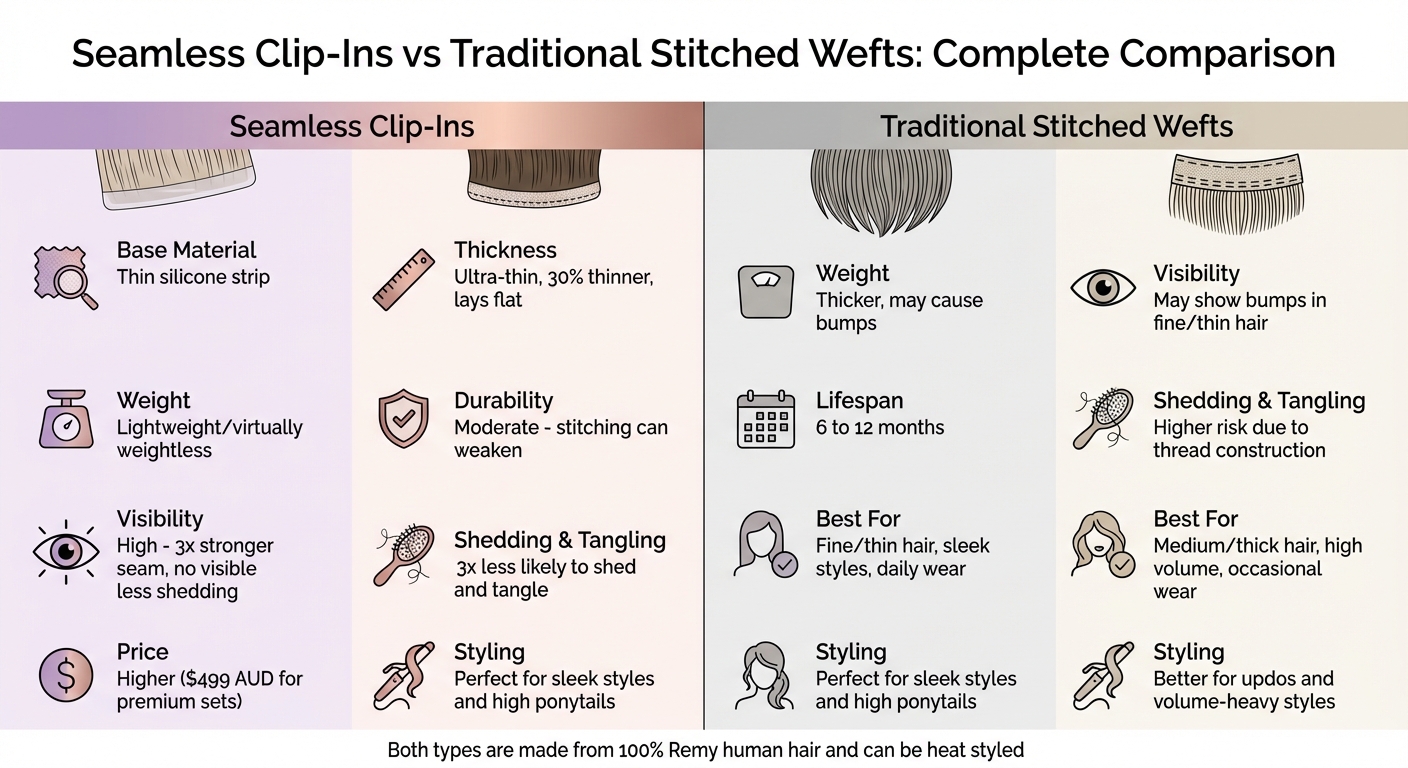
Seamless vs Traditional Hair Extensions Comparison Chart
Seamless vs Classic Clip In Hair Extensions | Luxy Hair
Construction: Silicone Base vs Stitched Wefts
When it comes to clip-in hair extensions, the way they're constructed plays a big role in how they perform and look. By comparing seamless and traditional wefts, you can see why the design makes such a difference.
The main distinction lies in how the hair is secured. Seamless extensions use a micro-thin strip made of silicone or polyurethane (PU) to hold the hair in place. In contrast, traditional wefts rely on hair being sewn onto a fabric or lace base with thread.
The silicone or PU base gives seamless extensions an ultra-thin profile, which allows them to sit snugly against the scalp without creating visible bumps. This design makes seamless wefts much thinner than traditional lace wefts, which tend to have a bulkier seam.
Abbey Wilson, a hair expert at Cliphair, highlights the advantage of seamless technology:
"The seamless technology means the extensions are 3 times less likely to shed and tangle as the seam is much more secure than a delicate thread seam".
Traditional wefts, on the other hand, are more prone to issues. Over time, the thread used in their construction can weaken or break during brushing or washing, which may lead to hair falling out from the track.
Seamless extensions are built to last. The silicone base can handle rigorous brushing and washing without compromising its structure, while lace and thread require extra care to avoid damage. This durability helps seamless extensions retain their thickness at the ends for a longer period.
Here’s a quick comparison of the two construction styles:
| Attribute | Seamless Clip-Ins (Silicone/PU) | Traditional Wefts (Lace/Fabric) |
|---|---|---|
| Base Material | Thin Silicone or Polyurethane strip | Stitched Lace or Fabric ribbon |
| Thickness | Ultra-thin; lays flat to the head | Thicker; can be bulky at the root |
| Shedding Risk | Low (hair is fused into the base) | Higher (thread can break or loosen) |
| Visibility | Virtually undetectable; no visible seams | May show bumps in fine or thin hair |
| Durability | High; resistant to water and brushing | Moderate; stitching is more fragile |
| Best For | Fine to thin hair; sleek styles | Medium to thick hair; maximum volume |
| Breathability | Less porous due to solid silicone | More breathable due to fabric weave |
This breakdown makes it clear why seamless extensions are often the go-to choice for individuals with fine or thin hair, while traditional wefts might be better suited for those looking to add dramatic volume to thicker hair.
Comfort and Application: Lightweight vs Heavy Wear
How a product feels is just as important as how it looks. Seamless clip-ins stand out because of their thin silicone base, which makes them incredibly lightweight. This design puts far less strain on your natural hair compared to fabric or lace-based extensions. The difference becomes clear when you compare them to traditional wefts.
Traditional stitched wefts, on the other hand, are heavier. This added weight can create constant tension on the scalp. For people with fine or thin hair, this isn't just uncomfortable - it can actually strain and damage fragile strands. Hair extensions expert Hope Saxton Howes highlights this advantage of seamless clip-ins:
"The flexible band means the hair can lay very flat to the head so if you have thin hair the root of the extensions won't bulge through and show".
Both types of extensions are relatively easy to apply, but seamless clip-ins are particularly beginner-friendly. Their snug fit makes them easier to conceal, especially for those with finer hair, whereas traditional wefts may require more effort to blend in. To ensure a secure and comfortable fit, you can lightly backcomb your natural hair at the root or use a small amount of texture powder before attaching the extensions. This creates a firm grip without unnecessary tension. These features make seamless extensions an excellent choice for anyone with fine or delicate hair.
| Feature | Seamless Clip-Ins | Traditional Stitched Wefts |
|---|---|---|
| Weight | Ultra-lightweight / Virtually weightless | Heavier due to fabric and stitching |
| Scalp Tension | Minimal to none | Higher tension from bulk and weight |
| All-Day Comfort | High – No dragging sensation | Moderate – Can feel heavy over time |
| Application Ease | Simple; lays flat instantly | Requires careful placement to hide seams |
| Best For | Fine to medium hair | Medium to thick hair |
The lightness of seamless extensions allows them to blend naturally with your hair’s texture, offering a flawless look that lasts all day. Unlike heavier wefts, they provide comfort without causing scalp fatigue, making them an ideal option for those with finer or more delicate hair.
Blending and Appearance: Hidden Seam vs Visible Lines
When it comes to how extensions blend and look, seamless clip-ins stand apart from traditional stitched wefts in some key ways.
The main difference lies in how they sit on the scalp. Seamless extensions feature a thin silicone strip that lays flat, unlike traditional wefts, which can create slight bumps due to their bulkier seams. This flat design makes seamless extensions almost invisible, even on fine or thin hair, where traditional wefts might be more noticeable.
Abbey Wilson from Cliphair explains this benefit perfectly:
"Because the wefts are flat, they don't create any visible lines, making them ideal for fine or thin hair."
For styles like updos or ponytails, the silicone base of seamless extensions moulds naturally to the shape of the head. On the other hand, traditional wefts can sometimes show mismatched colour lines or seams, particularly in sleek or straight hairstyles where every detail stands out.
Another advantage of seamless extensions is their durability. The silicone bond is three times stronger than traditional thread, reducing shedding and tangling. This strength ensures a polished, long-lasting appearance, making seamless extensions a top choice for those prioritising a flawless blend.
Here's a quick comparison of how the two types differ:
| Factor | Seamless Clip-Ins | Traditional Stitched Wefts |
|---|---|---|
| Scalp Proximity | Lies completely flat against the head | Sits higher; may create a minor bump |
| Visibility in Updos | Undetectable; no visible seams | May reveal a seam in very fine hair under certain angles |
| Colour Matching | Silicone base prevents mismatched colour lines | Bulkier seam may lead to visible lines |
| Best Styling | Perfect for sleek, straight styles and high ponytails | Better for styles needing volume |
| Hair Type Suitability | Great for fine to medium hair | Often preferred for medium to thick hair |
sbb-itb-dcde78e
Styling Options and Durability
Seamless and traditional wefts are both made from 100% Remy human hair, meaning they can handle heat styling just like your natural hair. Whether you want to curl, straighten, or blow-dry, these extensions are up for the task. Just be sure to use a heat protectant spray to maintain the hair's softness and prevent long-term damage.
When it comes to durability, seamless extensions have a clear edge. Their silicone bond is three times stronger than traditional seams, which means less snagging and a longer-lasting finish. Abbey Wilson from Cliphair UK highlights this advantage:
"Because the hair is held together with a silicone strip, it's far less fragile than lace and thread which can be broken when brushed, washed and handled."
Traditional wefts, on the other hand, are more prone to shedding and tangling due to their delicate thread construction. Seamless extensions, with their flat design and fused silicone bond, are better at staying tangle-free and securely in place.
To care for your extensions, tools like the Hair Wonderland Tangle Tamer Brush ($21.95) and Styling Comb ($12.95) are great options. Use the brush to gently detangle, starting from the ends and working upward, to minimise tension on clips or seams. The comb is perfect for precise sectioning, making styling easier while also helping to prolong the life of your extensions.
With proper care, seamless extensions can last anywhere from 6 months to 5 years, depending on how frequently you wear and style them. Traditional wefts, however, generally last 6 to 12 months, especially if the stitching starts to weaken over time.
Pros and Cons
When deciding between seamless extensions and traditional wefts, the choice often comes down to priorities: comfort and durability versus volume and affordability.
Seamless extensions stand out for their comfort and durability. Thanks to their thin silicone base, they sit flat against the scalp, making them nearly invisible - especially on fine or thin hair. They're also much less prone to shedding or tangling, with seams that are three times stronger than traditional options. However, they come at a higher price and tend to be thinner compared to traditional wefts. As Hope Saxton Howes from Stranded explains:
"Seamless hair extensions are slightly thinner than an original set of extensions and this is because if they were too thick the silicone would have to be much thicker therefore defeating the point of the set having a seamless appearance."
Traditional stitched wefts, on the other hand, are perfect for those seeking maximum volume and density. They’re more budget-friendly and well-suited for medium to thick hair. Plus, their design allows for greater flexibility with updos and intricate hairstyles. However, the stitched seam can feel bulkier and may be more prone to damage during brushing or washing.
Here’s a quick comparison to help you decide:
| Feature | Seamless Clip-Ins | Traditional Stitched Wefts |
|---|---|---|
| Base Material | Thin silicone strip | Stitched lace weft |
| Visibility | Virtually invisible; lays flat | Can be bulky or visible in thin hair |
| Weight | Ultra-lightweight | Slightly heavier/thicker |
| Durability | High; 3x stronger seam | Moderate; stitching can be fragile |
| Shedding | Minimal shedding; 3x less likely | Higher shedding risk; hair may pull from weakened stitching |
| Volume | Natural, slightly thinner | High volume; double-layered hair |
| Best For | Fine/thin hair; daily wear | Medium/thick hair; occasional wear |
| Styling Flexibility | Excellent for sleek, down styles | Better for updos and complex styles |
| Price | Premium/Higher | Affordable/Budget-friendly |
| Colour Variety | Limited selection | Wider range of options |
If you have fine hair, wear extensions daily, or prefer sleek styles with a discreet finish, seamless extensions are a great pick. But if you're working with a tighter budget, have thicker hair, or need extra volume for special events, traditional wefts might be the better choice.
Conclusion
Seamless clip-in extensions offer a discreet and natural-looking finish. Thanks to their thin silicone base, they eliminate bulky lines and bumps, making them a fantastic option for Australians with fine or thin hair who want an effortless transformation.
Their lightweight, flat-lay design ensures all-day comfort while expanding your styling options. Whether you’re going for a sleek, straight look or an intricate updo, seamless extensions stay hidden where traditional wefts might stand out. While they may come at a higher cost and provide slightly less volume than traditional wefts, the nearly invisible finish and durability - lasting 6–9 months with proper care - make them a worthwhile investment.
With seamless clip-ins, you get salon-quality results without the need for a permanent commitment. If you’re after a discreet, everyday solution, seamless extensions outperform traditional options in both comfort and appearance.
Ultimately, your choice depends on your hair type, lifestyle, and styling preferences. But for most Australians seeking an undetectable and comfortable solution for daily wear, seamless extensions stand out as a superior choice.
FAQs
Are seamless clip-in extensions more expensive than traditional wefts?
Seamless clip-in extensions do tend to cost more than traditional wefts. For high-quality Remy human hair seamless clip-ins, prices typically start at around AUD 160–180 for a set measuring 16–20 inches. On the other hand, traditional clip-ins can cost as little as AUD 20–150, depending on the quality and material used.
The higher price of seamless clip-ins comes down to their ultra-thin design, which offers a more natural look and blends effortlessly with your own hair. For those prioritising a flawless and discreet finish, they can be a worthwhile choice.
Are seamless clip-in extensions a good choice for thick hair?
Seamless clip-in extensions are crafted to blend effortlessly with various hair types, including thicker hair. Their ultra-thin wefts lie close to the scalp, offering a lightweight and comfortable option. This design is perfect for achieving a natural appearance without adding extra bulk, particularly for those with finer to medium hair textures.
If you have thicker hair, seamless extensions can still be a great choice, provided they match your hair's colour and thickness. Opting for wide wefts and using proper application techniques helps create a smooth, undetectable finish. For those aiming to add substantial volume, combining seamless extensions with other types might be worth considering. The trick is to choose extensions that align with your hair's density and your styling preferences.
How do I care for seamless clip-in extensions to make them last longer?
To keep your seamless clip-in extensions in great condition and extend their lifespan, taking proper care of them is essential. Start by washing and conditioning them with products specifically made for extensions. These are designed to maintain their softness and shine while reducing the risk of damage. Steer clear of shampoos or conditioners containing sulphates, as these can strip the hair and make it wear out faster.
When styling, try to limit the use of heat tools. If you do use them, always apply a heat protectant spray to shield the hair fibres from damage. For storage, place your extensions in a cool, dry spot or use a storage case designed to prevent tangling and help them keep their shape.
By handling them gently, washing them properly, and storing them safely, your seamless clip-in extensions can keep their natural look and last for months.