


Hair extensions need extra care to stay smooth and tangle-free. The right brush can make a big difference, preventing damage, reducing shedding, and extending the life of your extensions. Here’s a quick guide to the best brushes for maintaining your extensions:
- Boar Bristle Brushes: Great for spreading oils and reducing frizz. Ideal for daily care and styling.
- Paddle Brushes: Perfect for detangling large sections, especially for thick or curly extensions.
- Loop Brushes: Designed specifically for extensions, these glide over bonds without snagging.
- Wet Brushes: Flexible bristles minimise damage when detangling damp hair.
- Dual Bristle Brushes: Combines nylon pins and boar bristles for detangling and smoothing.
Quick Tips:
- Use brushes with soft, flexible bristles to avoid pulling or breaking.
- Always brush starting from the ends and work upwards.
- Clean your brush regularly to prevent buildup and bacteria.
- Replace your brush when bristles wear out or cause snagging.
Choosing the right brush and using proper techniques will help keep your extensions looking their best for longer.
Best Brush Types for Hair Extensions
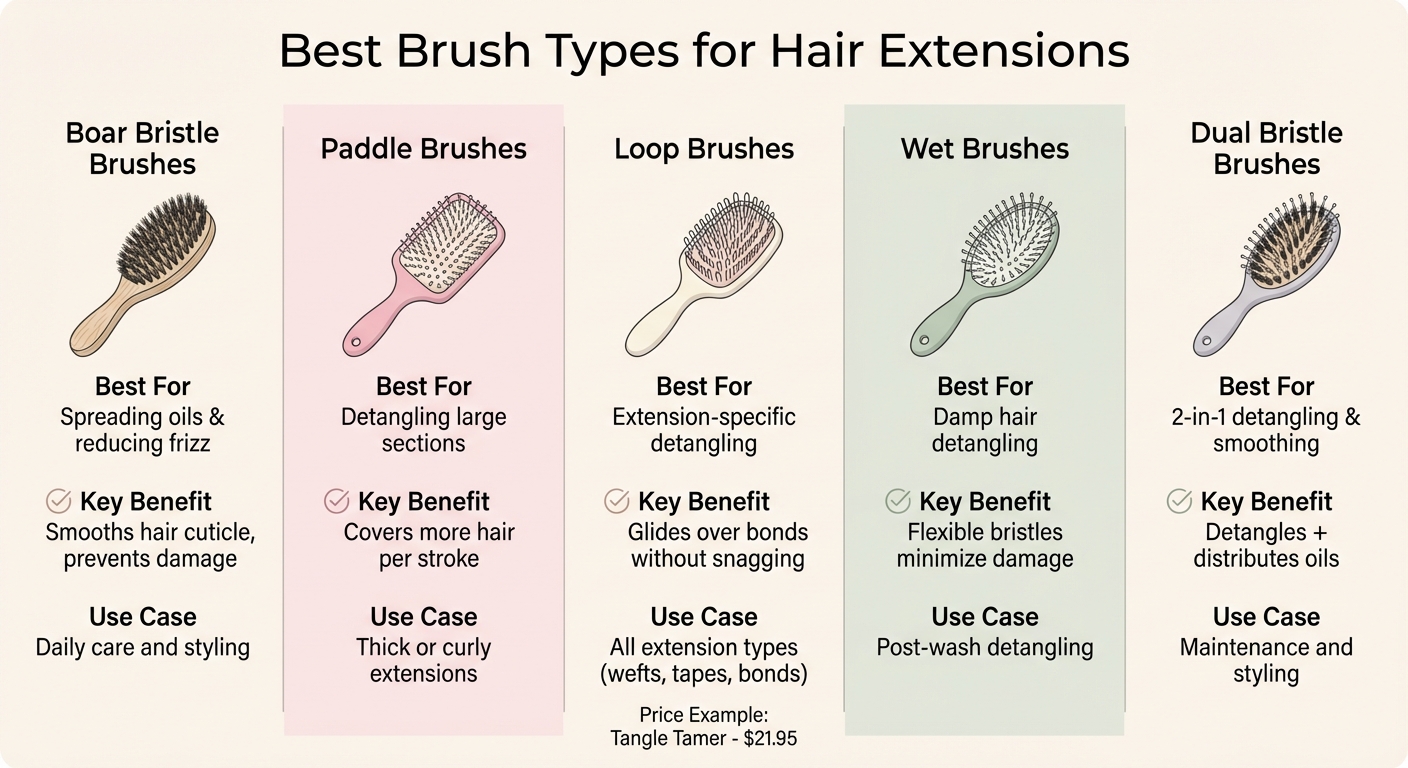
5 Best Brush Types for Hair Extensions Comparison Guide
Not every brush is suitable for hair extensions. Each type serves a specific purpose, so understanding their differences is key to choosing the right one. Here’s a breakdown of the best brushes to keep your extensions looking their best.
Boar Bristle Brushes
Boar bristle brushes are excellent for spreading treatment oils evenly through your extensions. Since extensions don’t receive natural oils from your scalp, these brushes help distribute applied oils from root to tip. The natural bristles also smooth the hair cuticle, reducing frizz and promoting a sleek finish. Their gentle design prevents damage and snagging, making them perfect for both daily care and styling.
Paddle Brushes
Paddle brushes, with their wide and flat design, are ideal for detangling large sections of hair quickly. They’re especially useful for thick or curly extensions, as their broad surface covers more hair in a single stroke. The cushioned base applies gentle tension, allowing you to detangle without putting strain on the attachment points.
Loop Brushes
Loop brushes are specifically designed for extensions, featuring looped bristles instead of straight pins. This unique design allows the brush to glide over wefts, tapes, or bonds without catching, reducing shedding and breakage. For example, the Tangle Tamer, priced at $21.95, is a great option for this purpose. When brushing clip-in extensions, hold the weft securely at the top and start brushing from the ends, gradually working upwards.
Wet Brushes
Wet brushes are designed with flexible bristles that bend easily to glide through knots without causing damage. This is particularly important because damp extensions are at their most delicate. Marc Ballance from IGK Salon recommends the Tangle Teezer Ultimate Detangler:
"The Ultimate Detangler is by far the best I've used this year... [it features] two-tiered teeth technology made for combing out wet hair sans snags."
For best results, brush your extensions when they’re damp - not soaking wet - and always start from the ends, working your way up.
Dual Bristle Brushes
Dual bristle brushes combine nylon pins with boar bristles, offering a two-in-one solution for detangling and smoothing. While the nylon pins work through knots, the boar bristles distribute oils and add shine, making this type of brush a versatile choice for both maintenance and styling.
What to Look for When Buying an Extension Brush
When it comes to extension brushes, it’s not just about how they look - it’s about how well they protect your extensions. The wrong brush can harm bonds, lead to shedding, and shorten the life of your extensions. To keep them in top shape, here’s what to keep in mind when choosing a brush.
Soft and Flexible Bristles
The bristles of your brush play a huge role in maintaining your extensions. Soft, flexible bristles are ideal because they gently move over knots without pulling or causing damage. This is especially important when your extensions are damp, as they’re more prone to breakage in that state.
Long, flexible bristles are particularly handy for detangling wet extensions, as they glide over knots instead of tugging. Always brush starting from the ends and work your way up to the roots to minimise stress. For extra care, support the base of your extensions with one hand while brushing.
Non-Snagging Design
A brush designed to avoid snagging is essential for protecting your extension bonds. Loop brushes, for instance, are specifically made with looped bristles that glide over bonds, tapes, and wefts without catching. Some brushes also feature a two-tier bristle system, where longer bristles detangle while shorter ones smooth the hair cuticle. This design allows you to detangle and polish your hair in one go, making it a practical choice for daily grooming.
Comfortable Handle and Sturdy Build
Comfort matters, especially if you’re brushing for longer periods. Brushes with ergonomic, lightweight handles provide better control and reduce hand fatigue, allowing you to brush gently yet effectively.
Durability is another key factor. A well-made brush with quality materials not only lasts longer but also maintains its performance over time. Many extension brushes come with rubber cushions that reduce scalp impact and protect your hair. Look for brushes built to resist warping and bristle loss, ensuring they stay effective in safeguarding your extensions day after day.
sbb-itb-dcde78e
How to Care for Your Extension Brush
Taking proper care of your extension brush is essential to avoid buildup, bacteria, and damage. A clean brush not only protects your extensions but also keeps them looking their best.
Cleaning Your Brush
Make it a habit to remove loose hair from your brush at least once a week. Use your fingers, tweezers, or a rattail comb for this task, and for stubborn tangles, carefully snip them with scissors. A deep clean every 2–4 weeks is ideal, though you might need to clean more often if you use a lot of styling products.
The cleaning method depends on the material of your brush:
- Plastic or synthetic brushes: Soak these in warm, soapy water for about 10 minutes, then scrub thoroughly.
- Wooden or bamboo brushes: Avoid soaking these, as water can warp or damage them. Instead, dip them briefly in water and scrub.
- Boar bristle brushes: Use a sulfate-free shampoo to clean the bristles, as this prevents the natural fibres from drying out. Do not soak them.
For all types, a clean toothbrush can help scrub the base of the bristles and the pad, removing oils and product residue. If your plastic brush has heavy grime, a mix of warm water and vinegar can be very effective.
When drying, place the brush bristle-side down on a clean towel. This allows water to drain from the brush pad, protecting it from mould and internal damage. Avoid using a hair dryer, as the heat can harm or melt the bristles. Always ensure the brush is completely dry before storing it.
Storing Your Brush Properly
Once your brush is dry, store it in a silk or satin bag or hang it up to prevent dust from settling and to maintain the shape of the bristles. It’s important to keep the padding and wooden parts dry to preserve their condition. Avoid damp areas like bathrooms, and never store the brush while it’s still wet - this can lead to mould or material decay.
By cleaning regularly, storing correctly, and replacing when necessary, you can keep your extension brush in top shape and your extensions looking flawless.
When to Replace Your Brush
Even with the best care, brushes don’t last forever. Replace your extension brush when you notice the bristles becoming stiff, brittle, or falling out. These are clear signs that the brush can no longer detangle properly without risking damage. If the protective tips wear off or the brush head cracks, it’s time for a new one. A key indicator is increased tugging or snagging, which shows the bristles are worn out. To check, gently pull on the bristles - if they come out easily, it’s time to replace the brush.
Conclusion
Using the right brush is key to maintaining the longevity and beauty of your hair extensions. Brushes designed with flexible teeth are gentle on both your natural hair and extensions, reducing tension and preventing unnecessary damage. Brushing from the tips upward while supporting the roots helps protect attachment points from loosening or slipping prematurely.
With proper care, including regular brushing with the right tools, high-quality human hair extensions can maintain their look for 9–12 months. Since extensions lack natural oils, the right brush also ensures treatments are evenly distributed, keeping your hair soft and shiny.
Hair Wonderland understands these needs and offers detangling brushes specifically designed for extensions. Their brushes feature flexible teeth that glide through knots effortlessly, making detangling a painless experience. You can choose between the Detangle Brush ($29.95) or the Tangle Tamer Brush ($21.95), both highly rated for their ability to manage thick hair with ease. As one happy customer, Lisa d, put it:
"Fav brush! Detangles my thick hair so easily".
Whether you're new to extensions or have been wearing them for years, investing in a quality, specialised brush completes your hair care routine. Check out Hair Wonderland's range of detangling brushes at hairwonderland.com.au to keep your extensions smooth, tangle-free, and looking their best.
FAQs
How often should I clean my brush for hair extensions?
To keep your hair extensions looking their best, make it a habit to clean your brush regularly - once a week is ideal. This removes trapped hair, product residue, and debris, keeping the brush effective and your extensions smooth and tangle-free.
Start by pulling out any hair stuck in the bristles. Then, wash the brush using warm water and a mild shampoo. Once cleaned, let it air dry completely before using it again. This simple routine not only helps protect your extensions but also keeps your brush in good condition for longer.
How should I store my extension brush to keep it in good condition?
To keep your extension brush in top shape, make sure to store it in a clean, dry spot, away from direct sunlight or damp areas, as these can wear down the bristles over time. If you have a protective pouch or container, use it to shield the brush from dust and debris. Additionally, give your brush a regular clean to get rid of any hair or product residue. This not only keeps it hygienic but also ensures it works effectively for maintaining your extensions.
How often should I replace my hair extension brush?
There’s no hard-and-fast rule for when to replace your hair extension brush - it all comes down to how frequently you use it and how well you maintain it. If you notice the bristles wearing out, the brush struggling to detangle effectively, or any visible damage, it’s probably time for an upgrade.
To extend the life of your brush, make regular cleaning a habit. Remove any trapped hair and give it a gentle wash using warm water and mild soap. This helps keep it in top shape, ensuring it glides effortlessly through your extensions without causing harm.