


The human hair extension market, valued at over $10 billion in 2023, has a growing demand for Russian and Mongolian hair due to its fine texture and durability. However, sourcing practices raise ethical concerns, particularly in rural areas where women may face exploitation or inadequate compensation. Ethical sourcing ensures hair is voluntarily donated, donors are fairly paid, and supply chains are transparent.
Key points:
- Russian and Mongolian hair is prized for its soft, silky texture and minimal processing needs.
- Ethical sourcing involves voluntary donation, fair payment, and traceable supply chains.
- Hair Wonderland focuses on direct sourcing, high-quality processing, and donor rights.
Challenges include geopolitical issues, misrepresentation in the market, and limited regulation, making transparency crucial. Consumers can support ethical practices by choosing brands that prioritise fair treatment and quality.
Where Hair Extensions Come From Ethically Sourced Methods & Textures
How Russian and Mongolian Hair Is Sourced
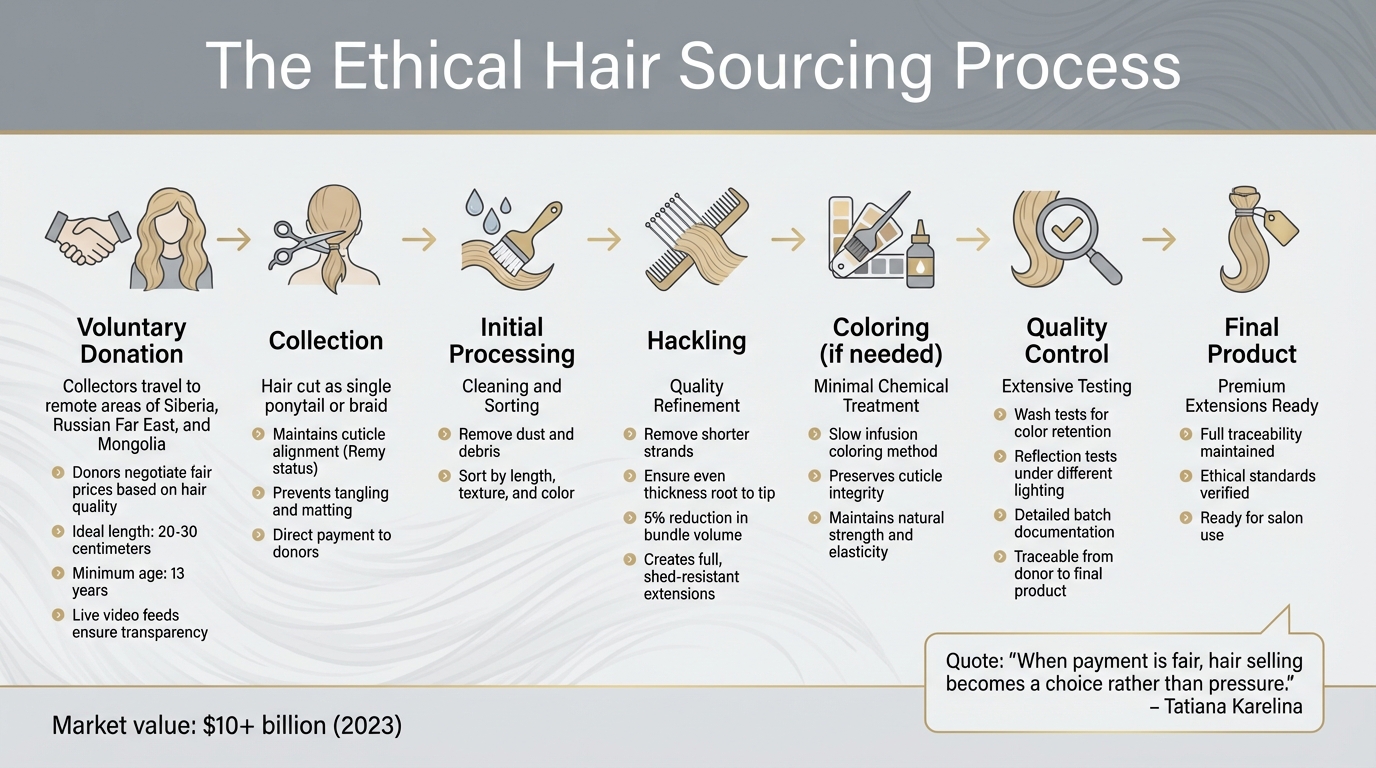
Ethical Hair Sourcing Journey: From Donor to Extension
The journey from donor to finished extension involves several carefully planned steps aimed at maintaining quality and respecting donor rights. This process starts with voluntary donations and continues through meticulous handling and processing.
Voluntary Donation Practices
Ethical sourcing is at the heart of this industry. Hair collectors travel to remote areas of Siberia, the Russian Far East, and Mongolia to engage with potential donors. For many women, their hair represents years of care and a chance to earn income. The process begins with a negotiation where collectors assess the hair’s length, texture, and colour to determine a fair price.
"When payment is fair, hair selling becomes a choice rather than pressure." - Tatiana Karelina
Clear communication ensures that donors fully understand the process and willingly consent to sell their hair. Payments are made directly to the donors, reflecting the time and effort required to grow hair to the ideal length - usually between 20 and 30 centimetres. To ensure transparency, some suppliers even use live video feeds of collection sites and auctions, showcasing voluntary participation and fair compensation. Additionally, age restrictions, such as a minimum age of 13, are in place to protect children from exploitation.
Collection and Processing Steps
Once the hair is donated, it undergoes a detailed processing routine to maintain its quality. Hair is cut as a single ponytail or braid to keep the cuticles aligned. This alignment, known as "Remy" status, is crucial for premium extensions as it prevents tangling and matting caused by misaligned cuticles. Proper maintenance, including correct brushing techniques, further protects this alignment.
After collection, the hair is initially cleaned to remove dust and any debris. It is then sorted by length, texture, and colour. The next step, called hackling, involves combing the hair with metal pins to remove shorter strands, ensuring even thickness from root to tip. This process reduces the original hair bundle by about 5%, but it’s essential for creating extensions that are full and resistant to shedding.
Russian and Mongolian hair, known for its fine texture and lighter shades, typically requires minimal chemical treatment. High-end suppliers use "slow infusion colouring" methods, which gradually add colour without damaging the cuticle. This technique helps preserve the hair’s natural strength and elasticity.
Each batch undergoes extensive quality checks, including wash tests to ensure colour stays intact and reflection tests under different lighting to confirm consistency. Ethical suppliers also maintain detailed documentation for every batch, creating a traceable record from the donor to the final product. This level of transparency allows buyers to verify sourcing claims in an industry that often lacks regulation.
Ethical Standards in the Hair Industry
The hair extension market often operates with limited oversight, leaving room for unethical practices. This makes it crucial for suppliers to adopt and document ethical practices that prioritise the well-being of donors, workers, and the planet. Suppliers who commit to these standards not only enhance their credibility but also align with the voluntary collection and premium processing methods discussed earlier. Below, we’ll dive into two key components of ethical sourcing: fair compensation and transparent supply chains.
Fair Payment and Donor Rights
At the heart of ethical sourcing is fair compensation. In regions like Siberia and Mongolia, donors negotiate rates based on the quality and characteristics of their hair. This direct payment system ensures that donors receive fair market value, accounting for the time and effort it takes to grow hair to the desired length - usually between 20 and 30 centimetres.
"Ethical practices also involve providing transparent information to customers about the origin of the hair and the manufacturing process."
– KmXtend Hair Extensions
Beyond payment, the protection of donor rights is essential. Donors must give informed, voluntary consent, free from any pressure or coercion. Single-donor sourcing - where an entire ponytail is purchased from one individual - is often considered the most ethical method. This approach ensures the hair remains in its natural alignment (known as Remy quality) and avoids the use of "fallen hair", which is typically collected from floors or brushes. These practices not only safeguard donor autonomy but also ensure they are compensated fairly for their contribution.
Transparency and Traceability
Ethical sourcing doesn’t stop at fair payment - it also requires a transparent and accountable supply chain. Proper documentation helps distinguish genuine suppliers from those making unsupported claims, helping you compare Russian and Mongolian hair to ensure you receive the quality you pay for. To uphold these standards, many brands require suppliers to adhere to a Supplier Code of Conduct (SCoC), which includes guidelines on labour rights, environmental safeguards, and operational management.
In rural areas, where cash economies dominate, maintaining detailed records can be challenging. Ethical brands address this by insisting on official VAT invoicing and increasingly adopting digital systems to track every batch of hair. Regular audits and on-site inspections, often conducted annually, further ensure compliance with these practices. When suppliers provide thorough documentation tracing hair from donor to salon, it builds trust and confidence among buyers.
Interestingly, while the global hair extension market surpassed $10 billion by 2023, the limited number of eligible donors in regions like Mongolia - approximately 150,000 women aged 18–40 - casts doubt on the authenticity of much of the "Mongolian hair" being marketed worldwide.
| Ethical Marker | Standard Practice |
|---|---|
| Consent | Full transparency and voluntary agreement from the donor |
| Payment | Fair market rates paid directly to the donor |
| Labour | No child or forced labour; safe and ventilated working environments |
| Traceability | Documented path from donor to salon via audits and invoices |
| Environment | Use of certified dyes and water recycling systems |
sbb-itb-dcde78e
Challenges in Ethical Sourcing
Maintaining ethical standards in the Russian and Mongolian hair market is no easy feat. Issues like international politics and rampant mislabelling make it tough for both suppliers and consumers to navigate this space. These challenges only emphasise the importance of transparent supply chains, as previously discussed, to ensure ethical practices are genuinely upheld.
Geopolitical and Economic Impacts
International sanctions have had a significant impact on Russian hair exports. For instance, the United States banned imports of Russian goods, including hair, as early as 2014, with European countries following suit with similar restrictions. These sanctions have driven up trade costs by an average of 19%, pushing many suppliers to turn to Mongolian hair as a more accessible legal alternative.
"The conflict has resulted in economic sanctions and political tensions between Russia and some Western countries, which has impacted the hair industry as well."
– KmXtend Hair Extensions
To get around these restrictions, suppliers often reroute goods through hubs like Turkey, China, Hong Kong, and the UAE. This "transit loophole" allows hair to be declared as originating from a third country, masking its true source. It’s a tactic similar to those seen in other industries, such as Russian gemstones being processed in India or Dubai to obtain new paperwork that obscures their origin.
In rural areas, the situation is even more complex. Middlemen often reap the majority of profits, leaving donors with only a small fraction of the earnings. The global human hair market is largely unregulated, making it nearly impossible to track hair from donor to final product, especially in remote cash-based economies where digital records are scarce.
These geopolitical and economic dynamics not only distort the market but also pave the way for widespread misrepresentation.
Misrepresentation in the Market
Sanctions and rerouting aren’t the only issues. Misrepresentation in the market further erodes trust in product claims. The term "Russian Hair" is often used loosely, with little verification. Hair from nearby regions is frequently passed off as premium Russian hair. Professor Emma Tarlo from Goldsmiths, University of London, sheds light on the issue:
"In terms of marketing it's up to the integrity of traders all the way along the line to specify what hair is what. Quite a lot of mislabelling goes on."
"Without a transparent and clear sales chain, claiming to have Russian Hair is baseless and can be claimed about any hair extensions, regardless of its origin or quality."
– Great Lengths
To make matters worse, lower-quality hair is often chemically treated - through acid baths or silicone coatings - to imitate the texture of authentic Russian or Mongolian hair. While these treatments temporarily improve appearance, they damage the hair’s structure, compromising its quality. Pricing can be a helpful clue here: genuine Russian and Mongolian hair fetches high prices due to its limited supply and strong demand. If you see "Russian hair" being sold at suspiciously low prices, it’s likely a sign of dubious sourcing or exploitative labour practices.
The scale of misrepresentation becomes glaringly obvious when you consider supply versus demand. Mongolia’s population of women aged 18–40 is only about 150,000, yet the market is flooded with products labelled "Mongolian hair." This clear mismatch highlights how substitution and mislabelling have become rampant, affecting not just supplier practices but also the rights of donors across the industry.
Hair Wonderland's Ethical Sourcing Approach
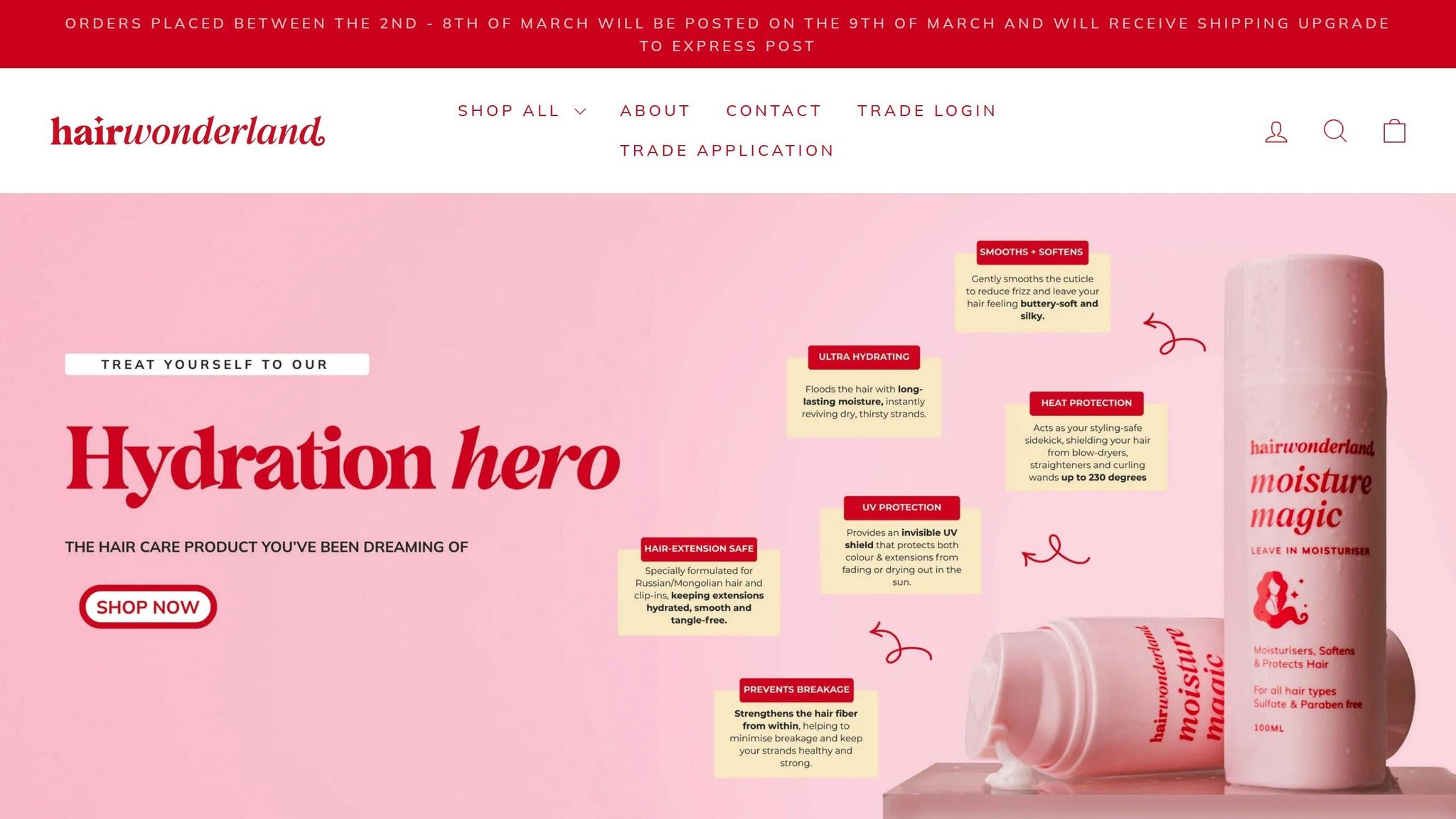
Hair Wonderland takes ethical sourcing seriously, setting high standards for quality and transparency. Back in 2020, founder Lisa embarked on a journey to personally source premium Russian and Mongolian hair that would meet strict durability and quality requirements. Drawing on her extensive experience in Australia's top salons, Lisa noticed a gap in the market - existing options simply didn’t meet the standards professionals needed. This realisation led to a multi-year process of stringent testing and quality control, reshaping the way hair extensions are sourced. It’s a move that reflects the growing push for transparency and ethical practices within the industry.
Before officially launching in 2024, the brand spent four years perfecting its supply chain and testing its products. Hair Wonderland works exclusively with trusted global partners who hand-select and evaluate raw hair to ensure premium quality. Each bundle is collected from a single ponytail, maintaining natural cuticle alignment and chemical-free integrity. By directly negotiating prices, the company ensures both fairness and quality at every step.
"All hair is ethically sourced, professionally evaluated, and hand-selected to ensure healthy cuticles, natural alignment, and long-lasting performance."
– Wonderland Hair
Premium Double-Drawn Hair Extensions
Hair Wonderland takes it a step further by refining its extensions through advanced processing methods. Their double-drawn hair undergoes a meticulous process to remove shorter strands, ensuring consistent thickness from root to tip. This dedication to quality results in a 5% loss during the enhanced quality control process. The Seamless Set 22" ($499.00 AUD) stands out as a flagship product, crafted from Russian and Mongolian hair known for its thickness, strength, and natural shine. Mongolian hair, in particular, offers a soft wave and incredible durability, though its availability is limited to a donor pool of just 150,000 individuals.
Invisi® Weft Technology and Care Accessories
Hair Wonderland’s Invisi® Weft Technology provides a nearly invisible, natural-looking extension that lies flat and stays secure. To maintain the longevity of these extensions, the brand offers the Tangle Tamer Brush ($21.95 AUD), designed to minimise breakage and keep double-drawn strands in excellent condition. With proper care, these extensions can last an impressive 9–12 months.
Conclusion
Ethical sourcing is reshaping the hair extension industry. By focusing on voluntary consent, fair compensation, and transparent supply chains, brands not only protect the dignity of donors in rural areas but also deliver top-tier products to their customers. As Tatiana Karelina explains:
"Ethical sourcing means the donor knows what is happening, agrees freely, and is treated with respect".
This approach turns hair donation into a legitimate and fair source of income, helping families and local economies thrive.
The link between ethics and quality is clear. Hair that’s carefully collected - cut as a single ponytail to preserve cuticle alignment, minimally processed, and fully traceable - stays smooth, lasts longer, and retains its natural strength. On the other hand, unethical sourcing often involves heavy chemical treatments that weaken the hair, reducing its durability.
These quality advantages highlight why ethical practices matter. Hair Wonderland, for instance, exemplifies this by sourcing directly and testing every bundle to ensure high standards. Their premium double-drawn Russian and Mongolian hair is known for its long-lasting quality and ability to deliver stunning transformations.
Your choices as a consumer play a crucial role. When buying extensions, ask about supplier practices, processing techniques, and traceability. By demanding transparency, you encourage the industry to maintain ethical standards from start to finish. Your purchasing power can support brands that prioritise beauty with respect and integrity.
FAQs
How can I verify hair is ethically sourced?
To make sure the hair you purchase is sourced ethically, look for suppliers who prioritise transparency and follow fair trade practices. Ethical sourcing involves several key factors: donors must give their hair willingly, collection processes must treat donors with respect, and suppliers should adhere to strict standards, including fair labour practices and compliance with local laws.
Ask for documentation to back up these claims, such as certificates or detailed sourcing information. Partner with suppliers who are open about their ethical sourcing methods and are willing to share their protocols openly. This way, you can feel confident that the hair you’re buying aligns with ethical practices.
What makes Russian and Mongolian hair 'Remy'?
Russian and Mongolian hair earn the 'Remy' label because the cuticles are kept intact and aligned in a single direction. This alignment plays a key role in reducing tangling and maintaining the hair's natural texture, resulting in a smooth, long-lasting finish.
Does ethical sourcing affect extension price and lifespan?
Ethical sourcing plays a key role in improving the lifespan of hair extensions. When hair is sourced ethically, it tends to be of better quality and handled with greater care throughout the process. This attention to detail ensures the extensions are more durable and maintain their appearance over time.
However, there’s often a trade-off in terms of cost. Ethically sourced hair typically comes with a higher price tag. This is because it involves fair trade practices and careful collection methods, which prioritise the well-being of donors and the integrity of the product. While it may cost more upfront, the longevity and quality can make it a worthwhile investment.